Balanced and Unbalanced Forces
Balanced forces
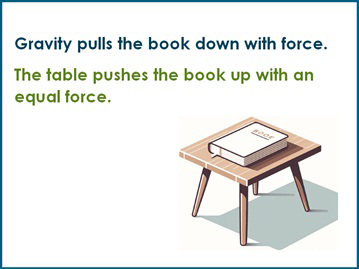
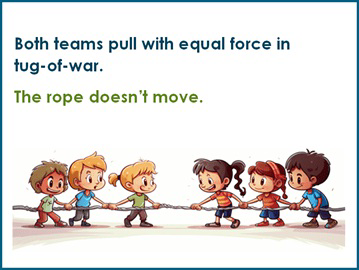
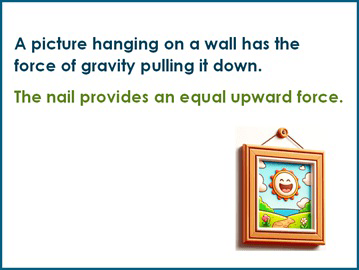
Balanced forces occur when two forces acting on an object are equal in size but opposite in direction. This results in no change in the object's motion.
Key characteristics:
Equal in size.
Opposite in direction.
No change in motion.
Examples of balanced forces
Unbalanced forces
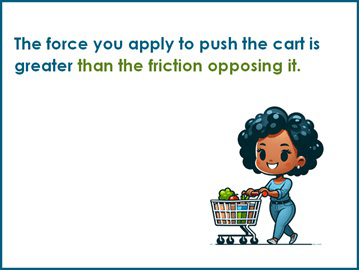
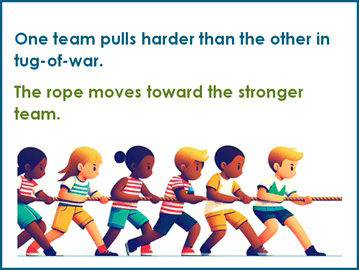
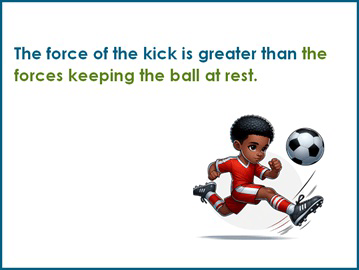
Unbalanced forces occur when the forces acting on an object are not equal, resulting in a change in the object's motion. This can cause the object to start moving, stop moving, or change direction.
Key characteristics:
Unequal in size or not directly opposite.
Cause a change in motion (speed up, slow down, or change direction).
Examples of unbalanced forces
Students observe that a toy car rolls down a ramp and travels different distances depending on the surface it rolls onto (e.g., tile, carpet, sandpaper). This helps them explore how unbalanced forces (like friction) affect motion.
Table 1.
Surface Type | Distance Traveled (cm) | Observation of Motion | Balanced or Unbalanced Force? |
|---|
Tile Floor | 120 cm | Rolled smoothly | Mostly balanced |
Carpet | 65 cm | Slowed quickly | Unbalanced (more friction) |
Sandpaper | 40 cm | Stopped quickly | Strong unbalanced friction |