Designing a Catcher’s Mitt to Reduce Force During a Ball Collision
Diagram 1.
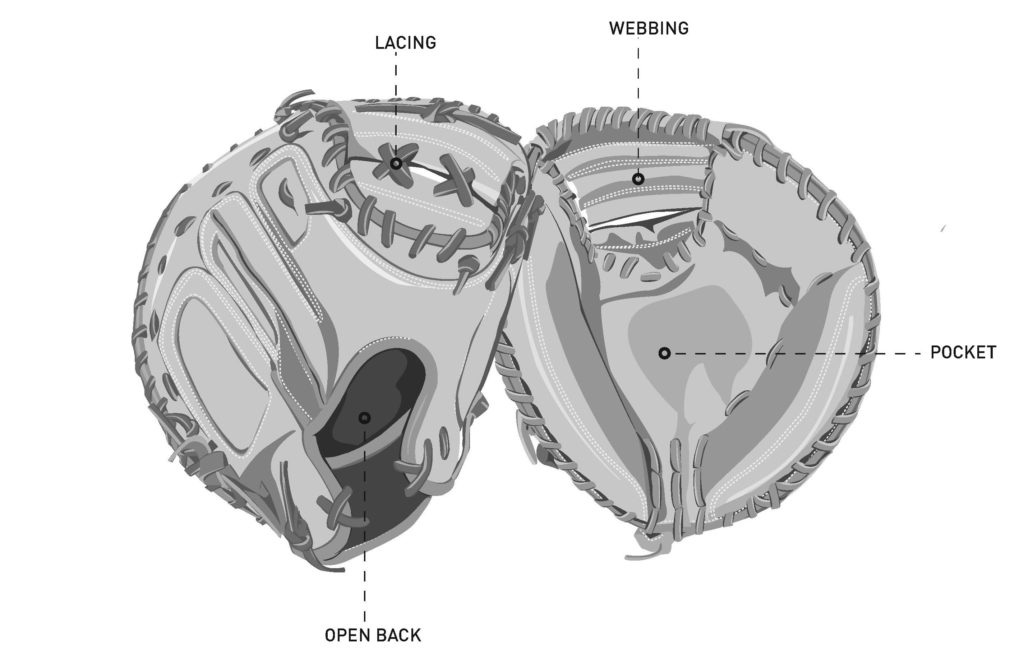
Source: https://www.dickssportinggoods.com/protips/sports-and-activities/baseball/choose-baseball-catchers-mitt
Real-World Phenomenon
In sports like baseball or softball, a fast-moving ball collides with a catcher’s mitt. Even though the catcher stops the ball, the collision can still cause pain or injury to the hand. Catcher’s mitts are designed to reduce injury by changing how the collision happens between the ball and the mitt.
When a moving object collides with another object, the two objects exert forces on each other. According to Newton’s Third Law of Motion, these forces are equal in size and opposite in direction. When a baseball hits a catcher’s mitt, the ball pushes on the mitt, and the mitt pushes back on the ball with an equal force in the opposite direction.
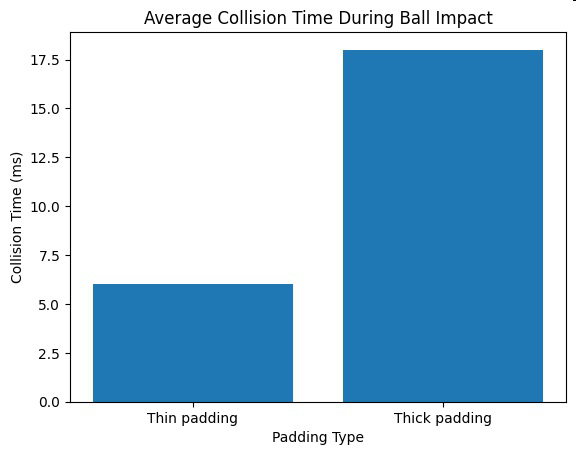
Even though the forces are equal, the effect of the collision can be changed by design. One important factor is the time over which the collision occurs. If the ball stops very quickly, the forces during the collision are large. If the ball slows down over a longer period of time, the forces are spread out and the catcher experiences less force on their hand.
Catcher’s mitts are designed with thick padding and flexible materials. When the ball hits the mitt, the padding compresses and the mitt bends backward. This increases the collision time and allows the ball to slow down more gradually. The mitt does not eliminate the force between the ball and the hand. Instead, it changes how the force is applied.
Engineers test mitt designs by measuring how long the collision lasts, how much the mitt compresses, and the force transferred to the hand. They may also compare different padding thicknesses or materials. Based on test data, engineers modify the mitt design to reduce the peak force while still stopping the ball effectively.
Using Newton’s Third Law, students can explain that the ball and the mitt always exert equal and opposite forces, but the design of the mitt changes the outcome of the collision by increasing collision time and reducing peak force.
Table 1.
Trial | Ball Speed Before Collision (m/s) | Collision Time (ms) | Peak Force on Hand (N) |
|---|
Trial 1 | 18 | 6 | 3900 |
Trial 2 | 18 | 7 | 3700 |
Trial 3 | 18 | 6 | 3800 |
Trial 4 | 18 | 5 | 4000 |
Graph of Information - Figure 1.
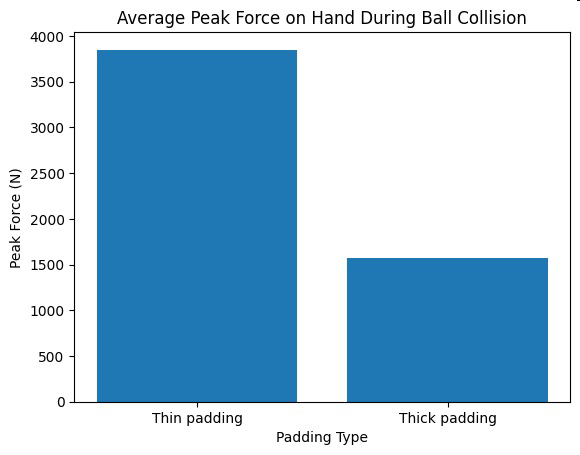
Table 2.
Trial | Ball Speed Before Collision (m/s) | Collision Time (ms) | Peak Force on Hand (N) |
|---|
Trial 1 | 18 | 17 | 1600 |
Trial 2 | 18 | 18 | 1500 |
Trial 3 | 18 | 19 | 1550 |
Trial 4 | 18 | 18 | 1650 |
Graph of Information - Figure 2.