Electromagnet Coil Turns and Magnetic Force Strength
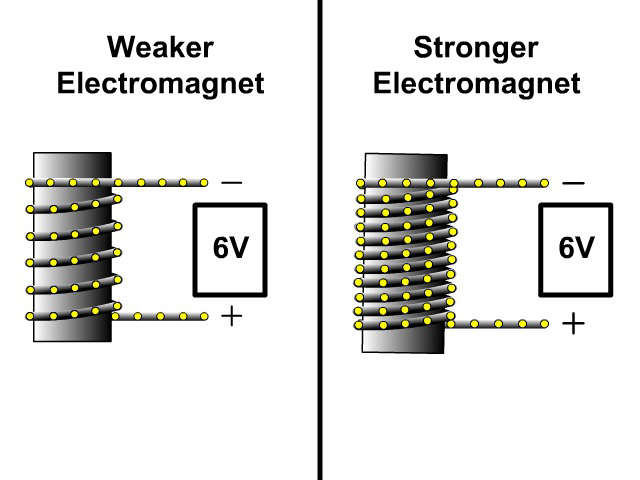
Diagram 1.
 Source:
https://sciencewiz.com/distance-learning/inventions/lesson-1/
Real-World Phenomenon
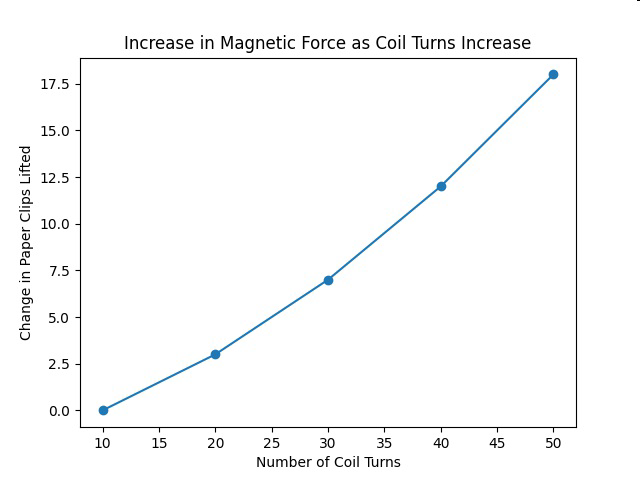
An electromagnet made by wrapping wire around an iron nail can lift paper clips. When the coil has more loops of wire, the electromagnet can lift more paper clips, showing a stronger magnetic force.
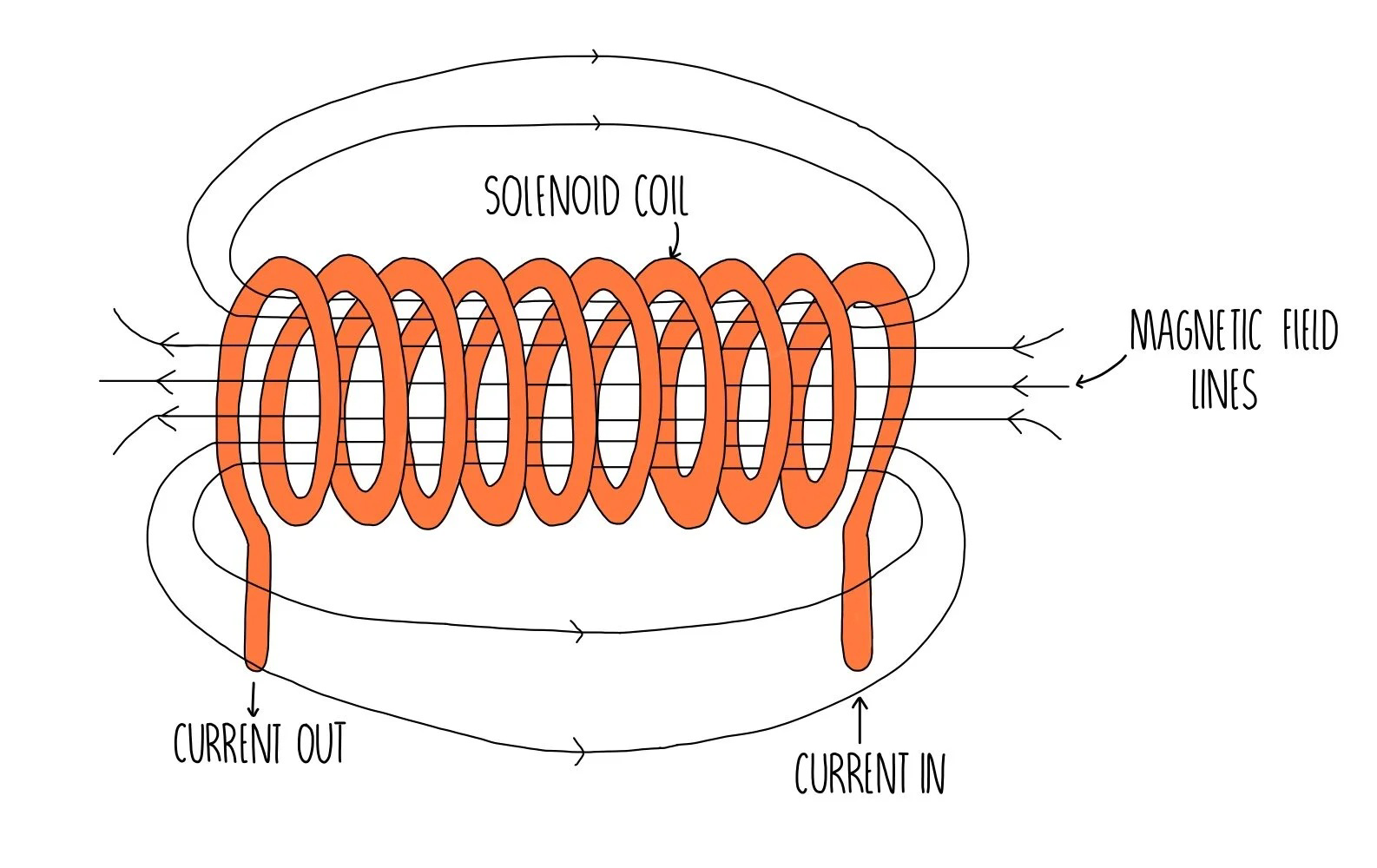
Magnetic forces can be produced by permanent magnets, but they can also be produced by moving electric charges. An electromagnet is a magnet created when an electric current flows through a wire. When the wire is wrapped into coils around an iron core (like a nail), the magnetic effect becomes much stronger.
In an electromagnet, the electric current moving through the wire creates a magnetic field around the wire. When the wire is wrapped into a coil, the magnetic fields from each loop add together. This means the number of coil turns can affect the strength of the magnetic field. More turns can create a stronger magnetic field, which can lead to a stronger magnetic force on nearby magnetic objects.
Scientists often measure magnetic force strength using data that can be collected safely in a classroom. One common method is to count how many paper clips an electromagnet can lift. Lifting more paper clips indicates a stronger magnetic force. By changing only one factor at a time and recording results, students can identify patterns and determine which factors affect force strength.
Diagram 2.
Source: https://www.thesciencehive.co.uk/electromagnetism-gcse
In this investigation, the key factor tested is the number of coil turns. To make the data meaningful, other factors should stay the same, such as the battery type, the same nail core, and the same type of paper clips. If the data show that increasing the number of coil turns increases the number of paper clips lifted, that provides evidence that coil turns affect the strength of magnetic force.
Table 1.
Coil Turns | Paper Clips Lifted | Change From Lowest |
|---|
10 | 2 | 0 |
20 | 5 | 3 |
30 | 9 | 7 |
40 | 14 | 12 |
50 | 20 | 18 |
Graph of Information - Figure 1.
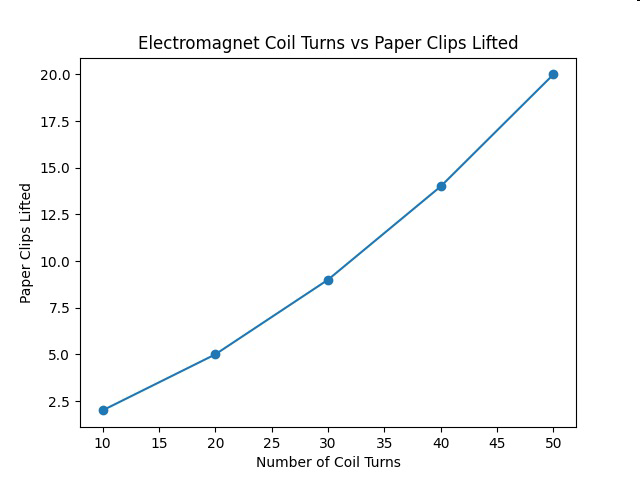
Graph of Information - Figure 2.