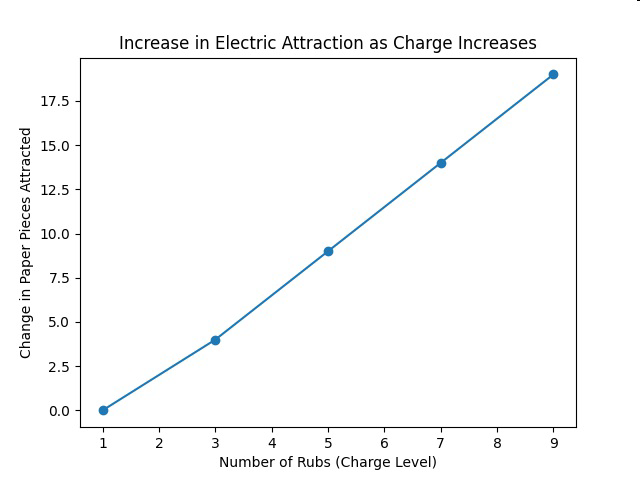
Number of Battery Cells and Electric Force Strength
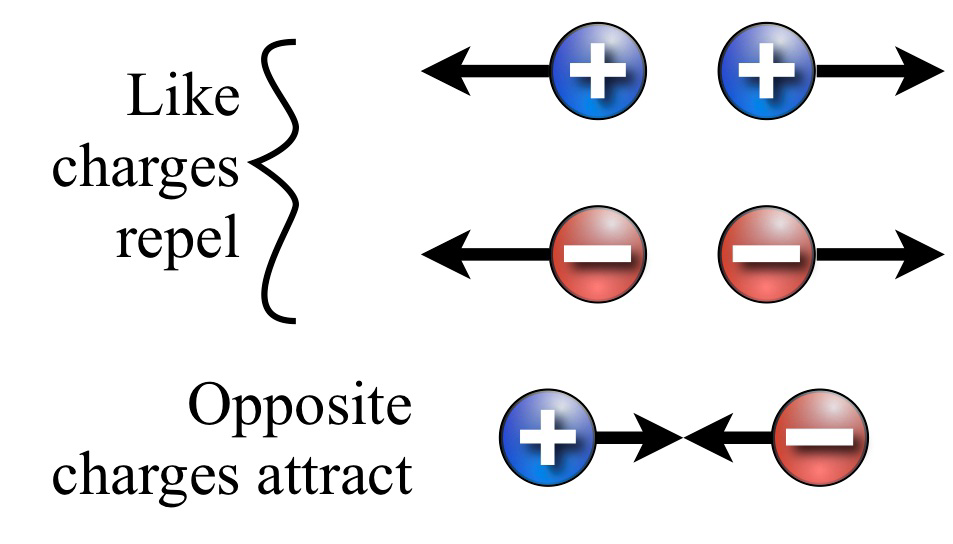
Diagram 1.
 Source:
https://www.askiitians.com/iit-jee-electrostatics/basic-properties-of-electric-charge/
Real-World Phenomenon
A charged object attracts small pieces of paper more strongly when it has more electric charge. When the object has less charge, the attraction is weaker.
Electric forces act at a distance, just like magnetic forces. Objects with electric charge can pull on other charged or neutral objects without touching them. However, the strength of the electric force is not always the same. One important factor that affects electric force strength is the amount of electric charge on the object.
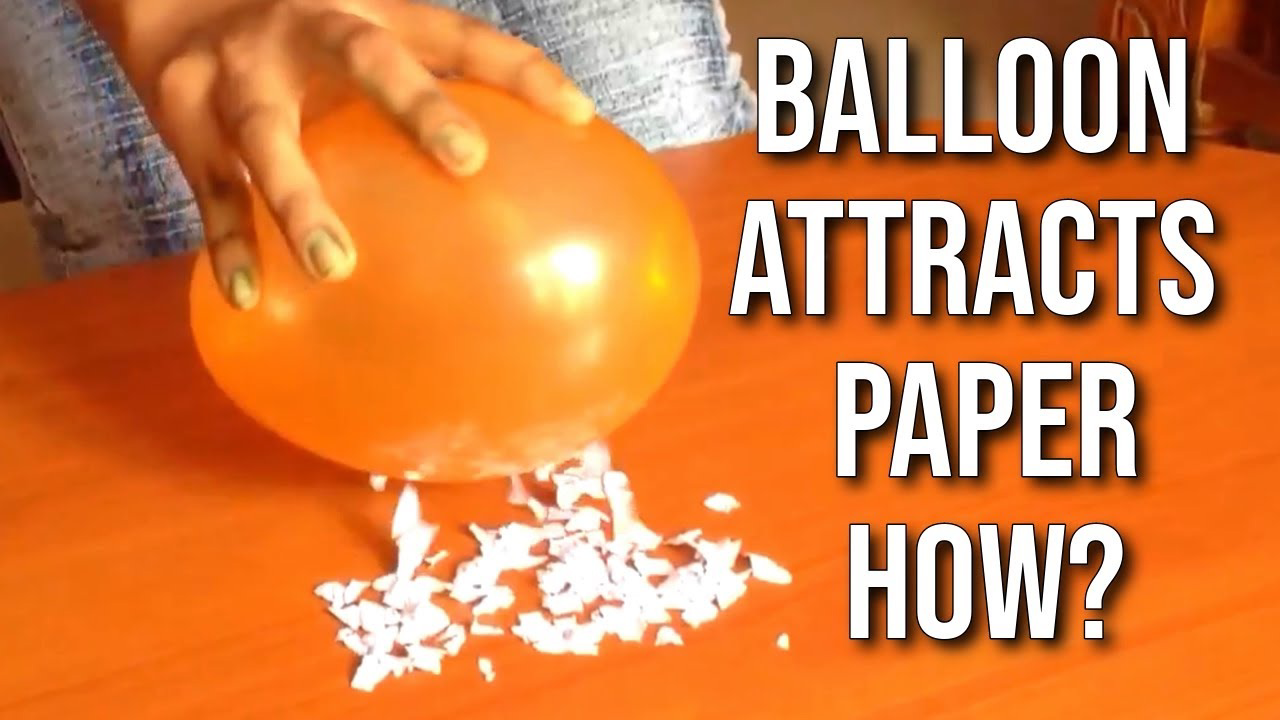
When an object gains electric charge, it can attract or repel other objects more strongly. For example, rubbing a balloon on hair transfers electric charge to the balloon. A balloon that has been rubbed several times usually attracts small pieces of paper more strongly than a balloon that has been rubbed only once. This happens because the balloon with more charge produces a stronger electric force.
Scientists investigate electric forces by collecting data that show how force strength changes when charge changes. Because electric force cannot always be measured directly with a scale, scientists often use indirect measurements. For example, they may count how many paper pieces are attracted, measure the distance at which attraction begins, or measure how quickly objects move toward the charged object. These measurements provide useful data for identifying patterns.
When the amount of charge changes while other factors stay the same, any change in force strength can be linked to the charge. If the data show that increasing charge leads to stronger attraction, this provides evidence that charge affects electric force strength.
Asking good questions about data helps scientists determine which factors matter most. Questions such as “How does increasing electric charge affect the strength of electric force?” or “Does doubling the charge double the attraction?” guide data analysis and help explain electric interactions.
Diagram 2.
Source:
https://www.youtube.com/watch?v=NVmdapLA5I4
Table 1.
Number of Rubs | Paper Pieces Attracted | Change From Lowest |
|---|---|---|
1 | 2 | 0 |
3 | 6 | 4 |
5 | 11 | 9 |
7 | 16 | 14 |
9 | 21 | 19 |
Graph of Information - Figure 1.
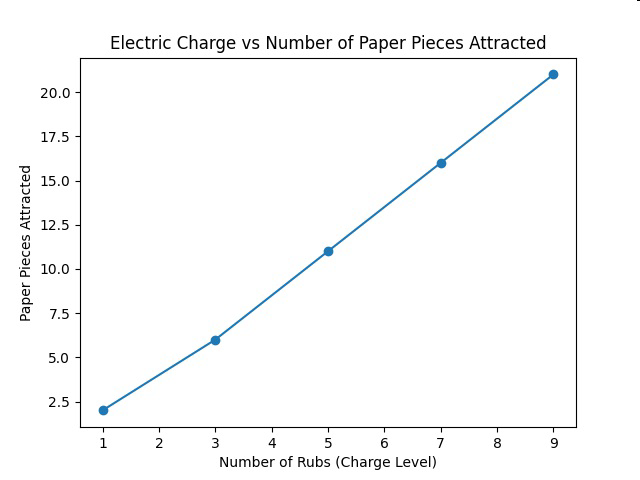
Graph of Information - Figure 2.