Patterns and Predicting Future Motion
Often objects move in regular, repeated patterns, such as up and down (e.g., seesaw), back and forth (e.g., swing or pendulum), or around and around (e.g., hands of an analog clock). These repeated patterns can be used to predict an object’s future motion or position at a given time.
Many predictable patterns of motion can be observed in the natural world, such as the rise and fall of ocean waves, the rotation of Earth, and the revolution of planets around the sun. Sports players use predictable patterns of motion, such as the path of a baseball after being struck by a bat, to achieve desired results.
A pendulum is simply a mass (called a bob) that hangs from a rope or string and swings freely (the virtual tire swing in this lesson is a pendulum). The shorter the swing or rope, the faster the pendulum swings, regardless of how heavy the bob is or how high the starting position. The pirate ship amusement park ride is a giant pendulum. Engineers use pendulums in clocks (the grandfather clock being the most obvious example), and other devices such as metronomes and seismographs (instruments that measure movement of the Earth’s surface). Pendulum science is also used to determine how much a building might sway in high winds or during an earthquake.
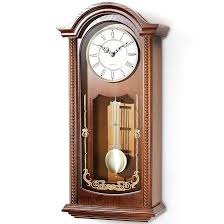
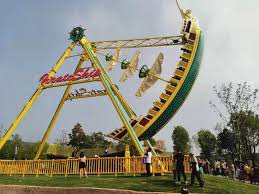
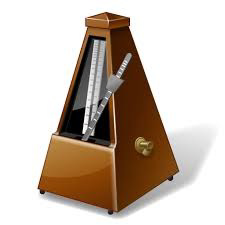
Students observe that when someone is on a swing, they move back and forth in a repeating pattern. They can make predictions about the swing’s motion over time by observing this pattern.
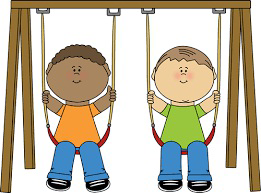
What pattern can we observe in the motion of a swing, and how can we use it to predict where the swing will be at a later time?
Materials:
Investigation Procedure:
Pull the swing back to a fixed height (e.g., 40 cm) and release.
Observe and record how the swing moves (back and forth) over a set time.
Count the number of complete back-and-forth swings (oscillations).
Repeat multiple times to confirm the pattern.
Time (seconds) | Swing Position | Swing Count |
|---|
0 | Starting point | 0 |
2 | Back to start | 1 |
4 | Back to start | 2 |
6 | Back to start | 3 |
9 | Back to start | 4 |
10 | Back to start | 5 |