Identifying Mystery Liquids Using Density
Diagram 1.
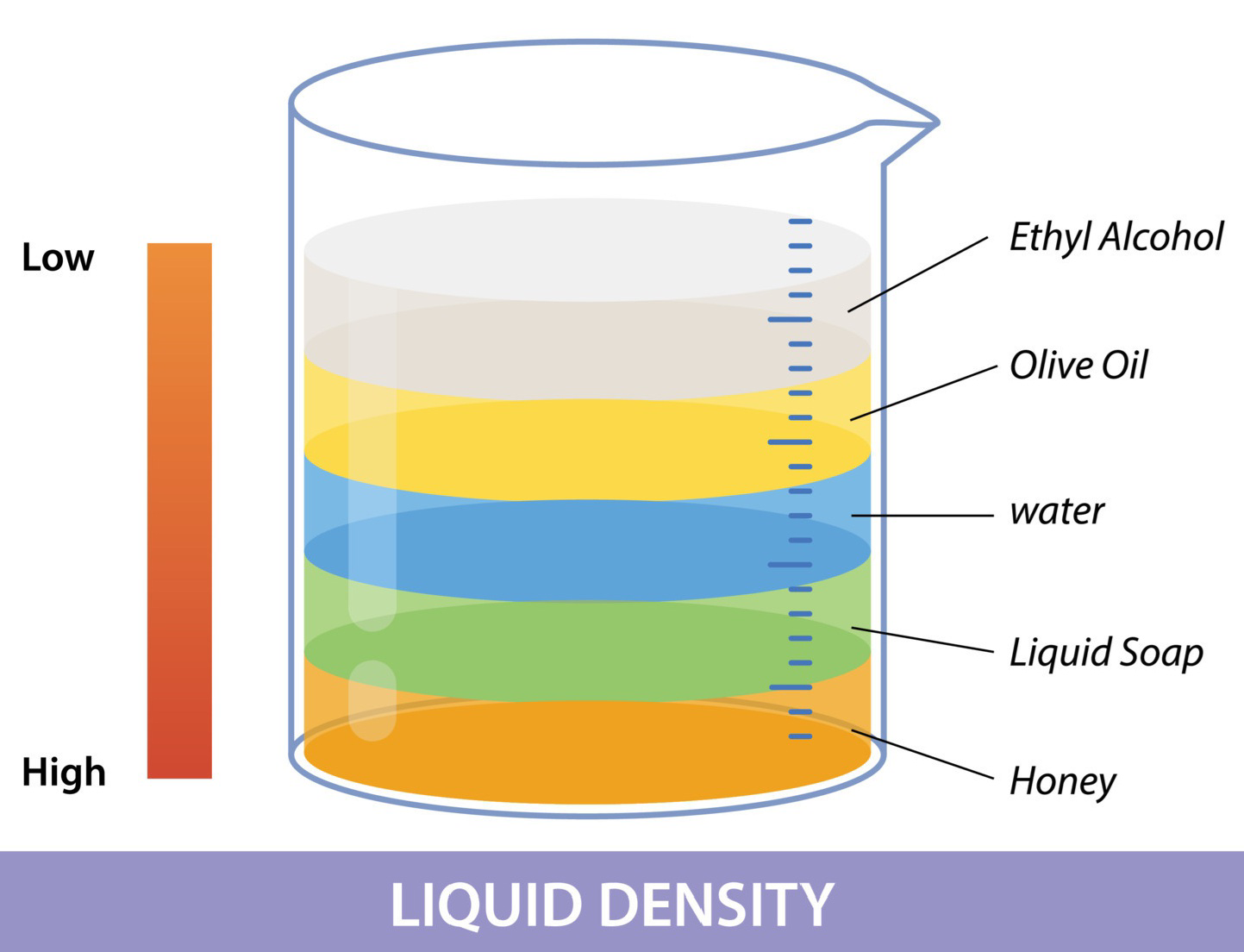 Source: https://www.vecteezy.com/vector-art/12074945-liquid-density-scientific-experiment-concept-separate-fluid-layers
Real-World Phenomenon
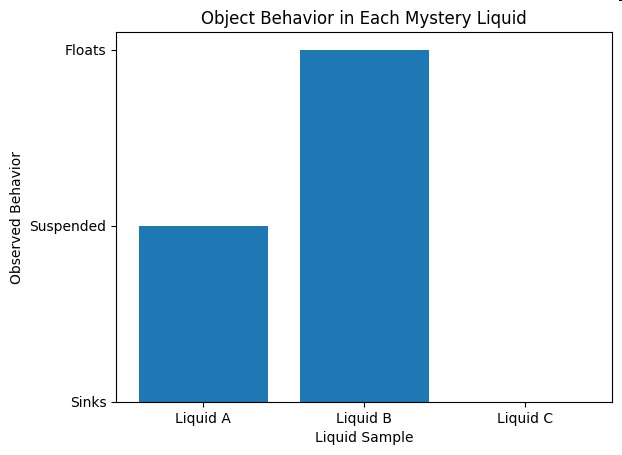
Three clear, colorless liquids are placed in identical beakers. They look the same, but when a small object is dropped into each one, it sinks in the first liquid, floats in the second, and stays suspended in the third. Scientists can identify each liquid by measuring mass and volume and using density as evidence.
Density is a physical property that describes how much mass is packed into a given volume. It is calculated by dividing mass by volume. Each substance has a characteristic density that stays the same no matter how much of the substance is present. Because of this, density can be used to identify unknown samples of matter.
Liquids can appear identical but still have different densities. For example, pure water, saltwater, and vegetable oil are all liquids at room temperature and can look clear in a container. However, their densities are different because their particles are arranged differently and have different masses.
When an object is placed into a liquid, whether it sinks or floats depends on density. If the object’s density is greater than the liquid’s density, it will sink. If the object’s density is less than the liquid’s density, it will float. An object with a density close to the liquid’s density may remain suspended.
Scientists identify unknown liquids by carefully measuring mass and volume. By calculating density and comparing it to known values, scientists can determine the identity of the liquid. This method is reliable because density does not depend on the size of the sample.
Using evidence from measurements allows scientists to distinguish between substances that look the same but behave differently. Density provides a way to identify matter using numerical data rather than appearance alone.
Diagram 2.
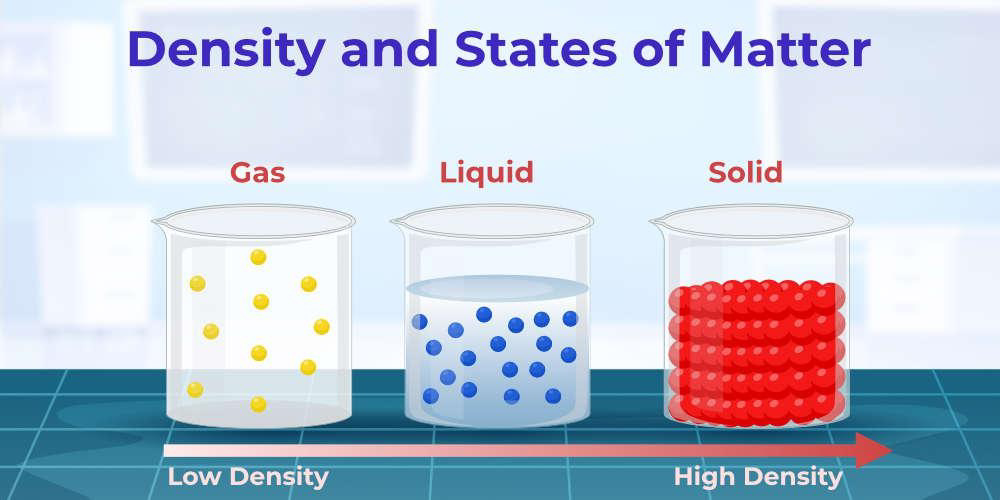
Table 1.
Liquid Sample | Mass (g) | Volume (mL) | Density (g/mL) | Object Behavior |
|---|
Liquid A | 100 | 100 | 1 | Suspended |
Liquid B | 120 | 100 | 1.2 | Floats |
Liquid C | 90 | 100 | 0.9 | Sinks |
Graph of Information - Figure 1.
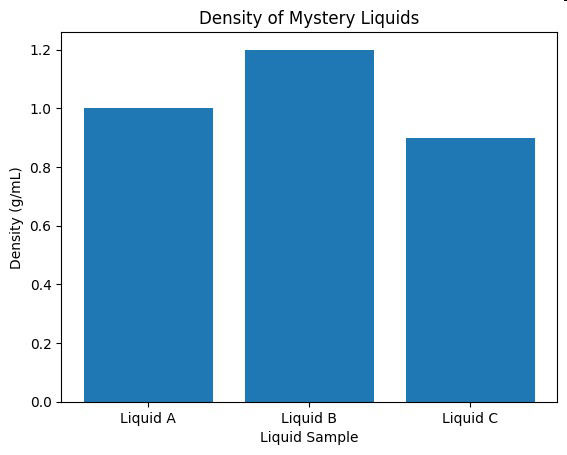
Graph of Information - Figure 2.