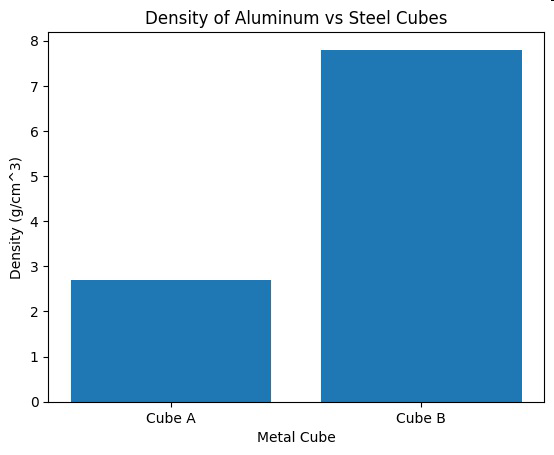
Aluminum vs Steel Cubes
Diagram 1.
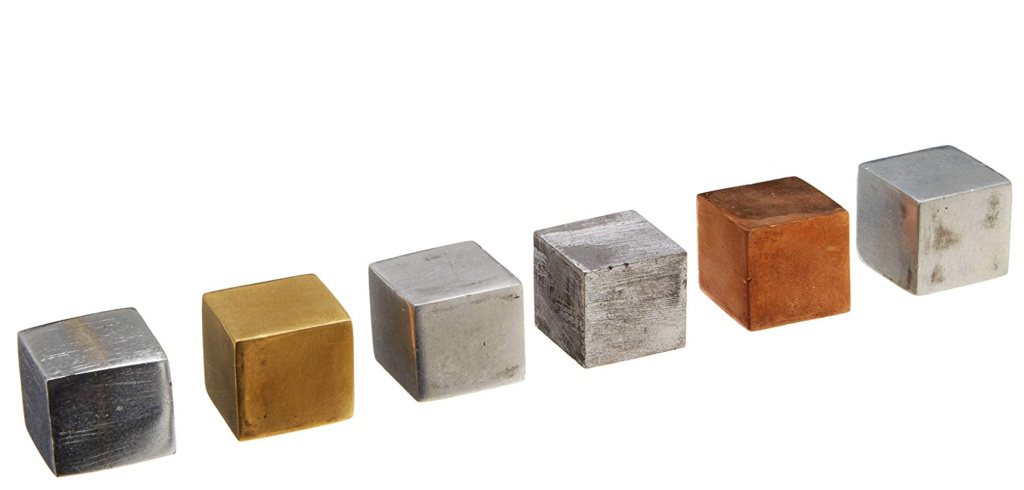
Source: https://stemlibrarylab.myturrn.com/library/inventory/show/203950
Real-World Phenomenon
Two metal cubes are exactly the same size and shape. When students hold them, one cube feels much heavier than the other. Even though the cubes look identical, scientists can identify which metal each cube is by measuring mass, calculating density, and using evidence to determine the material.
Density is a physical property that describes how much mass is packed into a given volume. It is calculated by dividing mass by volume. Because density does not depend on the amount of material present, it is called a characteristic property. This makes density useful for identifying unknown samples of matter.
Metals often look similar, especially when they are shaped the same way. Aluminum and steel, for example, can both appear shiny and silver-colored. However, their densities are very different because their atoms have different masses and are packed differently.
When two objects have the same volume, the one with greater mass has a higher density. This is why one cube feels heavier even though it is the same size as the other. Aluminum has a relatively low density, while steel has a much higher density. By measuring mass and knowing the volume of each cube, scientists can calculate density and identify the material.
This method works even if the objects are small, large, or shaped differently. As long as mass and volume are known, density can be calculated and compared to known values. Using numerical evidence rather than appearance allows scientists to accurately identify materials.
Density provides a reliable way to distinguish between substances that look the same but are made of different kinds of matter.
Diagram 2.
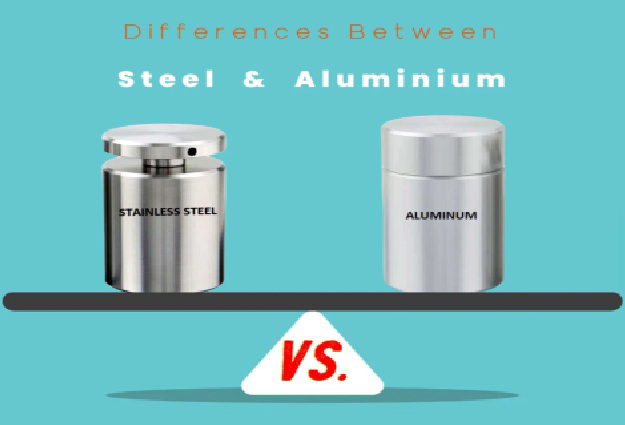 Source:
https://difbetween.com/aluminium-vs-steel.p24960/
Table 1.
Metal Cube | Mass (g) | Volume (cm3) | Density (g/cm3) | Identified Material |
|---|
Cube A | 27 | 10 | 2.7 | Aluminum |
Cube B | 78 | 10 | 7.8 | Steel |
Graph of Information - Figure 1.
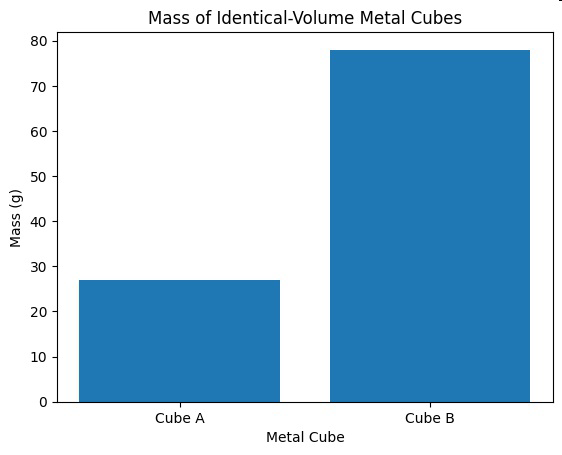
Graph of Information - Figure 2.