Synthetic Fertilizers and Modern Food Production
Diagram 1.
 Source: https://www.fertilizerseurope.com/decarbonising-fertilizers-by-2050/
Diagram 2.
 Source:
https://jp.pinterest.com/pin/organic-and-synthetic-fertilizers-with-explained-differences-outline-diagram--913386368162131796/
Real-World Phenomenon
Farmers today can grow much larger amounts of food on the same land than farmers did in the past. One major reason is the use of synthetic fertilizers. These fertilizers are manufactured in factories but begin with natural resources taken from the Earth. Their use has helped feed more people, while also creating environmental challenges.
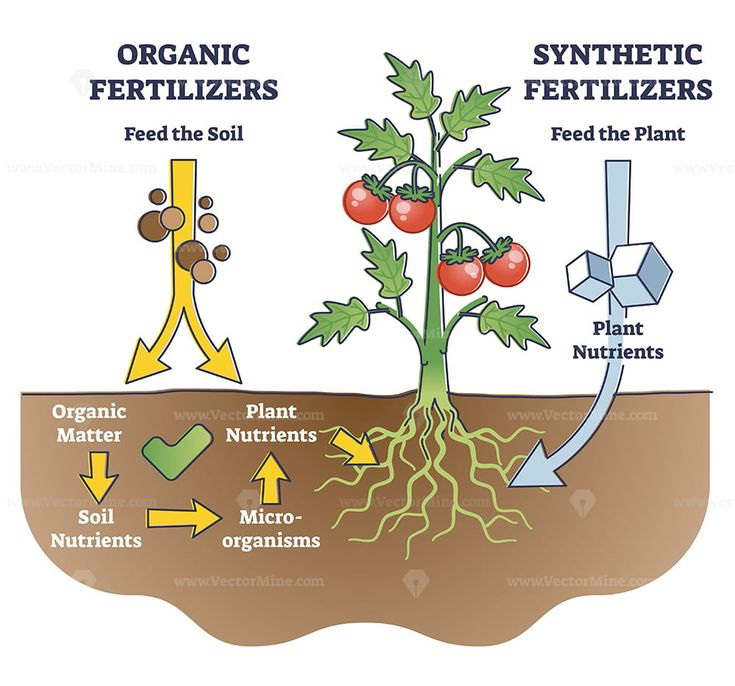
Plants need nutrients to grow, especially nitrogen. Nitrogen is abundant in the air, but most plants cannot use it directly. In the past, farmers relied on natural sources of nitrogen such as animal manure or compost. Today, many farms use synthetic nitrogen fertilizers instead.
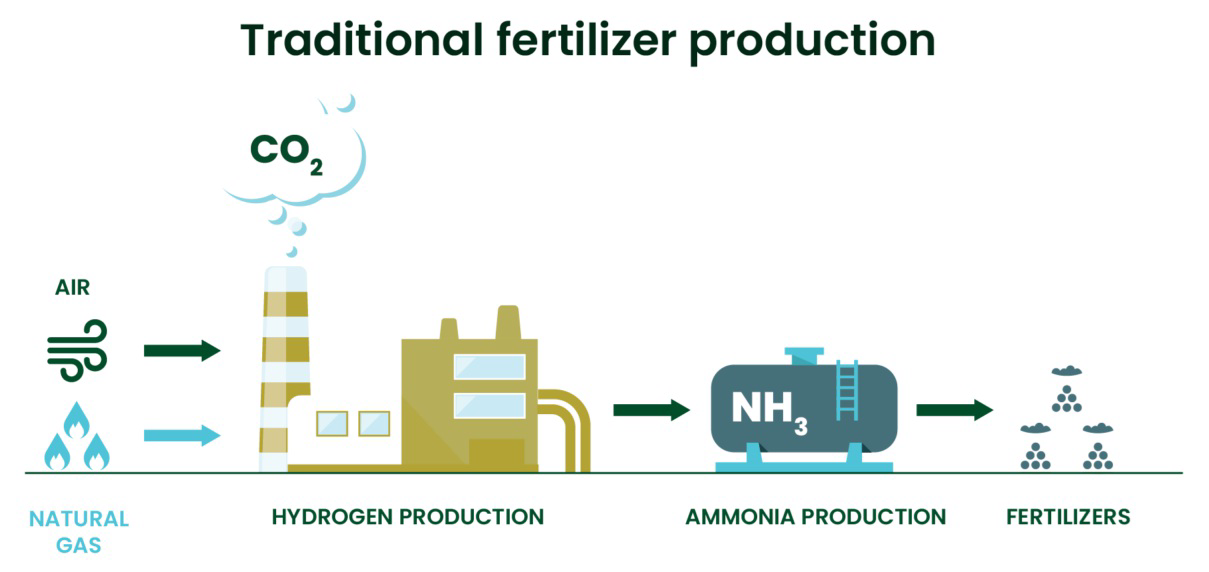
Synthetic fertilizers are produced using natural gas, a fossil fuel extracted from underground. Natural gas provides the energy and hydrogen needed to convert nitrogen gas from the air into ammonia, a nitrogen-rich compound. This industrial process allows large amounts of fertilizer to be produced efficiently. Although the fertilizer itself is synthetic, it originates from natural resources.
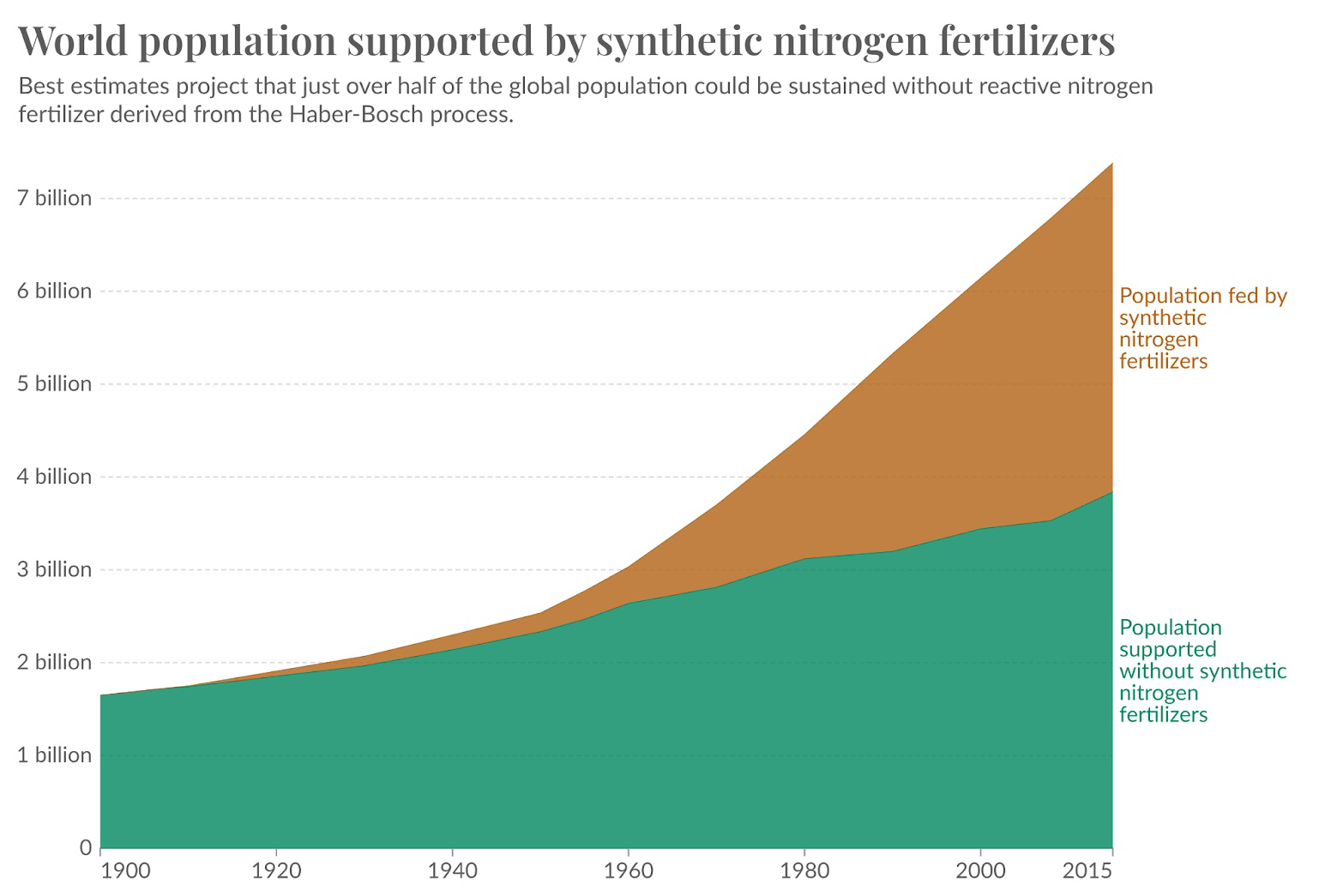
Using synthetic fertilizers has greatly increased crop yields. Plants grow faster and produce more grain, fruits, or vegetables when nitrogen is readily available. This has helped increase the global food supply and support growing human populations.
However, synthetic fertilizers also affect society in negative ways. When too much fertilizer is applied, excess nitrogen can wash into rivers and lakes. This runoff can cause algae to grow rapidly, reducing oxygen levels in the water and harming fish and other organisms. Fertilizer production also uses energy and contributes to greenhouse gas emissions.
Scientists study both the benefits and impacts of synthetic fertilizers so society can make informed decisions. By tracing fertilizers back to their natural resource origins and examining their effects, students can better understand how synthetic materials shape food systems and environmental health.
Table 1.
Resource | Source | Role in Fertilizer Production |
|---|---|---|
Natural Gas | Underground reservoirs | Provides energy and hydrogen for ammonia production |
Atmospheric Nitrogen | Air | Provides nitrogen used to make ammonia |
Graph of Information - Figure 1.
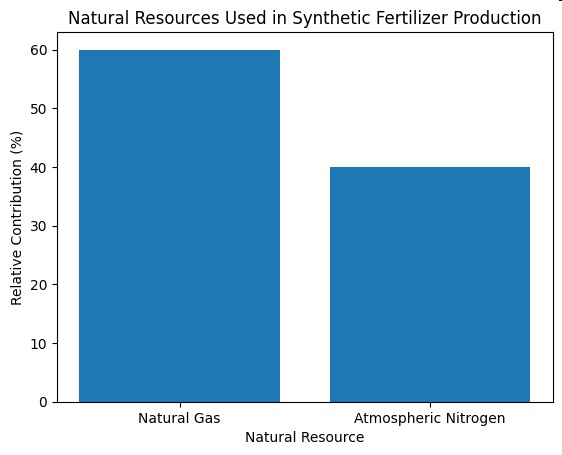
Table 2.
Impact Category | Benefit or Challenge | Relative Impact Level |
|---|---|---|
Crop Yield Increase | Benefit | High |
Food Supply Stability | Benefit | High |
Water Pollution Risk | Challenge | High |
Energy Use | Challenge | Medium |
Graph of Information - Figure 2.
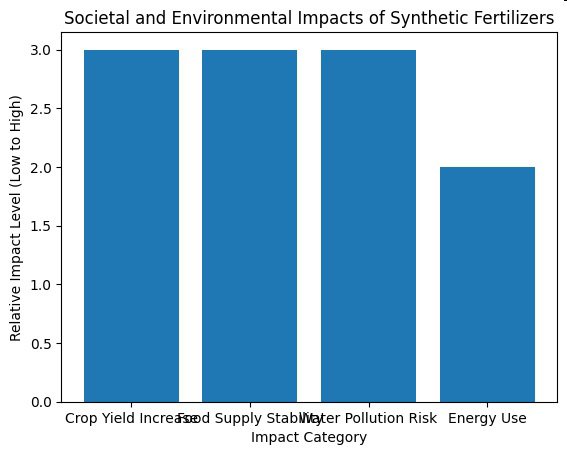
Diagram 3.
 Source:
https://2024.igem.wiki/msp-maastricht/description.html