Real-World Phenomenon
Two bags of trail mix look similar, but one has mostly raisins while the other has mostly peanuts and chocolate pieces. Even though the ingredients are the same types of substances, the amount of each substance can be different. Students can investigate trail mix by separating and measuring the parts to show that mixtures are combinations of substances.
A mixture is made when two or more substances are combined physically, but no new substance is created. In a mixture, each substance keeps its own properties. This means the parts of a mixture can often be separated using simple physical methods such as sorting, filtering, or evaporating.
Trail mix is a familiar example of a mixture. It contains different substances, such as peanuts, raisins, and chocolate candies, combined in one bag. Even though the ingredients are mixed together, each ingredient is still the same substance it was before mixing. A peanut in trail mix still looks and feels like a peanut. A raisin is still a raisin. The substances have not changed into something new.
Because the substances in a mixture keep their properties, mixtures can be separated. One way to separate trail mix is to sort the pieces by type. If students separate the pieces and count them or measure their mass, they can collect evidence that the trail mix is made of multiple substances combined together.
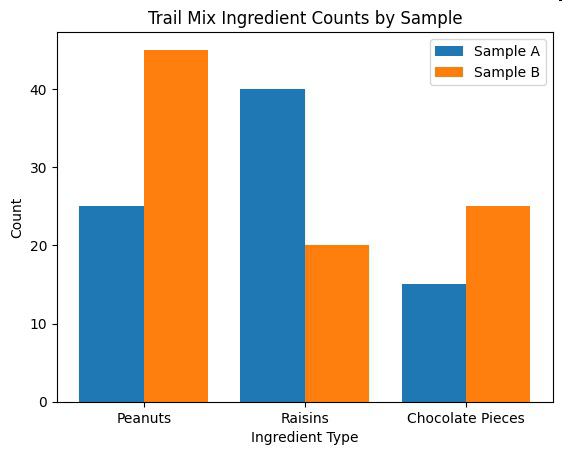
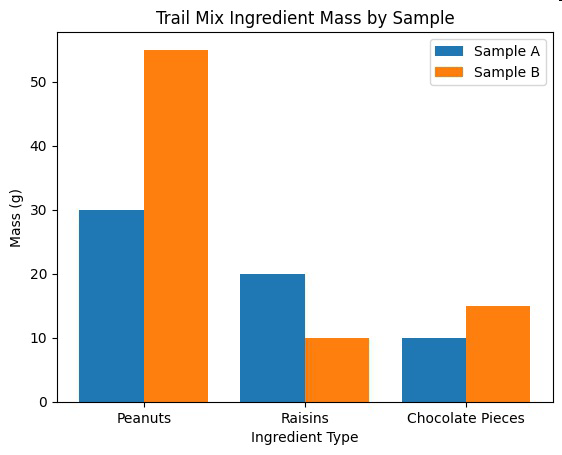
Different trail mix brands (or different batches) can also have different ratios of ingredients. That means two trail mixes can contain the same substances but in different amounts. Measuring the mass or number of each ingredient helps show that a mixture is not a single uniform substance, but a combination of substances that can vary.
By planning and conducting a simple investigation, students can demonstrate that trail mix is a mixture: it contains multiple substances, the substances keep their properties, and the parts can be separated and measured.
Table 1.
Ingredient Type | Sample A Count | Sample B Count | Sample A Mass (g) | Sample B Mass (g) |
|---|
Peanuts | 25 | 45 | 30 | 55 |
Raisins | 40 | 20 | 20 | 10 |
Chocolate Pieces | 15 | 25 | 10 | 15 |
Graph of Information - Figure 1.
Graph of Information - Figure 2.
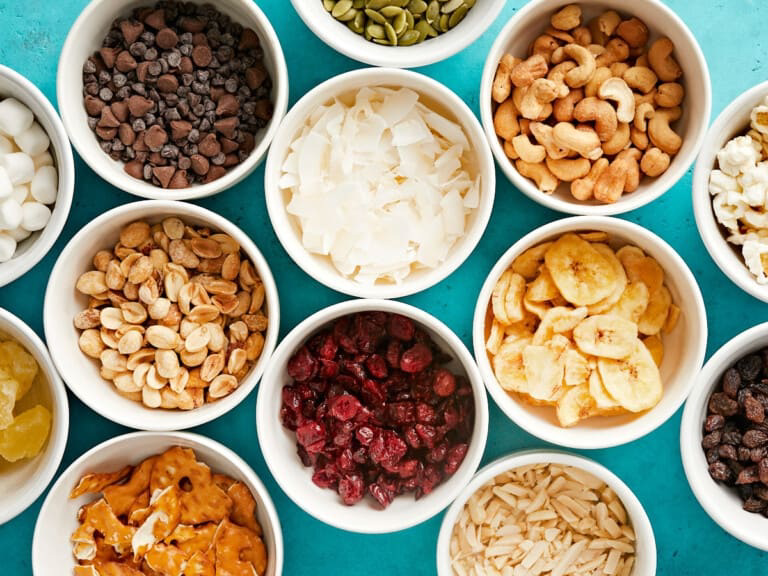 Source: https://www.budgetbytes.com/trail-mix/
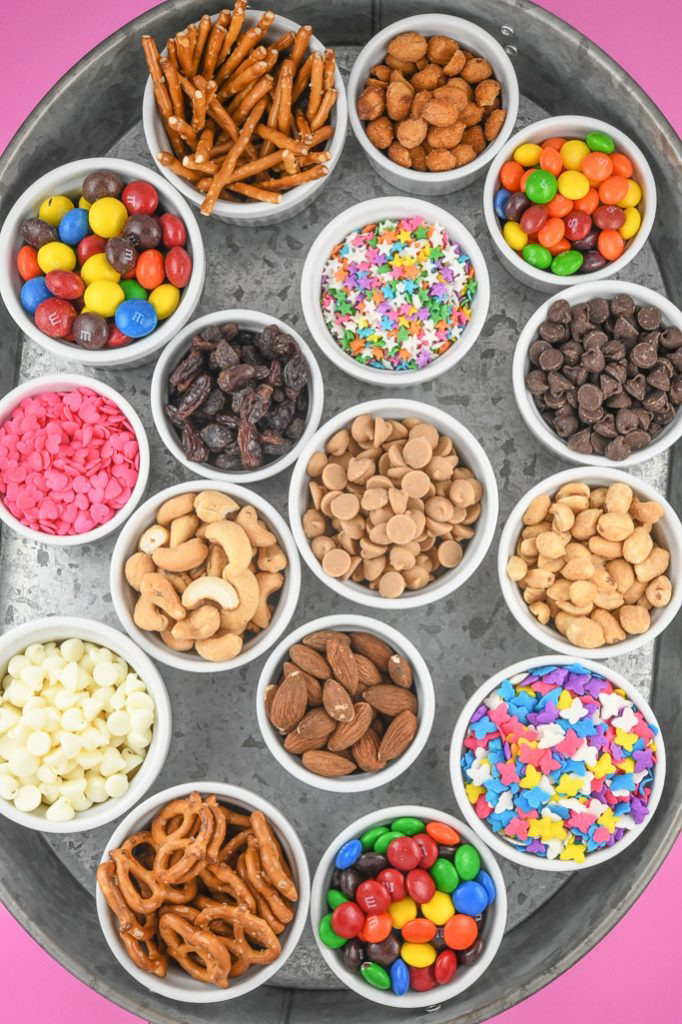 Source: https://blog.shopsweetsandtreats.com/homemade-trail-mix-recipe-sprinkles/