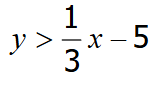
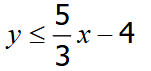
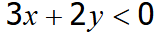
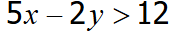
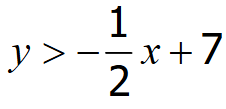
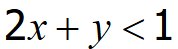
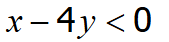
Essential Question: What are linear inequalties and how are they related to linear equations?
Learning Target: Students will be able to apply their existing knowledge of graphing linear equations to graph linear inequations and use them to represent real world examples.
Complete the entire document and use full sentences when prompted for full credit.
Responses without work will receive no points.
Remember to upload work from paper when prompted to receive credit.
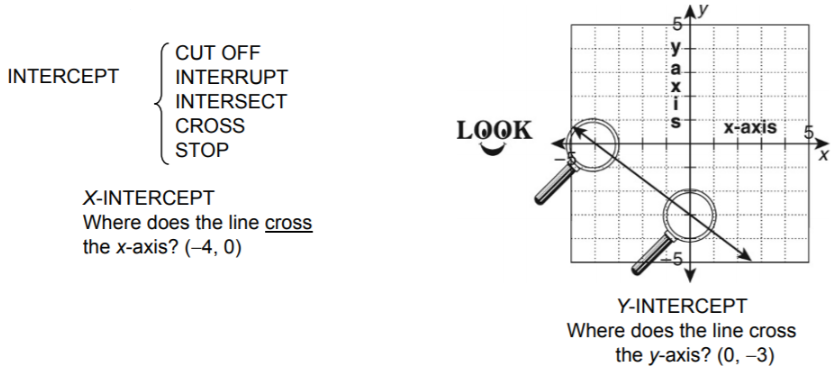
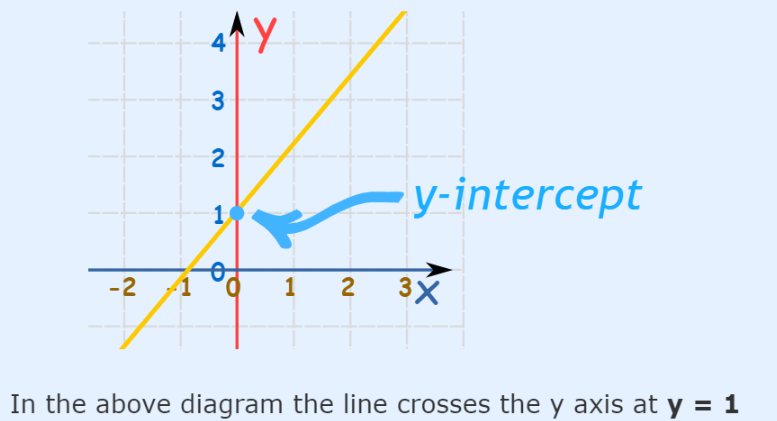
The point where the line crosses the y-axis is called the .
The point where the line crosses the y-axis is also called the .


Directions: Graph each equation using slope intercept-form.
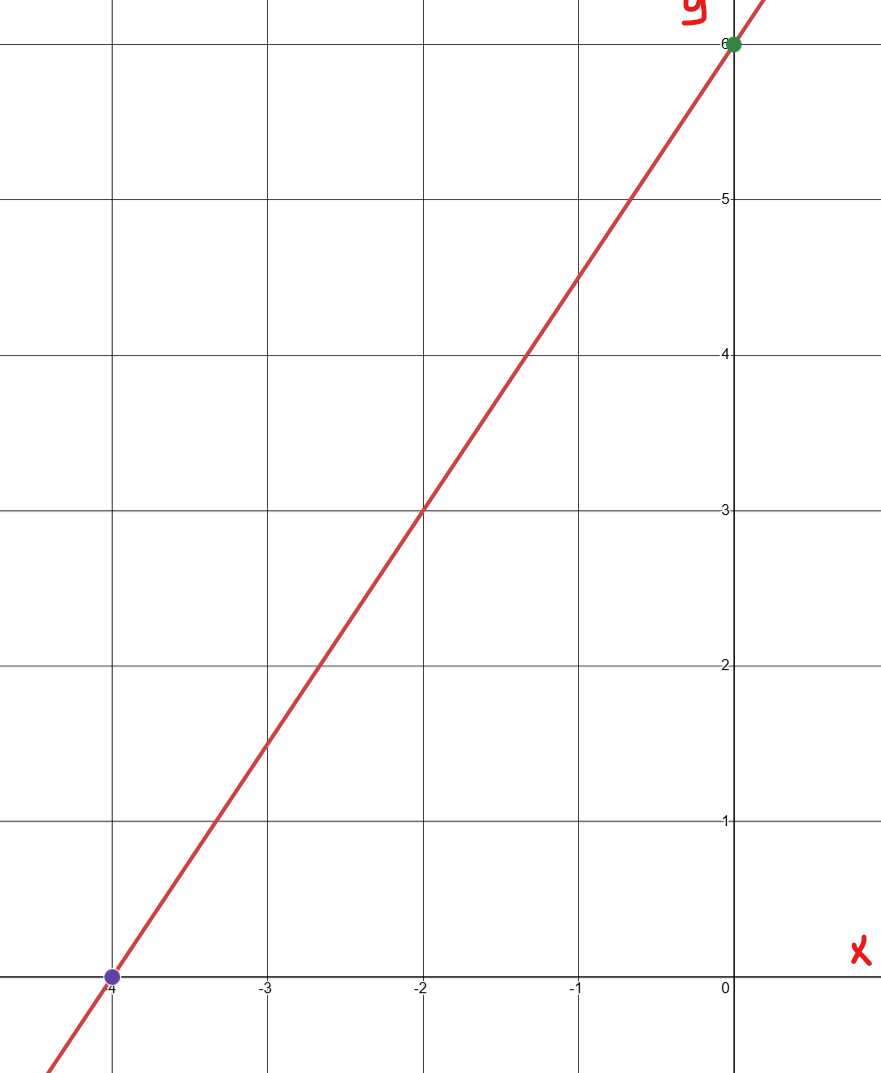
x-intercept (-4,0) and y-intercept (0,6)
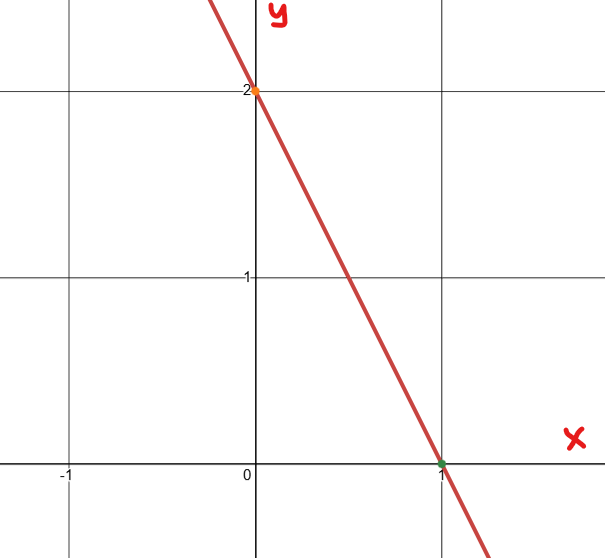
x-intercept (1,0) and y-intercept (0,2)
3x - 2y = -12
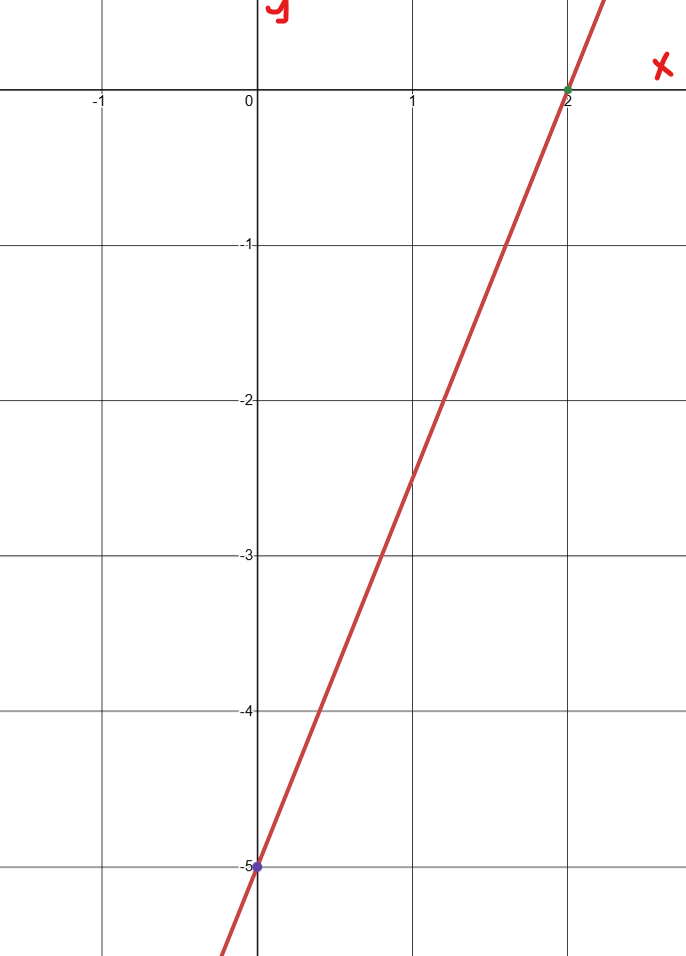
5x - 2y = 10
x-intercept (2,0) and y-intercept (-5,0)
4x + 2y = 4


Use x and y-intercepts of this linear equation to graph it.
What type of line will each Linear Inequality have?


Graph Will Have a Solid Line
Graph Will Have a Dashed Line
Use the point (3,6) to see if it makes the following linear inequality true or false:

After evaluating the linear inequality at that point it makes the linear inequality
Use the point (-6,8) to see if it makes the following linear inequality true or false:

After evaluating the linear inequality at that point it makes the linear inequality
Use the point (1,0) to see if it makes the following linear inequality true or false:

After evaluating the linear inequality at that point it makes the linear inequality
Use the point (0,0) to see if it makes the following linear inequality true or false:

After evaluating the linear inequality at that point it makes the linear inequality
When you are trying to figure out where to shade a linear inequality, use the point, if that point is on the line pick another easy point liketo find out where to shade the linear inequality.
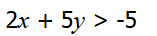
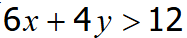
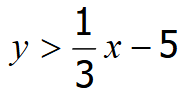
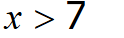
Directions: Graph this Linear Inequality. (Remember to shaded the correct area.)

This line will have a line.
Using the point (0,0) makes this inequality
So this means you will shade the line.
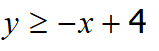
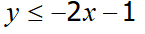
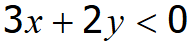
Directions: Graph this Linear Inequality. (Remember to shaded the correct area.)

This line will have a line.
Using the point (0,0) makes this inequality
So this means you will shade the line.
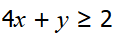
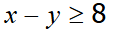
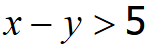
Directions: Graph this Linear Inequality. (Remember to shaded the correct area.)

This line will have a line.
Using the point (0,0) makes this inequality
So this means you will shade the line.
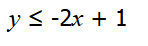
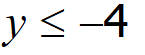
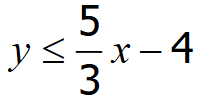
Directions: Graph this Linear Inequality. (Remember to shaded the correct area.)

This line will have a line.
Using the point (0,0) makes this inequality
So this means you will shade the line.
Directions: Graph this Linear Inequality. (Remember to shaded the correct area.)

This line will have a line.
Using the point (0,0) makes this inequality
So this means you will shade the line.
Directions: Graph this Linear Inequality. (Remember to shaded the correct area.)

This line will have a line.
Using the point (0,0) makes this inequality
So this means you will shade the line.
**Directions: Graph this Linear Inequality. (Remember to shaded the correct area.)

This line will have a line.
Using the point (0,0) makes this inequality
So this means you will shade the line.
Directions: Graph this Linear Inequality. (Remember to shaded the correct area.)

This line will have a line.
Using the point (0,0) makes this inequality
So this means you will shade the line.
Directions: Graph this Linear Inequality. (Remember to shaded the correct area.)

This line will have a line.
Using the point (0,0) makes this inequality
So this means you will shade the line.
Directions: Graph this Linear Inequality. (Remember to shaded the correct area.)

This line will have a line.
Using the point (0,0) makes this inequality
So this means you will shade the line.
Directions: Graph this Linear Inequality. (Remember to shaded the correct area.)

This line will have a line.
Using the point (0,0) makes this inequality
So this means you will shade the line.
Directions: Graph this Linear Inequality. (Remember to shaded the correct area.)

This line will have a line.
Using the point (0,0) makes this inequality
So this means you will shade the line.
Directions: Graph this Linear Inequality. (Remember to shaded the correct area.)
This line will have a line.
Using the point (0,0) makes this inequality
So this means you will shade the line.
Directions: Graph this Linear Inequality. (Remember to shaded the correct area.)
This line will have a line.
Using the point (0,0) makes this inequality
So this means you will shade the line.
Directions: Graph this Linear Inequality. (Remember to shaded the correct area.)

This line will have a line.
Using the point (0,0) makes this inequality
So this means you will shade the line.
Directions: Graph this Linear Inequality. (Remember to shaded the correct area.)

This line will have a line.
Using the point (0,0) makes this inequality
So this means you will shade the line.
Directions: Graph this Linear Inequality. (Remember to shaded the correct area.)

This line will have a line.
Using the point (0,0) makes this inequality
So this means you will shade the line.
Essential Question:
What was the Essential Question of this assignment?
(Use complete sentences for full credit)
Learning Outcomes
Why do you pick the point (0,0) to find out where to shade when you graph a linear inequality?
(Use complete sentences for full credit)
Learning Outcomes
Why does picking (0,0) sometimes not work when deciding where to shade the linear inequaltiy?
(Use complete sentences for full credit)
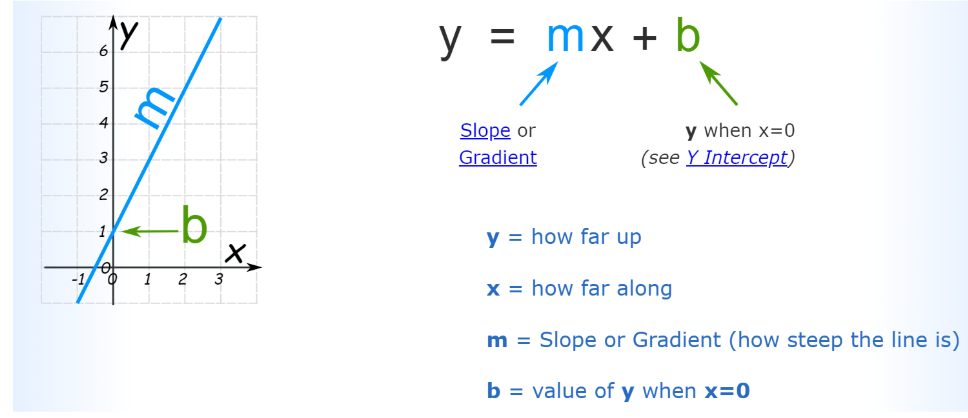
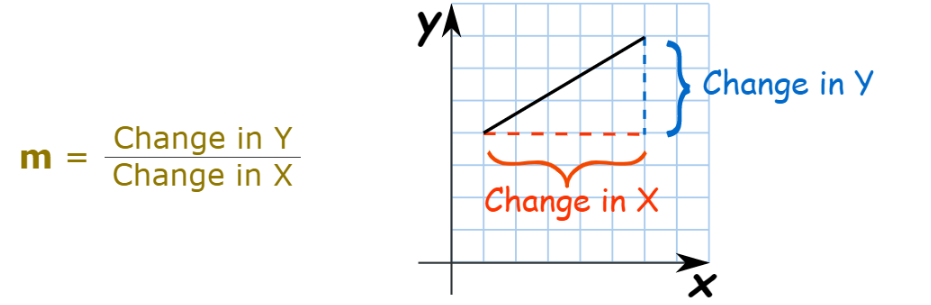
The slope of a line is the ratio of over . Another name for slope is .
Write the equation in slope intercept form with the given information:
y = m x + b
y=x
Write the equation in slope intercept form with the given information:
y = m x + b
y=x
Write the equation in slope intercept form with the given information:
1 Question I have.
1 question I have is...
(Must be a question)
OR
What was the hardest part of the assignment?