|
Satellite imagery of China. Notice the desert and mountains to the north and west as well as the green plains to the east, where China’s major rivers run to the sea. |
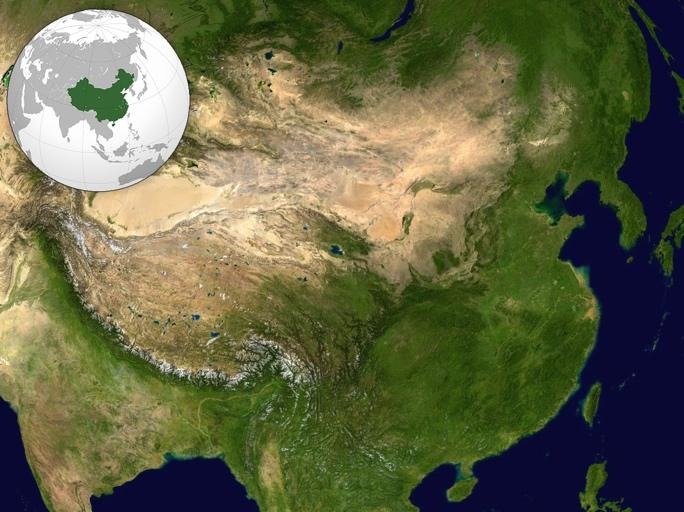
China is a huge country. It is about the size of all of Europe. In the eastern part of China, there is a large fertile plain that surrounds two rivers: the Yangtze and the Yellow River. This fertile plain was very important to the rise of China. In ancient times, it made farming and the rise of big cities possible.
Dynasty: A series of rulers from the same family, where power is passed down from parent to child. |
For about 4,000 years, from 2070 BCE to 1912 CE, China was ruled by dynasties of emperors. A dynasty is a series of rulers who all come from the same family. Between dynasties, there were often long periods during which China was divided into many smaller states. These states fought against each other. The years from 481 to 221 BCE are called the Warring States period. The short-lived Qin Dynasty (221–206 BCE) united China after this time of war. It was followed by
What surrounds the Yangtze and Yellow Rivers in eastern China?
What is a dynasty?
What was the time called when China was divided into states?
What united China after the Warring States period?
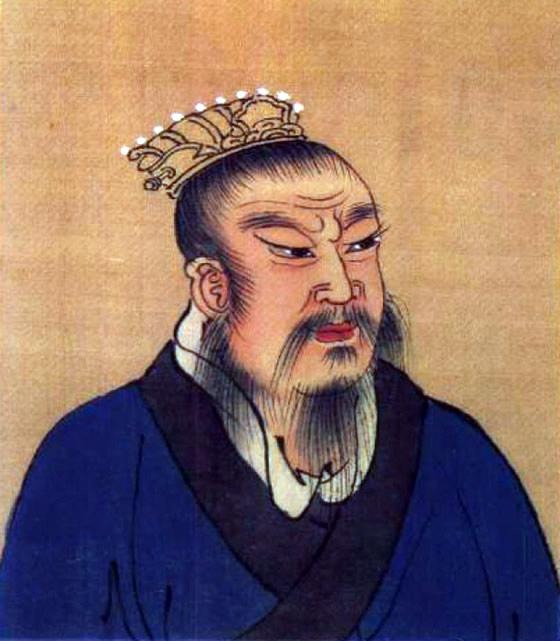
the Han Dynasty (202 BCE–220 CE). The Han Dynasty reunified China and ruled for about four centuries. The first Han Dynasty emperor was Liu Bang. He reigned from 202 to 195 BCE.

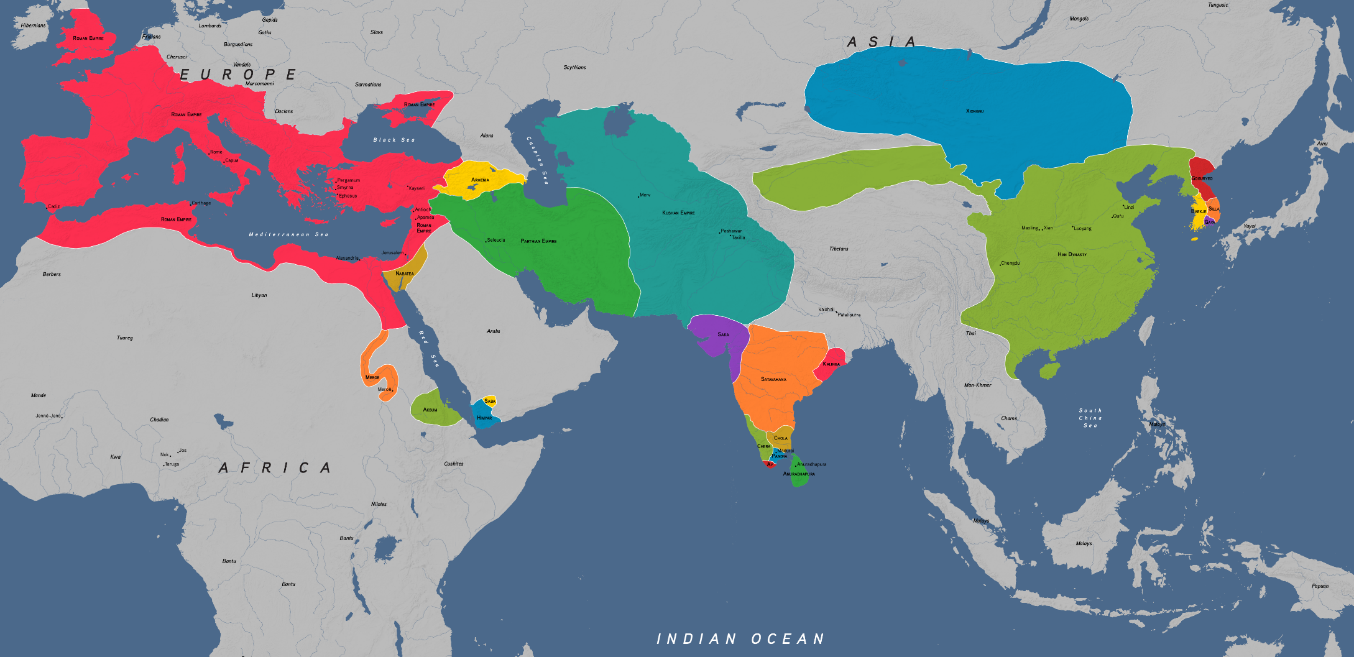
A map of Afro-Eurasia around 100 CE. Han China appears in green on the far right, and the Roman Empire is shown in red on the far left. Explore the full map here.
|
A depiction of Liu Bang, the founder of the Han Dynasty. |
The Han Dynasty ruled a region that was well-suited for farming. The two river valleys produced rich farmland. This supported the growth of a large population. However, periods of drought sometimes led to food shortages. And widespread hunger led to unrest.
To prevent unrest, Han Dynasty rulers built canals and other irrigation systems. These systems delivered water to China’s farms.
Who was the first emperor of the Han Dynasty?
What was a major natural challenge for Han China?
What type of systems did Han rulers build for farms?
From Liu Bang onward, China was ruled by an emperor. Emperors were believed to have received the right to rule from the gods themselves. This right was known as the Mandate of Heaven. However, when a ruler was unsuccessful or cruel, some people would claim he had lost the Mandate. That meant they could rebel against him, they said.
|
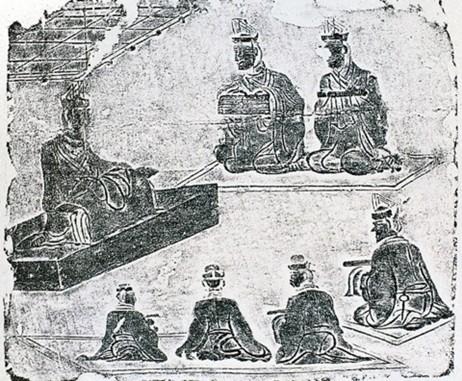
Han Dynasty scholars, who served in government. |
Emperors often used belief systems to support their claim to power. Confucianism was one such system. Confucianism is based on the teachings of a man named Confucius. It claims that to create a peaceful society, you must focus on proper behavior and education. Confucianism teaches that people should obey authority—both their parents and the emperor. These ideas helped the emperors rule.
Bureaucracy: A system of government where many trained officials are organized into departments to help run the country. |
The Han Dynasty had a bigger and better bureaucracy than any other state at the time. A bureaucracy is a system of government in which many officials and workers are organized into different government departments. Government officials are known as bureaucrats. In Han China, they earned their positions by studying Confucian ideas about government. They had to pass a test to get their job.
The bureaucracy collected taxes, enforced laws, and helped defend China from invaders. Some bureaucrats were judges. Others managed building projects. Governors were among the most powerful bureaucrats. They managed whole regions of China.
|
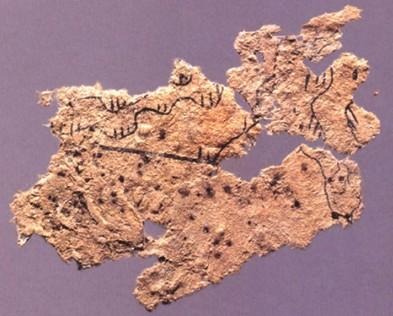
Very little original paper survives from the Han Dynasty. Most documents were recopied later. But this is a fragment of a map made 2,000 years ago. |
We know a lot about the Han Dynasty. One main reason is that paper was invented in China during this period. Paper made it easier to record and store information. Indeed, one of the first great historians, Sima Qian, wrote a history of China during the Han Dynasty years.
Confucianism was just one of several belief systems that shaped the Han Dynasty period. Another was Daoism. It taught people to live simply and in harmony with the Universe. But Daoism also taught that people should be free. That encouraged some people to rebel against emperors. Buddhism is yet another belief system that shaped Han China. It reached China during the Eastern Han period.
|
These three belief systems inspired many people. They led to the creation of a great deal of poetry, pottery, sculpture, and painting. But it was not just the arts that thrived during the Han period. There were great advances in technology too. Silk-making is just one example.
What is one example of a technological advancement from the Han Dynasty?
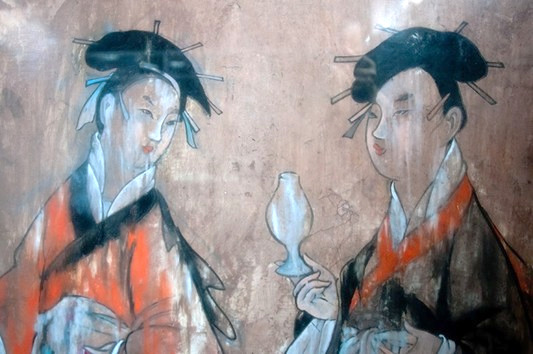
The Han Dynasty produced great culture. But most people couldn’t enjoy it. Only a few people were from powerful, educated families. Most people were peasant farmers. They couldn’t afford expensive silk clothing or art.
Virtuous: Being good, honest, and doing the right thing according to a society’s rules and customs. |
|
Two wealthy Han Dynasty women wearing silk robes. From a mural in a tomb. |
However, farmers were not looked down upon. Confucianism taught that they were important because they fed the country. There were also merchants. They were wealthier than peasants. However, they were often seen as being less virtuous. But merchants helped make China rich from trade and brought goods from far away. China also had many artisans. These were the people who made goods to sell.
The Han Dynasty ruled China for 400 years. For most of that time, China’s social system worked pretty well. Because of the exam system, government workers were well trained. If the emperor was wise, and if there was no invasion and no drought, nearly everyone could live a reasonably good life.
What did Confucianism teach about farmers?
Bandits: People who rob travelers, villages, or trade routes, especially in remote or dangerous areas. |
Unfortunately, the good times did not last forever. Late in the Han Dynasty, emperors began to tax farmers too heavily. They did this to pay for the emperor’s wars. Increasingly, people cheated on their government exams. Money-hungry bureaucrats allowed the rich to buy farmland. Peasant farmers were pushed off their land. Many became homeless. Others became bandits. Members of the royal family also began to fight for power. This broken system couldn’t deal with natural disasters, particularly flooding and drought. In 220 CE, the last Han emperor lost his throne. China then broke apart into three kingdoms, launching another period of disorder. But the Han Dynasty had set many great advances in motion. Later Chinese dynasties used these advances as an example and built upon them.
What factors contributed to the decline of the Han Dynasty during its later years?
What belief system did Han emperors use to support their power?
What is the role of bureaucrats in Han China?
How did a person become a bureaucrat in Han China?
What happens if a ruler is cruel or unsuccessful in Han China?
What was a major benefit of the exam system in the Han Dynasty?