Twa kɔ nsɛm atitiriw so
Log in
Sign up for FREE
arrow_back
Laabri

Week 4.4: A Little Different

star
star
star
star
star
Last updated about 2 hours ago
44 Nsɛmmisa
“Virginia's Wild Pony Islands” & Splashing with the Ponies on Pony Penning Day
Short Responses
Ɛhia
1
W.5.22.d
Ɛhia
1
W.5.23.a
Ɛhia
2
W.5.24.d
Ɛhia
2
W.5.28
Ɛhia
1
W.5.29
Ɛhia
2
L.5.38.e
Ɛhia
1
L.5.39.c
Ɛhia
1
L.5.39.e
Ɛhia
2
L.5.41.a
Ɛhia
1
L.5.42.c
Excerpt from Clara Barton
Coach Motivates Her Girls, Both On and Off the Court
Almost Human?

Click submit when finished with all questions and check your answers. You may not be able to make corrections at this time.

Ɛhia
1
Ɛhia
1
Ɛhia
2
RI.5.10
Ɛhia
1
Ɛhia
1
Ɛhia
1
L.5.42.a
Ɛhia
1
RI.5.15
Ɛhia
1
Ɛhia
1
Ɛhia
1
Ɛhia
1
Ɛhia
1
Ɛhia
1
Ɛhia
1
Asemmisa {{asɛmmisaAhyɛnsode}}
15.

Read the paragraph from a student's opinion paper on hobbies.

All kids should have a hobby. It's important to have something fun to do when you are not in school. If you don't have a hobby, what will you do when you get home from school and finish your homework? You can pick one thing you really like to do or even have several hobbies. For example, some kids play a sport as a hobby. Other kids might like to read or draw. Crafting and woodworking are also hobbies some enjoy.

Which sentence is the best conclusion for the paragraph?

Asemmisa {{asɛmmisaAhyɛnsode}}
16.

A student is writing an informational report about the Alabama River. Read the note the student took about the topic.

The Alabama River is an important route for barge traffic that delivers products to businesses.

Under which heading should the student include the note?

Asemmisa {{asɛmmisaAhyɛnsode}}
17.

Read the sentence. Choose the correct word from each drop-down menu to describe the experience most precisely.

As soon as the door opened, my younger sister Kim oak tree that stands in the backyard.

Asemmisa {{asɛmmisaAhyɛnsode}}
18.

A student plans to research ways to use waterpower. Move the two sources the student should use to best build knowledge about this topic into the chart.

  • a book about waterpowered inventions

  • an autobiography of an adventurous scientist living at sea

  • a newspaper opinion article about the expense of waterpower

  • a website about harnessing power from a flowing river

  • an online video of students controlling a battery-powered boat

  • Sources the Student Should Use

Asemmisa {{asɛmmisaAhyɛnsode}}
19.

A student is doing research on icebergs and is looking for reliable sources of information. The student reads the following paragraph from a source.

Icebergs are large pieces of ice that float in the ocean. They break away from glaciers or shelf ice and move with the ocean currents. To be considered a true iceberg, the piece of ice needs to be at least five feet across and sixteen feet above the water. Icebergs are most commonly found in the waters near Antarctica.

Which pair of notes best summarizes the types of information found in the paragraph?

Asemmisa {{asɛmmisaAhyɛnsode}}
20.

Use the drop-down menus to correctly complete the sentences.

the tiredness he was feeling in his legs would stop Juan from finishing the race. He could adjust his pace, but he was determined to keep going.

Asemmisa {{asɛmmisaAhyɛnsode}}
21.

Which sentence misuses a comma?

Asemmisa {{asɛmmisaAhyɛnsode}}
22.

Read the sentences.

Meredith and her dad had already begun eating their dessert when the doorbell interrupted them. Meredith's dad went to answer the door; it was their neighbor Ms. Lawlor. She had come to deliver their mail, which she had recieved by mistake.

Which revision corrects the spelling mistake?

Asemmisa {{asɛmmisaAhyɛnsode}}
23.

Read the sentences.

Ben and I have been sending letters and e-mails back and forth for years. However, other than the e-mail I sent on the first of this month, there has been no recent correspondence between us at all. I am hoping he will respond soon.

What does correspondence mean as it is used in the sentences? Choose two answers.

Asemmisa {{asɛmmisaAhyɛnsode}}
24.

Read the sentence

The soothing sound of the ocean's waves calms me when I stroll along the beach to search for seashells.

Which word in the sentence has nearly the same meaning as soothing?

Ɛhia
1
Ɛhia
1
Ɛhia
1
Ɛhia
1
Ɛhia
1
Ɛhia
1
Ɛhia
1
Ɛhia
1
Ɛhia
1
Ɛhia
1
Ɛhia
1
Ɛhia
1
Ɛhia
1
Ɛhia
1
Ɛhia
1
Ɛhia
1
Ɛhia
1
Ɛhia
1
Ɛhia
1
Ɛhia
1

Virginia’s Wild Pony Islands

Two barrier islands lie off the coast of Virginia. Chincoteague is just seven miles long. It nestles next to Assateague, which is 38 miles long. Assateague protects its little neighbor from the fury of Atlantic storms.

Chincoteague Island is home to a small resort town of the same name. Assateague Island has no homes or towns. Parts of these and other islands and shoreland make up the Chincoteague National Wildlife Refuge. This refuge includes 14,000 acres of beaches and provides habitat for birds, horseshoe crabs, and other wildlife.

There are many tourists. Every year, nearly 1.5 million people come to visit the refuge. They come to enjoy the white sands and dunes. They come to see the fish and crabs, and they come to watch for migratory birds.

But there is one sight every visitor must see—the wild ponies.

No one knows for sure how the ponies got to the islands. Ponies are not a native species. But they have been there for a very long time, perhaps 400 years. Legend says that they swam ashore from sinking Spanish galleons, or ships, that were shipwrecked near the islands during a storm.

Maybe people from the mainland put their animals on the deserted island. That way, they did not have to pay taxes on the animals. Over time, many of the animals became wild.

These days, the story of the ponies draws tourists to the islands. People come to stay in seaside hotels. They stay on the lookout for a glimpse of a mare with her foal. They hope to see a stallion galloping over the dunes. They want to see his mane flying in the wind.

The author Marguerite Henry was also fascinated by the ponies. She wrote the book Misty of Chincoteague in 1947 about a real pony named Misty. The book was made into a movie. Children everywhere fell in love with Misty and the island ponies and loved learning about Pony Penning Day.

Once a year, since about 1925, volunteer firefighters have continued the tradition of Pony Penning Day. On horseback, they round up the Assateague ponies. Including the foals, there are about 150 ponies. The firefighters herd the ponies into the water, and then the ponies swim across the channel to Chincoteague. It is a short swim, and it takes five or six minutes.

The “saltwater cowboys” then parade the ponies down Main Street and to the local fairgrounds. Forty or fifty thousand people show up every year to watch. This spectacle brings business to the town of Chincoteague.

The young ponies are sold at auction. People may pay from $375 to $17,500 for one pony. The ponies belong to the volunteer fire department, and the money raised by this auction goes to help the fire department with its annual expenses.

Some of the money is used to fund vaccinations and care for the wild ponies. The islanders want to keep the ponies healthy. They also want to keep the herd approximately the same size. They do not want too many ponies. The people plan to protect the island environment for many years to come.

Asemmisa {{asɛmmisaAhyɛnsode}}
1.

What is one main purpose of Assateague Island, according to Passage 1?

Asemmisa {{asɛmmisaAhyɛnsode}}
2.

What does Passage 1 suggest about how the ponies first arrived on the islands?

Asemmisa {{asɛmmisaAhyɛnsode}}
3.

Which excerpts from “Virginia's Wild Pony Islands” best support the idea that the wild ponies play an important role in supporting the community? Choose two answers.

Asemmisa {{asɛmmisaAhyɛnsode}}
4.

Which detail from Passage 2 shows that Pony Penning Day is carefully planned?

Asemmisa {{asɛmmisaAhyɛnsode}}
5.

Which detail from Passage 2 shows that the narrator has personal experience with Pony Penning Day?

Asemmisa {{asɛmmisaAhyɛnsode}}
6.

In “Splashing with the Ponies on Pony Penning Day,” why does the narrator state, “I'm a saltwater cowboy"?

Asemmisa {{asɛmmisaAhyɛnsode}}
7.

How are both passages similar in point of view?

Asemmisa {{asɛmmisaAhyɛnsode}}
8.

What role do the volunteer firefighters play in both passages?

Asemmisa {{asɛmmisaAhyɛnsode}}
9.

How are the ponies described differently in Passage 1 and Passage 2?

Asemmisa {{asɛmmisaAhyɛnsode}}
10.

How are the purposes of the two passages different?

Asemmisa {{asɛmmisaAhyɛnsode}}
11.

What does Passage 2 help the reader understand that Passage 1 does not?

Asemmisa {{asɛmmisaAhyɛnsode}}
12.

What tone is mostly used in Passage 2 but not in Passage 1?

Asemmisa {{asɛmmisaAhyɛnsode}}
13.

Which detail appears in both passages?

Asemmisa {{asɛmmisaAhyɛnsode}}
14.

What theme is shared by both passages?

In 1881, Clara Barton founded the American Red Cross, an organization that helps people during times of need.

Excerpt from Clara Barton

by Stephen Krensky

1. "I was what is known as a bashful child," Clara confessed in later years. This was not surprising considering that she was surrounded by her family and had little contact with strangers. But shyness was not considered a virtue. In the hope of correcting this deficiency, her parents decided to send her to a nearby boarding school. It was quite a change. At home, she had been the only student, learning from her brothers and sisters. Now there were 150 students filling several schoolrooms. And almost all of them were bigger and older than she was.

2. Clara was good at her studies, but speaking up with dozens of eyes staring at her was unnerving. She grew pale and lost weight. At the end of her first term, her parents, her teachers, and her family doctor held a meeting. They decided it would be best for Clara to return home.

3. But home had changed. Her family was moving down the hill to a 300-acre farm. The new house needed to be fixed, and Clara pitched in to help. Among other things, she learned how to hang wallpaper and make her own paints.

4. Some cousins came to live with the Bartons as well. Clara’s big sisters had stayed at the old house, which made the change feel even more dramatic. On the bright side, Clara’s cousins were closer to her own age. “From never having had any playmates, I now found myself one of a very lively body of six–three boys and three girls…”

5. Clara and her cousins explored the new farm thoroughly, learning the best spot to cross the streams and where to find the tastiest chestnuts. They played hide-and-seek and balanced on poles in the millstream. Clara’s parents, worried that she was becoming too much of a tomboy, forbade her from learning to ice skate. But it was a little late to rein Clara in now. She enlisted the boys to teach her secretly at night. They pulled her along, one on each side, which was fine, as long as the ice was smooth. But, as Clara remembered, “at length we reached a spot where the ice had been cracked and was full of sharp edges.” Here, she fell repeatedly, injuring herself seriously enough that her parents soon found out. They were not pleased, and Clara endured several weeks of their disappointment before life went on as before.

6. In warmer weather, she continued to practice riding– now with her own horse. Riding became second nature to her, and she remembered the skill well later in life. But not every advance was planned or predictable. In 1832, when she was 11, her brother David was helping to build a new family barn. He was working on the ridgepole1 when a plank snapped beneath him and he fell to the ground. At first he seemed to be largely unharmed by the accident, but his internal injuries turned out to be serious.

7. No one had to tell Clara what she should do next, and she didn’t need to ask. She simply knew it in herself. She took care of David day and night, rarely leaving his side. Ans he grew just as attached to her in return. Clara learned to administer his medicine and manage his treatment with great aplomb2. Among her many duties was applying the leeches that were supposed to suck the bad blood out of David’s body.

8. For two years, Clara tended to her brother, leaving him for only half a day in all that time. He recovered at last, no thanks to the leeches, due to rest and the ability of his body to heal over time.

9. Clara’s devotion was not unheard of in the Barton family. Her great aunt Martha Ballard, who died a few years before Clara’s birth, had been a well-respected midwife. She had delivered babies and treated illnesses across a wide swath of the wilderness of Maine. Caring for her brother had given Clara a special satisfaction. It was something she would always remember.

10. As delighted as Clara was to see David recover, she had trouble simply returning to a life of her own. The freedom to do as she pleased was no substitute for the feeling of usefulness she had felt nursing her brother back to health. She felt anxious and unsettled and cast about for some meaningful way to fill her time.

11. For the moment, she stayed busy doing chores around the farm and helping to look after her sister Sally’s children. As time passed, though, she roamed farther from home, coming to the aid of poor families in the nearby countryside. Some had illnesses that she tended to. Others had money troubles, and she tried to point these families in a direction where they could get assistance.

—

1 ridgepole: the horizontal beam that runs along the peak of a roof; the upper ends of the rafters are attached to it

2 aplomb: confidence and skill

Asemmisa {{asɛmmisaAhyɛnsode}}
25.

How do paragraphs 1 through 4 support a main idea of the article?

Asemmisa {{asɛmmisaAhyɛnsode}}
26.

Why did Clara return from boarding school?

Asemmisa {{asɛmmisaAhyɛnsode}}
27.

Why is paragraph 9 important for the article?

Asemmisa {{asɛmmisaAhyɛnsode}}
28.

Read this sentence from paragraph 5.

But it was a little late to rein Clara in now.

What does the phrase "to rein Clara in" suggest?

Asemmisa {{asɛmmisaAhyɛnsode}}
29.

What do paragraphs 5 and 6 show about Clara?

Asemmisa {{asɛmmisaAhyɛnsode}}
30.

How did Clara's relationship with her brother David most affect her life?

Asemmisa {{asɛmmisaAhyɛnsode}}
31.

Which detail would be most important to include in a summary of the article?

Coach Motivates Her Girls, Both On and Off the Court

by Martha Irvine

1. The coach leans forward, her hands pressed on a table in a room off the gymnasium. A basketball game is about to start. She is silent for a minute or two. Her players shift uncomfortably.

2. When Dorothy Gaters finally speaks, her message is familiar and firm. As usual, it's about fundamentals.

3. "Move your big feet." "Box out." "No fouls."

4. If they don't do that, she doesn't hesitate to take it up a notch on the court.

5. "You're embarrassing yourselves!" she tells them.

She is the same, even when they're winning handily.

6. Gaters later explains: "Sloppy play is never enjoyable. Sometimes I'll be like, 'I hope this game is over soon. I can go home and watch some real basketball.' "

7. The candor1 might be hard for the members of the girls' basketball team at John Marshall Metropolitan High School to hear. But they listen. They know this woman who can take them places.

8. For 40 years, Gaters has brought respect and pride to a West Side Chicago neighborhood that has seen more than its share of hard times. They understand this and also how much Gaters cares about them and their futures. And that's whether they end up playing basketball after high school or not.

9. "Just do something. So that you can be self-supportive, help your family, and set an example for those who are going to follow you," the coach tells her players. They call her Ms. Gaters or often just "G".

10. This current crop of players helped Gaters reach her 1,000 career win in November. The victory placed her among an elite group of coaches at any level of basketball.

11. Gaters' attention to detail and her competitiveness have led her teams to eight Illinois state titles and 23 city titles.

12. A few of her players have gone on to play professionally, including Cappie Pondexter, a WNBA All Star and Olympic gold medalist.

13. "She's the first coach who really taught me the game of basketball," says Pondexter, whom Gaters first saw play in a YMCA recreational league and then helped hone2 her talent. "I credit it all to her, my humble beginnings."

14. Pondexter started at Rutgers University, but she is far from the only Gaters helped get to college. And that is among the coach's proudest accomplishments.

15. In fact, her players must regularly bring in academic progress reports or report cards for her to check.

16. "School before basketball" says Tineesha Coleman, a junior who hopes to play in college.

17. When asked what Gaters is like, former player Rhonda Greyer, now 33, ponders that question.

18. "She's a sweetie pie," Greyer says, quickly adding, "Off the Court. OFF the court!"

19. She laughs, as does Pondexter when recalling the seemingly endless laps her team ran on the track above Marshall practice Gym 12. The gym has since been named for Gaters.

20. "I wasn't a troubled kid. My problem was focusing on basketball so much," Pondexter says, remembering how Gaters would call her mother if Pondexter skipped class. In her case, the punishment would be to lose gym time.

21. But though Gaters is tough, it is a tough love, her former players say. They recall a coach who occasionally took them to movies or out for burgers and fries.

22. They note how Gaters has quietly provided a coat, clothing or shoes for a player who needs them.

23. Gaters started coaching in 1975, and understands how one can learn and succeed, in big ways. The Mississippi native grew up in Chicago. She says she took on the Marshall girls' team, fresh out of the Depaul University, because "no one else wanted to do it."

24. Gaters liked basketball, even played a bit herself. But she didn't know much about coaching, so she watched the boys' coaches carefully and took in any games she could find.

25. She won her first state championship in 1982.

26. Now, tucked amid the memorabilia3 in her office is a photo of Gaters shaking the hand of President Bill Clinton at the White House. She was honored for her work with young people in 1998. Another photo shows her being inducted into the Women's Basketball Hall of Fame. In 2009, the Naismith Memorial Basketball Hall of Fame recognized Gaters with one of its lifetime achievement awards for high school coaches.

27. The 68-year-old coach says she thinks about retiring. But some are doubtful she'll leave anytime soon.

28. Assistant coach Gwen Howard smiles and rolls her eyes playfully at the thought of the coach retiring.

29. "Please! I think this last would do this forever if she could."

__

1candor: the quality of being open, sincere, and honest

2hone: make something better

3memorabilia: things collected as souvenirs

Asemmisa {{asɛmmisaAhyɛnsode}}
32.

What does "take it up a notch" mean as it is used in paragraph 4?

Asemmisa {{asɛmmisaAhyɛnsode}}
33.

Read this sentence from paragraph 7.

That candor might be hard for the members of the girls' basketball team at John Marshall Metropolitan High School to hear.

What idea does this sentence help to support?

Asemmisa {{asɛmmisaAhyɛnsode}}
34.

Read this sentence from paragraph 7.

They know this is a woman who can take them places.

How does the author best support this point?

Asemmisa {{asɛmmisaAhyɛnsode}}
35.

Read this sentence from paragraph 21.

But though Gaters is tough, it is a tough love, her former players say.

Which point in the article does this details best support?

Asemmisa {{asɛmmisaAhyɛnsode}}
36.

What does paragraph 26 suggest about Gaters?

Asemmisa {{asɛmmisaAhyɛnsode}}
37.

How do paragraphs 27 through 29 contribute to the article?

Asemmisa {{asɛmmisaAhyɛnsode}}
38.

According to the article, why do so many people respect Gaters?

Almost Human?

Robots become more and more like people.

In 2009, at Aizo Chuo Hospital in Japan, employees greeted newcomers, guided patients to and from the surgery area, and printed out maps of the hospital for confused visitors. They didn’t take lunch breaks or even get paid. Why? They were robots!
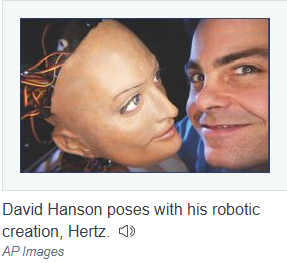
A robot is a machine that can complete complex tasks without human control. The child-sized machines at the hospital were just a few of the thousands of robots that helped people around the world that year.

Robots had long worked in factories, helping to build cars and electronic appliances. Some of today’s robots are a far cry from the clunky machines of the past. They don’t just do the jobs of people—they actually look and act a lot like people.

Robo-People

In around 2007, a robot from Japan named Kansei had a silicon face covering 19 movable parts. The robot could form up to 36 facial expressions in response to different words. Kansei quivered in fear at the word “war” and broke into a smile when it heard the word “sushi.”

Not long after Kansei, researchers in Europe went one step further with iCub, a “baby” robot. They taught it to speak and hold conversations.

The ability to interact is crucial, or necessary, for robots that would one day work closely with humans, says Chris Atkeson, a professor at the Robotics Institute at Carnegie Mellon University in Pennsylvania. “It is important for robots and all machines that interact with people to understand what you say and how you are feeling and respond with appropriate emotions,” he told WR News.

Japanese scientist Minoru Asada agrees. He built a robot called CB2 that acted like a real toddler. When he was building the robot, Asada said, “Right now, it only goes, ‘Ah, ah.’ But as we develop its learning function, we hope it can start saying more complex sentences and moving on its own will. Next-generation robots need to be able to learn and develop themselves.”

Helping Humans

Robot communication will allow the machines to help people more in the future, as the number of human workers declines in some countries. “We are going to have so many more old people and not enough young people to take care of them,” Matthew Mason, director of the Robotics Institute at Carnegie Mellon University, told WR News. “Technology can help the old people live at home longer, instead of going to nursing homes.”

That would be a big help in Japan, which has an aging population. Already, more than 370,000 robots work in Japanese factories. Other robots perform tasks such as planting rice and tending the country’s rice paddies. Japanese officials estimate that one robot can do the work of 10 human employees.

Aizo Chuo Hospital elderly patient Hiroshi Asami isn’t thrilled about the prospect, or possibility, of robot workers. “[The robot] just told us to get out of the way!” he exclaimed after almost running into one of the hospital’s robot workers. “It’s a robot. It’s the one that should get out of my way. I prefer dealing with real people.”

Robots That Rock

People have been trying to rev up robots for hundreds of years. Here’s a look at some of the most notable creations.
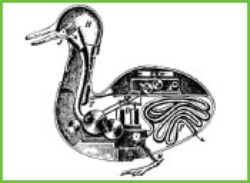
drawing of robotic duck1737: Quacky Invention
In 1737, French inventor Jacques de Vaucanson built a robotic duck that could flap its wings, paddle in water, and even eat grain.
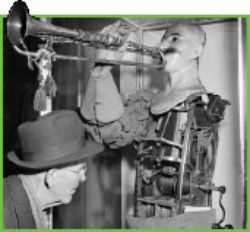
early robot playing a trumpet1810: Early Robot
Toot, toot! One of the first robots was a mechanical trumpet player. It is now in a museum in Germany.

robot arm1961: Strong Arm
The 4,000-pound robotic arm Unimate got its start welding car parts. Today, this kind of robot is among the most widely used industrial robots in the world.
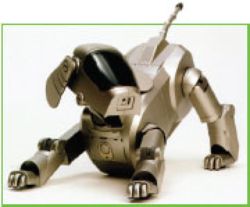
robot puppy

1999: Robo Pup
Forget fetching your own slippers—that’s what AIBO is for! Sony created the $2,000 robot dog in 1999 as a companion for people.
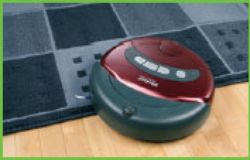
roomba2002: Cleaning Machine
One of the world’s most popular robots is Roomba, a robotic vacuum. Introduced in 2002, Roomba can clean a room all by itself, gliding over floors to pick up dirt.

mars rover2004: Space Pioneers
NASA has robots that are out of this world! Spirit and Opportunity are twin rovers that have been exploring Mars since 2004. They send valuable data back to Earth.

Asemmisa {{asɛmmisaAhyɛnsode}}
39.

According to the text, who greeted newcomers and guided patients to and from the surgery area at Aizo Chuo Hospital in 2009?

Asemmisa {{asɛmmisaAhyɛnsode}}
40.

This text is divided into sections with subheadings. What does the author list and describe in the section with the subheading "Robots That Rock"?

Asemmisa {{asɛmmisaAhyɛnsode}}
41.

Read these sentences from the text.

"Robots had long worked in factories, helping to build cars and electronic appliances. Some of today’s robots are a far cry from the clunky machines of the past. They don’t just do the jobs of people—they actually look and act a lot like people."

Based on this information, what can you conclude about robots today compared to robots of the past?

Asemmisa {{asɛmmisaAhyɛnsode}}
42.

Based on the text, what might a future generation of robots look and act like?

Asemmisa {{asɛmmisaAhyɛnsode}}
43.

What is the main idea of the text?

Asemmisa {{asɛmmisaAhyɛnsode}}
44.

Read these sentences from the text.

In around 2007, a robot from Japan named Kansei had a silicon face covering 19 movable parts. The robot could form up to 36 facial expressions in response to different words. Kansei quivered in fear at the word “war” and broke into a smile when it heard the word “sushi.”

As used in these sentences, what does the word “quivered” most closely mean?