Log in
Sign up for FREE
arrow_back
Library
Patterns in Evolution
By Annie Klentz
star
star
star
star
star
Share
share
Last updated 16 days ago
21 questions
Add this activity
zoom_in
zoom_in
1
1
1
zoom_in
1
Question 4
4.
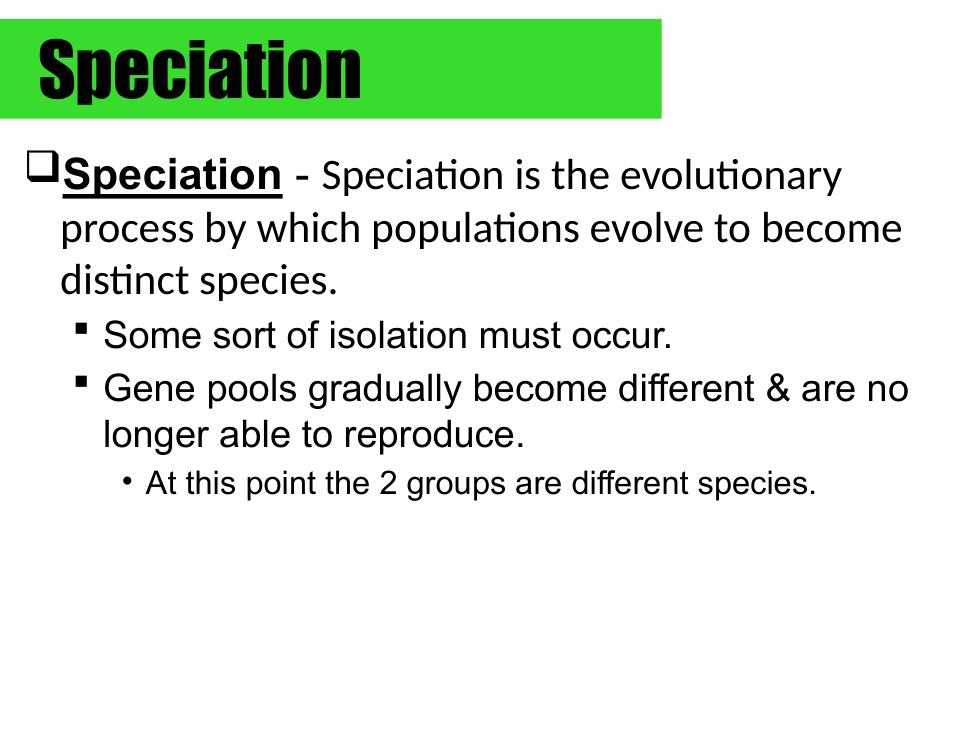
What is speciation?
The formation of new species over time.
The mixing of species.
The extinction of a species.
The migration of animals.
1
zoom_in
1
1
1
zoom_in
1
1
1
zoom_in
1
1
zoom_in
1
1
1
zoom_in
1
1
1
zoom_in
1
Question 20
20.
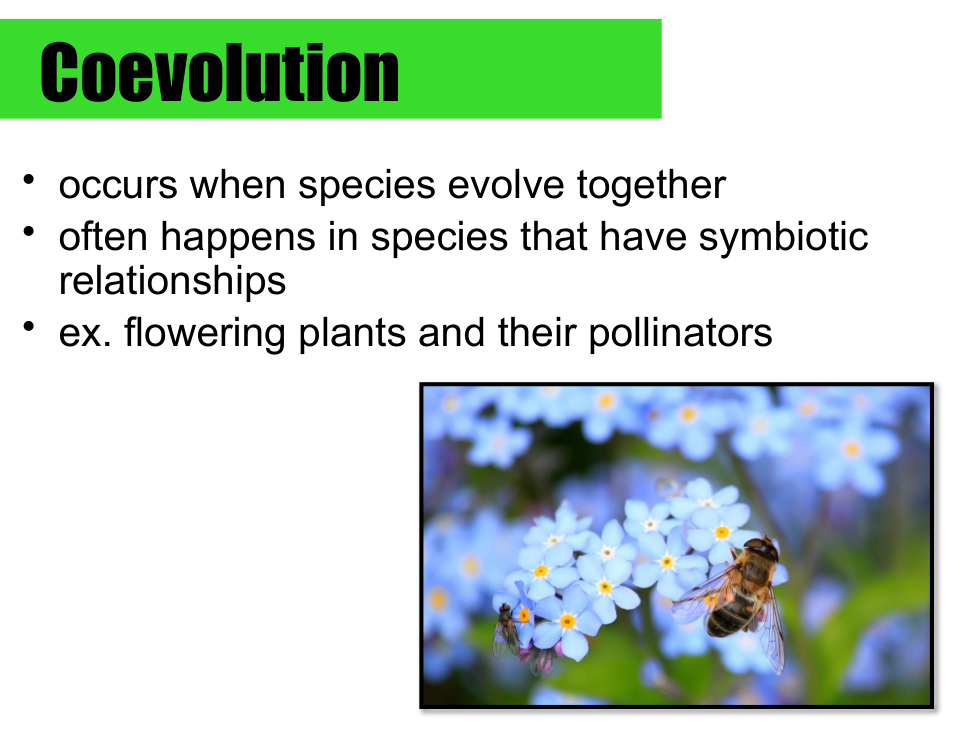
What is coevolution?
Species becoming extinct together.
Species evolving in isolation.
Species adapting individually.
Species evolving together.
1
Question 1
1.
What is speciation?
Random genetic mutations occur.
Process of populations evolving into distinct species.
Change in one species only.
Evolution of similar species.
Increase in population size.
Question 2
2.
What happens to gene pools during speciation?
They gradually become different and separate.
They always increase in size.
They only change due to disease.
They remain unchanged indefinitely.
They become identical over time.
Question 3
3.
At what point are two groups considered different species?
When they live in different habitats.
When they can no longer reproduce with each other.
When they look different physically.
When they eat different foods.
When they have different predators.
Question 5
5.
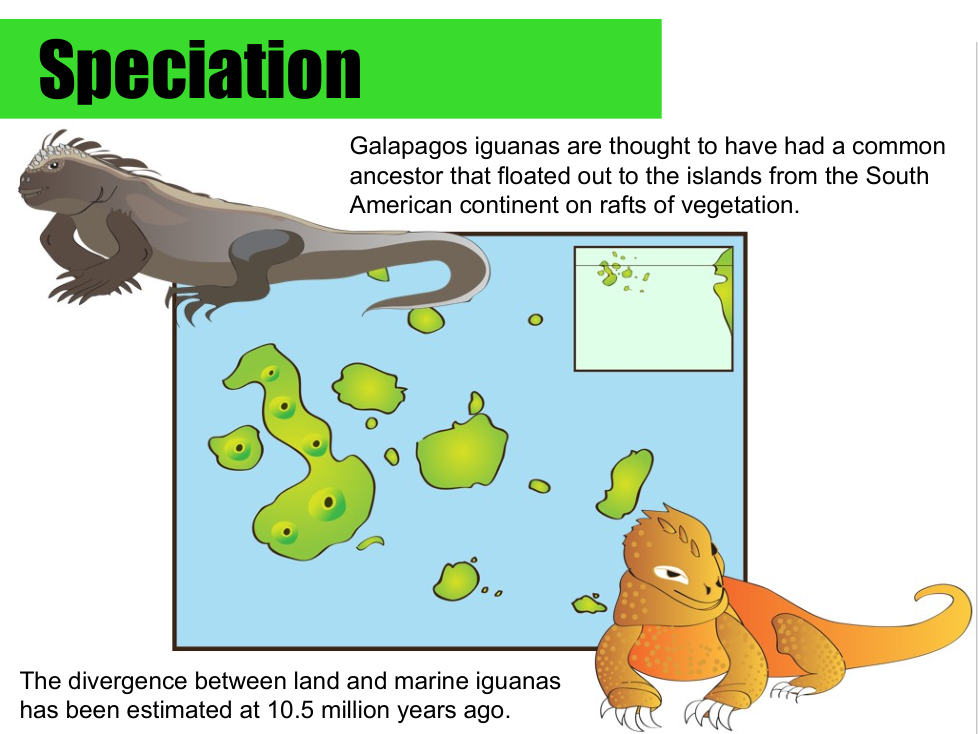
What type of evolution did the iguanas undergo?
Adaptive radiation resulting in different species.
Gradual extinction of old forms.
Convergent evolution into similar forms.
Artificial selection by humans.
Question 6
6.
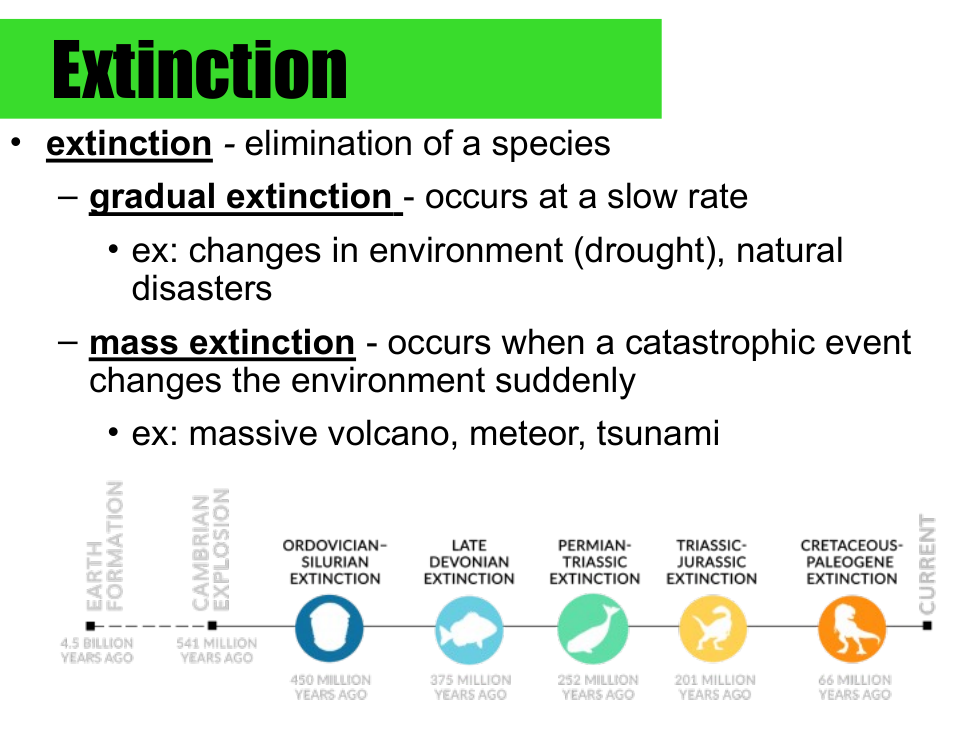
What is extinction?
Elimination of a species
Natural selection process
Change in habitat only
Increase in species population
Question 7
7.
What is mass extinction?
Loss of habitat gradually
Natural selection over time
Low species reproduction rates
Sudden loss of many species
Question 8
8.
What can lead to gradual extinction?
Changes in the environment
Global warming only
Meteor impacts
Immediate climate shifts
Question 9
9.
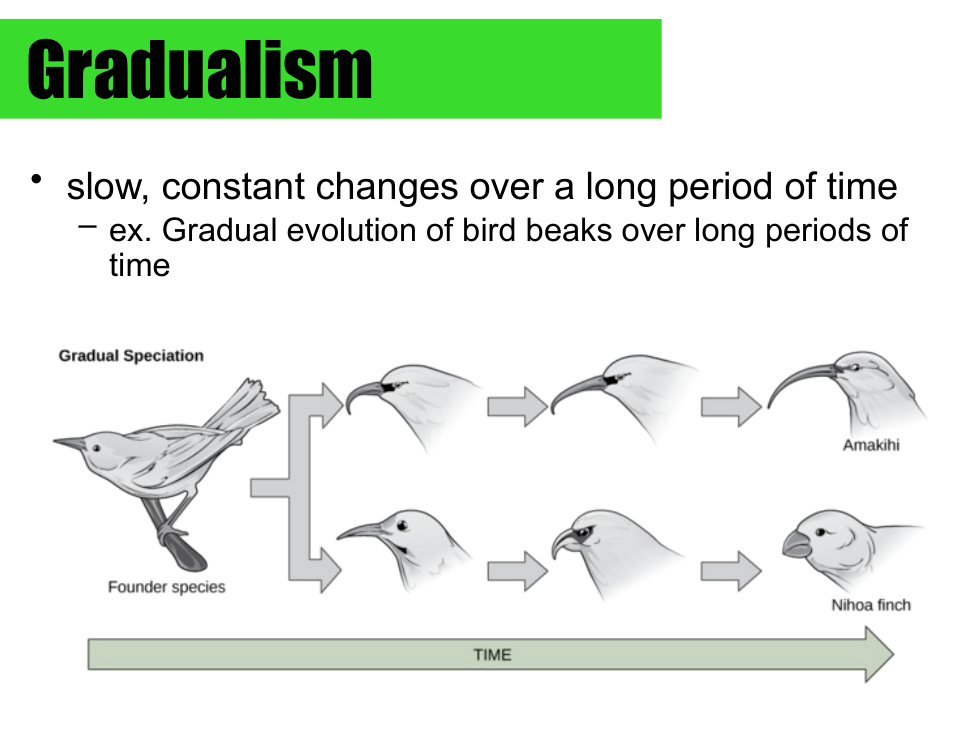
What is gradualism in evolution?
Slow, constant changes over time.
Rapid changes in species
No change in species over time
Sudden extinction of species
Question 10
10.
What is a key factor in gradualism?
One-time genetic shifts in species
Immediate changes in ecosystems
Mass extinction events
Time allows for small changes to accumulate.
Question 11
11.
What does gradualism take to produce new species?
Long periods of time and small changes.
External impacts only
Instantaneous changes
Single major mutations
Question 12
12.
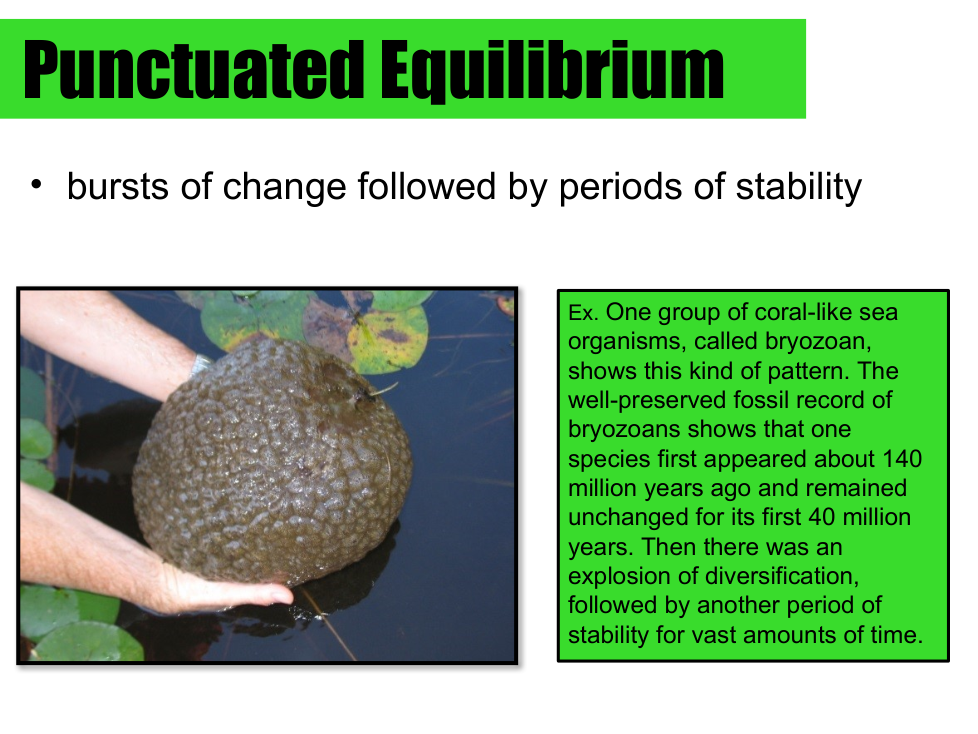
What does punctuated equilibrium describe?
Only extinction events
Bursts of change with stability periods
No changes in species species
Constant gradual change
Overall species decline
Question 13
13.
What happens during bursts in punctuated equilibrium?
Changes happen slowly
No changes occur
Species disappear completely
Species go extinct
Rapid species diversification
Question 14
14.
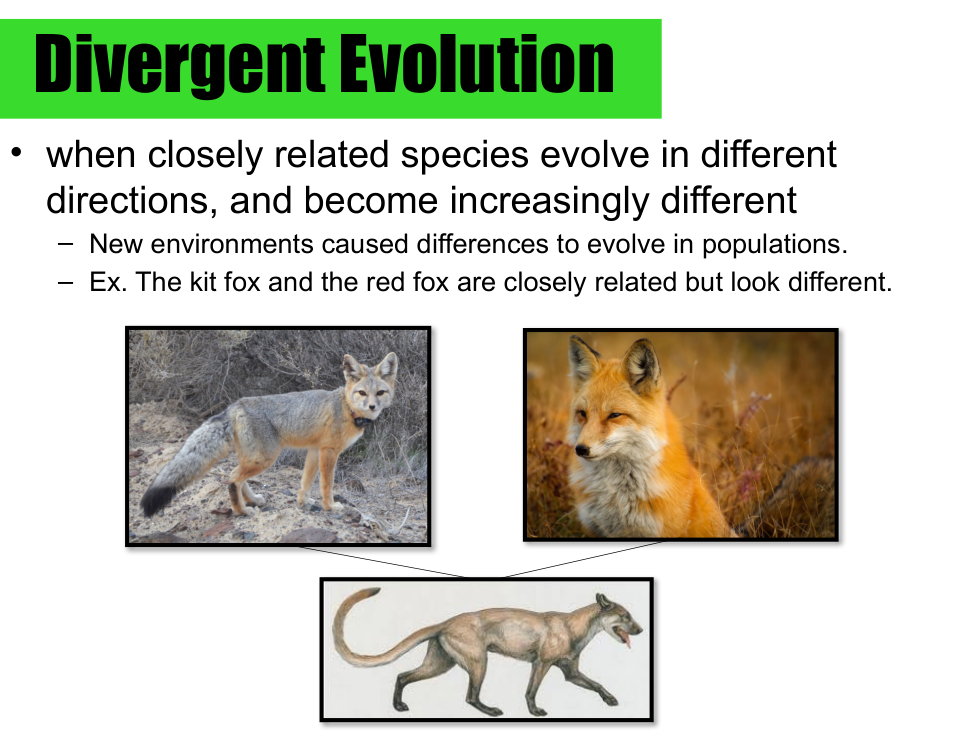
What is divergent evolution often caused by?
New environments for species
Similar environments for species
Separate populations moving closer
Mutation in a single species
Question 15
15.
How does divergent evolution affect species appearance?
They stay exactly the same
They become increasingly different
They become identical to each other
They become smaller in size
Question 16
16.
Why do species evolve differently in divergent evolution?
They don't share common ancestors
They all migrate to the same area
They are genetically engineered
Due to environmental changes
Question 17
17.
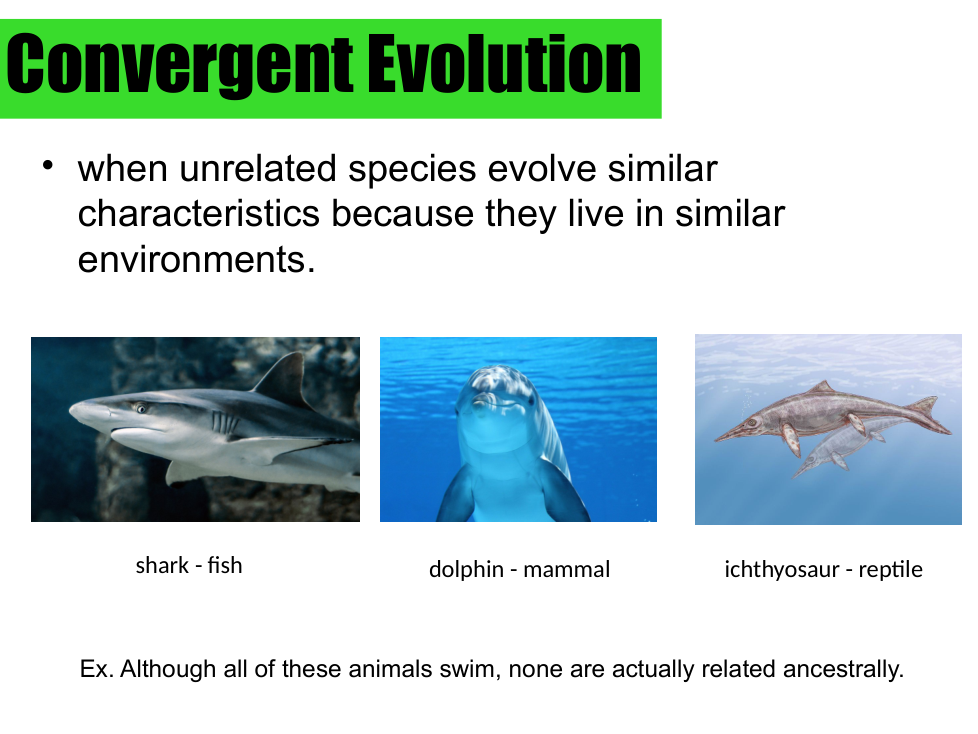
What is convergent evolution?
Animals become similar due to genetic mutation.
Related species evolve different traits.
All species in one area evolve the same traits.
Unrelated species evolve similar traits due to environment.
Question 18
18.
Which of these is an example of convergent evolution?
Dogs and cats living in the same home.
Frogs and fish living in water.
Eagles and owls hunting at night.
Sharks and dolphins swimming in the ocean.
Question 19
19.
Why do unrelated species evolve similar characteristics?
They share the same diet.
They live in the same geographical area.
They live in similar environments.
They have a common ancestor.
Question 21
21.
Why do species coevolve?
To compete for resources.
To avoid extinction together.
To dominate each other's habitats.
To adapt to each other's changes.