Drag and drop the name of each component of the virus below.
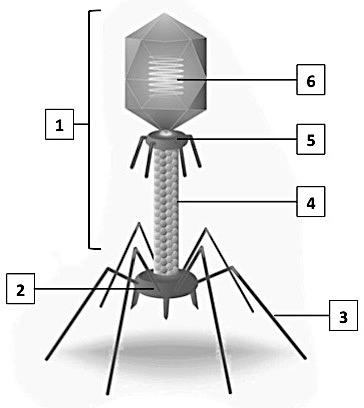
Mmuae Afoforo a Wobɛpaw:
Capsid
DNA or RNA
Tail Fibers
Viruses are considered to be
Identify the correct description for each term related to viruses.
| Draggable item | arrow_right_alt | Corresponding Item |
|---|---|---|
Virus | arrow_right_alt | Protein coat protecting viral genome |
Capsid | arrow_right_alt | Complete set of genetic material of a virus |
Genome | arrow_right_alt | Infectious agent with genetic material in a protein structure |
Drag and drop the name of each component of the virus below.
Capsid
DNA or RNA
Tail Fibers
Which of these describes a difference between viruses and cells?
A virus is unable to reproduce on its own because it —
Which term refers to the protein coat that surrounds a virus’s genetic material?
Which feature is found in both cells and viruses?
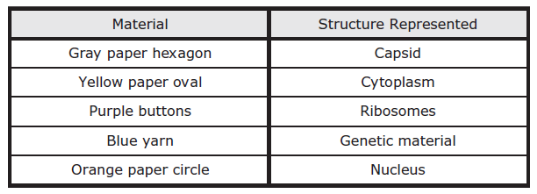
Materials are provided to students to build models of a prokaryotic cell, a eukaryotic cell, and a virus. The materials and the structures they represent are listed in the table shown.
What material will students use in all three models?
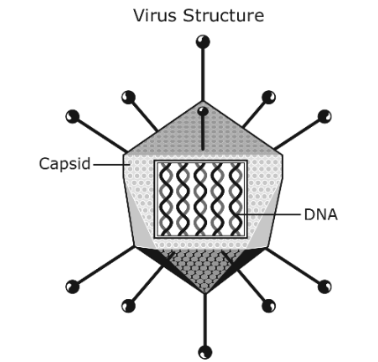
A student produces a labeled drawing of a virus for a presentation. The student states that the capsid has a function similar to the nuclear (nucleus) membrane found in animal cells.
Which of these describes the similar functions of capsids and nuclear (nucleus) membranes?
A student touches a doorknob that was recently handled by a person infected with a virus. Later, the student rubs their eyes without washing their hands.
Which method of viral transmission most likely occurred?
A virus can survive for several hours on cafeteria tables. Multiple students who never had close contact with each other become infected after eating lunch.
Which factor most likely contributed to the spread of the virus?
During flu season, a school nurse notices an increase in students becoming sick after sitting near classmates who are coughing.
Which type of viral transmission best explains the spread of illness in this situation?