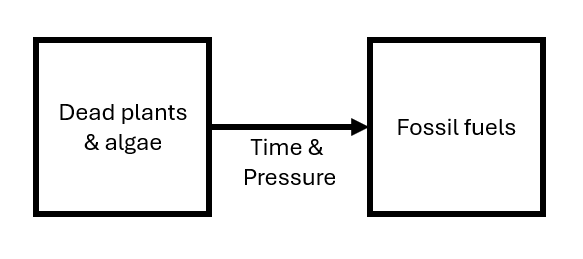
Represent carbon transfer through reservoirs and fluxes using a box model.
Explain whether a flux acts as a source or a sink.
Represent carbon transfer through reservoirs and fluxes using a box model.
Explain whether a flux acts as a source or a sink.
The diagram in the Carbon Cycle Interactives has labeled areas. These places that store carbon are called "reservoirs" or "pools."
Match the carbon reservoirs to their sphere (other than atmosphere).
| Draggable item | arrow_right_alt | Corresponding Item |
|---|---|---|
Biosphere | arrow_right_alt | Soil, rocks, ocean sediment, fossil fuels |
Geosphere / Lithosphere | arrow_right_alt | Marine animals, plants, algae, shells, coral, sediments |
Hydrosphere | arrow_right_alt | Land plants & animals |
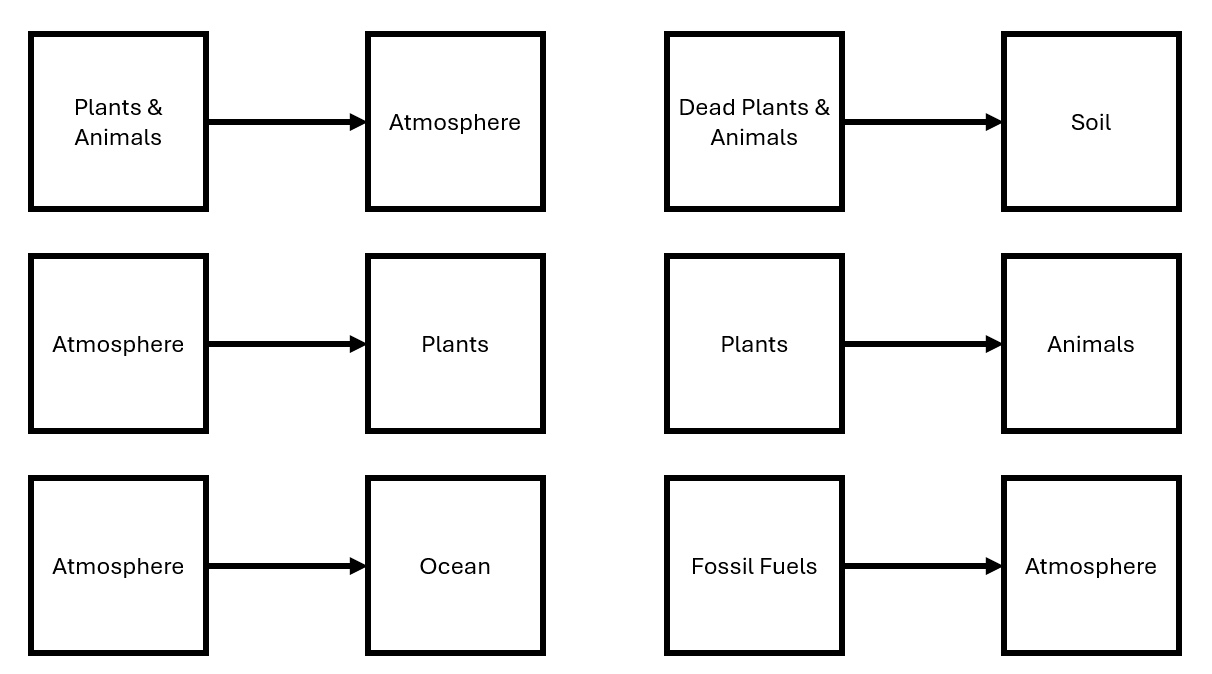
Carbon cycles between reservoirs via biological, chemical, and physical processes called fluxes. The diagram in the Carbon Cycle Interactives has arrows representing these fluxes.
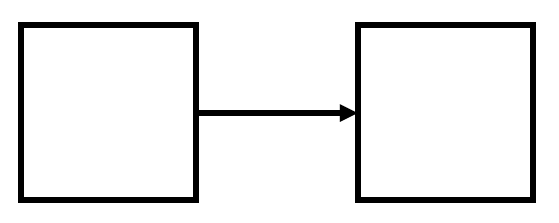
We will be using simple box models to represent the relationship between reservoirs and fluxes.
Arrows represent carbon fluxes. The direction of the arrow indicates the flow of carbon.
Boxes represent carbon reservoirs.
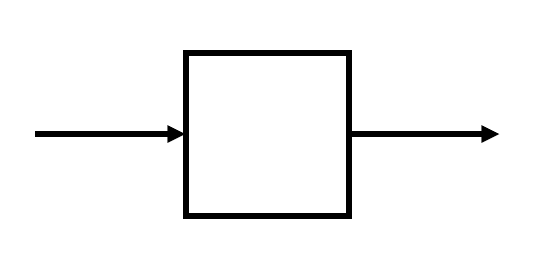
Explore the Carbon Cycle Interactive and identify the flux (process) that occurs between 2 reservoirs (storage).

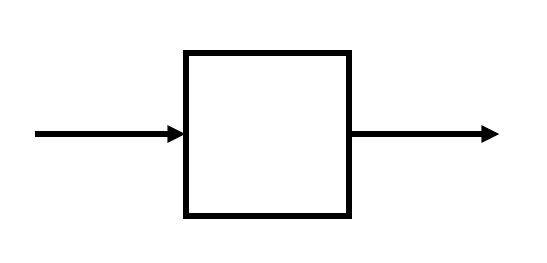
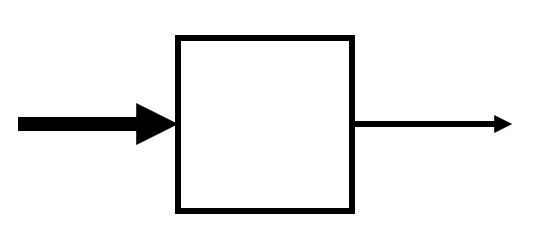
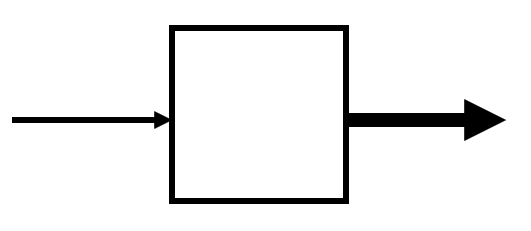
We can change the size of the arrows in our box models to represent the size of each flux.
Consider this box model.

Describe the flow of carbon:
What will happen to the amount of carbon in the reservoir?
We can change the size of the arrows in our box models to represent the size of each flux.
Consider this box model.

Describe the flow of carbon:
What will happen to the amount of carbon in the reservoir?
We can change the size of the arrows in our box models to represent the size of each flux.
Consider this box model.

Describe the flow of carbon:
What will happen to the amount of carbon in the reservoir?
A flux that absorbs large amounts of carbon is known as a sink.
Which model represents a sink?
A flux that releases large amounts of carbon is known as a source.
Which model represents a source?
So far, our box models have been very simple. But carbon cycles endlessly in and out of reservoirs through different fluxes so our model could be much larger (even circular).
Identify 2 reservoirs and 2 fluxes you could connect to this box model.
Identify which flux you believe would be the biggest source.
You may describe these in words or use the "Show Your Work" drawing tools to add to the model.
Which statement best restates the learning objectives of this assignment?