“The Principles of Economic Expansion”
from Lawn Boy by Gary Paulsen
A boy is given his grandfather’s old riding lawn mower as a birthday gift. At first, he is unsure of what to do with such an unusual present.
1 I looked at the mower. Very old, low, small. It looked like it only cut about a two-foot-wide area, and it was nothing like the fancy new machines. The seat was steel, without a pad, and the driver’s feet went over the top of the motor to rest on two foot pedals. One was a brake, the other a clutch that you had to push down to get the mower moving. It steered with two levers, like a very small bulldozer, and looked more like a toy than a mower.
2 Okay…I didn’t have much experience with motors. I’ve never even had a dirt bike or a four-wheeler. I’m just not machine oriented.
3 My birthday present sat there. I tried pushing it toward our garage, but it didn’t seem to want to move. Even turning around to put my back against it and push with my legs—which I thought might give me better leverage—didn’t help; it still sat there.
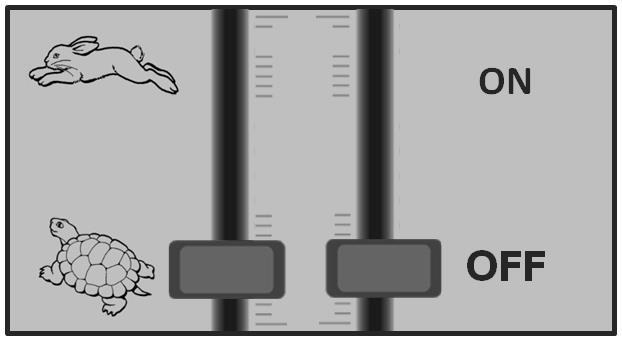
4 So I studied it. On the left side of the mower was a small gas tank, and I unscrewed the top and looked in. Yep, gas. On top of the tank were two levers; the first was next to pictures of a rabbit and a turtle. Even though I’m not good with machines, I figured out that was the throttle and the pictures meant fast and slow. The other lever said ON-OFF. I pushed ON.
5 Nothing happened, of course. On the very top of the motor was a starting pull-rope.… I gave it a jerk and the motor sputtered a little, popped once, then died. I pulled the rope again and the motor hesitated, popped, and then roared to life. I jumped back. No muffler.
6 Once when I was little, my grandmother, in her usual logic-defying fashion, answered my request for another cookie by saying that my grandfather had been a tinkerer. “He was always puttering with things, taking them apart, putting them back together. When he was around nothing ever broke. Nothing dared to break.”
7 Loud as the mower was, it still wasn’t moving and the blade wasn’t going around. I stood looking down at it.
8 This strange thing happened.
9 It spoke to me.
10 Well, not really.…
11 Anyway, there was some message that came from the mower through the air and into my brain. A kind of warm, or maybe a settled feeling. Like I was supposed to be there and so was the mower. The two of us.…
12 Next I found myself sitting on the mower, my feet on the pedals. I moved the throttle to the rabbit position—it had been on the turtle—and pushed the left pedal down, and the blade started whirring. The mower seemed to give a happy leap forward off the sidewalk and I was mowing the lawn.
13 Or dirt. As I said, we didn’t really have much of a lawn. Dust and bits of dead grass flew everywhere and until I figured out the steering, the mailbox, my mother’s flowers near the front steps and a small bush were in danger.
14 But in a few minutes, I got control of the thing and I sheared off what little grass there was.
15 The front lawn didn’t take long, but before I was done the next-door neighbor came to the fence, attracted by the dust cloud. He waved me over.
16 I stopped in front of him, pulled the throttle back and killed the engine. The sudden silence was almost deafening. I stood up away from the mower, my ears humming, so I could hear him.
17 “You mow lawns?” he asked. “How much?”
18 And that was how it started.
19 When it all began, it was simple.
20 Our neighbor’s house had a larger yard than ours, with what looked like good grass. No difficult corners, just a big square with a large elm tree in the center.
21 I mowed it, he gave me money.
22 Twenty dollars.
23 Figuring that I used almost all the gas in the tank, about a gallon, which cost three dollars, and not counting the wear and tear on the mower (I didn’t know how to figure that out), I made seventeen dollars for my work. It took two hours so I made eight dollars and fifty cents an hour.
What is the meaning of the word puttering as it is used in paragraph 6?
According to the passage, why did the boy’s neighbor come to the fence?
Which of the following statements describes the lawnmower based on paragraph 1?
Which quote from the passage supports the inference that the narrator was unsure of his ability to start the lawn mower?
Read the sentence from paragraph 6.
“Once when I was little, my grandmother, in her usual logic-defying fashion, answered my request for another cookie by saying that my grandfather had been a tinkerer.”
What is meant by the phrase “logic-defying fashion”?
Part A: Which choice provides a summary of the passage?
Part B: Which TWO details from the passage best support the answer to Part A?
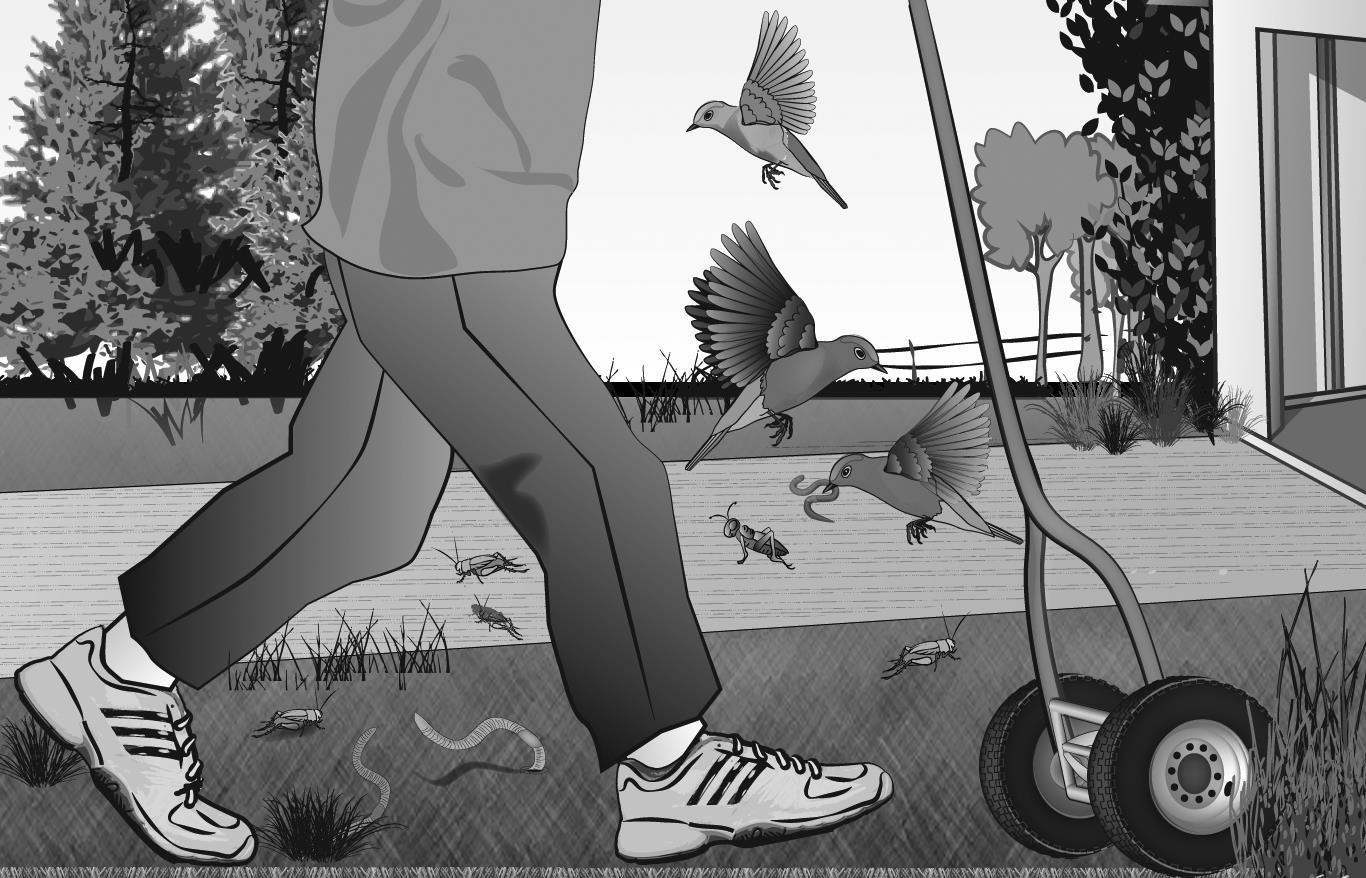
Which detail from the passage best illustrates what is shown in the image? 
What effect does the point of view have on the passage?
Based on the passage, choose TWO statements that best describe the main character.
adapted from “A Song of the Lawn-Mower”
by Amos Russel Wells
Twas the nicest lawn-mower that ever was seen,
Its body was red and its handle was green.
It ran on the lawn for most of the day,
And oh! how it rattled and clattered away!
5 It had a wide mouth and a long, twisted tongue,
And this is the song that the lawn-mower sung:
“Ke-clickety, clickety, clickety, klot!
The work, it is hard, and the day, it is hot.
But Susie will like it, the dear little lass;
10 How happy she is in the newly cut grass!
It’s good for her tennis and good for croquet,
And gladly for Susie, I’ll labor away
With my clickety, clickety, klot!
“Ke-clickety, clickety, clickety, klot!
15 The work, it is hard, and the day, it is hot.
And Charley, the lad who is pushing me now,
He carries a terrible frown on his brow.
For Charley is lazy and Charley’s a shirk,
But spite of it all I must stick to my work
20 With my clickety, clickety, klot!
“Ke-clickety, clickety, clickety, klot!
The work, it is hard, and the day, it is hot.
But all of the sparrows are grateful to me,
And all of the robins are coming, you see.
25 The crickets and worms they can easily spy,
So they pounce on their dinner when I have gone by
With my clickety, clickety, klot!
“Ke-clickety, clickety, clickety, klot!
The work, it is hard, and the day, it is hot.
30 And down in the grass, when I listen, I hear
The grasshoppers squeaking, half-crazy with fear.
The ants and the worms and the katydids dread
To hear me come clattering on overhead
With my clickety, clickety, klot!
35 “Ke-clickety, clickety, clickety, klot!
The work, it is hard, and the day, it is hot.
O Charley, and crickets, and ants, and the rest,
I’d like to please all, but I’m doing my best.
As long as I work I am happy all day,
40 And so keep pegging and pegging away
With my clickety, clickety, klot!”

1croquet — an outdoor game played by hitting a wooden ball with a mallet through small hoops on the ground
2katydids —large, green long-horned grasshoppers
3shirk —someone who avoids work
What is the theme of “A Song of the Lawn-Mower”?
What is the meaning of line 4?
“And oh! how it rattled and clattered away!"
What is the meaning of the word dread as it is used in line 32?
What can the reader infer about Susie based on lines 9-11?
What is the effect of giving human qualities to the lawn mower?
Which set of lines supports the inference that the lawn mower is determined in its work?
Which lines from the poem best illustrate what is shown in the image?

Part A: Based on the poem, how are Susie and Charley different?
Part B: Select TWO sets of lines from the poem that best support the answer to Part A.
“The Principles of Economic Expansion”
from Lawn Boy by Gary Paulsen
A boy is given his grandfather’s old riding lawn mower as a birthday gift. At first, he is unsure of what to do with such an unusual present.
1 I looked at the mower. Very old, low, small. It looked like it only cut about a two-foot-wide area, and it was nothing like the fancy new machines. The seat was steel, without a pad, and the driver’s feet went over the top of the motor to rest on two foot pedals. One was a brake, the other a clutch that you had to push down to get the mower moving. It steered with two levers, like a very small bulldozer, and looked more like a toy than a mower.
2 Okay…I didn’t have much experience with motors. I’ve never even had a dirt bike or a four-wheeler. I’m just not machine oriented.
3 My birthday present sat there. I tried pushing it toward our garage, but it didn’t seem to want to move. Even turning around to put my back against it and push with my legs—which I thought might give me better leverage—didn’t help; it still sat there.
4 So I studied it. On the left side of the mower was a small gas tank, and I unscrewed the top and looked in. Yep, gas. On top of the tank were two levers; the first was next to pictures of a rabbit and a turtle. Even though I’m not good with machines, I figured out that was the throttle and the pictures meant fast and slow. The other lever said ON-OFF. I pushed ON.
5 Nothing happened, of course. On the very top of the motor was a starting pull-rope.… I gave it a jerk and the motor sputtered a little, popped once, then died. I pulled the rope again and the motor hesitated, popped, and then roared to life. I jumped back. No muffler.
6 Once when I was little, my grandmother, in her usual logic-defying fashion, answered my request for another cookie by saying that my grandfather had been a tinkerer. “He was always puttering with things, taking them apart, putting them back together. When he was around nothing ever broke. Nothing dared to break.”
7 Loud as the mower was, it still wasn’t moving and the blade wasn’t going around. I stood looking down at it.
8 This strange thing happened.
9 It spoke to me.
10 Well, not really.…
11 Anyway, there was some message that came from the mower through the air and into my brain. A kind of warm, or maybe a settled feeling. Like I was supposed to be there and so was the mower. The two of us.…
12 Next I found myself sitting on the mower, my feet on the pedals. I moved the throttle to the rabbit position—it had been on the turtle—and pushed the left pedal down, and the blade started whirring. The mower seemed to give a happy leap forward off the sidewalk and I was mowing the lawn.
13 Or dirt. As I said, we didn’t really have much of a lawn. Dust and bits of dead grass flew everywhere and until I figured out the steering, the mailbox, my mother’s flowers near the front steps and a small bush were in danger.
14 But in a few minutes, I got control of the thing and I sheared off what little grass there was.
15 The front lawn didn’t take long, but before I was done the next-door neighbor came to the fence, attracted by the dust cloud. He waved me over.
16 I stopped in front of him, pulled the throttle back and killed the engine. The sudden silence was almost deafening. I stood up away from the mower, my ears humming, so I could hear him.
17 “You mow lawns?” he asked. “How much?”
18 And that was how it started.
19 When it all began, it was simple.
20 Our neighbor’s house had a larger yard than ours, with what looked like good grass. No difficult corners, just a big square with a large elm tree in the center.
21 I mowed it, he gave me money.
22 Twenty dollars.
23 Figuring that I used almost all the gas in the tank, about a gallon, which cost three dollars, and not counting the wear and tear on the mower (I didn’t know how to figure that out), I made seventeen dollars for my work. It took two hours so I made eight dollars and fifty cents an hour.
Which statement correctly compares the points of view from which the passage “The Principles of Economic Expansion” and the poem “A Song of the Lawn-Mower” are told?
Which statement about the events in “The Principles of Economic Expansion” and “A Song of the Lawn-Mower” is true?
Which TWO statements about the structural elements used in both the passage “The Principles of Economic Expansion” and the poem “A Song of the Lawn-Mower” are true?