Log in
Sign up for FREE
arrow_back
Library

C8 Gas Tests and Separating Mixtures FT (05/02/2026)

star
star
star
star
star
Last updated 14 days ago
20 questions
4.8.1.1 Pure substances
Required
1
Required
1
Required
1
Required
1
2
Required
1
Required
1
1
Required
1
4.8.1.3 Chromatography
1
1
1
1
1
2
8
4.8.2 Identification of common gases
1
…
Question 1
1.

A pure substance has to be an element

Question 2
2.

A mixture is always an impure substance.

Question 3
3.

Impure substances have higher boiling points

Question 4
4.

Salt is put on ice to increase the melting point.

Question 5
5.

Identify 2 differences between pure and impure substances

Question 6
6.

What happens to the melting point of water when impurities are added?

Question 7
7.

Explain why salt is placed on roads in winter months?

Question 8
8.
Question 9
9.

Question 10
10.

Simple distillation allows us to separate liquids with different boiling points.

1
Question 11
11.

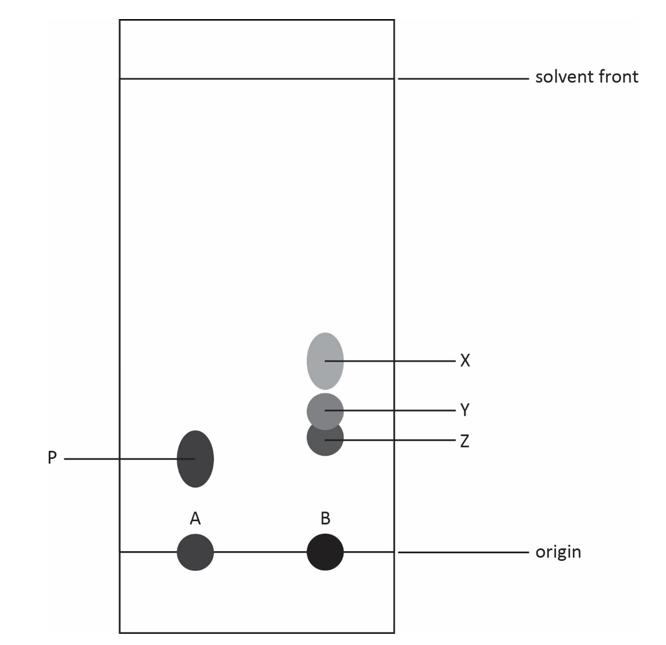
How many substances are in dye A?

1
Question 12
12.

How many substances are in Dye B?

2
Question 13
13.

Explain how the chromatogram shows that A is a pure substance and B is a mixture.

Question 14
14.

In chromatography, ink is the solvent.

Question 15
15.

Why is the start line drawn in pencil rather than pen?

Question 16
16.

Chromatography allows us to separate different elements in a compound.

Question 17
17.

In chromatography, the dyes are soluble in water.

Question 18
18.

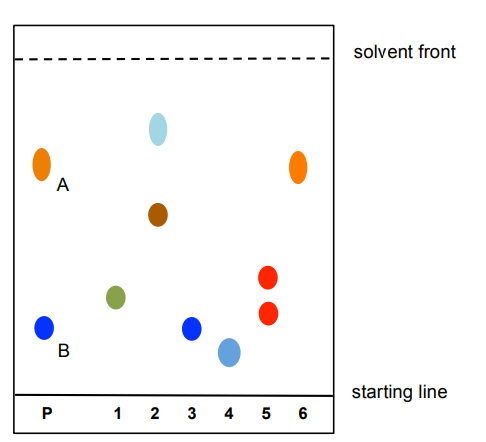
What colours are in substance P?

Question 19
19.

Put the order of Chromatography in order

  1. Lay the paper flat and leave it to dry
  2. Draw a line with a pencil and ruler to one end of the strip of filter paper
  3. When the solvent has almost reached the top of the filter paper, remove it from the beaker
  4. Use a ruler to measure the distance the ink spot has travelled (Rf values)
  5. Place a spot of ink on the pencil line
  6. Carefully add the solvent to a level just below the ink spot, taking care not to splash the paper
  7. Cover the beaker and wait a few minutes
  8. Suspend the filter paper in a beaker so it isn't touching the sides or the bottom
Question 20
20.

Match the gas test to its positive result

Draggable itemarrow_right_altCorresponding Item
Shakes or bubble the gas through limewater
arrow_right_alt
Limewater turns milky (cloudy)
Put Damp litmus paper into the gas
arrow_right_alt
Litmus paper is bleached and turns white
Hold a burning splint at the open end of a test tube of the gas
arrow_right_alt
A squeaky pop sound is produced
Place a glowing splint in a test tube of the gas
arrow_right_alt
The splint relights.