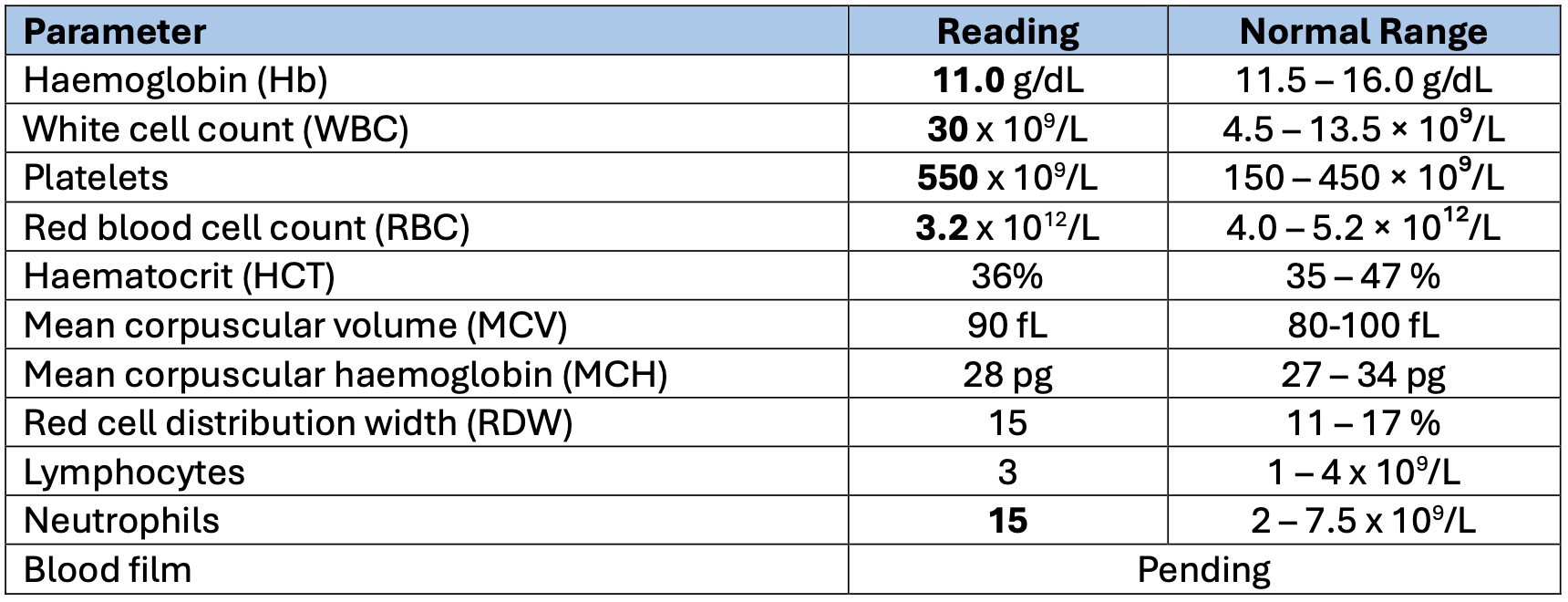
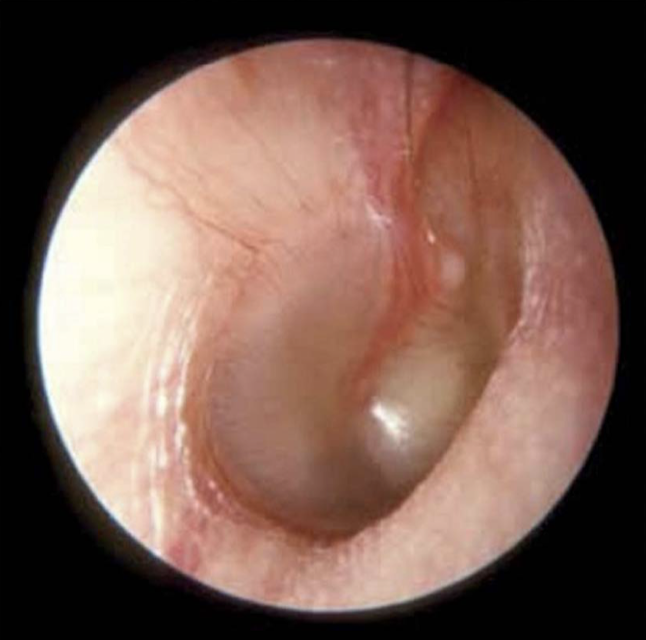
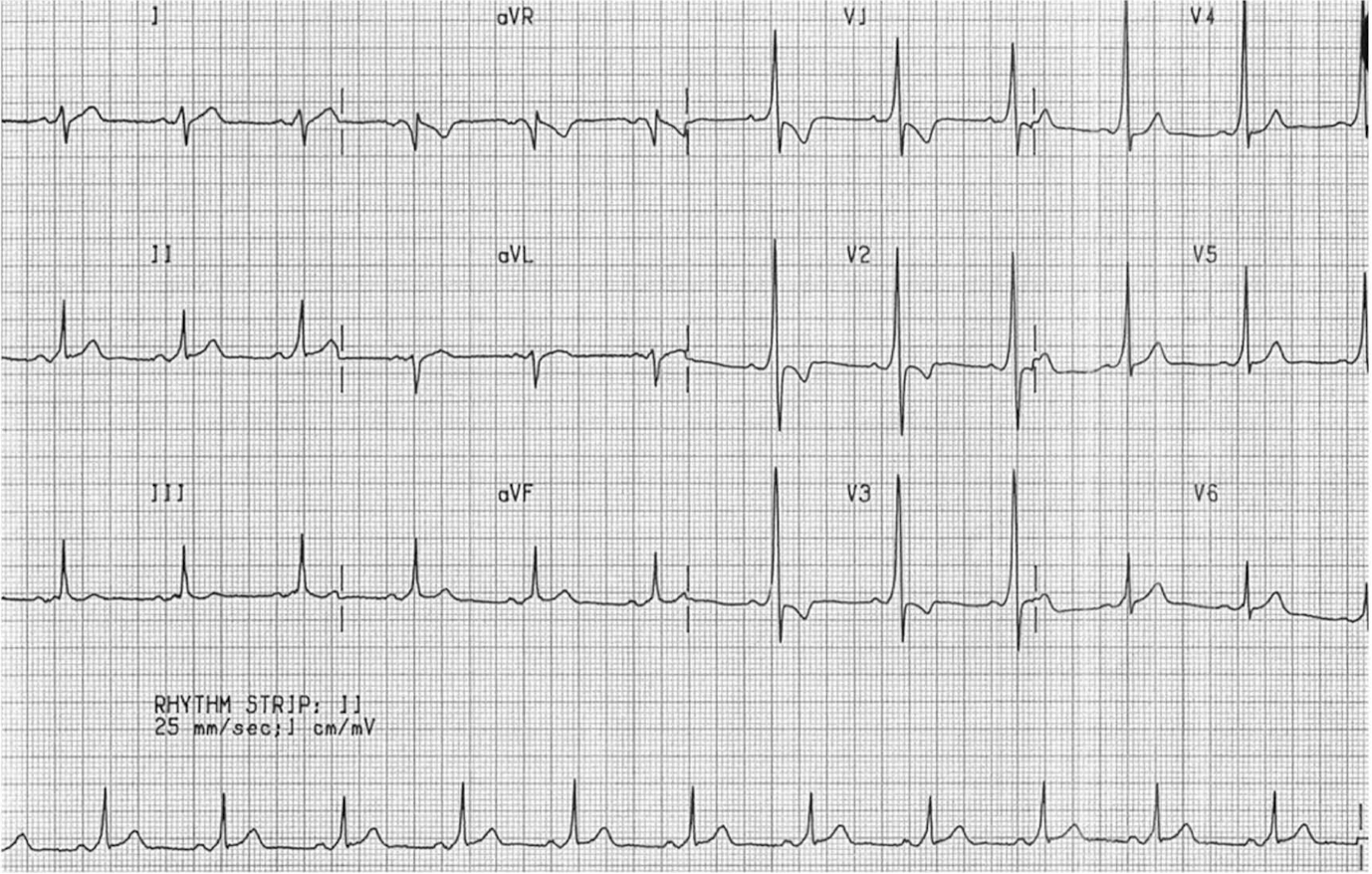
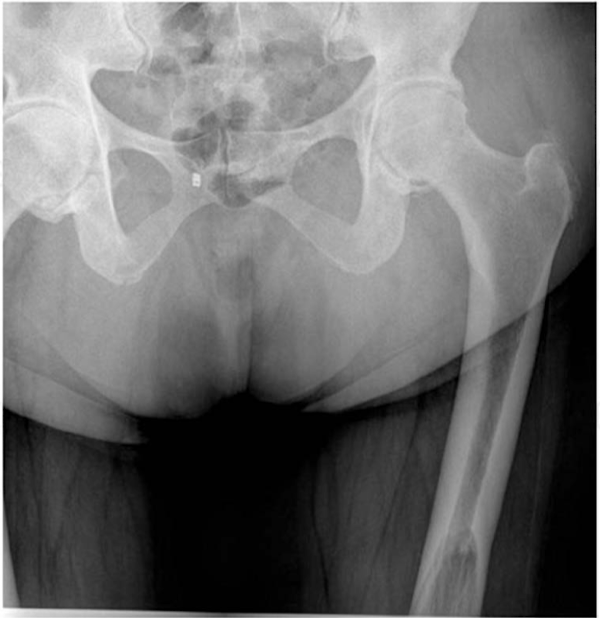
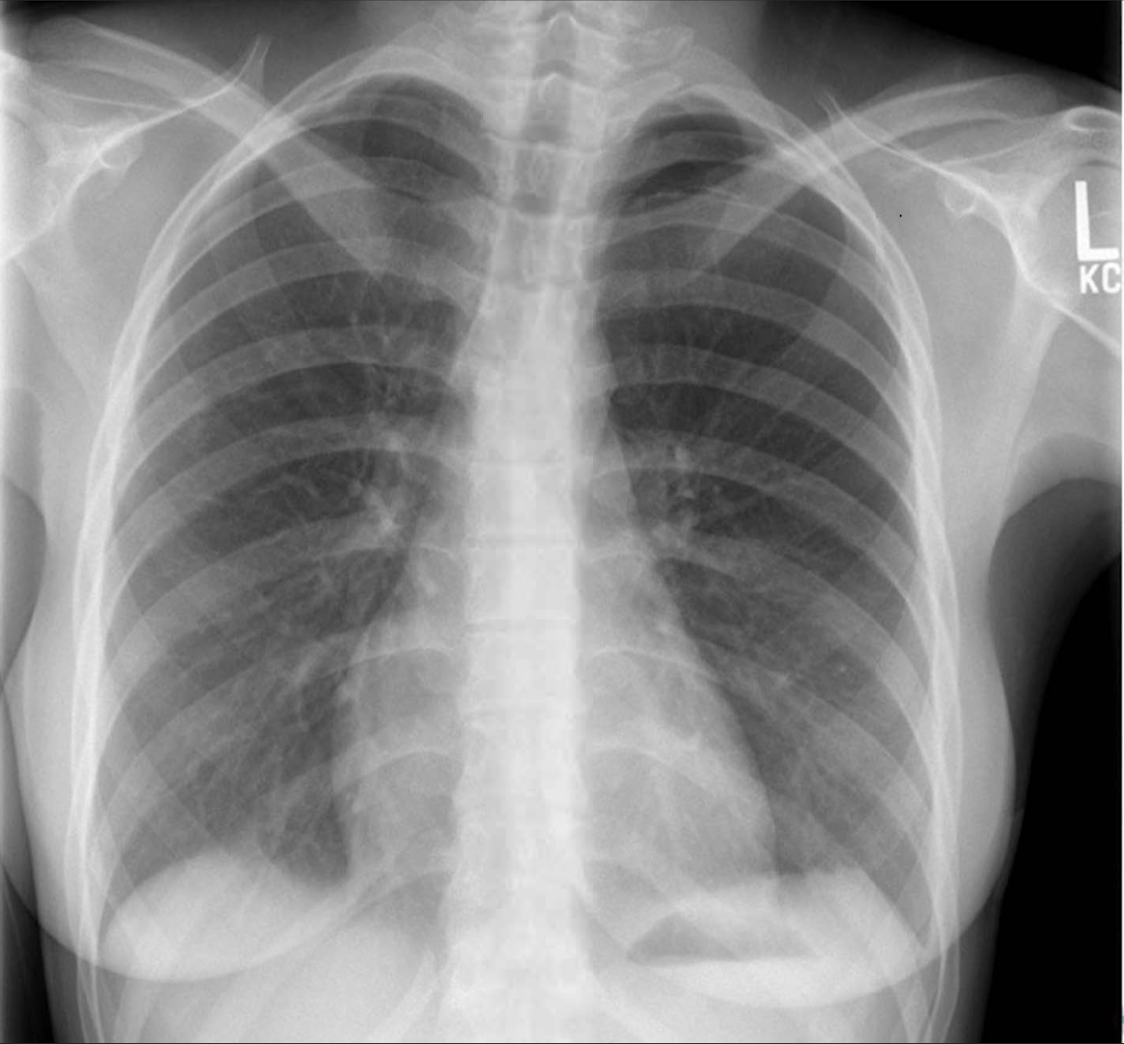
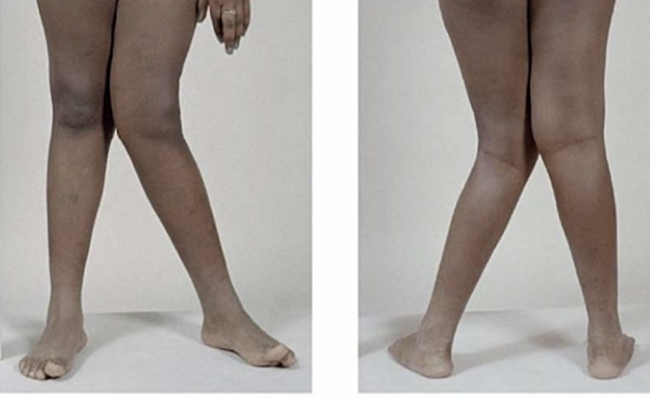
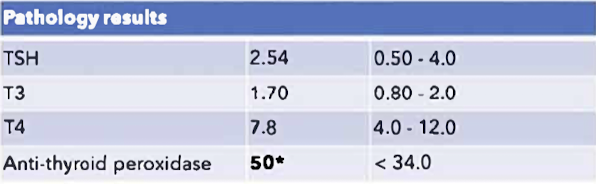
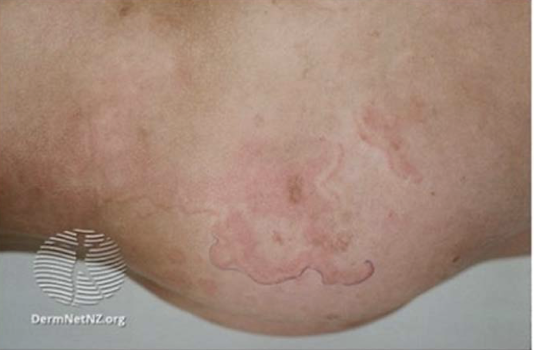
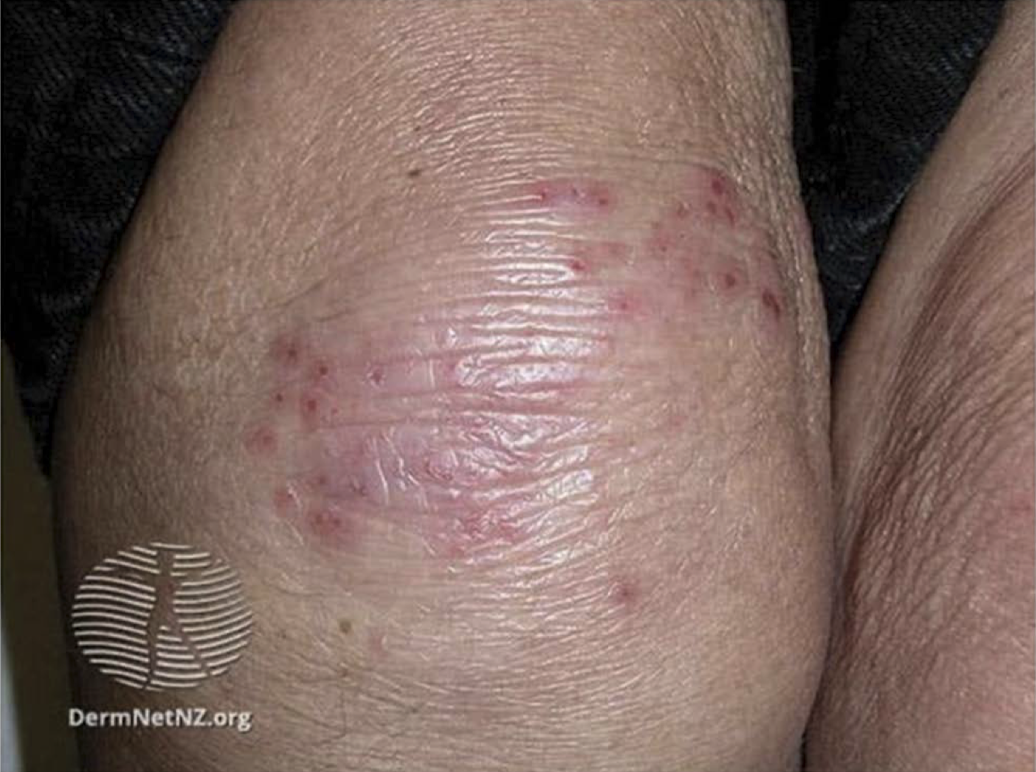
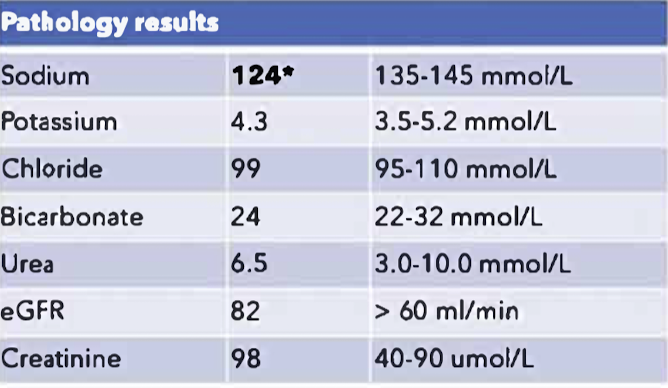
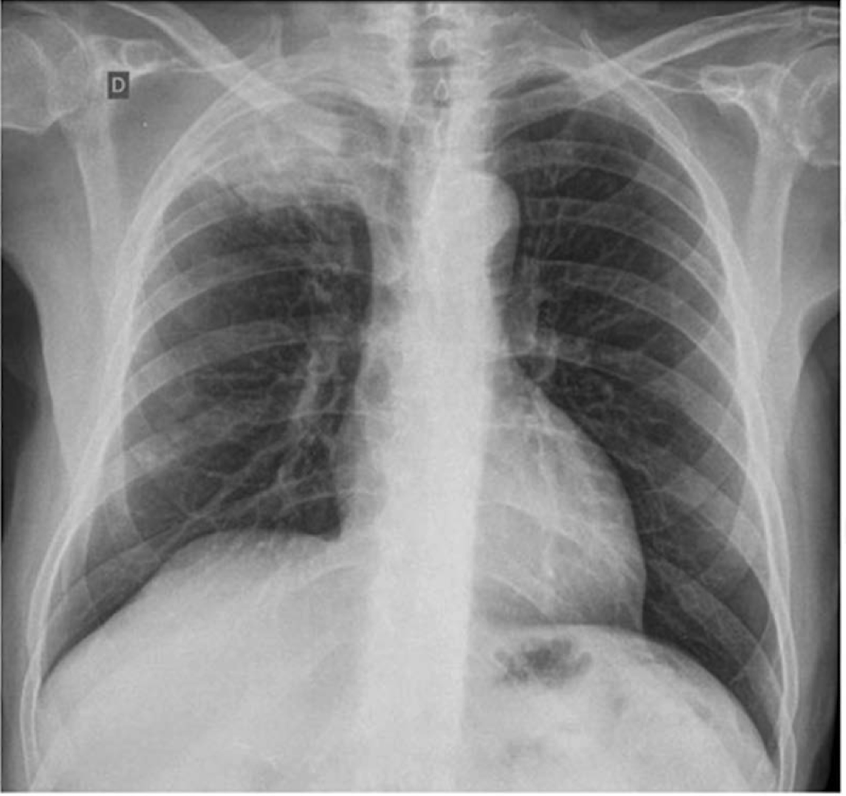
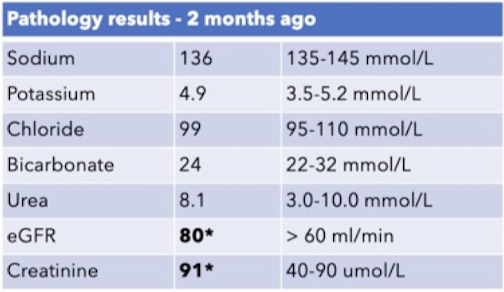
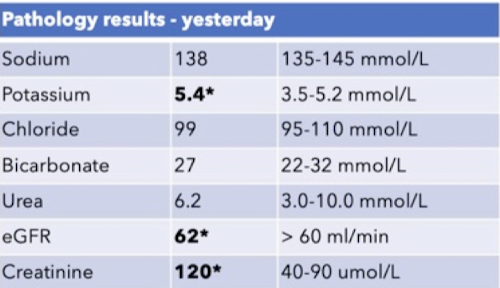
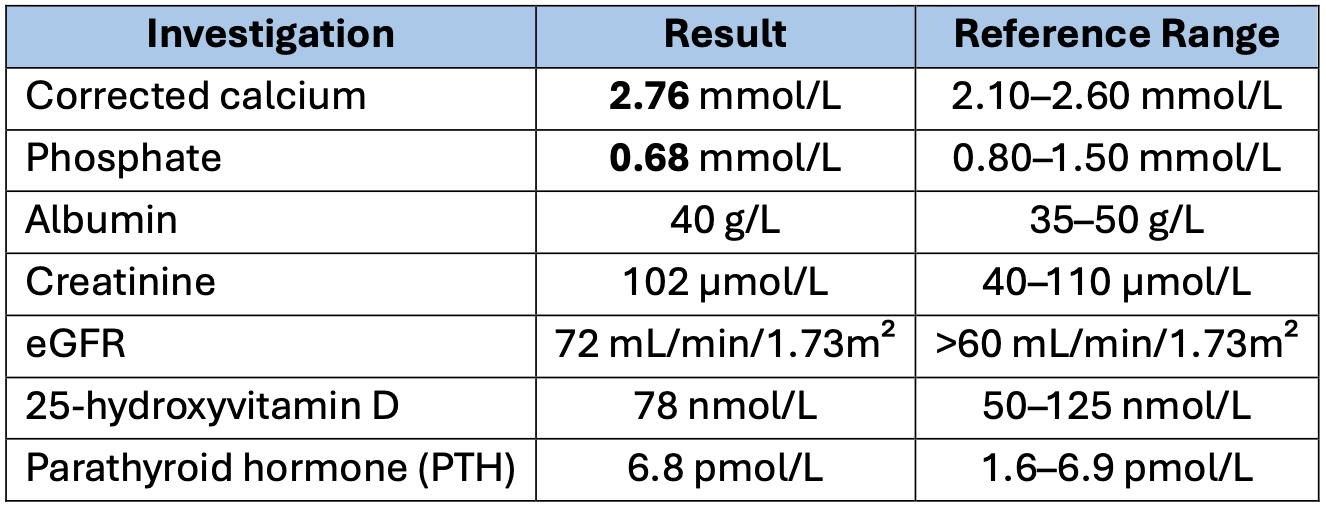
Ahmad Firdaus, an 8-year-old boy, is brought by his parents to the clinic with a history of reduced activity level and intermittent low-grade fever over the past 6–7 weeks. His parents report that he appears stiff on waking most mornings and takes at least 1–2 hours before he is able to move comfortably and engage in normal activities. Over the same period, he has complained intermittently of pain in his left knee and occasional discomfort in his right shoulder, without a clear history of trauma. There is no history of recent upper respiratory tract infection, diarrhoea, or skin rash. His appetite has been reduced, and a review of his growth chart shows a weight loss of approximately 2 kg since his last visit two months ago. On examination, he appears tired. Temperature is 37.9°C, blood pressure 102/64 mmHg, pulse rate 98 beats per minute and regular. Examination of the left knee reveals mild swelling with reduced range of motion but no marked erythema or warmth. The right shoulder shows discomfort at the extremes of movement. Other systemic examination is unremarkable. Initial blood investigations show elevated erythrocyte sedimentation rate (ESR) and leukocytosis.
What is the MOST appropriate next step in management?
Rizal bin Ahmad, a 55-year-old man with a background of well-controlled hypertension, presents to the clinic with a 7-day history of facial asymmetry. He first noticed difficulty keeping water in his mouth while brushing his teeth, with saliva escaping from the left side. His wife reports that over the past few days, his facial expression has appeared “uneven” in photographs and that he has been unable to smile normally. He also describes a dull ache behind his left ear and increased sensitivity to sound on that side. There is no history of limb weakness, speech disturbance, visual symptoms, headache, recent trauma, or constitutional symptoms. He denies recent upper respiratory tract infection and has no known diabetes.
On examination, he is alert and comfortable at rest. Temperature is 36.8°C, blood pressure 128/78 mmHg, pulse rate 82 beats per minute and regular. Cranial nerve examination reveals a complete lower motor neurone facial nerve palsy on the left side, with inability to raise the left eyebrow, incomplete eye closure, and flattening of the nasolabial fold. There are no vesicles in the external auditory canal and no facial rash. The remainder of the neurological examination is normal.
What is the MOST appropriate next step in management?
Lim Wei Jian, a 67-year-old man, is brought to the clinic by his daughter due to concerns about his ability to manage independently at home. He has lived alone in the same house for many years. Over the past 6 months, she has noticed increasing forgetfulness, particularly difficulty recalling recent conversations and misplacing household items.
In addition, his daughter reports that his walking has gradually changed. He appears slower, takes shorter steps, and has difficulty initiating movement, particularly when starting to walk or turning. He has not had any falls but describes his legs as feeling “heavy” at times. Over the past few months, he has also mentioned needing to rush to the toilet more often, with occasional near-accidents, which he attributes to “getting older.” There is no history of acute confusion, hallucinations, tremor, limb weakness, or recent infection.
On examination, he is alert and cooperative. Temperature is 36.6°C, blood pressure 136/78 mmHg, pulse rate 76 beats per minute and regular. Gait assessment reveals a broad-based, shuffling gait with reduced step height and difficulty turning. The remainder of the neurological examination is unremarkable.
Which of the following is the MOST likely diagnosis?
Zainab binti Hassan, a 77-year-old woman who has been a long-term patient at your clinic, requests a home visit as she feels too unsteady to attend the clinic. She reports waking up earlier this morning and experiencing sudden dizziness when she turned in bed to reach for her phone. She describes a persistent sensation that the room is moving, associated with nausea, and says she feels unsafe attempting to walk without support. She recalls having similar episodes several years ago and asks if you can prescribe the same medication she was given previously.
Her medical history includes hypertension, for which she takes amlodipine 5 mg daily. She also takes calcium and vitamin D supplements. There is no recent history of upper respiratory tract infection, headache, chest pain, hearing loss, or tinnitus.
On examination at home, she appears uncomfortable but alert and oriented. Her temperature is 36.5°C, blood pressure 150/92 mmHg, pulse rate 84 beats per minute and regular. Eye examination reveals spontaneous nystagmus in multiple directions that persists despite visual fixation. On performing ocular alignment testing, a subtle vertical misalignment is noted. She requires assistance to sit upright and is unable to walk unaided due to marked unsteadiness. Apart from the ocular findings and gait disturbance, the remainder of her neurological examination is normal.
What is the MOST appropriate next step in management?
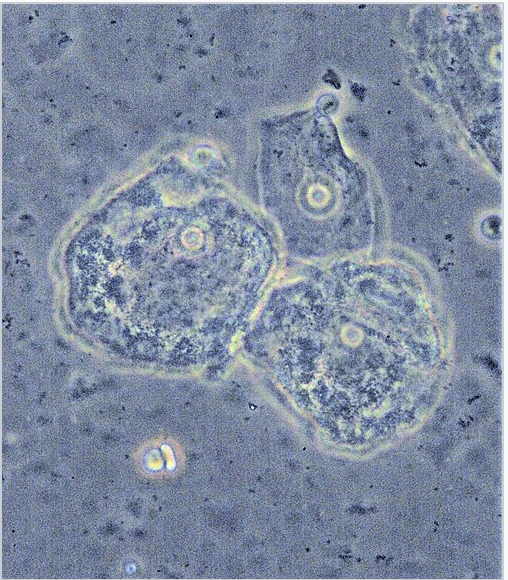
Ahmad Faizal bin Rahman, a 42-year-old man, presents with a mildly itchy skin lesion over his right forearm that he first noticed about three weeks ago. The lesion has gradually increased in size despite the use of a moisturising cream. He works as a security guard and often wears long-sleeved uniforms for prolonged periods, particularly during night shifts. There is no history of trauma, insect bites, recent travel, or contact with new soaps or chemicals. He is otherwise well and has no known chronic medical illnesses.
On examination, there is a single, well-demarcated erythematous plaque on the extensor aspect of the forearm with fine peripheral scaling and relative central clearing. There is no associated pain, discharge, or surrounding cellulitis. No other skin lesions are noted. His vital signs are stable: temperature 36.8°C, blood pressure 124/76 mmHg, pulse rate 72 beats per minute and regular.
A skin sample is taken from the edge of the lesion and examined. Microscopy finding is as shown below:
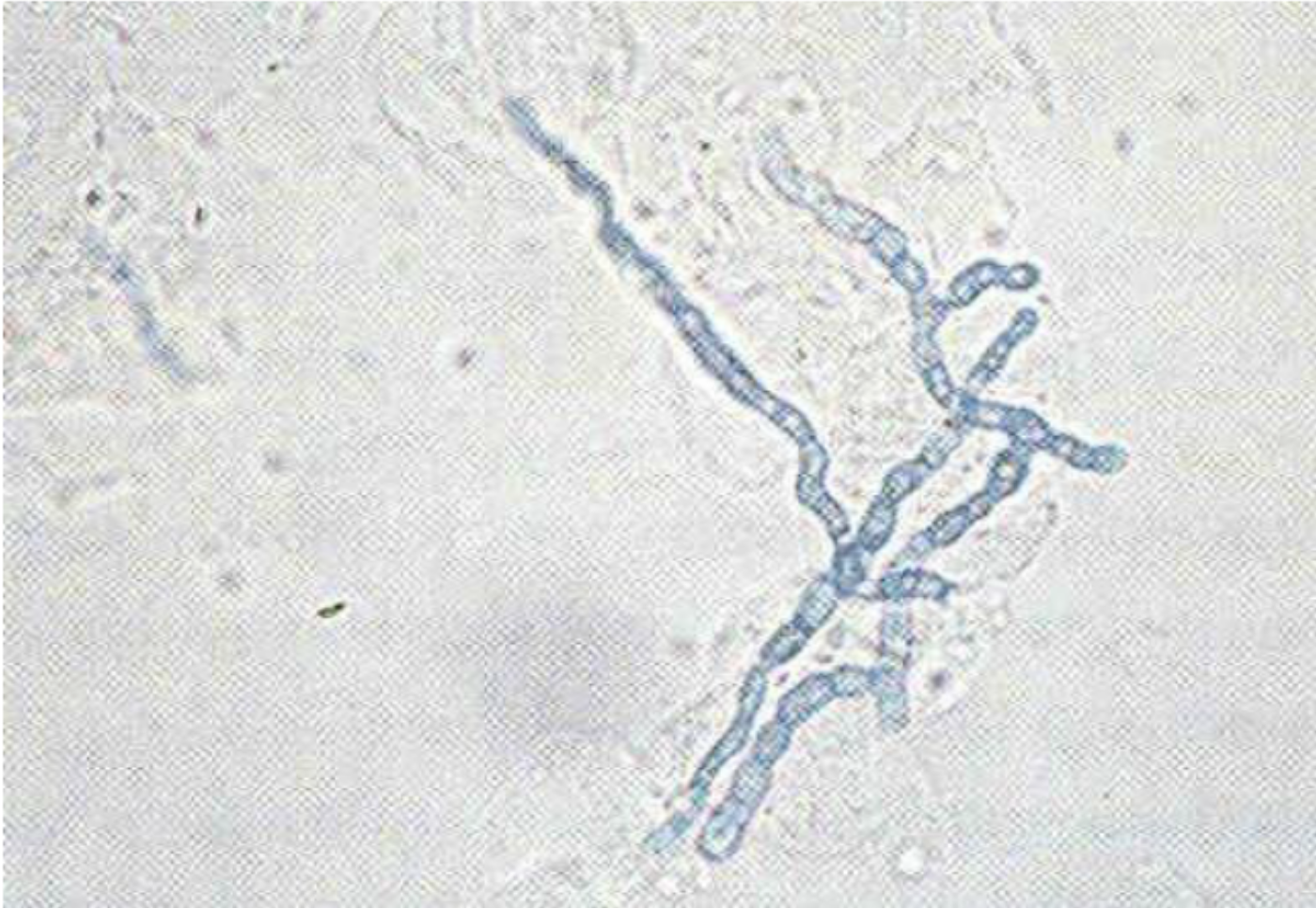
What is the MOST appropriate management?
Nur Aisyah binti Rahman, a 25-year-old woman, returns to your clinic for discussion of her routine cervical screening results performed as part of the national cervical cancer screening programme. She is well and asymptomatic. She has regular menses and is sexually active with one partner. She completed her HPV vaccination during adolescence.
Her screening result shows high-risk HPV detected (non-16/18 genotype), and reflex liquid-based cytology reports low-grade squamous intraepithelial lesion. She has no history of abnormal smears. There is no post-coital bleeding, intermenstrual bleeding, pelvic pain, or abnormal discharge.
She has a past history of recurrent uncomplicated urinary tract infections treated with patient-initiated antibiotics. She does not smoke and drinks alcohol occasionally.
On examination, she appears well. Temperature 36.7°C, blood pressure 112/70 mmHg, pulse rate 74 beats per minute and regular. Abdominal and pelvic examinations are unremarkable.
What is the MOST appropriate next step in management?
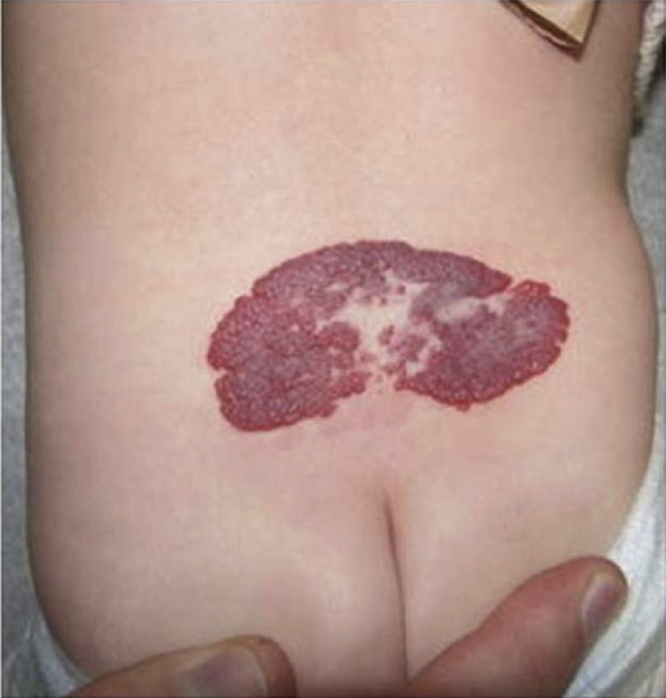
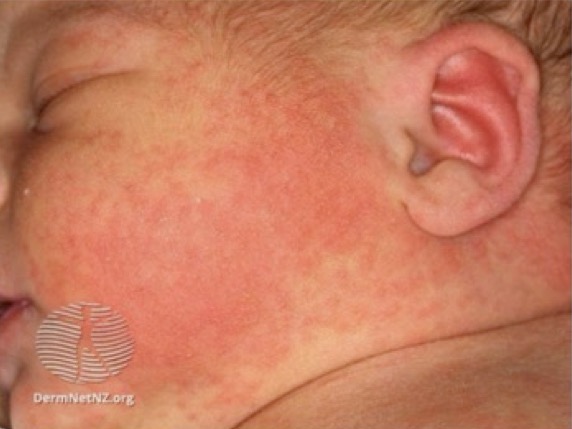
Adam, a 6-day-old boy, is brought to the clinic by his mother, Puan Aina, who is concerned about a rash that appeared over the past 24 hours. It was first noticed on his face and has since spread to his trunk and proximal limbs. The palms and soles appear unaffected.
Adam was born at 40+1 weeks via emergency lower segment Caesarean section for non-reassuring CTG. His mother was Group B Streptococcus positive on antenatal screening and received intrapartum intravenous antibiotics. He has been exclusively breastfed and feeds every 2–3 hours. He is passing 3–4 yellow stools daily and has 5–6 wet nappies per day. There has been no fever, poor feeding, lethargy, vomiting, or irritability.
On examination, he is alert and active. Temperature is 36.6°C, heart rate 142 beats per minute, respiratory rate 48 breaths per minute.. Oxygen saturation is 99% in room air. The rash has the appearance shown in the image. The remainder of the systemic examination is unremarkable.
What is the MOST appropriate next step in management?
Muhammad Arif Hakimi, an 8-year-old boy, is brought to the clinic by his parents for the third time in 10 days. He was initially seen with a sore throat and mild cough, which settled with supportive care. Three days later, he returned with intermittent central abdominal pain but had a soft, non-tender abdomen and was systemically well.
Over the past 48 hours, his abdominal discomfort has persisted intermittently and today his parents noticed a new rash over his lower limbs and buttocks. He has no fever, vomiting, diarrhoea, or urinary symptoms. There is no history of easy bruising or bleeding disorders. He takes no regular medications.
On examination, he appears comfortable at rest. Temperature 36.8°C, blood pressure 108/68 mmHg, pulse 88 beats per minute and regular. Abdominal examination reveals mild periumbilical tenderness without guarding or rebound. There is a non-blanching purpuric rash over both lower limbs and buttocks as shown. No hepatosplenomegaly is detected.

Considering the most likely diagnosis, which of the following investigations is MOST likely to be abnormal?
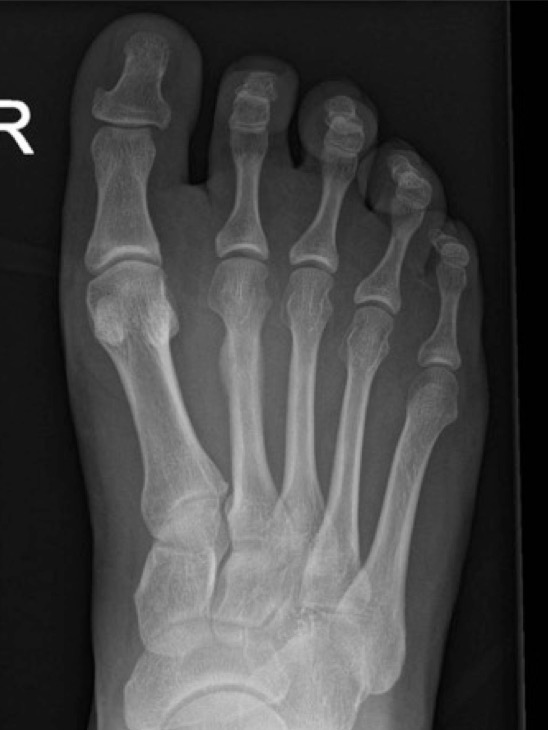
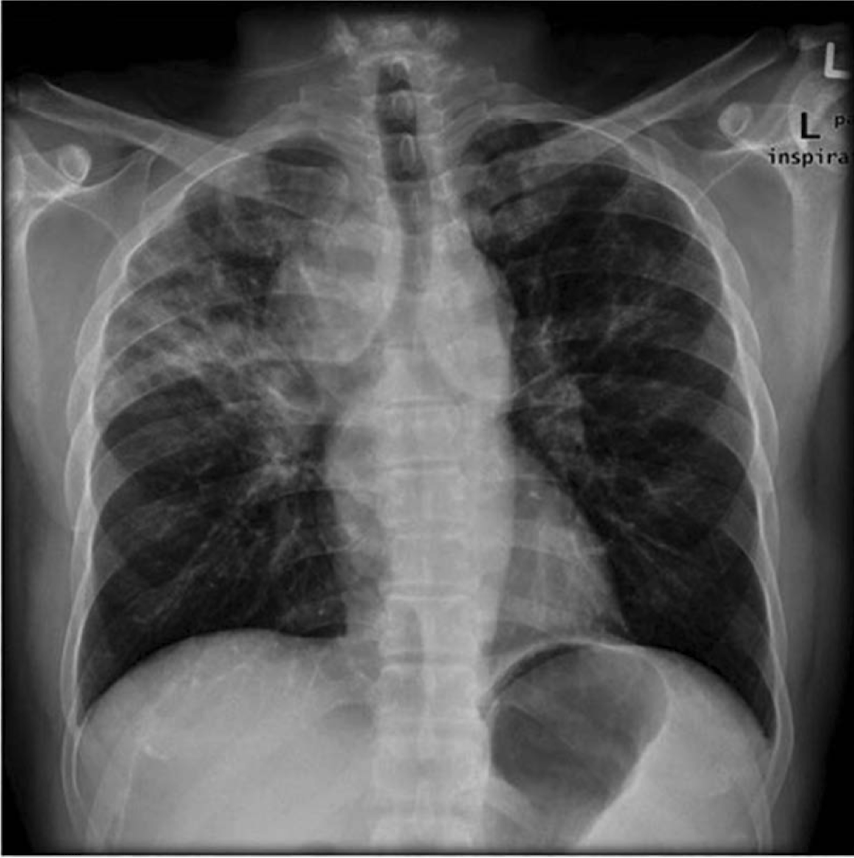
Muhammad Iqbal bin Zainal, a 24-year-old man, presents to your clinic with a 2-week history of gradually worsening pain over the dorsum of his right foot. He has recently returned from a three-week overseas trip during which he undertook daily long-distance hiking. He denies any single traumatic event.
He reports that he is still able to bear weight but experiences moderate discomfort, particularly toward the end of the day. The pain is localised and does not radiate. There is no redness, swelling, or systemic symptoms. He is otherwise well, with no significant past medical history. He has been taking doxycycline for malaria prophylaxis during travel.
On examination, temperature is 36.7°C, blood pressure 122/76 mmHg, pulse 72 beats per minute and regular. There is focal bony tenderness over the shaft of the second metatarsal. The remainder of the foot examination is unremarkable, and neurovascular status is intact.
A plain radiograph of the right foot is performed (see image).

What is the MOST appropriate next step in management?
Azman, a 69-year-old man, presents to your clinic with a 3-day history of gradually worsening left-sided scrotal pain. He underwent cystoscopy with transurethral cystolitholapaxy for a bladder stone 8 days ago. The procedure was uncomplicated.
He denies recent sexual intercourse, urethral discharge, or trauma. Over the past two days, he has experienced mild dysuria but no visible haematuria. His past medical history includes hypertension and benign prostatic hyperplasia.
On examination, he appears mildly uncomfortable but not toxic. Temperature is 37.9°C, blood pressure 138/82 mmHg, pulse rate 88 beats per minute and regular. The left hemiscrotum is swollen and tender, with enlargement of the left testis in a normal anatomical position. Elevation of the scrotum reduces his discomfort. When the inner aspect of the left thigh is gently stroked, the left testis elevates appropriately.
Urine dipstick reveals positive nitrites and 2+ blood.
What is the MOST appropriate next step in management?
Encik Rahman bin Yusof, a 72-year-old retired school principal, presents with progressively worsening lower urinary tract symptoms over the past year. He reports increased nocturia, now waking 3–4 times nightly, along with hesitancy, reduced urinary stream, and a sensation of incomplete bladder emptying.
He was commenced on combination dutasteride/tamsulosin therapy three years ago with initial symptomatic improvement. However, over the past six months, he feels his symptoms have gradually worsened despite adherence. He denies dysuria, haematuria, weight loss, or bone pain. He does not smoke and drinks alcohol occasionally.
On examination, he appears well. Temperature is 36.7°C, blood pressure 132/78 mmHg, pulse rate 76 beats per minute and regular. Abdominal examination reveals no palpable bladder. Digital rectal examination demonstrates a smooth, symmetrically enlarged prostate without nodularity.
He is now considering referral for transurethral resection of the prostate (TURP) but is concerned about long-term complications he has read about.
Which of the following is the MOST common long-term adverse outcome of TURP that should be discussed with him?
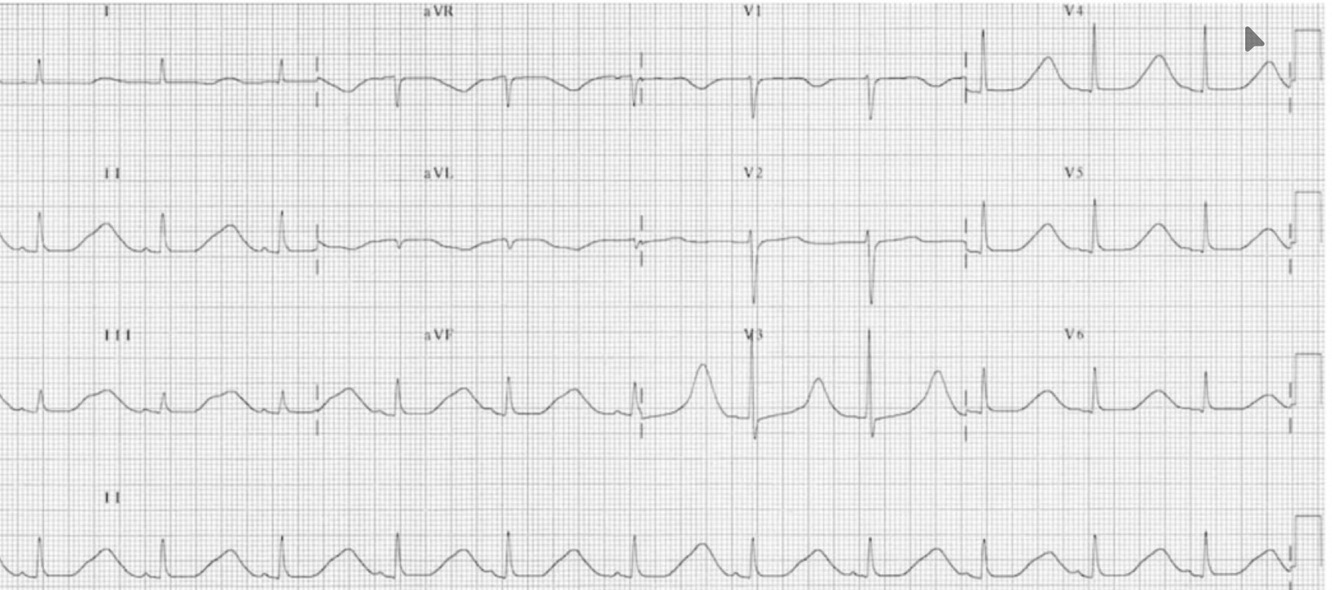
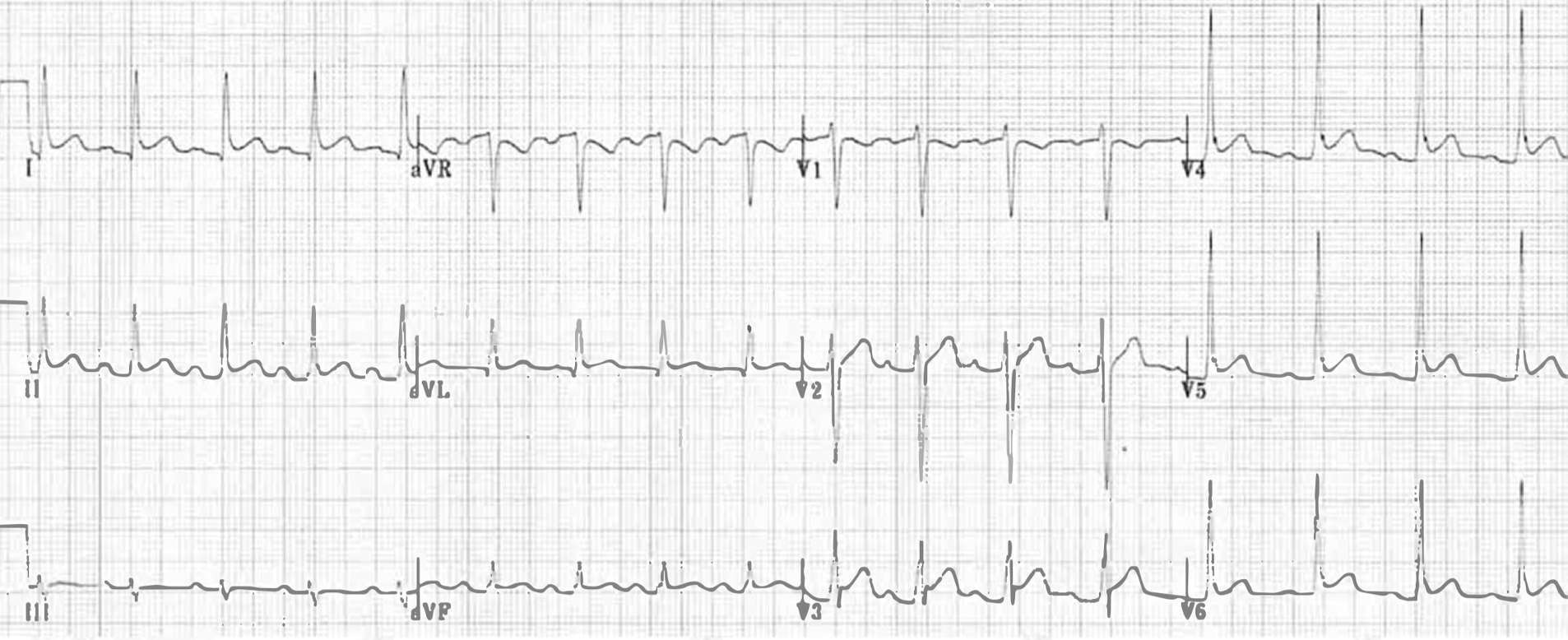
Jennifer Ong, a 55-year-old financial consultant, attends your clinic for a routine medical assessment required for a new life insurance policy. She has a history of hypertension, hyperlipidaemia, and migraine with aura.
Her regular medications include rosuvastatin 20 mg once daily, perindopril arginine 5 mg once daily, aspiring 100mg once daily and amitriptyline 25 mg nightly for migraine prophylaxis. She also uses sumatriptan 50 mg as required for acute migraine and reports taking a dose the previous evening.
She is a non-smoker, drinks one glass of wine with dinner most nights, and exercises regularly. She denies chest pain, palpitations, syncope, or dyspnoea.
On examination, she appears well. Temperature is 36.6°C, blood pressure 128/76 mmHg, pulse rate 68 beats per minute and regular. Cardiovascular and respiratory examinations are unremarkable.
As part of the assessment, an ECG is performed (see image).

Which of the following medications is MOST likely responsible for the ECG findings?
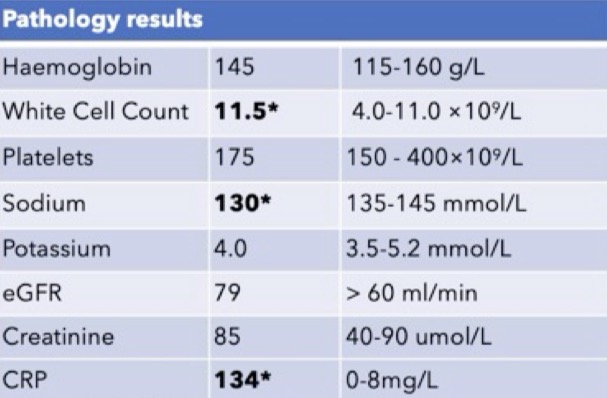
Encik Hafiz bin Salleh, a 52-year-old train operations supervisor, presents to your clinic with a 3-day history of fever, loose stools, dry cough, and generalised myalgia. He returned one week ago from a company retreat in Langkawi, where he stayed in a resort hotel and participated in outdoor team-building activities. Several colleagues have reported mild “flu-like” symptoms since returning, but none required hospitalisation.
He reports temperatures up to 38.7°C at home, associated with headache and fatigue. He denies chest pain, haemoptysis, rash, or joint swelling. His past medical history includes hypertension and anxiety disorder, treated with perindopril 5 mg daily and sertraline 100 mg daily. He is an ex-smoker (ceased 15 years ago) and drinks socially.
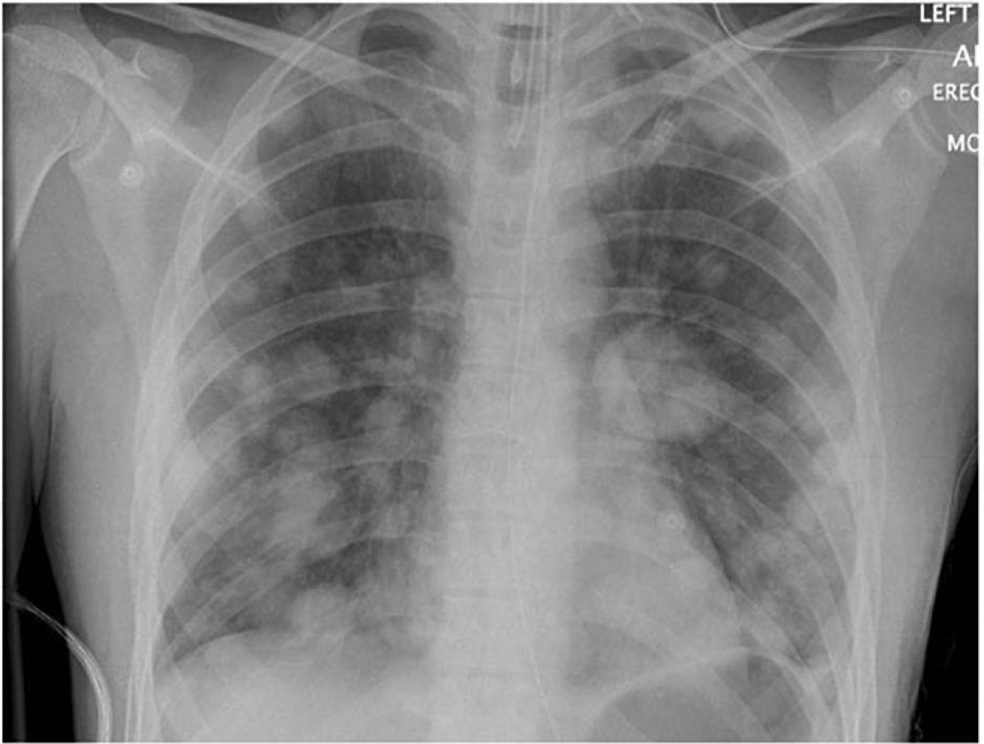
On examination, he appears unwell but alert. Temperature 38.5°C, blood pressure 92/58 mmHg, pulse 104 beats per minute, respiratory rate 18 breaths per minute, oxygen saturation 95% on room air. Chest auscultation reveals right lower zone crackles with reduced air entry. The remainder of the examination is unremarkable.
Initial investigations show:

Chest X-ray demonstrates right lower lobe consolidation.
What is the MOST likely cause of his presentation?
Puan Noraini binti Hamzah, a 52-year-old laboratory technologist, attends to discuss ongoing menopausal symptoms. Over the past two years, she has experienced increasingly troublesome hot flushes, night sweats, and fragmented sleep. Her menstrual cycles have been irregular for approximately five years, and her last menstrual bleeding episode was six months ago.
She remains sexually active with her husband and they use barrier contraception. She reports vaginal dryness, partially relieved with over-the-counter moisturisers. She denies post-coital bleeding or intermenstrual bleeding. Her cervical screening, mammography, and colorectal cancer screening are up to date.
Her past medical history includes well-controlled hypertension, generalised anxiety disorder, and chronic radicular back pain. Current medications are perindopril 5 mg once daily, venlafaxine 150 mg nightly, pregabalin 150 mg nightly, and topical metronidazole for rosacea. She is a non-smoker and drinks alcohol occasionally. Her mother was recently diagnosed with osteoporosis following a fragility fracture.
On examination, she appears well. Temperature 36.7°C, blood pressure 128/78 mmHg, pulse 72 beats per minute and regular. BMI is 24 kg/m². Cardiovascular and breast examinations are unremarkable. Pelvic examination shows pale vaginal mucosa without lesions. A recent imaging study of the uterus and ovaries performed transabdominally demonstrated normal endometrial thickness and no adnexal masses.
She wishes to improve her vasomotor symptoms and sleep but is unsure about hormone therapy.
What is the MOST appropriate next step in management?
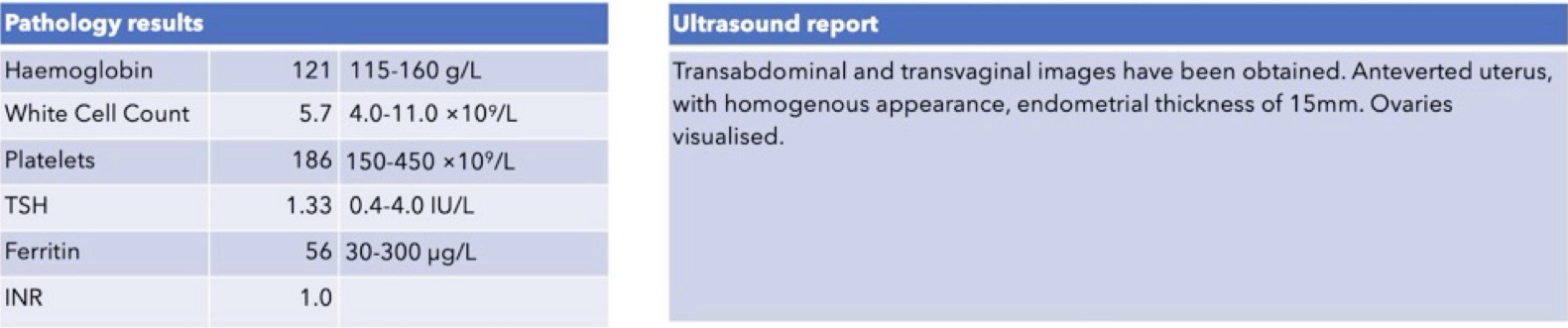
Puan Siti Mariam binti Rahman, a 47-year-old secondary school teacher, presents for review of investigations arranged for increasingly heavy menstrual bleeding over the past four months. Since menarche, she has had regular 28-day cycles with 4–5 days of bleeding. However, her last three cycles have been prolonged and heavier, with her most recent period lasting 11 days and associated with passage of clots. She denies intermenstrual bleeding or post-coital bleeding. There are no vasomotor symptoms, sleep disturbance, or vaginal dryness.
Her mother attained menopause at 53 years. Puan Siti has a history of hypertension and previous gestational diabetes. She is taking perindopril 4 mg once daily. Her husband has undergone vasectomy. She does not smoke and drinks alcohol occasionally.
On examination, she appears well. Temperature 36.8°C, blood pressure 134/82 mmHg, pulse 76 beats per minute and regular. BMI is 32 kg/m². Abdominal examination is unremarkable with no palpable masses. Bimanual pelvic examination reveals a non-tender, normal-sized uterus without adnexal masses.

What is the MOST appropriate next step in management?
Ms Lim Hui Wen, a 39-year-old corporate finance manager, presents with worsening bowel symptoms over the past month. She was diagnosed with diarrhoea-predominant irritable bowel syndrome (IBS-D) eight years ago following assessment that included blood tests and a visual examination of the large intestine using a flexible camera, both of which were normal at that time.
Her usual management includes dietary modification (low fermentable carbohydrate intake) and loperamide 2 mg as required, which she previously required only occasionally. Over the past four weeks, she reports increased stool frequency to 5–6 loose motions daily and has needed loperamide almost daily. She now describes being woken from sleep by an urgent need to defecate on several occasions, which is new for her.
She denies visible rectal bleeding, melena, or unintentional weight loss. She reports increased occupational stress but no recent travel or antibiotic use. Her appetite is unchanged. There is no family history of colorectal cancer or inflammatory bowel disease.
On examination, she appears well. Temperature 36.7°C, blood pressure 118/74 mmHg, pulse 76 beats per minute and regular. BMI is 22 kg/m². Abdominal examination reveals mild diffuse tenderness without guarding, masses, or organomegaly.
What is the MOST appropriate next step in management?
Ms Aishwarya Nair, a 28-year-old secondary school teacher and recreational long-distance runner, presents with a 6-month history of intermittent tightness and burning discomfort over the outer aspect of her right calf. The symptoms occur predictably during high-intensity exercise, particularly after 15–20 minutes of running, and gradually worsen if she continues. She occasionally notices transient weakness around her ankle when the discomfort is severe, describing difficulty lifting her foot fully during sprinting.
Her symptoms reliably improve within 20–30 minutes of stopping activity. She denies trauma, calf swelling, redness, back pain, bowel or bladder disturbance, or paraesthesia at rest. She has no past medical history and takes no regular medications. There is no history of smoking or use of hormonal contraception.
On examination at rest, she appears well. Temperature 36.6°C, blood pressure 116/72 mmHg, pulse 68 beats per minute and regular. Inspection of the lower limbs shows no asymmetry, swelling, or skin changes. Peripheral pulses are palpable and symmetrical. Sensory and motor examination of both lower limbs is normal. When asked to repeatedly dorsiflex and plantarflex her right ankle against resistance for several minutes in the clinic, she develops mild discomfort but no focal neurological deficit.
What is the MOST likely cause of her presentation?
Arjun Kumar, a 7-year-old boy, is brought to the clinic by his parents because he has refused to walk since this morning. They report that he was well until two days ago when he complained of aching in both legs. This morning, he asked to be carried and was reluctant to stand independently.
Arjun is normally active and plays futsal after school. Four weeks ago, he had a self-limiting upper respiratory tract infection. His developmental milestones are appropriate for age, and he has no chronic medical conditions. There is no history of trauma, back pain, bowel or bladder disturbance. He reports “tingling” in his feet but denies headache or visual changes.
On examination, he is alert and cooperative. Temperature 36.9°C, blood pressure 102/64 mmHg, pulse 92 beats per minute and regular. He is able to stand briefly with support but demonstrates difficulty initiating steps. When seated, power in both lower limbs is reduced symmetrically (Medical Research Council grade 3/5 proximally and distally). When the patellar tendon is tapped with a reflex hammer, the usual brisk extension of the lower leg is markedly reduced bilaterally. Upper limb power and reflexes are normal. Sensation to light touch is preserved.
What is the MOST probable diagnosis?
During a busy Saturday afternoon clinic session in Subang Jaya, your clinic assistant informs you that Ms Tan Li Wen, a 35-year-old staff nurse, sustained a needlestick injury while disposing of a hollow-bore needle after venepuncture. The injury involved a superficial puncture wound to her left index finger.
Immediate first aid was performed with thorough washing of the area using soap and running water. The source patient consented to blood testing for blood-borne viruses; however, as it is a weekend, the results will only be available in three days.
Ms Tan is otherwise well. Temperature 36.7°C, blood pressure 118/72 mmHg, pulse 74 beats per minute and regular. She has no chronic medical conditions.
You commenced HIV post-exposure prophylaxis with tenofovir disoproxil fumarate 300 mg plus emtricitabine 200 mg once daily, and dolutegravir 50 mg once daily.
Her immunisation record shows she completed a 3-dose hepatitis B vaccination series 17 years ago and was documented at that time to have an adequate immune response. You inadvertently requested measurement of circulating antibody levels against the hepatitis B surface antibody*, and the result returned the next day as 7 mIU/mL (laboratory reference for protective immunity ≥10 mIU/mL).
Correction: The previously stated “antigen” has been corrected to “antibody” for accuracy.
What is the MOST appropriate next step in management?
Mr Daniel Wong, a 31-year-old secondary school teacher, presents with a 2-week history of persistent hoarseness. He describes his voice as raspy and strained, particularly during morning classes, with partial improvement later in the day.
Over the past month, he has been under increased occupational stress following a complaint from a parent and admits to drinking 2–3 glasses of wine most evenings, which is more than his usual intake. He has also gained approximately 4 kg in the past two months. He denies dysphagia, odynophagia, haemoptysis, or neck swelling. He has never smoked. His past medical history includes anxiety treated with escitalopram 20 mg daily.
On examination, he appears well. Temperature 36.8°C, blood pressure 122/78 mmHg, pulse 74 beats per minute and regular. BMI is 31 kg/m². There is no cervical lymphadenopathy. Inspection of the oropharynx and visualisation of the upper airway using a light source and tongue depressor reveal no obvious masses or inflammation. The thyroid gland is not enlarged on palpation. Chest examination is unremarkable. During the consultation, you observe frequent throat clearing.
What is the MOST appropriate next step in management?
Adam Lee, an 18-month-old boy, is brought by his mother for review of a heart murmur detected incidentally two weeks ago during an upper respiratory tract infection. At that time, he had fever and reduced oral intake. He has since fully recovered and returned to his usual level of activity.
His mother reports no concerns regarding feeding, exercise tolerance, or growth. Adam runs around actively with his older sister and has never appeared breathless or cyanosed. He was born at term via spontaneous vaginal delivery with no antenatal or postnatal complications. There is no family history of congenital heart disease or sudden unexplained death.
On examination today, he is playful and interactive. Temperature 36.6°C, heart rate 96 beats per minute, blood pressure 92/58 mmHg, respiratory rate 24 breaths per minute, oxygen saturation 99% in room air. Weight and length track along the 50th–75th centiles. There are no dysmorphic features and peripheral pulses are normal.
Cardiovascular examination reveals a soft, grade 1–2/6 ejection systolic murmur best heard at the upper left sternal border. It does not radiate. The murmur is more audible when he is lying supine and becomes softer when he sits upright. There are no added heart sounds, thrills, or signs of heart failure.
What is the MOST appropriate next step in management?
You are the on-call GP in a district klinik kesihatan in rural Sabah, approximately 250 km from the nearest tertiary centre with cardiothoracic services.
Mr Kelvin Tan, a 22-year-old university student who is home for the holidays, presents to the emergency department in your klinik kesihatan with sudden onset right-sided pleuritic chest pain that began while he was resting. He denies trauma. He is otherwise fit and well, has no known medical conditions, and does not smoke.
On arrival, he reports that the pain has slightly improved compared to onset. He denies significant shortness of breath.
On examination: temperature 36.7°C, blood pressure 112/76 mmHg, pulse 78 beats per minute and regular, respiratory rate 18 breaths per minute, oxygen saturation 98% on room air. He is comfortable at rest and speaking in full sentences. Chest examination reveals mildly reduced breath sounds at the right apex without tracheal deviation.
You personally review an upright inspiratory chest radiograph, which demonstrates a visible rim of approximately 1 cm between the lung margin and the chest wall at the right apex. There is no mediastinal shift.
What is the MOST appropriate next step in management?
Mr Amir Rahman, a 27-year-old software engineer, presents to your clinic in Shah Alam after falling off his bicycle earlier that morning. He reports that he lost control while descending a slope and landed directly on the left side of his chest against the road surface. Since the fall, he has had sharp, localised pain over the left lateral chest, significantly worsened by deep inspiration, coughing, and trunk rotation.
He denies shortness of breath at rest, haemoptysis, syncope, or palpitations. He has no past medical history and does not smoke.
On examination, he appears uncomfortable but haemodynamically stable. Temperature 36.7°C, blood pressure 120/76 mmHg, pulse 96 beats per minute and regular, respiratory rate 20 breaths per minute, oxygen saturation 98% on room air. There is visible ecchymosis over the left mid-axillary line at approximately the level of the 5th rib. Palpation elicits marked focal bony tenderness at a single point, and gentle compression of the rib cage anteroposteriorly reproduces the pain at the same location. No crepitus is felt. Breath sounds are equal bilaterally, and there is no tracheal deviation.
An upright inspiratory chest radiograph does not demonstrate pneumothorax, pleural effusion, or obvious fracture.
What is the MOST likely diagnosis?
Mr Hafiz Rahman, a 37-year-old farm supervisor from Cameron Highlands, presents with a 4-month history of progressive breathlessness and a persistent dry cough. He has worked in agriculture most of his adult life but began working on a dairy farm six months ago. His duties now include cleaning animal sheds, handling feed, and breaking apart stored hay bales daily.
He reports that his symptoms tend to worsen toward the end of work shifts, particularly after prolonged time inside enclosed barns. On weekends away from the farm, he notices partial improvement. He denies fever, chest pain, wheeze, or haemoptysis.
His past medical history includes mild atopic dermatitis. He smokes approximately 15 cigarettes daily and drinks alcohol occasionally.
On examination, he appears comfortable at rest. Temperature 36.6°C, blood pressure 138/90 mmHg, pulse 84 beats per minute and regular, respiratory rate 16 breaths per minute, oxygen saturation 96% on room air. Chest auscultation reveals fine inspiratory crackles over the mid zones bilaterally. No wheeze is heard. There is no digital clubbing.
Which of the following findings would be MOST consistent with the likely diagnosis?
Mr Adrian Lee, a 43-year-old marketing consultant in Kuala Lumpur, returns for follow-up after treatment for syphilis 12 months ago. At that time, he had presented with a painless genital ulcer. Blood testing demonstrated reactive treponemal-specific antibody tests and a quantitative non-treponemal titre of 1:16. He was treated with a single intramuscular dose of long-acting benzathine penicillin and received counselling regarding partner notification and safer sex. He had a documented negative sexually transmitted infection screen 6 months prior to that episode.
He now attends for routine follow-up. He reports no new symptoms and feels well. He has recently started a new sexual relationship with a male partner in the past two weeks. On examination, he appears well. Temperature 36.7°C, blood pressure 124/76 mmHg, pulse 72 beats per minute and regular. There are no mucocutaneous lesions or lymphadenopathy.
The blood test result from 12 months ago and test done today is shown below:

What is the MOST appropriate next step in management?
A multicentre randomised controlled trial, the Heart Outcomes Prevention Evaluation Study (HOPE), evaluated the effect of ramipril on cardiovascular outcomes in high-risk patients aged ≥55 years without heart failure. A total of 9,297 participants were randomised to receive ramipril 10 mg daily (n=4,645) or placebo (n=4,652) and were followed for a mean duration of 5 years. Baseline characteristics including hypertension, diabetes mellitus and smoking status were comparable between groups. The primary composite outcome was myocardial infarction, stroke, or cardiovascular death. During follow-up, the primary outcome occurred in 651 patients (14.0%) in the ramipril group and 826 patients (17.8%) in the placebo group (relative risk 0.78; 95% CI 0.70–0.86; p<0.001). The relative risk reduction was reported as 22%. The hazard ratio adjusted for covariates was 0.78. Subgroup analysis showed consistent benefit across diabetics and non-diabetics. There was no statistically significant difference in overall adverse event–related discontinuation.
Based on the results above, how many patients would need to take ramipril for 5 years in order to prevent one additional patient from experiencing the combined outcome of heart attack, stroke, or cardiovascular death?
Ms Nur Afiqah Rahman, a 23-year-old physiotherapy student in Kuala Lumpur, presents with gradually progressive difficulty hearing over the past 6–8 months. She first noticed difficulty following conversations in small group discussions and has recently needed to increase the volume on her phone.
She denies vertigo, tinnitus, ear pain, or recent upper respiratory infection. She has no significant past medical history. She takes a combined oral contraceptive pill. She does not smoke cigarettes and drinks alcohol occasionally. She reports occasional recreational cannabis use. She denies regular exposure to loud music or industrial noise. Her father reportedly required hearing aids in his early 30s.
On examination, she appears well. Temperature 36.6°C, blood pressure 118/72 mmHg, pulse 70 beats per minute and regular. Otoscopic examination reveals intact tympanic membranes without effusion or cerumen impaction.
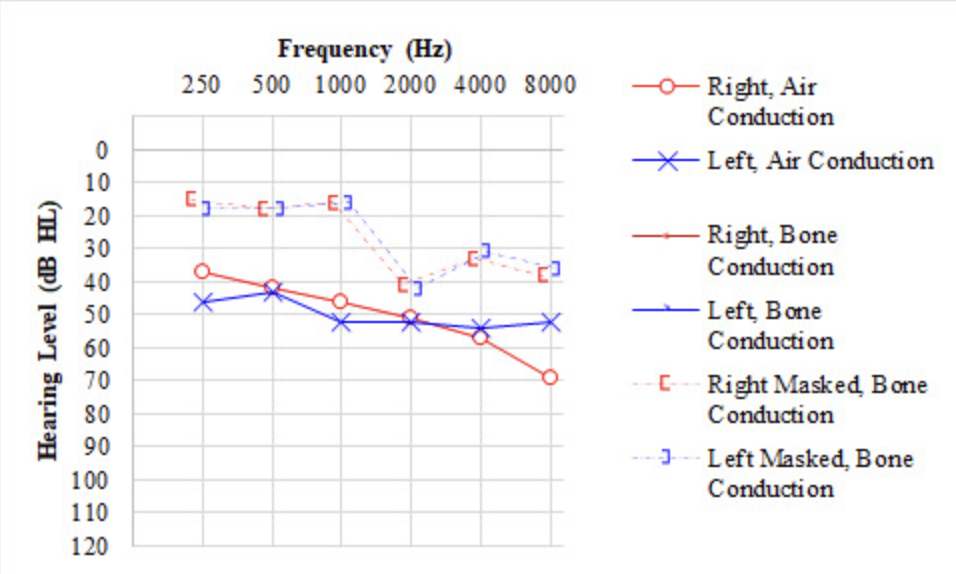
A bedside assessment using a vibrating tuning fork placed at the midline of her forehead produces a sound heard equally in both ears. When the vibrating fork is placed on the mastoid process and then moved adjacent to the ear canal, she reports that the sound is louder when the fork remains in contact with the bone on both sides. An audiology test was done and audiogram showed as below:

Based on the most likely diagnosis, what is the MOST appropriate next step in management?
Ms Kavitha Raj, a 22-year-old university student in Johor Bahru, presents with persistent breathlessness. She has attended your clinic three times in the past month with similar symptoms. She reports using her salbutamol inhaler every 2–3 hours over the past week with little benefit.
She was diagnosed with asthma at age 7 and has remained on salbutamol 100 mcg as required since childhood. She has never required hospitalisation for asthma. She attributes recent symptoms to academic stress and examinations.
Last week, while symptomatic, she underwent assessment of lung volumes and airflow before and after inhalation of bronchodilator medication. The results showed:

Today, she appears comfortable. Temperature 36.6°C, blood pressure 116/70 mmHg, pulse 90 beats per minute and regular, respiratory rate 14 breaths per minute, oxygen saturation 98% on room air. Chest examination is clear with no wheeze or prolonged expiratory phase. Despite this, she states she still feels breathless.
What is the MOST appropriate next step in management?
Ms Nur Aisyah Rahman, a 37-year-old administrative executive in Kuala Lumpur, presents with a 1-week history of reduced vision in her left eye. She describes blurring that particularly affects central vision and notes mild discomfort behind the eye, especially when moving it. There is no redness, discharge or photophobia.
She has a history of a distal deep vein thrombosis 5 years ago following the delivery of her second child, which was treated with anticoagulation for 6 weeks. She is not on any regular medications. She does not smoke and drinks alcohol occasionally.
On examination, she appears well. Temperature 36.8°C, blood pressure 124/78 mmHg, pulse 76 beats per minute and regular. Visual acuity testing shows right eye 6/6 and left eye 6/12 When each eye is tested separately, shining a light into the left eye results in reduced constriction compared to when the right eye is illuminated.
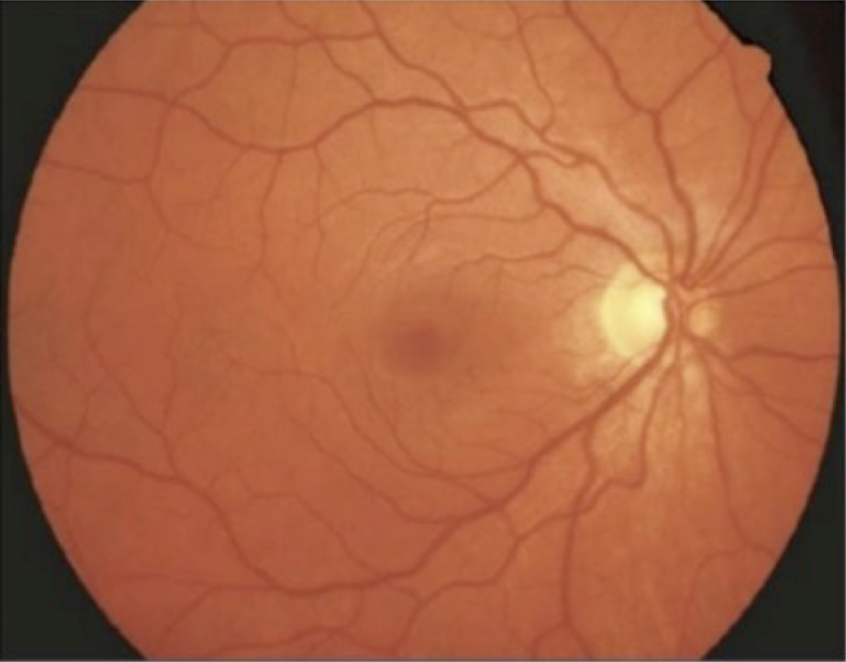
Fundoscopy findings shown below:

What is the MOST likely diagnosis?
Ms Aina Lim, a 34-year-old accountant, presents to your clinic with a 2-day history of fever and pain in her left breast. She delivered her second child 6 weeks ago via uncomplicated spontaneous vaginal delivery and is exclusively breastfeeding. She reports feeling increasingly tired with chills and localised breast discomfort. Feeding has become uncomfortable but she continues to breastfeed from both sides. She denies nipple trauma, cracked skin or purulent discharge. There is no history of previous breast infections.
On examination, she appears mildly unwell but not toxic. Temperature 38.3°C, blood pressure 122/76 mmHg, pulse 88 beats per minute and regular, respiratory rate 16 breaths per minute, oxygen saturation 99% on room air.
Inspection of the left breast reveals a wedge-shaped erythematous area over the upper inner quadrant. The area is warm and tender to palpation. There is no fluctuance and no discrete mass. When gentle compression is applied around the areola to assess for duct obstruction, no pus is expressed.
What is the MOST appropriate next step in management?
Ms Tan Mei Ling, a 51-year-old office administrator, attends to review a recent hormone result. She has been taking a progestogen-only oral contraceptive (norethisterone 350 micrograms daily) for the past 5 years. She wishes to stop contraception if it is no longer required. She reports that her bleeding has been very light and irregular for several years while on this medication and she cannot recall her last spontaneous menstrual period. She denies vasomotor symptoms, sleep disturbance or vaginal dryness. She remains sexually active in a stable relationship. Her past history includes uterine fibroids managed conservatively and uncomplicated lower limb varicose veins. She takes no other regular medication.
On examination, she is well. Temperature 36.6°C, blood pressure 124/78 mmHg, pulse 74 beats per minute and regular. BMI 24 kg/m². A serum follicle-stimulating hormone level performed while she continued the progestogen-only pill is 31 IU/L (Normal FSH range: follicular phase: 3–10 IU/L, mid-cycle (ovulatory peak): 5–20 IU/L, luteal phase: 1–9 IU/L, postmenopausal: 25–135 IU/L)
What is the MOST appropriate next step in management?
Madam Kamala Devi, a 65-year-old retired clerk, attends for review of progressive breathlessness over the past 3 years. She was diagnosed with chronic obstructive pulmonary disease (COPD) 4 years ago. She becomes breathless after walking approximately 100 metres on level ground and needs to stop to catch her breath. Her symptoms improve with salbutamol and rest. She reports one exacerbation in the past 12 months, managed in the community with oral corticosteroids and antibiotics. She has not required hospital admission.
Her past medical history includes diverticulosis and bilateral knee osteoarthritis. She is currently on tiotropium 18 mcg inhaled once daily, salbutamol as needed, paracetamol sustained-release and lactulose. Her inhaler technique was reviewed last month and is satisfactory. She is an ex-smoker (30 pack-years), having quit 5 years ago.
On examination, she appears comfortable at rest. Temperature 36.6°C, blood pressure 134/80 mmHg, pulse 78 beats per minute regular, respiratory rate 14 breaths per minute, oxygen saturation 97% on room air. Chest auscultation reveals reduced breath sounds bilaterally without crackles or wheeze. There is no peripheral oedema. A breathing test performed one month ago showed airflow limitation with a forced expiratory volume in one second approximately 55% of predicted after bronchodilator use.
What is the MOST appropriate next step in management?
Madam Siti Marina, a 58-year-old retired teacher, presents with a pruritic rash over the left side of her neck that developed 2 days ago. She denies similar lesions elsewhere and feels otherwise well. She recently began using a new perfume applied to her neck over the past few days, which was a birthday gift from her daughter. She has not changed soaps, detergents, or skincare products.
Her past medical history includes autoimmune thyroid disease and coeliac disease. She takes levothyroxine 100 micrograms daily and continuous combined menopausal hormone therapy (estradiol 1 mg with dydrogesterone 5 mg daily). She has no known drug allergies.
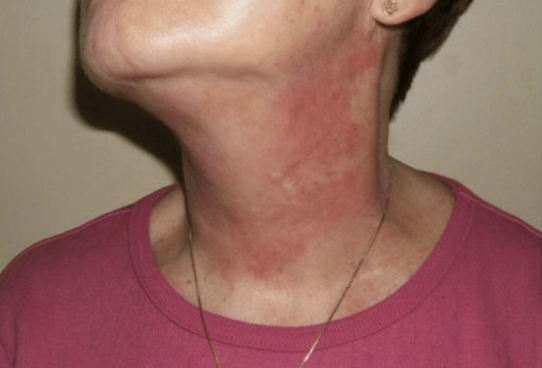
On examination her temperature 37.1°C. blood pressure 130/78 mmHg. Pulse 66 beats per minute, regular and respiratory rate 14 breaths per minute. Her rash has the following appearance (see image)

What is the MOST appropriate next step in management?
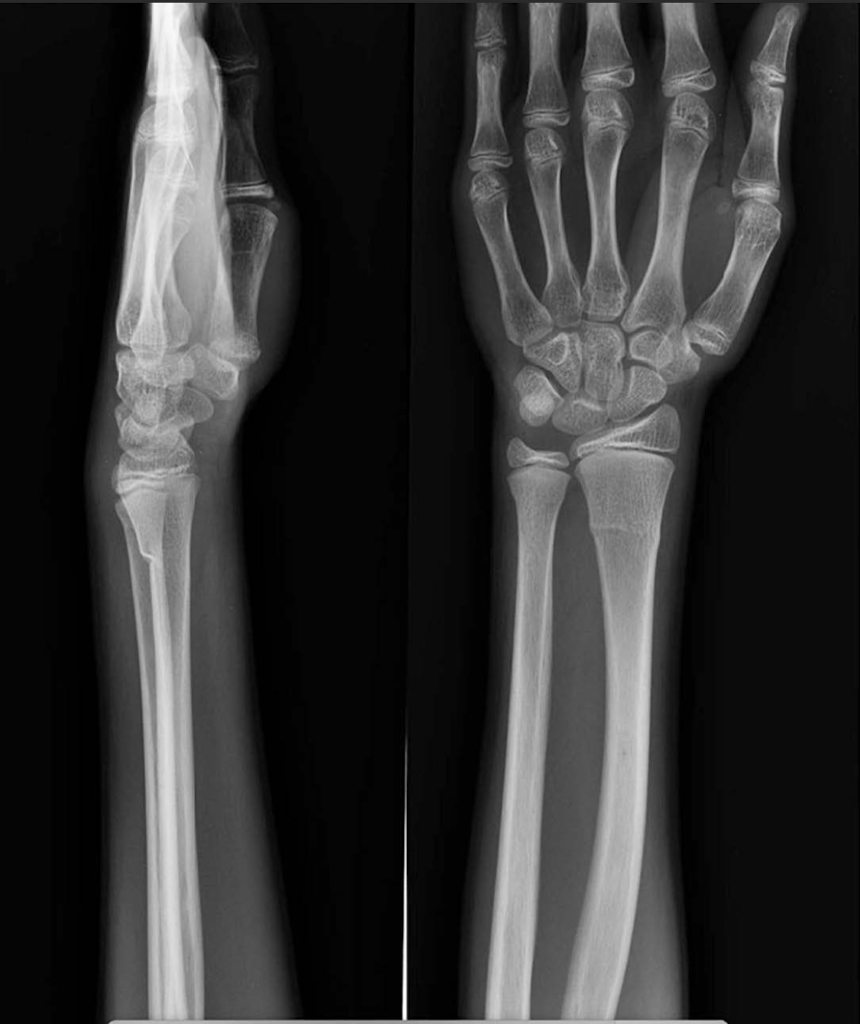
Mr Rajesh Kumar, a 60-year-old landscape contractor, presents with a 3-month history of progressive fatigue and generalized bone pain affecting his back, ribs, right forearm and thighs. The pain is dull, persistent and not clearly mechanical. He denies recent trauma. His appetite has reduced and he reports unintentional weight loss of 4 kg. He has a past history of alcohol dependence in remission and is a former intravenous drug user, abstinent for 10 years. He currently smokes 15 cigarettes daily.
On examination, he appears pale but not acutely unwell. Temperature 36.8°C, blood pressure 128/76 mmHg, pulse 88 beats per minute regular, respiratory rate 16 breaths per minute. There is diffuse bony tenderness over the thoracic spine and right forearm without swelling or erythema.
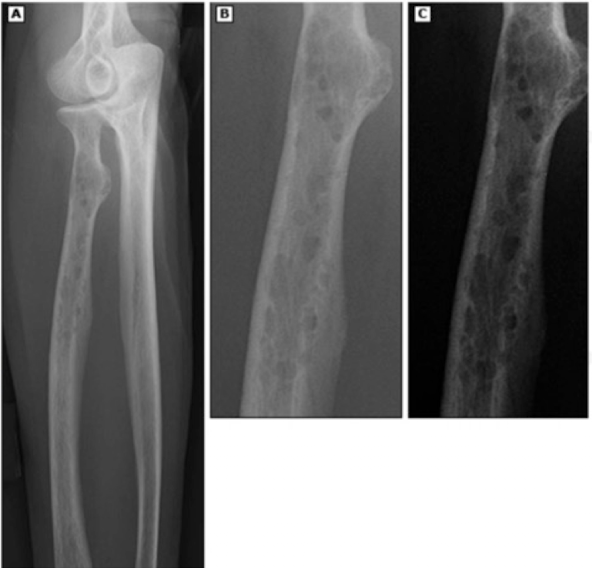
Blood investigations reveal haemoglobin 9.8 g/dL and corrected serum calcium 2.64 mmol/L. A plain radiograph of the right forearm demonstrates multiple well-circumscribed radiolucent lesions within the shaft of the radius (image provided).

Which of the following investigations would be MOST useful in confirming the most likely diagnosis?
Mr Lim Wei Jian, a 44-year-old construction worker, presents to your clinic requesting information about hepatitis C treatment. He was diagnosed more than 10 years ago and previously commenced interferon-based therapy but discontinued due to intolerable adverse effects. He has not had specialist follow-up for several years. He takes paracetamol 1 g twice daily for chronic knee pain. He drinks 4–5 beers most nights and admits to ongoing intravenous methamphetamine use. He smokes approximately 15 cigarettes per day.
He reports no jaundice, abdominal swelling or gastrointestinal bleeding. On examination, he appears well. Temperature 36.7°C, blood pressure 126/78 mmHg, pulse 84 beats per minute regular. There are no stigmata of chronic liver disease. Recent blood tests show mildly elevated transaminases. A molecular test detecting viral genetic material confirms detectable hepatitis C RNA.
He asks whether he is suitable for modern treatment and how cure would be determined. What is the MOST appropriate advice to give him?
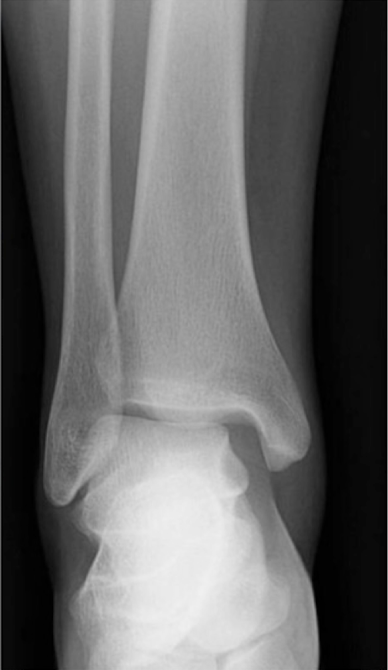
Mr Hafiz Rahman, a 45-year-old plumber, presents after sustaining an eversion injury to his right ankle while stepping off a ladder at work. He was immediately unable to weight bear. He reports medial ankle pain and swelling but denies head injury or other trauma. He has no significant past medical history and takes no regular medication.
On examination, he appears uncomfortable but haemodynamically stable. Temperature 36.7°C, blood pressure 132/82 mmHg, pulse 88 beats per minute regular, respiratory rate 16 breaths per minute. There is significant bruising over the medial ankle with tenderness over the medial malleolus and anterior ankle joint line. There is no obvious deformity. Distal pulses and sensation are intact.
A plain radiograph of the ankle is performed (image provided).

Based on the mechanism of injury and imaging findings, what is the MOST appropriate next step in management?
Ms Kavitha Menon, a 33-year-old marketing executive, presents with a 2-week history of vaginal discharge. She describes it as thin, whitish and associated with a noticeable fishy odour, particularly after intercourse. She denies vulval itch, dysuria or pelvic pain. She has been in a monogamous heterosexual relationship for the past 2 years and has no history of sexually transmitted infections. She has a subdermal etonogestrel implant inserted 2 years ago and takes no other regular medications.
She feels well otherwise. Temperature 36.8°C, blood pressure 118/72 mmHg, pulse 78 beats per minute regular. On examination, there is a homogenous thin discharge coating the vaginal walls without erythema or clumping. When vaginal fluid is tested using indicator paper, the pH is greater than 4.5. A laboratory assessment of the vaginal sample shown below:

What is the MOST appropriate next step in management?
Mrs Lim Siew Ling, a 77-year-old retired school administrator, attends for review after completing treatment for another symptomatic urinary tract infection. This is her third culture-confirmed episode in the past 3 months. She has type 2 diabetes mellitus, hypertension, chronic obstructive pulmonary disease and primary open-angle glaucoma. Her regular medications are metformin extended-release 2 g orally once daily, dapagliflozin 10 mg orally once daily, perindopril arginine 5 mg orally once daily, indapamide modified-release 1.5 mg orally once daily, tiotropium 18 micrograms inhaled once daily and latanoprost 0.005% eye drops nightly. She lives independently with her husband and remains active.
She reports that each episode is associated with dysuria, urgency and malaise but no flank pain. She is currently asymptomatic. Temperature 36.7°C, blood pressure 134/78 mmHg, pulse 74 beats per minute regular. Abdominal examination is unremarkable. When a small sample of urine is assessed using a reagent strip that changes colour in the presence of leukocytes and nitrites, it is negative. She expresses frustration and asks whether there is a way to prevent further infections.
What is the MOST appropriate next step in management?
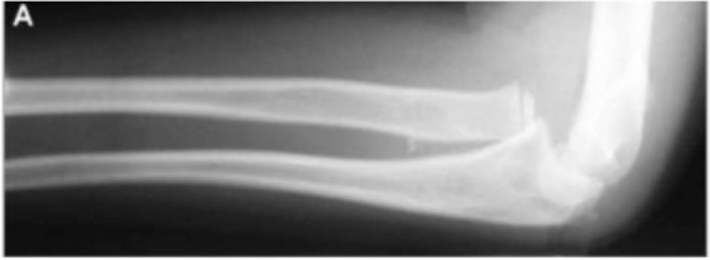
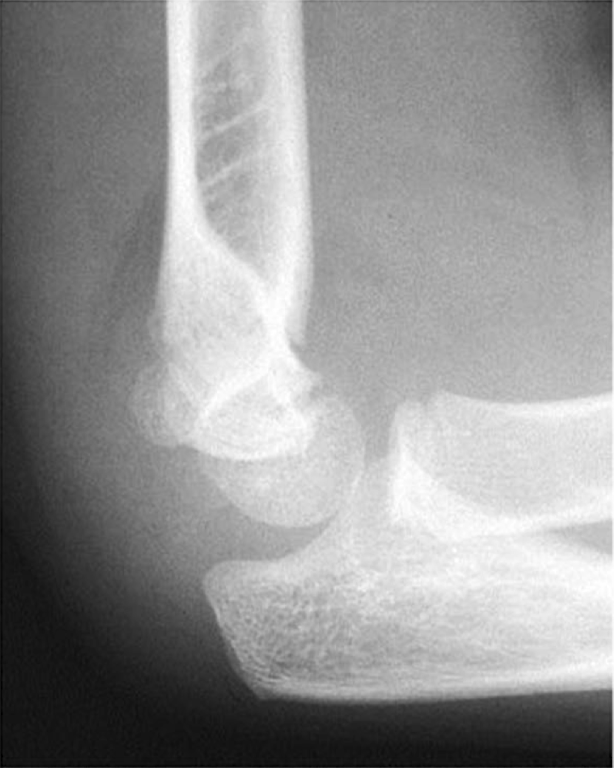
Arjun Nair, an 8-year-old boy, is brought to your clinic after falling onto his outstretched right hand while playing at school earlier today. Since the fall, he refuses to use his right arm and becomes distressed when the elbow is moved. He has no previous medical problems and takes no regular medications.
On examination, temperature 36.7°C, blood pressure 100/62 mmHg, pulse 96 beats per minute regular. The right elbow is swollen with tenderness along the proximal forearm. The skin is intact. He avoids forearm rotation and elbow movement. His fingers are warm with capillary refill under 2 seconds, and he is able to extend his wrist and fingers against resistance.
A lateral radiograph of the elbow shows below.

What is the MOST appropriate next step in management?
A 53-year-old woman attends for follow-up after participating in routine biennial screening. She is asymptomatic, has no significant family history of breast cancer, and her mammogram report states “no evidence of malignancy.” She asks how reassured she should feel, noting that she has read online that screening tests are not perfect and may “miss cancers.” You review population screening performance data derived from large mammography screening studies, including program data aligned with international evidence such as the Swedish Two-County Trial.
A published summary for asymptomatic women aged 50–69 years reports the following approximate estimates in a screening setting: sensitivity 87%, specificity 94%, cancer prevalence 8 per 1,000 women screened, recall rate 4%, and false negative rate 13%. The report also presents likelihood ratios and predictive values calculated for this population prevalence.
Mary’s specific concern is: “Now that my result is normal, what is the chance that I actually don’t have breast cancer?”
Which parameter from the report most directly addresses her question?
Ethan Wong, a 5-year-old boy, is brought by his mother who is concerned that he still wets the bed several nights per week. He has been consistently dry during the day since age 3 and has no urgency, dysuria or daytime incontinence. He wakes with a wet pull-up most mornings. His older sibling achieved overnight dryness at age 4, and his mother is worried that early treatment may be necessary to prevent long-term problems.
Ethan is otherwise well and attends kindergarten. He has a history of mild atopic dermatitis treated intermittently with methylprednisolone aceponate 0.1% topical ointment as required. He takes no regular systemic medications. There is no history of constipation, polydipsia or weight loss. On examination, temperature 36.6°C, blood pressure 96/60 mmHg, pulse 88 beats per minute regular. Growth parameters are appropriate for age. Abdominal, lumbosacral spine and neurological examinations are normal. A fresh urine sample tested with a reagent strip that detects glucose, leukocytes, nitrites and protein shows no abnormalities.
What is the MOST appropriate next step in management?
Daniel Lim, a 19-year-old man, presents with his stepmother requesting documentation to support referral for psychological assessment prior to an upcoming court appearance. He was recently released on bail for drug distribution offences. He reports a longstanding history of behavioural problems, including repeated police encounters for vandalism and assault during adolescence. He left secondary school at age 15 following suspension for physically attacking a classmate. His stepmother describes chronic truancy, classroom disruption and repeated disregard for school rules. There is a current restraining order taken out by his mother after he assaulted her during an argument over money. Daniel admits to regular cannabis use, intermittent methamphetamine use and smoking approximately 10 cigarettes per day. He denies depressive symptoms or psychotic features.
On examination, temperature 36.5°C, blood pressure 118/72 mmHg, pulse 84 beats per minute regular. He is alert, well oriented and cooperative but minimises responsibility for past actions. Speech is normal in rate and tone. There is no evidence of mood disorder, thought disorder or cognitive impairment.
What is the MOST likely diagnosis?
Nur Aisyah Rahman, a 38-year-old cattle farm supervisor from Kedah, presents with a 2-month history of bilateral hand swelling and prolonged morning stiffness. She reports stiffness affecting the metacarpophalangeal and proximal interphalangeal joints that lasts approximately 2 hours each morning before improving with activity. She also describes persistent fatigue despite adequate sleep. She denies fever, oral ulcers, photosensitivity or rash. Her past history includes postpartum thyroiditis and gestational diabetes. She is not on regular medications. She is a non-smoker and drinks alcohol occasionally. On examination, temperature 36.7°C, blood pressure 122/74 mmHg, pulse 76 beats per minute regular. There is symmetrical synovial thickening and tenderness over the second and third metacarpophalangeal joints bilaterally. There are no deformities or nodules.
Which of the following investigations would be MOST helpful in confirming your provisional diagnosis?
Adam Prakash, an 8-year-old boy from Petaling Jaya, is brought by his mother with a 3-month history of recurrent abdominal pain that has begun affecting school attendance. The pain is peri-umbilical, occurs at least 4 days per week and is most prominent in the mornings before school. He has continued to gain height and weight appropriately. There is occasional nausea but no vomiting, diarrhoea, constipation or nocturnal symptoms.
His mother describes him as “a worrier since he was small.” He has recurrent nightmares about being separated from his parents and refuses to sleep alone. He becomes distressed in crowded shopping centres and insists on holding both parents’ hands. Recently, he has refused to attend school and extracurricular classes, becoming irritable and occasionally throwing tantrums if pressured. After these episodes, he appears remorseful. Teachers report that he performs well academically and behaves appropriately in class.
On examination, temperature 36.7°C, blood pressure 100/62 mmHg, pulse 90 beats per minute regular. Abdominal examination is soft and non-tender. Neurological examination is normal. A urine sample assessed using a reagent strip that changes colour in the presence of infection markers is unremarkable. Growth parameters are within normal percentiles.
What is the MOST appropriate next step in management?
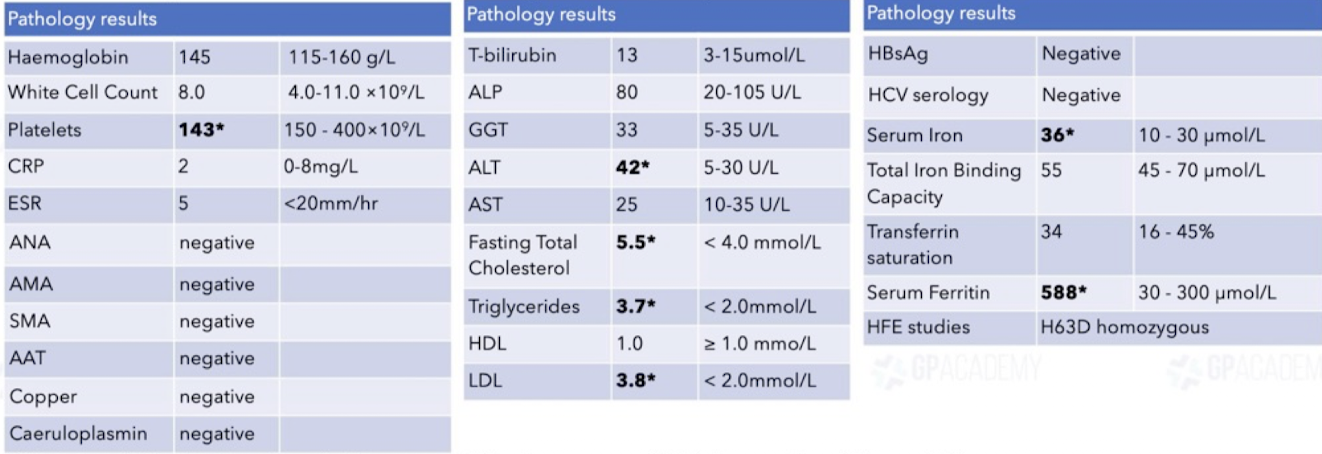
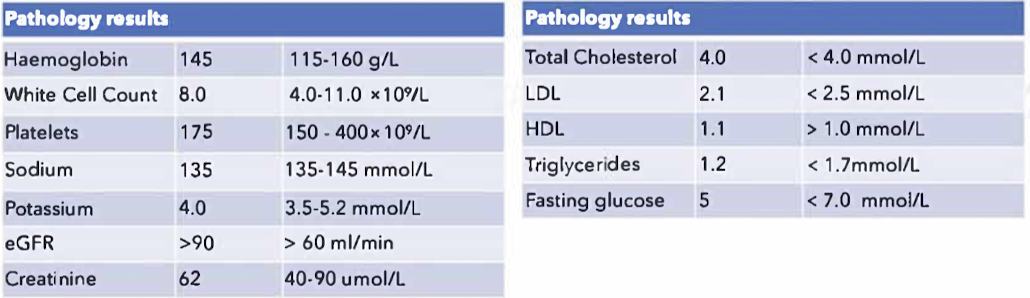
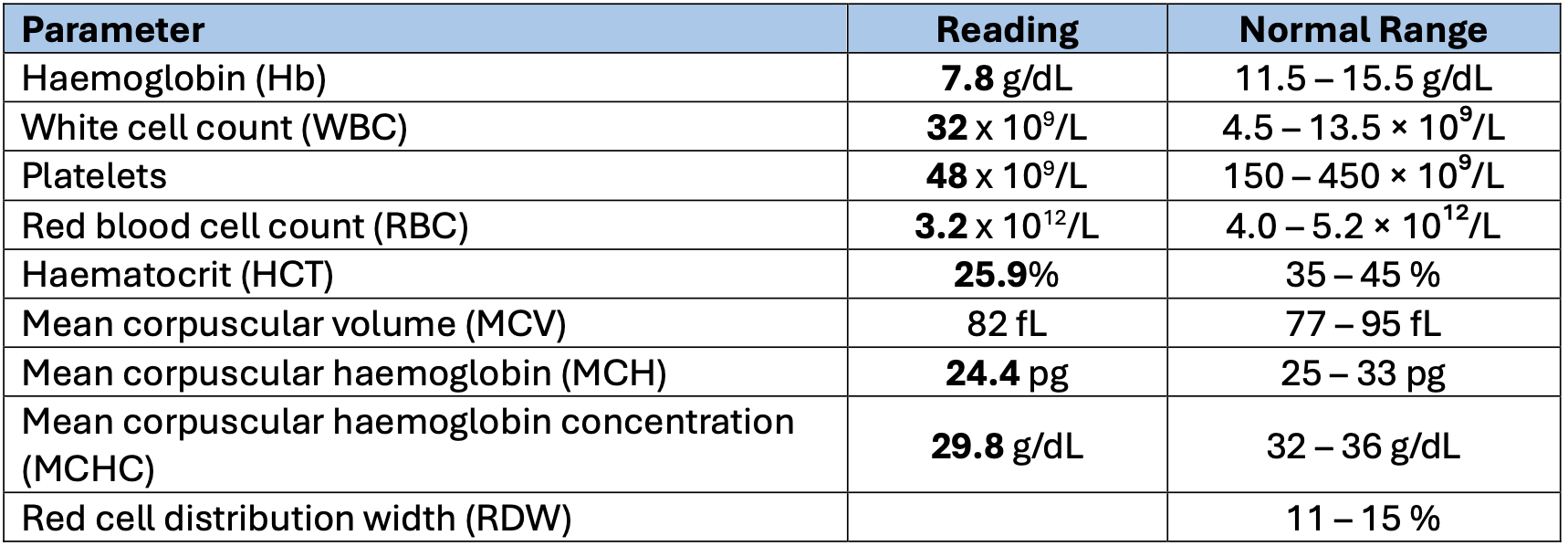
Mr Daniel Chong, a 55-year-old restaurant owner in Johor Bahru, presents for review of abnormal blood tests performed during evaluation for lethargy. He denies weight loss, night sweats, abdominal pain or arthralgia. He exercises minimally but remains physically active at work. His past history includes post-traumatic stress disorder managed with prazosin 5 mg orally at night. He smokes 20 cigarettes daily and drinks 1–2 alcoholic beverages on weekends only.
On examination, temperature 36.8°C, blood pressure 132/88 mmHg, pulse 86 beats per minute regular. BMI is 34 kg/m² and waist circumference 104 cm. There is no jaundice or hepatosplenomegaly. Laboratory investigations done and result is shown below (see image)

Which of the following is the MOST likely cause of his hyperferritinaemia?
Aina Subramaniam, a 23-year-old pharmacy assistant in Penang, presents for review one day after sustaining an inversion injury to her left ankle during a netball match. She reports landing awkwardly while pivoting and was unable to continue playing. She attended a nearby emergency department where a radiograph was performed and she was verbally informed that no fracture was identified. She was provided with crutches and a compression bandage.
Today she is able to partially weight-bear and walk a few steps unaided. Temperature 36.6°C, blood pressure 112/70 mmHg, pulse 82 beats per minute regular. There is swelling and ecchymosis over the lateral malleolus with maximal tenderness anterior to the lateral malleolus. There is no medial ankle tenderness. When the ankle is gently pulled forward while stabilising the tibia, there is increased anterior movement compared to the opposite side. The formal radiology report describes soft tissue swelling without bony injury.
Which of the following structures is MOST likely to have been injured?
Ms Farah Tan, a 42-year-old administrative executive in Kuala Lumpur, presents with a 6-month history of persistent low mood, anhedonia and fatigue. Over the past month, her occupational functioning deteriorated significantly. She denied psychotic symptoms, manic features or substance misuse. After a structured clinical interview exploring mood, sleep, appetite, cognition and risk assessment, you diagnosed major depressive disorder. She was commenced on sertraline 50 mg orally once daily and referred for cognitive behavioural therapy.
At review 6 weeks later, she reports substantial improvement. Her sleep has normalised and she describes improved motivation and energy. Temperature 36.7°C, blood pressure 118/74 mmHg, pulse 76 beats per minute regular. She has no adverse effects from medication. This is her first lifetime episode of depression. She asks how long she should continue pharmacotherapy.
What is the MOST appropriate duration to continue sertraline 50 mg orally once daily?
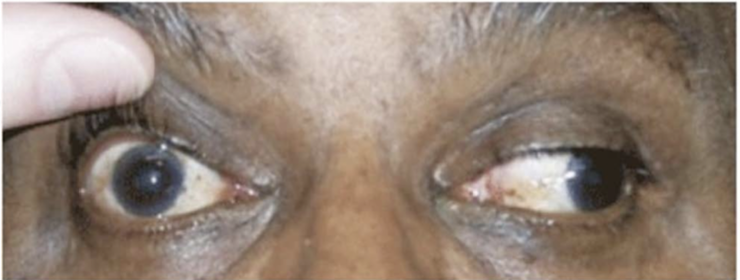
Mr Harinder Singh, a 64-year-old analyst from Kuala Lumpur, presents with sudden onset double vision since waking this morning. He has impaired fasting glucose managed with diet alone. He takes no regular medications. He denies headache, eye pain or limb weakness.
When each eye is assessed individually by covering the other eye, the diplopia resolves. Temperature 36.7°C, blood pressure 142/88 mmHg, pulse 84 beats per minute regular. Pupils are equal and reactive to light. There is no ptosis. When asked to look to his left, his appearance is as shown below. There are no other focal neurological deficits.

Which of the following is the MOST likely cause of his presentation?
Several recent randomised controlled trials have evaluated the cardiovascular safety of selective COX-2 inhibitors in patients with osteoarthritis and rheumatoid arthritis. Individual trials reported varying estimates of myocardial infarction and stroke risk, with some lacking sufficient power to detect uncommon adverse vascular events. A group of researchers systematically searched MEDLINE, EMBASE and Cochrane databases, predefined inclusion criteria, assessed methodological quality of eligible trials, and extracted outcome data independently by two reviewers. They then statistically pooled relative risks using a random-effects model to generate a single summary estimate of major vascular events associated with COX-2 inhibitor use compared with placebo or non-selective NSAIDs. Heterogeneity was assessed using the I² statistic, and publication bias was explored with a funnel plot. The authors concluded that COX-2 inhibitors were associated with an increased risk of vascular complications overall.
Which of the following best describes the study design used by the researchers?
Adam Rahman, a 6-year-old boy from Shah Alam, is brought to your clinic with 24 hours of fever and right ear pain. He has mild rhinorrhoea but no vomiting or diarrhoea. He has no chronic medical conditions and is up to date with immunisations. His parents report reduced appetite and clinginess but no lethargy.
On examination, temperature 38.2°C, blood pressure 98/60 mmHg, pulse 102 beats per minute, respiratory rate 22 per minute. He appears uncomfortable but alert. Oropharynx shows mild erythema. When examining the ear using a device that allows magnified visualisation of the tympanic membrane, you observe a bulging, opaque right tympanic membrane with loss of normal landmarks. The left tympanic membrane is mildly erythematous but translucent and not bulging. There is no perforation and no mastoid tenderness.
What is the MOST appropriate next step in management?
Arjun Nair, an 8-year-old boy from Klang, is brought to your clinic with increasing shortness of breath and wheeze since early this morning. He was diagnosed with asthma one year ago after lung function testing demonstrated reversible airflow obstruction. His asthma has been well controlled on low-dose inhaled budesonide 200 micrograms twice daily, and he rarely requires his reliever inhaler. Yesterday he developed rhinorrhoea and a sore throat. Overnight he woke several times coughing. His mother administered paracetamol 15 mg/kg orally when he felt warm. This morning, he has taken his usual preventer dose and has used salbutamol metered-dose inhaler 4 puffs every 2 hours for three doses (total 12 puffs) with minimal improvement.
On examination, temperature 37.8°C, blood pressure 104/68 mmHg, pulse 120 beats per minute, respiratory rate 32 breaths per minute. He has intercostal recession and tracheal tug. Oxygen saturation is 94% on room air. On auscultation, there is widespread expiratory wheeze with reduced air entry bilaterally. He is able to speak in short phrases.
What is the MOST appropriate next step in management?
Mr Arif Hassan, a 36-year-old construction worker in Johor Bahru, presents with a 3-week history of low back pain after lifting cement bags at work. The pain is worse with movement and prolonged standing. He continues working but reports limited comfort despite taking paracetamol 1 g orally three times daily. He describes a dull midline lumbar ache with radiation from the left buttock to the posterior thigh, stopping above the knee. He denies lower limb weakness, saddle numbness, bowel or bladder disturbance, fever or weight loss.
On examination, temperature 36.8°C, blood pressure 126/80 mmHg, pulse 84 beats per minute regular. Lumbar range of motion is reduced due to pain. Neurological examination of both lower limbs is normal, including power, reflexes and sensation. When the left leg is passively raised with the knee extended, he develops reproduction of leg pain between 40–60 degrees. There is no spinal tenderness on percussion.
What is the MOST appropriate next step in management?
Mr Daniel Tan, a 45-year-old office administrator from Penang, presents with a 4-week history of neck pain radiating to his right upper limb. The pain began after prolonged overtime work at a computer workstation. He describes sharp pain extending from the lower cervical region to the lateral forearm and into the thumb and index finger. He also reports intermittent tingling in the same distribution and difficulty gripping small objects.
On examination, temperature 36.7°C, blood pressure 132/82 mmHg, pulse 78 beats per minute regular. There is reduced neck extension and right lateral rotation due to discomfort. When his head is gently extended, rotated to the right and downward axial pressure is applied, his arm pain is reproduced. Motor examination shows mild weakness of wrist extension on the right side. Sensation is reduced over the lateral forearm and thumb. Deep tendon reflexes reveal a diminished brachioradialis reflex on the right.
Which level of cervical radiculopathy is MOST likely affected?
Ms Aisha Lim, a 26-year-old beautician from Kuala Lumpur, attends for pre-travel advice. She plans to take a year off to travel and has confirmed her first destination will be Brazil in three months’ time. She has not finalised her full itinerary.
She is currently taking a combined oral contraceptive pill for contraception and acne control, as well as doxycycline 50 mg orally once daily for acne. She reports a history of “egg allergy” in infancy. Her parents were told she developed a rash after eating egg at 6 months of age and were advised to avoid egg thereafter. She has avoided egg since childhood. She has never had wheeze, hypotension, facial swelling or required hospitalisation for this. She has never been prescribed an adrenaline auto-injector. Because of this history, she did not receive routine childhood immunisations.
On examination, temperature 36.8°C, blood pressure 118/74 mmHg, pulse 76 beats per minute regular. She is otherwise well. She is keen to “catch up on everything” before departure and asks what the most important advice is at this stage.
What is the MOST appropriate advice to give Aisha?
You are part of a mobile health outreach team visiting a remote Orang Asli settlement deep in rural Pahang. Access to the nearest district hospital requires a 4-hour journey by river and road. The mobile team visits the village once every three months.
A 28-year-old woman, Siti Aken, presents for the first time during this visit. She believes she is approximately 24 weeks pregnant based on her last menstrual period, although she is unsure of the exact date. She is gravida 6 para 5. All previous deliveries occurred at home with a traditional birth attendant. She has never attended a formal antenatal booking visit in any pregnancy. She does not know her blood group. She reports that after her last delivery she had “very heavy bleeding” but did not seek hospital care.
She denies dizziness, palpitations, shortness of breath, vaginal bleeding or reduced fetal movements. Her diet consists mainly of rice, tapioca and salted fish. She takes no supplements. On examination, temperature 36.8°C, blood pressure 100/62 mmHg, pulse 92 beats per minute regular. She appears mildly pale. Fetal heart sounds are audible. There is no oedema.
A point-of-care full blood count performed onsite shows haemoglobin: 9.0 g/dL, mean corpuscular volume: 70 fL and white cell and platelet counts are normal
What is the MOST appropriate next step in management?
Mr Amir Rahman, a 47-year-old pet groomer in Shah Alam, presents with a two-week history of progressive pain over his left forearm and elbow. He is right-hand dominant but uses both arms extensively in his work, which involves restraining animals and repetitive wrist movements. He works approximately eight hours daily. There has been no preceding trauma and no recent change in workload.
He describes the pain as sharp with a background dull ache. It sometimes disturbs his sleep but is not associated with numbness or weakness. He finds it increasingly difficult to grip grooming tools. He denies systemic symptoms.
On examination, temperature 36.8°C, blood pressure 128/82 mmHg, pulse 78 beats per minute regular. There is no swelling, erythema or deformity of the elbow. Tenderness is localised over the lateral aspect of the elbow. When the elbow is extended and the forearm pronated, resisted extension of the wrist reproduces his pain. Resisted wrist flexion does not provoke symptoms. Range of motion of the elbow is otherwise preserved.
What is the MOST likely diagnosis?
Mr Hafiz Chong, a 36-year-old furniture maker in Johor Bahru, presents two days after sustaining a right knee injury during a recreational futsal game. He reports landing from a jump and pivoting inward on a flexed knee while changing direction. He felt immediate pain followed by rapid swelling within the first hour. He was unable to continue playing and required assistance to leave the court.
He describes a sensation that the knee “caught” briefly when he attempted to bend it later that evening. He is unsure whether he heard a definite pop. Since the injury, he has been able to weight-bear with discomfort. There is no history of previous knee injuries.
On examination, temperature 36.7°C, blood pressure 122/78 mmHg, pulse 82 beats per minute regular. There is a moderate joint effusion. Tenderness is localised along the medial joint line. When the knee is flexed to 90 degrees and the lower leg is compressed downward while rotated internally and externally, his medial knee pain is reproduced. There is no pain or laxity when the knee is stressed sideways in either direction. When the knee is flexed and the tibia is gently pulled forward or pushed backward relative to the femur, there is no abnormal movement.
Which knee structure is MOST likely to have been damaged?
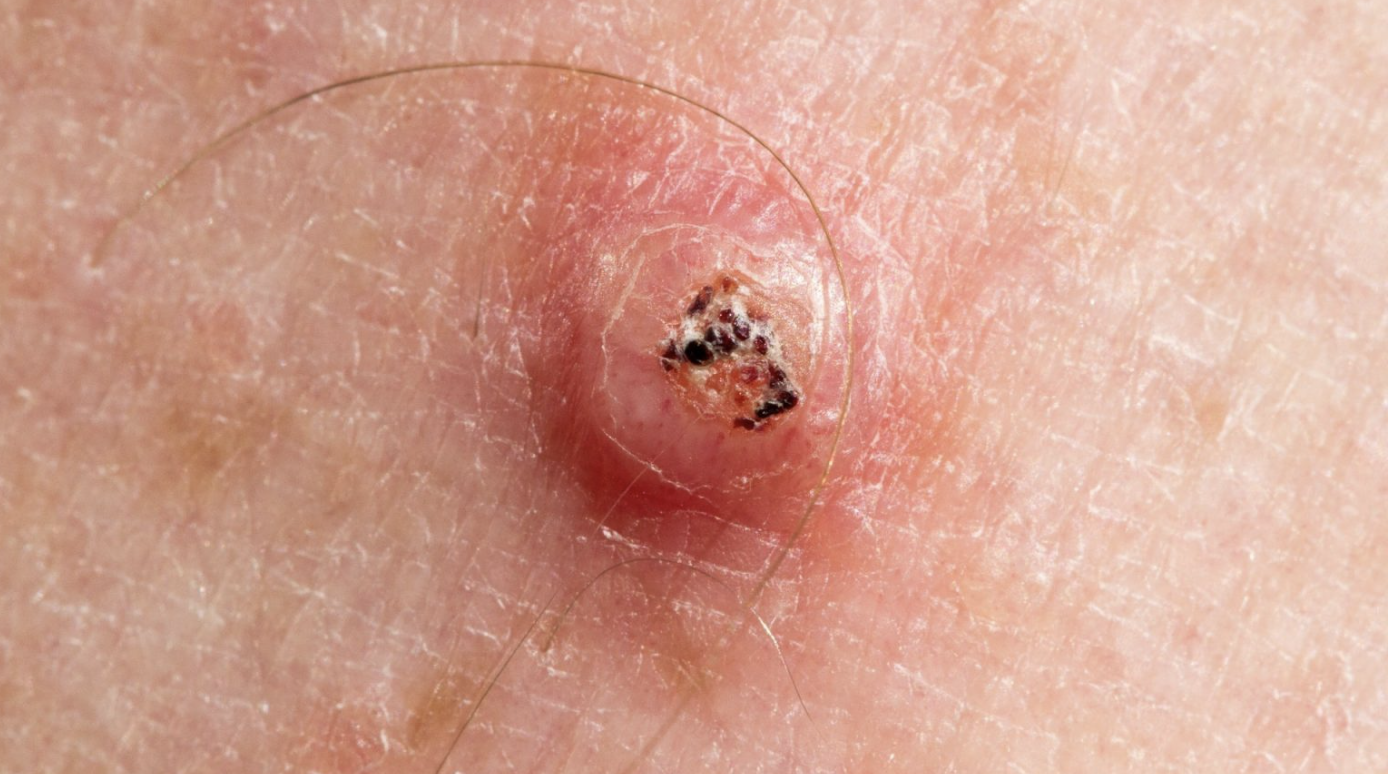
Madam Noraini Salleh, a 68-year-old retired supermarket cashier from Melaka, presents with a lesion on her right forearm that she describes as “growing faster than before.” She first noticed a small raised spot approximately six months ago. Over the past two months, it has enlarged noticeably. It is not painful and does not itch. There has been no bleeding unless accidentally scratched.
She recalls frequent sun exposure in her younger years while helping at her family’s roadside stall and reports several episodes of significant sunburn during adolescence. She does not routinely use sunscreen. She has previously had skin tags treated but has never undergone a formal skin examination. She has no personal history of skin cancer.
On examination, temperature 36.7°C, blood pressure 130/80 mmHg, pulse 76 beats per minute regular. The lesion on the right forearm measures approximately 1.2 cm in diameter and appearance shown below (see image). The surrounding skin appears sun-damaged. There is no regional lymphadenopathy.

What is the MOST likely diagnosis?
You are reviewing patients at a government health clinic in Sabah. A 34-year-old plantation worker, Ravi Kumar, presents with a 4-month history of progressive skin changes over his left forearm and upper back. He initially noticed a pale patch that was not itchy. Over time, additional similar patches appeared. He denies fever, weight loss or night sweats. There is no known history of tuberculosis.
He reports occasional tingling over the affected areas and difficulty gripping small tools at work. He has not sought prior treatment. There is no history of diabetes.
On examination, temperature 36.8°C, blood pressure 118/74 mmHg, pulse 80 beats per minute regular. There are three well-demarcated hypopigmented plaques with reduced hair growth. When lightly touched with cotton wool, sensation is diminished over the plaques compared to surrounding skin. When a blunt object is applied, he has reduced perception of pain over the same areas. The ulnar nerve at the elbow feels thickened and mildly tender. There is mild weakness of finger abduction on the left hand.
Based on your clinical suspicion, which of the following is the MOST appropriate confirmatory test?
A 4-month-old baby girl, Nur Aisyah Tan, is brought to your clinic for her routine immunisation visit. Her mother has no major concerns but mentions that the baby has had several light-brown “marks” on her skin since birth. They do not seem to bother the child and have not changed in texture or caused irritation. The infant feeds well and is meeting developmental milestones appropriately. There is no history of seizures or abnormal movements.
On examination, temperature 36.6°C, heart rate 128 beats per minute, respiratory rate 32 breaths per minute. Growth parameters are appropriate for age. You note six well-demarcated, uniformly pigmented, light-brown macules on the trunk and thighs, each measuring approximately 6–10 mm in diameter (see image). There is no scaling, induration, or tenderness. Neurological examination is normal for age.

What is the MOST common complication associated with this condition?
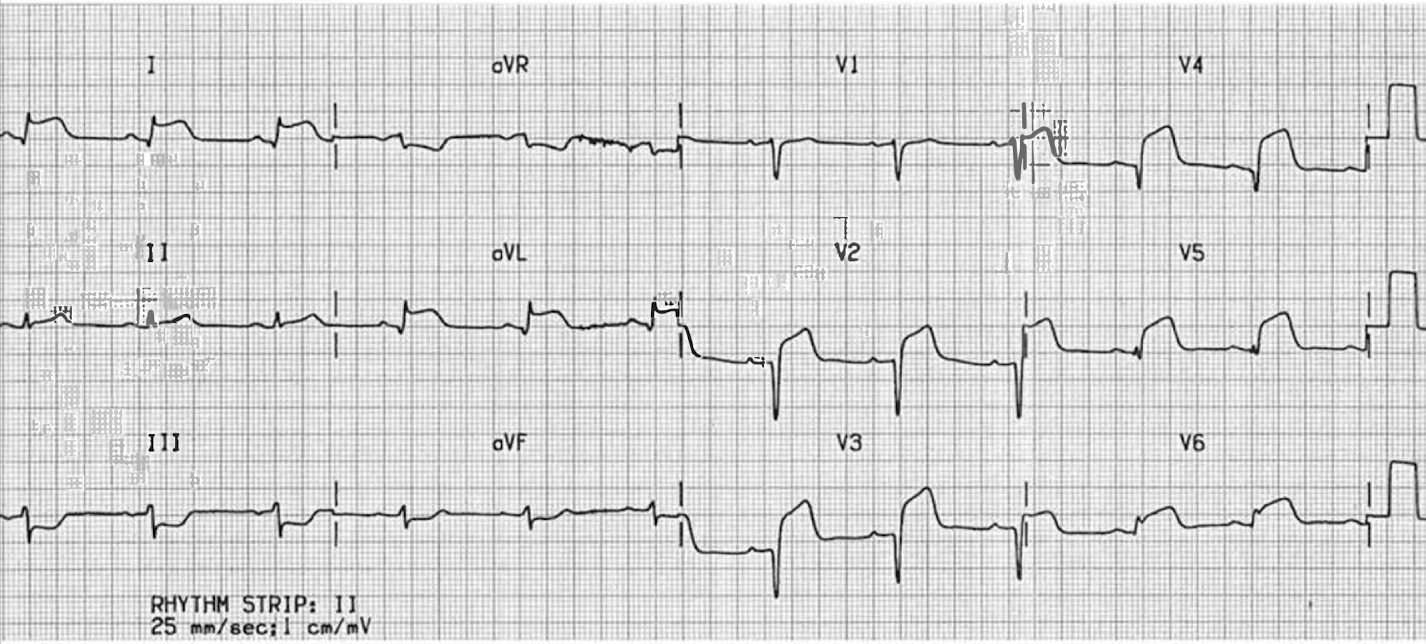
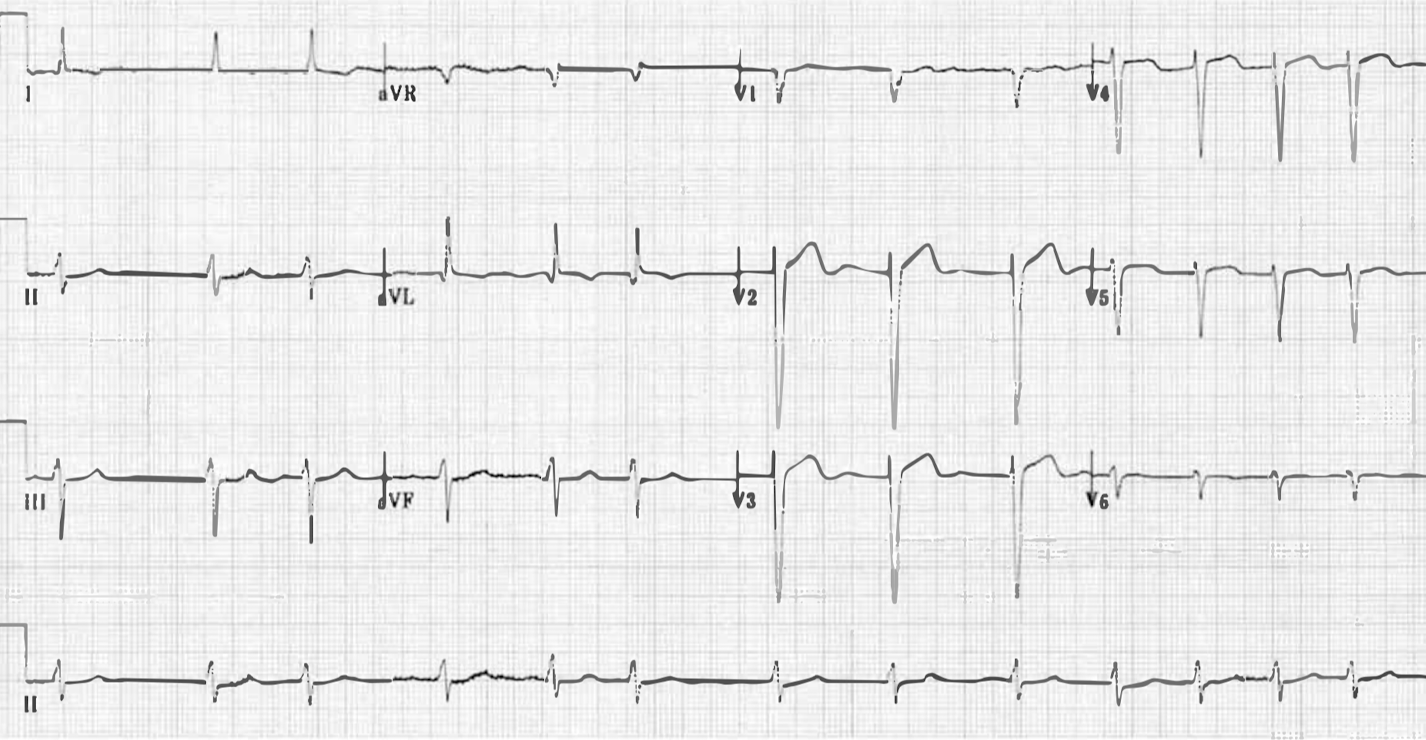
Mr Rajendran Pillai, a 62-year-old printing shop owner in Ipoh, presents to your clinic complaining of feeling unwell since early morning. He describes persistent belching, diaphoresis and discomfort radiating to his right arm. He initially assumed it was reflux, as he has a history of gastro-oesophageal reflux disease for which he takes pantoprazole 20 mg orally when required.
He denies sharp chest pain but reports a persistent heavy sensation across the upper chest. He has no known history of coronary artery disease.
On examination, temperature 36.8°C, blood pressure 150/94 mmHg, pulse 108 beats per minute regular, respiratory rate 20 per minute. He appears diaphoretic and mildly distressed. Cardiovascular and respiratory examinations are otherwise unremarkable.
You arrange a 12-lead electrocardiographic recording (image provided).

Which coronary vessel is MOST likely affected?
Arvind Raj, a 14-year-old secondary school student in Subang Jaya, attends your clinic with his mother after being advised by the school counsellor to seek medical review. His mother reports that Arvind has recently been involved in several physical altercations at school and is at risk of suspension. She believes he “has anger issues.” Arvind avoids eye contact and appears uncomfortable during the consultation. With his consent, you ask his mother to step outside to allow a private discussion. Arvind first asks whether what he says will remain confidential. You explain the limits of confidentiality, including situations where safety concerns arise.
He then discloses that he has been bullied online over the past few months and has been feeling persistently low in mood. Earlier today, he used a red pen to draw lines on his forearm while thinking about what it would be like to cut himself. He did not break the skin. When a friend grabbed his arm thinking he was bleeding, Arvind reacted impulsively and punched him. He says he regrets this. He denies current suicidal thoughts, plans, or intent. He denies previous self-harm. He says he feels embarrassed about having thought about hurting himself and would like help to “sort out” his moods. He is open to seeing a psychologist but does not want his mother to know the details of what happened today.
On examination, temperature 36.8°C, blood pressure 108/68 mmHg, pulse 82 beats per minute regular. There are no injuries or scars on his forearms. He is tearful but cooperative, and there is no evidence of psychosis.
What is the MOST appropriate next step in Arvind’s management?
A 68-year-old administrative clerk, Madam Lee, presents to your primary care clinic on the same day she left a public hospital against medical advice. Earlier this morning while at work, she experienced sudden difficulty articulating words associated with altered sensation over her right upper and lower limbs lasting approximately 30 minutes, with complete spontaneous resolution prior to hospital assessment. During admission, brain imaging using a magnetic field technique sensitive to recent cellular injury showed no areas of restricted water movement, ultrasonography of the neck vessels demonstrated no significant luminal narrowing, and cardiac rhythm tracing showed normal sinus rhythm. She was discharged at-own-risk without regular medication. She denies diabetes, hypertension, or smoking. On examination, she is comfortable, afebrile at 36.8°C, pulse 76 beats per minute and regular, blood pressure 124/78 mmHg, and neurological examination is normal. Recent fasting blood investigations performed two weeks earlier shown below (see image).

Which of the following is the MOST appropriate next management step for her?
A prospective diagnostic accuracy study evaluated the performance of prostate-specific antigen (PSA) testing for detecting prostate cancer in asymptomatic men aged 55–69 years. One of the large European trials, the European Randomized Study of Screening for Prostate Cancer (ERSPC), reported outcomes from a screened cohort compared with usual care. In a diagnostic substudy of 1,000 men who underwent PSA testing followed by biopsy as the reference standard, 200 men were found to have prostate cancer on biopsy. Using a PSA cut-off of 4.0 ng/mL, 160 of the 200 men with cancer had a positive PSA result, while 240 of the 800 men without cancer also had a positive PSA result. The remaining participants had negative PSA results. The investigators reported moderate sensitivity and limited specificity at this threshold. Positive and negative predictive values varied according to cancer prevalence.
Based on these findings, which of the following statements is correct?
Mrs Nurul Aina Rahim, a 31-year-old primigravida at 12 weeks’ gestation, attends her first antenatal booking visit at a government clinic in Johor. She migrated from another state several years ago and has never had prior medical screening. She feels well and denies jaundice, abdominal pain or previous liver disease.
Routine antenatal investigations reveal that she is positive for hepatitis B surface antigen (HBsAg). Her alanine transaminase is mildly elevated. Further testing confirms positive hepatitis B e antigen (HBeAg), and her HBV DNA level is high. She is distressed and worried about transmitting the infection to her baby. She specifically asks whether her child will “definitely get hepatitis,” whether delivery method makes a difference, and whether she will be allowed to breastfeed.
On examination, temperature 36.7°C, blood pressure 112/70 mmHg, pulse 78 beats per minute regular. She is clinically well with no stigmata of chronic liver disease.
Which of the following statements is FALSE?
Siti Hajar, a 12-year-old Year 6 student from Perlis, is brought to a rural health clinic by her mother after being sent home from school. She developed abdominal discomfort yesterday evening that began around the umbilicus and has since become more noticeable on the right side of her lower abdomen. The pain has been gradually increasing over the past 18 hours but remains tolerable. She reports reduced appetite and mild nausea but no vomiting. Over the past week, she has had cough, sore throat and low-grade fever that seemed to improve. She denies urinary symptoms and has not yet attained menarche.
On examination, she appears mildly uncomfortable but is able to walk into the consultation room. Her temperature is 38.6°C, pulse 104 bpm, blood pressure 108/68 mmHg and respiratory rate 18/min. Abdominal examination reveals tenderness in the right lower quadrant, but the abdomen remains soft without guarding or rigidity. When steady pressure is applied and then released, she reports discomfort but does not withdraw abruptly. She is able to hop with mild discomfort. Bowel sounds are present and normal. There is no flank tenderness.
What is the MOST likely diagnosis?
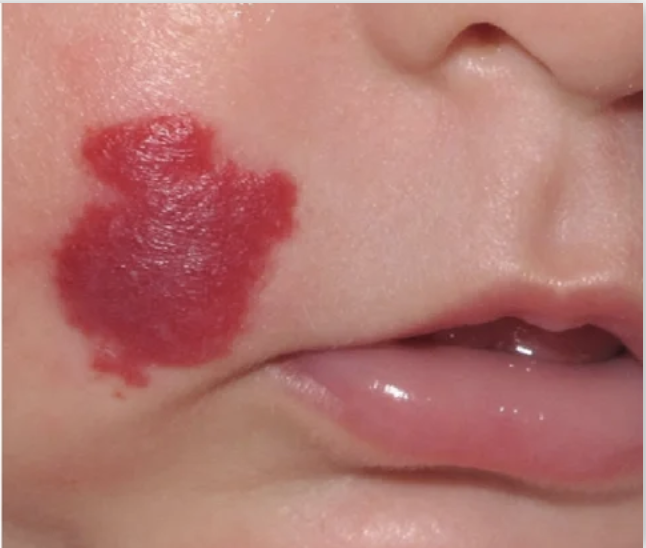
Nur Qistina, a 6-month-old infant, is brought to a Klinik Kesihatan in Kelantan by her mother for review. This is her first child. Her mother is concerned about a reddish lesion on the left side of Qistina’s face. She reports it was not obvious at birth but appeared within the first few weeks of life and has enlarged steadily over the past 3–4 months. It does not appear painful and has not ulcerated.
Her mother is also worried that Qistina’s left eye has been persistently watery since birth. She was previously told it was due to a blocked tear drainage channel and advised massage, but there has been no significant improvement. Additionally, her mother is concerned that Qistina is not yet sitting unsupported. Qistina was born at term via spontaneous vaginal delivery with no perinatal complications. She feeds well and is alert. On examination, her temperature is 36.8°C, pulse 124 bpm, respiratory rate 30/min, and blood pressure 86/54 mmHg. Growth parameters are appropriate for age. The lesion appearance is as shown below (see image). The remainder of systemic examination is unremarkable.

What is the MOST appropriate next management step?
Aisyah Tan, a 10-year-old right-handed schoolgirl, is brought to a Klinik Kesihatan in Johor Bahru after falling from her scooter earlier this evening. She landed on her outstretched left hand. She cried immediately but was able to walk home. Her mother is concerned about a fracture. Aisyah reports wrist pain that worsens with movement but denies numbness or tingling. She has no past medical history and is up to date with immunisations.
On examination, she appears comfortable at rest. Her temperature is 36.9°C, pulse 98 bpm, respiratory rate 20/min, and blood pressure 102/66 mmHg. There is mild tenderness over the distal left forearm with minimal swelling and no visible deformity. She has full finger movement and normal sensation in all digits. Capillary refill is less than 2 seconds. When gentle axial compression is applied along the forearm, she reports discomfort over the distal radius. A plain radiograph of the wrist is performed (see image).

What is the MOST appropriate next management step?
Rosnah Devi, a 62-year-old woman with Down syndrome, is brought to a Klinik Kesihatan in Negeri Sembilan by her caregiver from a supported living residence. She has a 3-day history of abdominal discomfort and has not attended her sheltered workshop during this period. She describes the pain as constant and tight, mainly in the upper abdomen, with occasional nausea but no vomiting. She reports passing “pale, chalky” stools over the past two days, which is unusual for her. She is known to have chronic constipation but says the colour change is new. She has no known history of liver disease.
On examination, she appears mildly uncomfortable. Her temperature is 38.4°C, pulse 112 bpm, blood pressure 104/68 mmHg, and respiratory rate 20/min. She is tender in the right upper quadrant. When steady pressure is applied beneath the right costal margin during inspiration, she abruptly stops inhaling due to pain. There is no rebound tenderness or abdominal rigidity. She is not jaundiced on inspection, though her sclera appear slightly yellowish in natural light.
What is the MOST likely diagnosis?
Arjun Menon, a 7-year-old boy, is brought to a Klinik Kesihatan in Penang by his mother after returning from a 6-week visit to India one week ago. He has had 4 days of loose, watery stools occurring 3–4 times daily. His mother reports that this morning she noticed some mucus in the stool but no visible blood. Arjun has reduced appetite but no vomiting. He is tolerating oral fluids and plain porridge. There has been no significant weight loss.
On examination, he is alert and interactive. His temperature is 37.2°C, pulse 96 bpm, blood pressure 100/64 mmHg, and respiratory rate 20/min. Capillary refill is less than 2 seconds and mucous membranes are moist. His abdomen is soft and non-distended with mild generalised tenderness but no guarding. A stool specimen was sent for microbiological testing, and the laboratory reports growth of Campylobacter jejuni.
What is the MOST appropriate next step in management?
Mr Ramesh Kumar, a 42-year-old lorry driver, attends your clinic to renew his vocational driving licence (GDL). One year ago, he experienced a single generalised tonic-clonic seizure after working overnight for 36 hours with minimal sleep. At that time, metabolic investigations were normal. Neuroimaging showed no structural abnormality. A brain electrical activity recording performed after the event did not show epileptiform discharges. He has not had any further seizures since. He is not on anti-seizure medication. He reports that he has since modified his work schedule to avoid sleep deprivation.
On examination today, his blood pressure is 124/78 mmHg, pulse 76 bpm regular, and neurological examination is normal.
Regarding his eligibility for renewal of a vocational driving licence, which of the following statements is FALSE?
Aiman Zulkifli, a 3-year-old boy, is brought to a Klinik Kesihatan Seri Iskandar for follow-up after his mother was diagnosed three weeks ago with smear-positive pulmonary tuberculosis. Aiman lives in the same household and shares a bedroom with her. He was well at the time of contact tracing and underwent screening.
He returns today to review his tuberculin skin test performed 72 hours ago. The induration measures 6 mm in diameter. He has no cough, fever, night sweats, reduced appetite, or weight loss.
On examination, his temperature is 36.7°C, pulse 104 bpm, respiratory rate 22/min, and blood pressure 92/58 mmHg. He is active and playful. Chest examination is clear. A chest radiograph performed earlier this week shows no consolidation, cavitation, or hilar lymphadenopathy.
What is the MOST appropriate next step in management?
Mrs Leela Krishnan, a 59-year-old retired schoolteacher from Ipoh, presents with a 2-week history of severe right-sided facial pain. She describes the pain as sudden, sharp and electric shock–like, lasting a few seconds at a time. It is triggered by brushing her teeth and washing her face. The pain occurs multiple times daily. Between episodes, she is pain-free.
She also reports mild scalp discomfort when combing her hair but denies persistent headache, visual disturbance, jaw fatigue while chewing, or constitutional symptoms such as weight loss or night sweats. She has no history of autoimmune disease.
On examination, temperature 36.7°C, blood pressure 136/82 mmHg, pulse 78 beats per minute regular. Cranial nerve examination is normal. There is no visual deficit. Gentle light touch over the right cheek precipitates brief severe pain. The temporal arteries are palpable and non-tender without nodularity. There is no scalp tenderness.
Which of the following is the MOST appropriate initial management?
Nur Syafiqah, a 23-year-old university student, presents to a Klinik Kesihatan Sungai Mati with a 2-day history of sore throat. She reports painful swallowing and low-grade fever. She denies cough, rhinorrhoea, or shortness of breath. She has no history of rheumatic fever. She mentions that she developed a generalised urticarial rash after taking amoxicillin as a child.
On examination, she appears mildly uncomfortable but not toxic. Her temperature is 38.1°C, pulse 92 bpm, blood pressure 116/70 mmHg and respiratory rate 18/min. Oropharyngeal examination shows mild tonsillar erythema without exudates. There is no peritonsillar swelling, no trismus and no uvular deviation. Palpation of the neck reveals small, non-tender anterior cervical lymph nodes. Chest examination is clear.
She asks if she needs antibiotics as she has an upcoming presentation at university.
What is the MOST appropriate next step in management?
Ms Amanda Lee, a 26-year-old marketing executive, attends a Klinik Kesihatan Seksyen 19 Shah Alam seeking urgent contraceptive advice. She was started 3 months ago on Diane-35
(cyproterone acetate 2 mg + ethinylestradiol 35 mcg) for acne management and contraception. Her cycles have been regular since starting the medication.
She completed her 7-day pill-free interval last week but realised this morning that she had forgotten to start her new pack on time. She was meant to restart the pack on Sunday but only resumed it today, making her 2 days late (missing 2 pills). She has taken today’s pill immediately upon realising.
She reports having unprotected sexual intercourse yesterday evening. She is anxious about pregnancy and wants to know whether she requires emergency contraception and whether she needs to use additional protection.
Her blood pressure today is 116/74 mmHg, pulse 78 beats per minute regular, and BMI 23 kg/m². She is not taking enzyme-inducing medications.
What is the MOST appropriate advice?
Mrs Nur Aisyah, a 32-year-old teacher, attends your clinic in Kota Bharu for contraceptive advice. She has been taking a combined oral contraceptive pill containing ethinylestradiol 30 micrograms with levonorgestrel 150 micrograms for the past 2 years. She takes her pills regularly and has no missed doses.
She is planning to perform Umrah in 2 months’ time and is concerned that her expected withdrawal bleed may coincide with her pilgrimage dates. She will be going to be in Arab Saudi for 15 days. She would prefer not to menstruate during that period. Her cycles on the pill are regular.
She has no contraindications to combined hormonal contraception. Her blood pressure is 118/72 mmHg, pulse 76 beats per minute, BMI 24 kg/m². She is a non-smoker and not on enzyme-inducing medications.
What is the MOST appropriate advice to delay her menses?
A 7-year-old boy, Adam Lim, is brought to a Klinik Kesihatan Seremban 2 by his mother with a 3-week history of lethargy and reduced appetite. She reports that he has been increasingly pale and has had intermittent low-grade fever over the past 10 days. Over the last week, she has noticed multiple bruises over his legs despite no significant trauma. He also complains of generalized bone pain, particularly in his thighs at night, which has caused him to wake from sleep.
There is no history of weight loss reported by the parents, but they note that his school teacher recently mentioned he appears “less energetic.” There is no recent travel history. He is fully immunised and has no known chronic illnesses. There is no family history of malignancy or bleeding disorders.
On examination, Adam appears pale and mildly unwell. His temperature is 38.1°C, pulse 108 beats per minute, blood pressure 96/60 mmHg, and respiratory rate 22 per minute. He has multiple ecchymoses over both lower limbs. There is non-tender cervical lymphadenopathy and mild hepatosplenomegaly. No focal neurological deficits are present.
A full blood count performed urgently shows:

What is the MOST appropriate next step in management
Mr Lim Wei Jian, a 65-year-old retired school principal, presents to your clinic in Ipoh with worsening plaques over his elbows, scalp and lower back over the past 2 months. He has a 15-year history of chronic plaque psoriasis, previously well controlled with coal tar 1% lotion applied nightly and intermittent courses of methylprednisolone aceponate 0.1% cream once daily during flares.
He reports that despite regular use of both topical agents over the past 6 weeks, his lesions have become thicker, more erythematous and increasingly pruritic. He denies recent infection, trauma to the skin, or major psychosocial stressors. There is no joint pain, nail pitting has been longstanding, and he denies new skincare products.
His current medications include venlafaxine 75 mg orally once daily for anxiety, atorvastatin 40 mg orally at night for hyperlipidaemia, propranolol 20 mg orally at night for migraine prophylaxis, erythromycin 250 mg orally twice daily for rosacea, and finasteride 5 mg orally once daily for benign prostatic hyperplasia.
On examination, his blood pressure is 132/78 mmHg, pulse 68 beats per minute regular, temperature 36.8°C. He has well-demarcated erythematous plaques with silvery scale over extensor surfaces. No signs of infection are noted.
Which of the following is the MOST likely precipitating factor for his psoriasis flare?
Mr Rajendran Nair, a 71-year-old retired lorry driver, attends your primary care clinic in Klang for renewal of his regular antihypertensive medication, candesartan 8 mg orally once daily. He reports feeling generally well and denies chest pain, dyspnoea, dizziness or palpitations.
He has a history of type 2 diabetes mellitus treated with metformin 1 g orally twice daily and hypercholesterolaemia treated with simvastatin 40 mg orally at night. Two months ago, a echocardiogram showed moderate mitral valve narrowing with preserved left ventricular function. At his annual review last year, his ECG was documented as normal sinus rhythm.
On examination today, his blood pressure readings are inconsistent: the first manual reading is 158/96 mmHg and the second is 124/82 mmHg. His pulse is irregularly irregular at 94 beats per minute. Temperature is 36.7°C. Cardiovascular examination reveals a mid-diastolic murmur best heard at the apex. No signs of heart failure are present.
You arrange a 12-lead recording of the heart’s electrical activity, which shown below:

Given these findings, which of the following is the MOST appropriate first-line medication to commence?
Encik Hafiz Rahman, a 40-year-old prison officer, presents to your clinic in Shah Alam with a 3-day history of progressive weakness of his left lower limb. He reports that the weakness began suddenly while he was resting at home. He denies any recent trauma, back pain, or constitutional symptoms. He describes the sensation as if “the leg does not feel like mine.”
He is currently under psychiatric follow-up for post-traumatic stress disorder related to a workplace assault 6 months ago and is due to resume duties next week on a phased return. He recalls a similar episode last year affecting the same leg. At that time, brain imaging and nerve conduction studies were performed and reportedly normal. The symptoms resolved spontaneously over several weeks without specific treatment.
Today, he walks with a noticeable limp. His temperature is 36.8°C, pulse 82 beats per minute regular, and blood pressure 128/76 mmHg. When lying supine, he states he is unable to push his left foot downward against resistance. When standing, he is able to rise onto both tiptoes. He also reports inability to extend his left hip, when asked to flex his right hip against resistance while lying down, there is involuntary extension of the left hip. Tone, reflexes and sensation are otherwise normal, and plantar responses are flexor bilaterally.
Which one of the following is the MOST likely diagnosis?
Ms Tan Jia Min, a 19-year-old university student in Penang, presents to your clinic to seek help for worsening menstrual pain. She attained menarche at 12 years old. Her cycles were initially irregular during adolescence but have been regular at 28-day intervals for the past 3 years, with moderate bleeding lasting 4–5 days.
Over the last 6 months, she has developed progressively severe lower abdominal cramping associated with her menses. The pain typically begins 1–2 days before bleeding starts and continues for the first 2–3 days of menstruation. She reports missing lectures due to the discomfort. She denies dyspareunia and has never been sexually active. There is no family history of endometriosis or heavy menstrual bleeding.
Her BMI is 27 kg/m². Vital signs are stable: blood pressure 116/72 mmHg, pulse 78 beats per minute, temperature 36.9°C. Abdominal examination is soft and non-tender. A pelvic imaging study using sound waves to visualise the uterus and ovaries shows enlarged ovaries with multiple peripheral follicles and a uterus consistent with the luteal phase of the cycle. No masses or features suggestive of endometriosis are seen.
Which of the following is the MOST appropriate next step in her management?
Mr Goh Seng Huat, a 78-year-old retired mechanic from Melaka, presents with a 4-week history of progressive fatigue and reduced exercise tolerance. He reports waking up at night with drenching sweats over the past 2 weeks. He initially attributed his symptoms to a recent upper respiratory tract infection, but the cough and rhinorrhoea have resolved while the fatigue persists. He denies overt bleeding, weight loss or recent travel.
His medical history includes chronic obstructive pulmonary disease, stage III chronic kidney disease, hypertension and osteoarthritis. He is a current smoker. His regular medications are tiotropium 18 micrograms inhaled once daily, salbutamol 100 micrograms inhaled 1–2 puffs as required, perindopril 5 mg orally once daily and paracetamol 1 g orally up to four times daily as required.
On examination, his blood pressure is 134/78 mmHg, pulse 88 beats per minute regular, temperature 37.4°C. He appears pale. There is mild tenderness in the left upper abdomen with a palpable spleen tip below the costal margin. No lymphadenopathy is noted.
You arrange a full blood count which shows:
Which of the following is the MOST likely cause of his presentation?
Mr Ong Kok Leong, a 65-year-old retired accountant, presents to your clinic in Johor Bahru with a 2-week history of intermittent bright red per rectal bleeding. He reports noticing blood mainly on toilet paper after wiping, and on one occasion felt blood dripping after defecation. He describes mild anal discomfort lasting approximately one hour after bowel movements, associated with perianal itchiness.
He reports one soft bowel movement daily without straining and denies constipation, abdominal pain, change in bowel habit, or weight loss. There is no known family history of colorectal cancer.
His medical history includes an unprovoked deep vein thrombosis 18 months ago for which he remains on apixaban 5 mg orally twice daily, and osteoarthritis treated with paracetamol 1 g orally up to four times daily as required.
On examination, his blood pressure is 128/74 mmHg, pulse 76 beats per minute regular, and temperature 36.7°C. Abdominal examination is unremarkable. Inspection of the perianal area reveals no fissure or thrombosed external haemorrhoid. A digital rectal examination is normal. A bedside procedure using a lighted tube inserted into the anal canal demonstrates engorged internal vascular cushions above the dentate line without ulceration.
What is the MOST appropriate next step in management?
You are asked to review a new resident at a private retirement home in Port Dickson. Madam Lee Siew Lan is a 75-year-old widow with no surviving children. She relocated to the facility two months ago after reporting persistent low mood and difficulty sleeping following the death anniversary of her husband.
Her previous general practitioner prescribed temazepam 10 mg orally at night as needed, which she has been taking almost nightly for the past four weeks. She reports that her sleep latency has improved, but she continues to experience pervasive low mood, reduced interest in activities, social withdrawal, reduced appetite and reduced energy. Staff note she has lost approximately 2% of her body weight over the past month.
She denies suicidal ideation. She has no history of bipolar disorder. Her medical history includes hypertension and osteoarthritis. Her current medications are temazepam 10 mg orally at night, amlodipine 5 mg orally once daily and paracetamol 1 g orally up to four times daily as required.
On examination, her blood pressure is 128/70 mmHg, pulse 72 beats per minute regular, and temperature 36.6°C. She appears mildly withdrawn but engages appropriately during conversation. A brief structured assessment of mood confirms reduced interest, sleep disturbance, low energy and poor appetite. Cognitive screening shows intact orientation and recall.
What is the MOST appropriate next step in management?
Encik Rahman Ismail, a 76-year-old retired teacher from Kuantan, presents to your clinic with a 6-hour history of progressively worsening lower abdominal pain associated with nausea. He reports that earlier this morning, when opening his bowels, he noticed bright red blood on the toilet paper. He describes the pain as constant and increasingly severe. Paracetamol 1 g orally taken earlier provided no relief.
He denies previous similar episodes. There is no recent travel or antibiotic use. His medical history includes hypertension, gout and glaucoma. His regular medications are amlodipine 5 mg orally once daily, allopurinol 300 mg orally once daily and timolol 0.5% ophthalmic drops twice daily.
On examination, his temperature is 37.9°C, pulse 110 beats per minute (regular), blood pressure 110/67 mmHg and respiratory rate 22 per minute. He appears uncomfortable. His abdomen is distended. On palpation, there is central abdominal tenderness with guarding and rebound tenderness. Bowel sounds are reduced. Digital rectal examination reveals minimal fresh blood but no masses.
Which of the following is the MOST likely diagnosis?
Nur Aisyah Rahim, a 6-year-old girl, is brought to your clinic in Kota Bharu by her parents after her teacher raised concerns about inattentiveness and possible learning difficulties in class. Her parents report that she often asks for repetition during conversations and tends to increase the television volume at home. She denies ear pain, fever or recent upper respiratory symptoms. There is no history of ear discharge.
She was born at term with normal developmental milestones. Immunisations are up to date.
On examination, her temperature is 36.8°C, pulse 92 beats per minute, blood pressure 98/60 mmHg. She appears well. Otoscopic examination of the right ear shown below (see image). The left ear appears normal.

A bedside assessment of hearing using whispered voice suggests reduced hearing on the right side. There is no mastoid tenderness.
What is the MOST appropriate next step in management?
Daniel Wong, a 14-year-old secondary school student in Johor Bahru, presents with a 6-month history of persistent mid-back discomfort. He denies any preceding trauma, heavy lifting or sports injury. The pain is described as a dull ache, worse towards the end of the school day and after prolonged sitting. There is no radiation to the lower limbs and no bowel or bladder symptoms. He remains systemically well and continues attending school, although he avoids physical education classes due to discomfort.
His parents initially attributed the pain to poor posture while studying. Despite attempts at ergonomic adjustments and stretching exercises, the symptoms have persisted.
On examination, his temperature is 36.7°C, pulse 84 beats per minute, blood pressure 104/66 mmHg. Inspection of the spine reveals a noticeable thoracic curvature that does not fully correct when he attempts to stand upright. When asked to bend forward with knees extended, he is unable to reach his toes and the thoracic curvature remains prominent. There is no focal vertebral tenderness and neurological examination of the lower limbs is normal.
What is the MOST likely diagnosis?
Arvind Raj, a 26-year-old factory technician from Shah Alam, attends your clinic for a pre-employment medical assessment prior to starting work in a manufacturing plant. He has no significant past medical history, takes no regular medications and reports no history of syncope, palpitations, chest pain or exertional dyspnoea. He exercises regularly and plays futsal weekly without limitation. There is no known family history of sudden cardiac death.
As part of the occupational health screening, a resting 12-lead tracing of his cardiac electrical activity is performed by the clinic nurse and findings shown below (see image)

On examination, his temperature is 36.6°C, pulse 72 beats per minute and regular, blood pressure 118/74 mmHg, respiratory rate 14 per minute. Cardiovascular examination is unremarkable.
Based on these findings, what is the MOST likely diagnosis?
Encik Suresh Nair, a 63-year-old retired technician from Melaka, presents for review of a pelvic radiograph performed after he developed left hip discomfort following a long day helping his neighbour move furniture. He describes the pain as dull and localised to the left hip and buttock, without radiation to the thigh or calf. The pain has slightly improved over the past week. He denies weight loss, night sweats, fever or neurological symptoms.
He has no known chronic illnesses and takes no regular medications. During his recent annual health screening, his alkaline phosphatase was noted to be mildly elevated, while his corrected calcium level was within the normal range. Repeat testing had been planned.
On examination today, his temperature is 36.8°C, pulse 80 beats per minute, blood pressure 130/78 mmHg. There is mild deep tenderness over the proximal left femur but no deformity. Neurological examination of the lower limbs is normal.
The pelvic radiograph appearance is shown below (see image)

What is the MOST likely diagnosis?
Nur Syafiqah Idris, a 34-year-old marketing executive from Kuala Lumpur, presents with a 2-day history of sharp left-sided chest pain. She describes the pain as worse on deep inspiration and says she feels slightly short of breath but is still able to speak in full sentences.
She smokes 15 cigarettes daily and is taking a combined oral contraceptive pill containing ethinylestradiol 30 mcg with levonorgestrel 150 mcg. She has mild intermittent asthma and uses salbutamol inhaler 100 mcg per puff as required, but recent doses have not improved her symptoms. She denies fever, calf pain, recent long-haul travel or trauma.
On examination, her temperature is 36.8°C, pulse 96 beats per minute, blood pressure 118/72 mmHg, respiratory rate 20 per minute, and oxygen saturation 97% on room air. She appears comfortable at rest. Chest examination reveals slightly reduced breath sounds on the left side without tracheal deviation.
A plain radiograph of the chest shown below (see image):

What is the MOST appropriate next step in management?
Adam Firdaus, a 6-year-old boy, is brought to your clinic in Subang Jaya by his mother who is concerned that he has started soiling his underwear. Adam has been fully toilet trained since the age of 4.
His mother reports that he usually passes stool every 2–3 days and the stools are large and firm, occasionally clogging the toilet. Over the past month, since starting Primary 1, she has noticed small amounts of brown staining in his underwear, mainly in the evenings. Adam says he does not realise when it happens. There has been no diarrhoea, vomiting or weight loss. His appetite is normal.
On examination, his temperature is 36.7°C, pulse 90 beats per minute, blood pressure 98/60 mmHg. He appears well. His abdomen is soft but there is a palpable firm mass in the left lower quadrant consistent with retained stool. Neurological examination of the lower limbs is normal. Inspection of the lower back shows no sacral dimple or hair tuft.
What is the MOST appropriate next step in management?
Puan Aina Rahman, a 28-year-old first-time mother, brings her 3-month-old son, Amir, to your clinic in Ipoh after noticing a swelling at his umbilicus while changing his diaper earlier today. Amir was born at term via spontaneous vaginal delivery with no perinatal complications. He is feeding well and gaining weight appropriately.
Puan Aina reports that the swelling is not constantly visible but becomes more prominent when Amir cries or strains. There has been no vomiting, abdominal distension or irritability. Amir previously had a small moist lesion at the umbilicus in the neonatal period that responded well to topical silver nitrate application.
On examination, his temperature is 36.8°C, pulse 128 beats per minute, respiratory rate 30 per minute. He appears well and active. Abdominal examination reveals a moderate-sized umbilical swelling that is soft, non-tender and reducible. The overlying skin is normal. There are no signs of obstruction or incarceration. The remainder of the examination is unremarkable.

What is the MOST appropriate next step in management?
Ananya Krishnan, a 6-year-old girl, is brought to your clinic in Klang by her parents who are concerned about the way she walks. They report that she has always had a “funny walk,” but assumed she would grow out of it. Recently, her class teacher mentioned that her gait appears different from her peers. Ananya is otherwise well. She runs, climbs stairs and keeps up with other children without difficulty. There is no history of trauma, bone pain, fever or night pain.
Her birth history was unremarkable and developmental milestones were achieved appropriately. Her height and weight are at the 50th centile. She takes no regular medications.
On examination, her temperature is 36.7°C, pulse 88 beats per minute and blood pressure 98/60 mmHg. Gait assessment confirms an abnormal lower limb alignment. Hip, knee and ankle movements are full and painless. Neurological examination of the lower limbs is normal.

What is the MOST appropriate next step in Ananya’s management?
Meena Rajendran, a 44-year-old school administrator from Penang, is brought to your clinic by her husband who is concerned about progressive changes in her behaviour and memory over the past year. He reports that she has become forgetful, misplaces items frequently and has difficulty completing familiar tasks. Over the same period, he has noticed increasing involuntary movements involving her shoulders, hips and face.
Meena denies alcohol use and is not taking any regular medications. She has no known chronic medical conditions. She was adopted and does not know her biological family history.
On examination, her temperature is 36.6°C, pulse 84 beats per minute, blood pressure 122/76 mmHg. She is alert but appears mildly disinhibited during conversation. Cognitive screening reveals impaired short-term recall and difficulty with executive tasks. Neurological examination shows irregular, brief, purposeless movements affecting the upper limbs and face. There is mild unsteadiness when walking and abnormal posturing of the hands during voluntary movement. Reflexes are normal and there are no focal neurological deficits.
What is the MOST likely diagnosis?
Priya Menon, a 35-year-old administrative officer from Petaling Jaya, attends for review of blood investigations arranged during an assessment for obesity done at a private laboratory. She reports no fatigue, cold intolerance, constipation, hair loss or menstrual irregularity. There is no neck swelling, dysphagia or voice change. She has no significant past medical history and is not on any regular medication.
On examination, her temperature is 36.7°C, pulse 78 beats per minute, blood pressure 118/74 mmHg. BMI is 32 kg/m². There is no goitre, thyroid tenderness or nodularity. The remainder of her examination is unremarkable.
The following blood results are available:

What is the MOST appropriate next step in management?
Anita Krishnan, a 35-year-old homemaker from Klang, presents with a 6-month history of intermittent shortness of breath, palpitations, dizziness and persistent fatigue. She also reports difficulty sleeping and feeling “on edge” most days. She has two young children aged 5 and 3 years and recently found out that she is 8 weeks pregnant.
She describes excessive worry about multiple areas of her life, particularly financial concerns and coping with another child. She says she feels tense most days and struggles to relax. She admits to irritability, dry mouth, urinary frequency and a sensation of internal shakiness. There are no episodes of sudden intense fear with peak symptoms. She denies weight loss, heat intolerance or tremor.
On examination, her temperature is 36.6°C, pulse 68 beats per minute and regular, blood pressure 120/80 mmHg, respiratory rate 16 per minute. Her hands feel cool and slightly clammy. There is no goitre, lid lag or tremor. Cardiovascular and neurological examinations are normal.
What is the MOST likely diagnosis?
Arjun Menon, a 19-year-old biomedical sciences undergraduate in Kuala Lumpur, attends your clinic accompanied by his mother, Kavitha, requesting completion of a medical certificate for his upcoming university examinations. Kavitha reports that Arjun has not attended lectures for the past 5 weeks and rarely leaves his bedroom.
When seen alone, Arjun explains that he believes unknown individuals have been following him for several weeks. He states that during his last bus journey, they released “invisible spores” that have now burrowed under his skin and are monitoring him. He says he has been soaking his hands in methylated spirits daily to “draw the spores out.” He appears restless and intermittently scans the room. He is reluctant to engage in a full physical examination but allows observation. You note erythematous, excoriated lesions over both hands with areas of weeping consistent with chemical dermatitis. He denies suicidal thoughts but insists the spores are real. His past history is significant only for anxiety during secondary school. He takes no regular medication and denies alcohol or illicit drug use.
On examination, temperature 36.7°C, pulse 96 beats per minute, blood pressure 126/78 mmHg, respiratory rate 18 per minute. He appears agitated but is oriented to time and place.
Kavitha believes he can be managed at home if you provide documentation for university deferral.
What is the MOST appropriate next step in Arjun’s management?
Batin Amir, a 10-year-old Orang Asli boy from a rural settlement in Pahang, is brought to your clinic by his mother with a rash and joint pain. Five days ago, he developed a sore throat and fever, which settled after two days without medical treatment. Shortly after, he began complaining of right elbow pain that resolved spontaneously. Today, he is limping due to pain in his right knee.
His mother reports that he is usually very active but has been more lethargic this week. There is no history of trauma. He has well-controlled asthma and uses ciclesonide inhaler 80 mcg, one puff daily via a pressurised inhaler with spacer. Immunisations are up to date.
On examination, his temperature is 38.2°C, pulse 110 beats per minute, blood pressure 100/64 mmHg. He appears mildly uncomfortable. The right knee is warm and mildly swollen with reduced range of motion due to pain. Other joints are normal. A non-pruritic, serpiginous erythematous rash is noted over his trunk (see image). Heart sounds are normal with no murmurs.

What is the MOST helpful investigation to assist in confirming the diagnosis?
Daniel Tan, an 18-year-old student from Kuala Lumpur who has just completed his SPM examinations, presents to your clinic 5 days after returning from a 2-week holiday in Bali with friends. He did not receive any travel vaccinations prior to departure. He reports persistent high-grade fever, severe frontal headache, abdominal discomfort and a dry cough for the past 4 days. He denies diarrhoea or vomiting. He has no known chronic illnesses and is not taking any regular medications. There is no history of animal bites or freshwater exposure.
On examination, his temperature is 38.9°C, pulse 48 beats per minute and regular, blood pressure 120/80 mmHg, respiratory rate 18 per minute. He appears fatigued but alert. Abdominal examination reveals mild generalised tenderness without rebound or guarding. There is no rash and no neck stiffness.
The discrepancy between his elevated temperature and slow pulse is noted.
What is the MOST likely diagnosis?
Siti Noraini, a 56-year-old clerk from Kuala Lumpur, attends your clinic for cardiovascular risk review. She had an acute myocardial infarction 4 years ago and was managed medically without percutaneous intervention. Following the event, she was commenced on aspirin 100 mg daily, perindopril 5 mg daily, metoprolol 50 mg twice daily and atorvastatin 80 mg nightly. Metoprolol was stopped after one year by her cardiologist. Since her infarction, she has adopted healthier lifestyle measures. She stopped smoking, cycles regularly and has lost 20 kg; her current BMI is 24 kg/m². Three months ago, she self-discontinued atorvastatin after experiencing recurrent sharp, shooting left calf pain during exertion. She read online that statins can cause muscle aches. Since stopping the medication, the calf discomfort has resolved completely.
Recent blood results show:
Total cholesterol: 3.8 mmol/L
LDL cholesterol: 1.8 mmol/L
On examination, her temperature is 36.6°C, pulse 72 beats per minute, blood pressure 126/78 mmHg. Peripheral pulses are palpable and symmetrical. There is no calf tenderness, swelling or erythema.
She is pleased that her lipid profile appears controlled and is reluctant to restart statin therapy.
What is the MOST appropriate next step in management?
Nur Aisyah, a 2-year-old girl, is brought to your Klinik Kesihatan by her grandmother approximately 15 minutes after accidentally pulling a kettle of freshly boiled water onto herself while in the kitchen. The grandmother immediately removed her clothing and brought her to the clinic. On arrival, Aisyah is crying but consolable. She has erythematous areas with multiple tense blisters over the anterior chest, upper abdomen and right upper limb. There are no facial burns, no soot in the mouth and no singed nasal hair.
A rapid primary survey is performed and is stable. Her airway is patent with no stridor, breathing is unlaboured with equal air entry bilaterally, and circulation is adequate with warm peripheries and capillary refill under 2 seconds. Her temperature is 36.8°C, pulse 128 beats per minute, respiratory rate 26 breaths per minute, blood pressure 94/58 mmHg, and oxygen saturation is 99% on room air. She is alert and responsive to voice.
Which of the following is the MOST important next management step?
Kavitha Nair, a 58-year-old accounts assistant, presents to your Klinik Kesihatan with a 2-day history of severe dizziness. She describes a persistent spinning sensation that began suddenly on waking and has been continuous since onset. The symptoms worsen with head movement but do not completely resolve at rest. She reports nausea and several episodes of vomiting. One week prior, she had mild rhinorrhoea and throat discomfort which settled without treatment. She denies headache, diplopia, dysarthria, limb weakness or sensory changes. On further questioning, she mentions a sensation of “fullness” in her right ear with faint ringing, and she feels that hearing on that side is “slightly muffled.” She has never experienced similar symptoms before.
On examination, her temperature is 36.7°C, pulse 86 beats per minute and blood pressure 130/78 mmHg. Cranial nerve examination shows no facial asymmetry and limb neurology is normal. Eye examination reveals a horizontal rhythmic involuntary movement beating consistently in one direction, which lessens when she fixes her gaze on a stationary target. When standing with her feet together, she sways and tends to drift slightly towards the right.
Bedside hearing assessment is performed. When a vibrating tuning fork is placed on the vertex of her skull, the sound is perceived louder in the left ear. When the vibrating fork is placed alternately on the mastoid process and then held next to the external auditory canal, air conduction remains louder than bone conduction in both ears.
Which of the following is the MOST likely diagnosis?
Arvind Kumar, a 33-year-old retail supervisor from Klang, presents with a 2-month history of persistent dry cough and progressive exertional dyspnoea. He reports that he previously played futsal weekly but now becomes breathless halfway through a match. He denies fever, night sweats, pleuritic chest pain or haemoptysis. He is a non-smoker. His past history is notable for surgical correction of an undescended left testis at 1 year of age. He has not noticed any scrotal pain but admits he has not examined himself. He is not on regular medications.
On examination, his temperature is 36.8°C, pulse 98 beats per minute, blood pressure 124/78 mmHg and oxygen saturation 95% on room air. Chest auscultation reveals scattered inspiratory crackles bilaterally.
A chest radiograph taken shown below (see image)

What is the MOST appropriate next step in management?
Hafiz Rahman, a 48-year-old traffic police officer, presents to your Klinik Kesihatan with a 3-month history of gradually worsening hearing in his right ear. He reports needing to use his left ear for phone calls and feels that conversations in crowded environments are increasingly difficult to follow. He denies vertigo, ear pain, otorrhoea or recent upper respiratory infection.
He has a BMI of 32 kg/m² and a history of hypercholesterolaemia but is not on regular medication. There is no history of significant noise trauma or head injury.
On examination, his temperature is 36.7°C, pulse 76 beats per minute, and blood pressure 134/82 mmHg. Otoscopic examination shows intact tympanic membranes bilaterally with no effusion. Cranial nerve examination is otherwise normal.
Bedside hearing assessment is performed. A vibrating tuning fork is placed at the midline of the forehead, and he reports hearing the sound louder in his left ear. When the vibrating fork is placed on the mastoid process and then held next to the ear canal on each side, he reports that on both sides the sound is louder when the fork is held next to the ear canal compared to when it is placed on the mastoid.
Which of the following examination findings is most consistent with right-sided sensorineural hearing loss?
Mohd Faizal, a 47-year-old store supervisor, attends your Klinik Kesihatan for routine diabetes follow-up. He was diagnosed with type 2 diabetes mellitus 12 months ago. His BMI is 33 kg/m² and he also has hypertension that has been difficult to optimise. He admits that he has struggled to implement dietary changes despite repeated counselling and continues to consume approximately 1 litre of sugar-sweetened beverages daily. He does not engage in structured exercise. He has attended several sessions with the diabetes educator but reports minimal behavioural change. He is currently taking metformin 1000 mg orally three times daily and gliclazide modified release 60 mg orally once daily. He reports no symptoms of hyperglycaemia or hypoglycaemia.
On examination, his temperature is 36.7°C, pulse 80 beats per minute, and blood pressure 144/88 mmHg. Cardiovascular and abdominal examinations are unremarkable. Foot assessment using a 10 g filament demonstrates intact protective sensation bilaterally.
His most recent investigations show HbA1c 7.9%, fasting glucose 8.6 mmol/L, eGFR 92 mL/min/1.73m².
Which of the following is the MOST appropriate next step in management?
Baby Nur Aisyah is brought by her mother, Farah, to a Klinik Kesihatan in Selangor for her routine 6-week postnatal review. She was born at 40+2 weeks via spontaneous vaginal delivery. The pregnancy and perinatal period were uncomplicated. She is the first child in the family.
Farah reports difficulty establishing exclusive breastfeeding and has been breastfeeding followed by expressing and supplementing with either expressed breastmilk or formula. The infant feeds well and has adequate urine and stool output.
On examination, Baby Nur Aisyah appears alert and well. Her temperature is 36.8°C, pulse 138 beats per minute, respiratory rate 36 breaths per minute. Weight gain averages 150 g per week since birth. There are no dysmorphic features. Cardiovascular, abdominal and neurological examinations are normal.
During skin examination of the lower back, you note the appearance below (see image). There is no overlying hair tuft, sinus opening or discharge. Limb tone, reflexes and spontaneous movements are normal.

Which of the following conditions is MOST likely to be associated with this physical finding?
Nur Syafiqah, a 27-year-old woman, presents to your clinic in Kuala Lumpur accompanied by her partner after intentionally ingesting 8 tablets of sustained-release paracetamol 665 mg approximately 12 hours ago. She reports that earlier in the day, following an argument and while alone at home, she took the tablets impulsively as she “didn’t want to wake up.” She now expresses regret and states she did not take any other medications. She denies alcohol or recreational drug use.
Over the past few weeks, she has been feeling persistently low and overwhelmed due to financial and housing stress. She reports poor sleep with prolonged sleep latency and frequent rumination at night. She has a past history of anxiety but is not on regular medication. She denies previous self-harm attempts.
On examination, she appears tearful but cooperative. Temperature 36.9°C, pulse 84 beats per minute, blood pressure 118/74 mmHg, respiratory rate 16 breaths per minute. Abdominal examination reveals no tenderness. There are no focal neurological deficits. She is alert and oriented.
Which of the following is the MOST appropriate next step in management?
Encik Rahman, an 83-year-old resident of a nursing home in Selangor, is reviewed at your request for a non-healing wound over his lower limb. He has a history of hypertension and ischaemic heart disease. He is currently taking ramipril 2.5 mg orally once daily and aspirin 100 mg orally once daily. He does not take any other regular medications.
Recent blood tests showed a normal fasting blood glucose. He mobilises with a four-wheel walker and is able to walk short distances without calf pain. He requires assistance with showering.
On examination, his temperature is 36.7°C, pulse 76 beats per minute, and blood pressure 132/78 mmHg. There is a shallow, irregular ulcer located over the medial aspect of the lower leg just above the ankle. The wound base is moist with clean edges. There is bilateral lower limb oedema and brownish skin pigmentation around the gaiter region. There is no surrounding warmth, erythema, purulence or malodour. Peripheral pulses are palpable but reduced.
Which of the following is the MOST appropriate next step in management?
Ms Kavitha, a 38-year-old receptionist in Petaling Jaya, presents with a 5-day history of left-sided lower chest discomfort. She describes the pain as sharp and fairly constant, localised to a small area along the lower anterior chest wall. She notices that twisting her torso and certain upper limb movements worsen the pain. There is no history of trauma, heavy lifting, or recent respiratory infection. She denies shortness of breath, diaphoresis, palpitations, nausea, syncope, exertional chest tightness, or radiation of pain to the jaw or arm. She has no significant past medical history and takes no regular medications.
On examination, her temperature is 36.8°C, pulse 74 beats per minute, blood pressure 128/76 mmHg, respiratory rate 14 breaths per minute, and oxygen saturation 99% on room air. Cardiovascular and respiratory examinations are unremarkable. Abdominal examination is normal. There is a well-localised area of tenderness over the left lower costal margin, and pressing over this point reproduces her pain. Hooking the examiner’s fingers under the lower rib margin and pulling anteriorly reproduces the discomfort. There is no swelling or erythema.
Which of the following is the MOST likely diagnosis?
Ms Aishah, a 30-year-old software engineer in Kuala Lumpur, presents with a 3-month history of persistent dry cough, progressive exertional dyspnoea and fatigue. She reports no fever, haemoptysis or weight loss. She has no known past medical history and takes no regular medications. She does not smoke. She recalls having a self-limiting “flu-like” illness several months ago but has otherwise been well. She denies recent travel, contact with tuberculosis cases or exposure to birds or mould.
On examination, her temperature is 36.7°C, pulse 88 beats per minute, blood pressure 118/72 mmHg and oxygen saturation 97% on room air. Chest auscultation reveals faint bilateral expiratory wheeze, more prominent on the right. There are no crackles. No peripheral lymphadenopathy is palpable. Cardiovascular and abdominal examinations are unremarkable.
A chest radiograph shown below (see image)

Which of the following is the MOST likely diagnosis?
Encik Hafiz, a 58-year-old landscaper from Melaka, attends your clinic to review the results of blood tests performed during a workplace health screening. He has a history of hypertension that has been well controlled on candesartan 16 mg orally once daily. His clinic blood pressure readings over the past year have consistently ranged between 120–130/75–82 mmHg.
He feels well and denies haematuria, frothy urine, ankle swelling or reduced urine output. One week before the blood test, he had a short episode of diarrhoea with reduced oral intake, which resolved spontaneously. His father had end-stage renal failure in his late 60s.
On examination, his temperature is 36.7°C, pulse 76 beats per minute and blood pressure 122/78 mmHg. He appears clinically euvolaemic. Cardiovascular, abdominal and peripheral examinations are unremarkable.
His investigations show an estimated glomerular filtration rate (eGFR) of 49 mL/min/1.73 m² (previously 92 mL/min/1.73 m² one year ago), urine albumin–creatinine ratio (ACR) of 2.0 mg/mmol, normal fasting glucose, normal lipid profile and normal serum potassium.
Which of the following is the MOST appropriate next step in management?
Mr Daniel Tan, a 29-year-old marketing executive in Kuala Lumpur, presents with a 2-day history of central chest pain associated with shortness of breath. The pain is constant, sharp in nature and worse when lying flat. He reports some relief when sitting forward. He has not been able to sleep due to the discomfort. He denies radiation of pain to the arm or jaw, nausea or diaphoresis. He had a recent upper respiratory tract infection one week ago which resolved spontaneously. He has no known medical conditions and takes no regular medications.
On examination, his temperature is 37.5°C, pulse 102 beats per minute, blood pressure 132/84 mmHg, respiratory rate 18 breaths per minute and oxygen saturation 98% on room air. Heart sounds are normal, with no murmurs. There is no chest wall tenderness.
An electrocardiogram demonstrate below (see image)

Which of the following is the MOST appropriate medication to initiate?
Suresh Kumar, a 74-year-old retired lorry driver in Seremban with known moderate chronic obstructive pulmonary disease (COPD), presents with a 4-day history of worsening cough and breathlessness. He reports that his sputum, usually scant and whitish, has become more abundant and green in colour. He feels slightly more short of breath when walking to the toilet but is still able to speak in full sentences. He activated his COPD action plan two days ago and has been using salbutamol 100 micrograms per actuation, up to 8 actuations via metered dose inhaler with spacer every 3 hours as required, together with prednisolone 37.5 mg orally once daily. His regular maintenance therapy is tiotropium 2.5 micrograms per actuation, two inhalations once daily via soft mist inhaler. Despite this, he notes minimal improvement. He was admitted for a COPD exacerbation 6 months ago but has otherwise remained stable.
On examination, he is alert and oriented. His temperature is 38.3°C, pulse 76 beats per minute and regular, blood pressure 128/78 mmHg, respiratory rate 20 breaths per minute, and oxygen saturation 94% on room air. Chest examination reveals bilateral air entry with scattered expiratory wheeze but no focal crackles. Percussion is resonant throughout.
You diagnose an acute exacerbation of COPD with increased dyspnoea, increased sputum volume and purulent sputum.
Which of the following is the MOST appropriate management to commence today?
Ms Kavitha Menon, a 23-year-old childcare worker in Johor Bahru, presents with a 3-week history of an intensely pruritic rash over both knees. She reports that the itching is severe and sometimes wakes her from sleep. Over the past week, she has also noticed similar itchy spots over her lower back and around the upper part of the natal cleft. She is otherwise well and takes no regular medications. She has no known allergies and no personal or family history of asthma, allergic rhinitis or eczema. She has a contraceptive implant in situ and reports two casual sexual partners in the past six months. She denies fever, sore throat, joint pain or recent upper respiratory tract infection.
On examination, her temperature is 36.9°C, pulse 78 beats per minute, blood pressure 112/70 mmHg and respiratory rate 14 breaths per minute. The rash is localised to her knees and appearance shown below (see image)

Which of the following is the MOST likely diagnosis?
Arjun Prakash, a 3½-year-old boy, is brought to your clinic in Subang Jaya by his mother, Meera, who is concerned that he has been “walking funny” since this morning. She noticed the limp when he got out of bed, and it becomes more obvious when he attempts to run. He has otherwise been his usual cheerful and talkative self. There is no history of recent trauma, fall, or preceding febrile illness. He has had occasional upper respiratory tract infections in the past but none in the last month. He achieved independent walking at 14 months and has had no previous gait abnormalities. His immunisations are up to date.
On examination, Arjun appears comfortable at rest and is interactive. His temperature is 36.8°C, pulse 96 beats per minute, blood pressure 92/58 mmHg and respiratory rate 20 breaths per minute. Oxygen saturation is 99% on room air. He demonstrates a noticeable limp and appears to favour his right leg when walking. When asked where it hurts, he indicates his thigh but is unable to localise further.
Examination of his spine, hips, knees and ankles reveals full range of movement without swelling, erythema or warmth. There is no tenderness on palpation of the long bones. There are no rashes and no signs of systemic illness. He is able to weight-bear, albeit with a limp.
Which of the following is the MOST appropriate next step in management?
Harith Iskandar, a 35-year-old plumber from Klang, presents with a 1-week history of progressive swelling and discomfort affecting the index and middle fingers of both hands. He reports difficulty making a fist due to stiffness and swelling. He denies any preceding trauma. Over the past week, he also developed right hip discomfort radiating to the groin after working in a confined space. Around the same time, he experienced a brief episode of dysuria and noticed a small amount of blood in his urine. The urinary symptoms resolved spontaneously after two days without treatment. He denies urethral discharge. He feels otherwise well and denies fever, weight loss or night sweats.
On examination, his temperature is 36.7°C, pulse 76 beats per minute, blood pressure 125/69 mmHg and respiratory rate 14 breaths per minute. Oxygen saturation is 98% on room air. Both hands show diffuse swelling of the index and middle fingers, with reduced flexion due to pain. The swelling appears to involve the entire digits rather than isolated joints. There is mild tenderness over the right sacroiliac region when pressure is applied over the posterior pelvis. His conjunctivae appear injected bilaterally. There are no psoriatic plaques, nail pitting or tophi.
Which of the following is the MOST likely diagnosis?
Mrs Kavitha Nair, a 50-year-old accounts manager in Petaling Jaya, attends your clinic requesting a repeat prescription of her combined oral contraceptive pill. She has been taking ethinylestradiol 30 micrograms with levonorgestrel 150 micrograms once daily in a 21/7 regimen for the past 12 years for contraception. She is in a stable monogamous relationship. Over the past year, she has noticed that her withdrawal bleeds during the hormone-free interval have become lighter. She denies hot flushes, night sweats, sleep disturbance or vaginal dryness. She has no history of migraine with aura, venous thromboembolism, ischaemic heart disease, diabetes or breast cancer. She does not smoke and takes no other regular medications.
On examination, her temperature is 36.7°C, pulse 74 beats per minute and regular, blood pressure 134/80 mmHg, and BMI 27 kg/m². Cardiovascular and breast examinations are unremarkable.
She asks whether she can continue her current pill and whether the lighter bleeds mean she is menopausal.
Which of the following is the MOST appropriate next step?
Nur Aina Rahman, a 4-year-old girl, is brought to your clinic in Klang by her mother with a 2-day history of fever, sore throat and two episodes of vomiting. This morning, her mother noticed a rash beginning on her neck which subsequently spread to her trunk and limbs. Her mother reports that Aina has been more irritable than usual and has reduced oral intake. There is no history of cough, rhinorrhoea or conjunctivitis. She is fully immunised according to the Malaysian childhood immunisation schedule.
On examination, her temperature is 38.5°C, pulse 110 beats per minute, blood pressure 92/58 mmHg and respiratory rate 22 breaths per minute. She appears uncomfortable but alert. Her oropharynx is erythematous with enlarged tonsils and tender anterior cervical lymph nodes. A fine, erythematous, blanching rash is present over her trunk and proximal limbs, most prominent in the skin creases. The rash is absent from her palms, soles and face. There are no vesicles or target lesions.
Which of the following organisms is the MOST likely cause of Aina’s illness?
Ethan Lim, a 10-month-old boy, is brought to your clinic in Puchong for review. Four weeks ago, he was seen for an episode of acute gastroenteritis characterised by vomiting and watery diarrhoea. His vomiting resolved within 48 hours. However, his diarrhoea has persisted since then. His mother reports that his stools are loose, frothy and sometimes explosive, causing redness and peeling of the perianal skin. There is no blood or mucus in the stools. He has no fever and remains active and playful. His appetite has returned to normal. He is currently taking three solid meals daily in addition to three standard cow’s milk–based formula feeds. There have been no recent travel histories or sick contacts.
On examination, his temperature is 36.8°C, pulse 108 beats per minute, blood pressure 88/54 mmHg and respiratory rate 24 breaths per minute. His hydration status is normal. His weight is tracking along his previous centile. Abdominal examination is soft and non-tender. There is mild perianal erythema without ulceration.
Which of the following is the MOST appropriate next step in management?
Adam Farid, a 5-year-old boy, is brought to your clinic in Kota Damansara by his father, Hafiz, with a 3-month history of intermittent leg pain. Hafiz reports that Adam wakes up occasionally in the middle of the night complaining of pain in both thighs and calves. The episodes occur once or twice a week and usually resolve after massage or a dose of paracetamol 15 mg/kg orally. Adam is then able to return to sleep. During the day, Adam is completely well. He remains active, attends kindergarten, and participates in football and cycling without limitation. There has been no history of trauma, fever, weight loss, morning stiffness, joint swelling or rash. His appetite is good.
On examination, his temperature is 36.7°C, pulse 90 beats per minute, blood pressure 94/60 mmHg and respiratory rate 18 breaths per minute. His growth parameters are on the 75th centile. He walks and runs normally in the clinic. Examination of his hips, knees and ankles shows full range of movement without tenderness, swelling or erythema. There is no lymphadenopathy or hepatosplenomegaly.
Which of the following is the MOST appropriate next step in management?
Arvind Kumar, an 11-year-old boy from Klang, has a 4-year history of asthma managed in primary care. Two weeks ago, he experienced an acute exacerbation triggered by a viral upper respiratory tract infection and required a short course of oral prednisolone. At follow-up, it was noted that he had been using his salbutamol inhaler more than three times per week and occasionally waking at night with cough. His asthma was assessed as partially controlled, and his regular medications were stepped up accordingly. His current medications are salbutamol 100 micrograms per actuation via metered dose inhaler with spacer as needed, budesonide/formoterol 200/6 micrograms two inhalations twice daily via pressurised inhaler, and montelukast 5 mg orally at night. Over the past 10 days, his mother reports that Arvind has become increasingly irritable and withdrawn. He has difficulty sleeping, appears unusually anxious, and has expressed thoughts such as “I wish I wasn’t here.” There is no history of prior behavioural or psychiatric issues. He denies bullying, substance exposure, or recent psychosocial stressors.
On examination, his temperature is 36.8°C, pulse 88 beats per minute, blood pressure 104/64 mmHg, and oxygen saturation 98% on room air. He appears tearful but cooperative. Respiratory examination reveals good bilateral air entry without wheeze. There are no focal neurological deficits.
Which of the following medications is MOST likely to have contributed to Arvind’s new symptoms?
Farid Hakim, a 29-year-old man, presents to your primary care clinic in Shah Alam accompanied by his elder sister. He recently relocated from Johor after the unexpected death of his mother, who had been his primary caregiver. His previous medical records have not yet been transferred. His sister reports that Farid was diagnosed with autism spectrum disorder during childhood and has a moderate intellectual disability. He is independent in basic activities of daily living but requires supervision for finances and complex tasks. There is no known history of congenital heart disease or major medical illnesses. He is not on any regular medications. There is no known family history of genetic disorders, although detailed information is limited.
On examination, his temperature is 36.6°C, pulse 76 beats per minute, blood pressure 118/70 mmHg and respiratory rate 16 breaths per minute. He is tall and slender. You notice a long, narrow face with a prominent forehead and chin, and relatively large, protruding ears. His speech is limited but appropriate to simple questions. Cardiovascular and respiratory examinations are unremarkable. There are no dysmorphic features such as upslanting palpebral fissures or webbed neck.
Which of the following is the MOST likely underlying diagnosis?
Nur Iman, a 9-year-old girl, is brought to your clinic in Subang Jaya by her mother with a 2-day history of nausea, recurrent vomiting and central abdominal pain. Over the past week, she has appeared increasingly lethargic and has complained intermittently of headaches. Her mother reports that for the last 10 days Iman has been drinking more water than usual and waking at night to pass urine. There is no dysuria. There has been no diarrhoea, cough, recent travel or sick contacts. Her mother notes that Iman’s clothes seem looser, and clinic records show her current weight is 26 kg, compared to 28 kg six months ago. She has taken paracetamol 15 mg/kg orally and ibuprofen 10 mg/kg orally at home with minimal improvement.
On examination, her temperature is 37.4°C, pulse 118 beats per minute, blood pressure 96/60 mmHg and respiratory rate 26 breaths per minute. She appears pale and mildly dehydrated with dry mucous membranes. You notice that her breathing is slightly deep and regular. Capillary refill time is 3 seconds. Abdominal examination reveals mild periumbilical tenderness on deep palpation without guarding, rebound tenderness or percussion tenderness.
Which of the following is the MOST appropriate next step?
Puan Salmah Ibrahim, a 57-year-old lorry driver in Kuala Lumpur, presents for routine review of her type 2 diabetes mellitus. She holds a Goods Driving Licence (GDL) and undergoes annual specialist review as part of her licence requirements but prefers to attend your clinic for ongoing care. Her most recent HbA1c is 8.6%, compared to 8.7% six months ago. Renal profile, liver function tests, fasting lipid profile and thyroid function are within normal limits. Her estimated glomerular filtration rate is 82 mL/min/1.73 m². She was diagnosed with diabetes two years ago during admission for elective cholecystectomy following gallstone pancreatitis. During that admission she required insulin and experienced a symptomatic hypoglycaemic episode. She describes it as “frightening” and is anxious about any treatment that may cause hypoglycaemia, as she worries this may affect her ability to continue working as a commercial driver. Her background history includes ischaemic heart disease, hypertension, hyperlipidaemia and primary hypothyroidism. Her current medications are aspirin 100 mg orally once daily, metformin immediate release 1 g orally twice daily, atorvastatin 40 mg orally at night, perindopril 5 mg orally once daily and levothyroxine 100 micrograms and 150 micrograms orally on alternate days.
On examination, her temperature is 36.7°C, pulse 74 beats per minute and regular, blood pressure 138/84 mmHg, and BMI 28 kg/m². Cardiovascular and respiratory examinations are unremarkable.
Which of the following is the MOST appropriate next step in Salmah’s glycaemic management?
Siti Aisyah, an 8-year-old girl, is brought to your GP clinic in Puchong after falling off a trampoline earlier in the afternoon. She landed on her outstretched right hand. She complains of right elbow pain and refuses to fully extend her arm. There is no visible deformity, but the elbow appears swollen and is tender on palpation. She becomes tearful when the joint is gently moved. There is no history of head injury or loss of consciousness.
On examination, her temperature is 36.8°C, pulse 96 beats per minute and blood pressure 100/64 mmHg. The right elbow is swollen with reduced range of movement secondary to pain. There is no open wound. Radial pulse is palpable and symmetrical. Capillary refill time is less than 2 seconds. Sensation over the radial, median and ulnar nerve distributions is intact, and she is able to move her fingers.
You arrange a lateral radiograph of the right elbow (see image).

Which of the following radiographic features is MOST suggestive of an underlying fracture in this child?
Raja Mariam, a 30-year-old accountant, is G1P0 at 22 weeks’ gestation and attends your antenatal clinic for routine review. This is a planned pregnancy conceived spontaneously. She lives with her husband in Shah Alam and continues to work full time in an office-based role, spending prolonged periods seated during the day. She drives approximately 45 minutes each way to work. She reports mild ankle swelling by the end of the day and occasional lower back discomfort but denies calf pain, unilateral leg swelling, chest pain, shortness of breath, or haemoptysis. She remains independently mobile and performs light household chores. There has been no recent long-haul travel. She was diagnosed with systemic lupus erythematosus (SLE) five years ago, predominantly affecting her joints and skin. Her disease has been stable for the past 18 months on hydroxychloroquine 200 mg orally once daily and azathioprine 100 mg orally once daily. She has never had renal involvement, thrombosis, or antiphospholipid antibody positivity. She has no personal or family history of venous thromboembolism.
Her booking BMI was 23 kg/m², and her current weight is 60 kg. She is a non-smoker and does not consume alcohol. Blood pressure today is 114/72 mmHg, pulse 80 beats per minute and regular. There is mild bilateral ankle oedema without asymmetry. Calves are soft and non-tender. Fundal height corresponds to gestational age.
What is the MOST appropriate management regarding VTE prophylaxis?
During a continuing medical education session in Kuala Lumpur, a pharmaceutical representative presents data on a newly marketed oral medication intended for primary prevention of cardiovascular disease in high-risk patients. She describes a prospective cohort study involving 2,000 participants with similar baseline cardiovascular risk profiles. According to the presented data, 1,000 patients received the new medication and 1,000 patients received standard care. Over a 5-year follow-up period, 150 patients in the treatment group experienced a cardiovascular event (15%), compared to 250 patients in the control group (25%). The representative highlights that the medication “reduces cardiovascular disease by 40%” and emphasises this figure repeatedly when discussing the study findings. She does not provide any further explanation of how this percentage was derived.
You quickly calculate that the absolute difference in event rates between groups is 10%.
What statistical measure is the representative MOST likely referring to when describing a “40% reduction”?
Puan Nur Syafiqah, a 29-year-old G2P1 at 31+2 weeks’ gestation, presents to your obstetric clinic with a small amount of fresh vaginal bleeding noticed this morning after intercourse. There is no associated abdominal pain, trauma, contractions or reduced fetal movements. Her first pregnancy was uncomplicated, and she delivered a healthy Rh-positive infant. She received postpartum anti-D at that time. In this pregnancy, booking investigations at 9 weeks confirmed she is blood group B Rhesus D negative. Indirect Coombs test was negative. Her husband is Rhesus D positive. Repeat antibody screening at 28 weeks remained negative, and she received routine antenatal anti-D prophylaxis with intramuscular anti-D immunoglobulin 1500 IU at 28 weeks.
On examination, she is haemodynamically stable with blood pressure 120/76 mmHg and pulse 86 beats per minute. Abdomen is soft and non-tender. Speculum examination shows a small amount of blood in the vaginal vault with no active bleeding. Cardiotocography is reassuring for gestational age.
What is the MOST appropriate next step in management?
Mr Kelvin Tan, a 44-year-old engineer, attends your primary care clinic in Subang Jaya for follow-up of his blood pressure. One month ago, he was commenced on ramipril 2.5 mg orally once daily after repeated clinic readings showed systolic blood pressure persistently above 140 mmHg. He reports that he has been compliant with treatment. Over the past 2–3 weeks, he has experienced intermittent nausea and several episodes of loose stools. He attributes this to a recent “stomach flu” but notes that the symptoms have not completely resolved. He also mentions feeling slightly more shaky than usual. He has a history of bipolar affective disorder, well controlled for many years. His regular medications are lithium modified release 450 mg orally at night and sertraline 100 mg orally once daily. He denies alcohol or illicit drug use.
On examination, his temperature is 37.0°C, pulse 78 beats per minute and regular, and blood pressure 146/90 mmHg. He is alert and oriented. Cardiovascular, respiratory and abdominal examinations are unremarkable. Neurological examination reveals a fine tremor of both hands and brisk deep tendon reflexes in the upper and lower limbs. There is no focal neurological deficit.
What is the MOST appropriate next step in management?
Mr Jason Wong, a 33-year-old mechanical engineer from Johor Bahru, presents to your clinic seeking advice. He has recently secured employment with a company servicing mining equipment in East Malaysia, which requires him to travel by air at least twice monthly. He reports that since accepting the offer, he has been experiencing marked anxiety whenever he thinks about flying. He describes palpitations, sweating, nausea and a sense of impending doom when he imagines boarding the aircraft. He avoids watching videos of flights and feels physically unwell even when discussing travel plans. He denies any history of panic attacks in other situations and functions well socially and occupationally. He has no significant past medical history and takes no regular medications. He rarely consumes alcohol and denies recreational drug use.
On examination, his temperature is 36.8°C, pulse 84 beats per minute, blood pressure 124/78 mmHg and respiratory rate 16 breaths per minute. Cardiovascular and respiratory examinations are normal. There are no signs of hyperthyroidism. When discussing flying, he appears visibly anxious and mildly diaphoretic, but remains oriented with coherent speech and intact insight.
He asks whether there is “something I can take just before the flight” to help him cope.
What is the MOST appropriate management option?
Ms Amanda Lee, a 32-year-old administrative assistant, presents to your clinic for follow-up after being seen at a government hospital emergency department one week ago for self-inflicted superficial lacerations to both wrists. The injuries did not require surgical intervention, and she was discharged after wound care and assessment. She reports that the incident occurred following an argument with her partner of three months, who had accused her of being “too dependent” and “overly sensitive.” She describes the argument as intense and states she felt “empty and overwhelmed” at the time. Police were called by a neighbour due to the disturbance. Amanda reports that her mood has been persistently low for many years, though she denies current suicidal intent. She describes a longstanding pattern of unstable relationships, frequent conflicts with friends and employers, and repeated changes of accommodation due to interpersonal disputes. She has a past history of alcohol misuse and recreational drug use in her twenties, and one prior brief incarceration related to a public altercation. She states that “people always end up betraying me,” yet also expresses fear of being abandoned. She has previously consulted several general practitioners for low mood and stress but has never engaged in structured psychotherapy. She is not taking any regular medications.
On examination, her temperature is 36.9°C, pulse 82 beats per minute, and blood pressure 118/74 mmHg. She is well-groomed, maintains eye contact, and engages appropriately. Her speech is coherent and goal-directed. She denies current suicidal thoughts or plans. There are healing superficial linear scars over both wrists. No psychotic symptoms are elicited.
What is the MOST appropriate management?
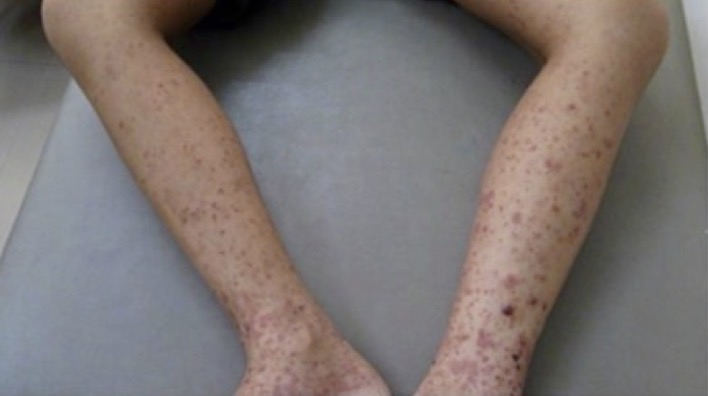
Lim Siew Lan, a 72-year-old retired music teacher, is brought to your clinic in Klang by her husband, who is concerned that she has not been her usual self over the past two weeks. She reports increasing fatigue, intermittent headaches and persistent nausea since starting a new medication prescribed by another doctor. She also describes feeling generally weak and mildly unsteady when walking.
Her past medical history includes hypertension, hypercholesterolaemia, ischaemic heart disease and trigeminal neuralgia. She is on perindopril 4 mg orally once daily, atorvastatin 40 mg orally at night, aspirin 100 mg orally once daily and bisoprolol 2.5 mg orally once daily. Two weeks ago, she was commenced on carbamazepine 200 mg orally twice daily for worsening facial pain.
On examination, her temperature is 36.7°C, pulse 64 beats per minute and regular, blood pressure 132/78 mmHg and oxygen saturation 98% on room air. She appears mildly lethargic but is oriented to time, place and person. There are no focal neurological deficits. Cardiovascular and respiratory examinations are unremarkable.
You refer her for urgent blood tests (see image)

What is the MOST likely medication responsible for her current presentation?
Madam Tan Siew Eng, a 67-year-old retired secondary school teacher from Ipoh, presents to your clinic with persistent right shoulder discomfort for the past three months. She initially attributed the pain to gardening and household chores after retirement. The pain is dull, constant, and occasionally radiates down the medial aspect of her right arm. Simple analgesia provides minimal relief. She also reports increasing lethargy and has recently developed a persistent cough productive of small amounts of mucoid sputum. She denies haemoptysis, fever or recent travel. She stopped smoking 10 years ago after a 30-pack-year history.
On examination, her temperature is 36.8°C, pulse 88 beats per minute, blood pressure 138/82 mmHg and oxygen saturation 97% on room air. She appears mildly cachectic. Respiratory examination reveals reduced breath sounds over the right upper chest. During conversation, you notice partial drooping of her right upper eyelid with a smaller right pupil compared to the left. There is reduced sensation along the medial aspect of her right forearm.
Her chest x-ray is shown below (see image)

What is the MOST likely diagnosis?
Mr Rajendran Nair, a 66-year-old retired lorry driver, presents to your clinic in Seremban with gradually enlarging firm nodules over the past several months. He is particularly concerned about a lesion over his left index finger and two similar swellings over his toes. The nodules are painless but have caused stiffness and mild restriction of movement. He denies redness, warmth or acute joint pain. He attempted to puncture one of the finger lesions at home using a sterile needle but was unable to aspirate any fluid. His past medical history includes osteoarthritis of the hands, hips and knees; hypertension; chronic kidney disease stage 3a; gout diagnosed 8 years ago; and non-alcoholic fatty liver disease. His regular medications are paracetamol 1 g orally twice daily as required, ramipril 10 mg orally once daily, amlodipine 5 mg orally once daily and allopurinol 100 mg orally once daily. He reports drinking 3–4 cans of beer most evenings. One month ago, his serum urate level was 390 micromol/L
On examination, his temperature is 36.6°C, pulse 72 beats per minute and blood pressure 134/80 mmHg. On examination of his finger, you observe the following (see image)

What is the MOST appropriate next step in management?
Ahmad Farid, a 43-year-old sales manager from Shah Alam, attends your clinic to review his recent blood test results. He has a history of hypercholesterolaemia, obesity, obstructive sleep apnoea on nocturnal continuous positive airway pressure therapy, chronic right shoulder pain and gout. His regular medications are atorvastatin 80 mg orally at night, allopurinol 100 mg orally once daily and meloxicam 15 mg orally once daily as required. He admits that he frequently forgets his medications, estimating that he misses doses two to three times per week and occasionally runs out of medication for several weeks before arranging follow-up. He denies chest pain or dyspnoea. He consumes alcohol socially on weekends and denies smoking.
On examination, his temperature is 36.9°C, pulse 84 beats per minute and regular, blood pressure 136/78 mmHg, respiratory rate 14 breaths per minute and oxygen saturation 98% on room air. His BMI is 36 kg/m².
Laboratory results shown below (see image)


What is the MOST appropriate next step in management?
Mr Suresh Nadarajan, a 56-year-old travelling sales representative from Melaka, presents for review of his recent blood investigations. Over the past year, he has transitioned from a customer-facing retail role to a largely sedentary position involving prolonged driving and desk-based administrative work. He reports increased occupational stress, irregular meals and minimal structured exercise. He has gained approximately 7 kg over 12 months. He has a 40 pack-year smoking history and currently smokes one pack daily. He drinks alcohol socially on weekends. He has no known history of diabetes mellitus, stroke or ischaemic heart disease.
On examination, his temperature is 36.7°C, pulse 80 beats per minute and regular, blood pressure today is 166/96 mmHg. Previous documented readings over the past 6 months were 168/94 mmHg and 162/92 mmHg. His BMI is 30 kg/m². Cardiovascular and respiratory examinations are unremarkable.
His laboratory investigations show fasting plasma glucose 5.4 mmol/L, total cholesterol 6.2 mmol/L, HDL cholesterol 0.9 mmol/L, LDL cholesterol 3.8 mmol/L, triglycerides 2.0 mmol/L, serum creatinine 82 µmol/L and electrolytes within normal range. The Framingham General Cardiovascular Risk Score, his estimated 10-year cardiovascular risk is calculated at 22%.
What is the MOST appropriate next step in management?
Tan Chong Wei, a 78-year-old retired school principal, presents to your clinic in Ipoh for repeat prescriptions. He has a history of long-standing ischaemic heart disease managed medically after being deemed unsuitable for revascularisation by his cardiologist, hypertension, hypercholesterolaemia, autoimmune hepatitis on long-term low-dose corticosteroid therapy, type 2 diabetes mellitus, gastro-oesophageal reflux disease, osteoporosis and bilateral knee osteoarthritis. He underwent left total knee replacement 5 years ago. He reports experiencing central chest tightness when walking approximately 100 metres on level ground. The discomfort resolves within a few minutes of rest or after using sublingual glyceryl trinitrate spray. He denies chest pain at rest, syncope or orthopnoea. There has been no recent change in frequency of symptoms.
His current medications are aspirin 100 mg orally once daily, rosuvastatin 40 mg orally once daily, perindopril 8 mg orally once daily, paracetamol sustained-release 1330 mg orally three times daily, esomeprazole 20 mg orally once daily as required, prednisolone 2.5 mg orally once daily, metformin extended-release 2 g orally once daily, insulin glargine 32 units in the morning and 36 units at night, and denosumab 60 mg subcutaneously every 6 months.
On examination, his temperature is 36.5°C, pulse 70 beats per minute and regular, blood pressure 128/88 mmHg, respiratory rate 14 breaths per minute and oxygen saturation 98% on room air. Cardiovascular examination reveals normal heart sounds with no murmurs. There are no basal lung crackles, raised jugular venous pressure or peripheral oedema.
What is the MOST appropriate next step in management?
Ethan Lim is brought by his parents to a government health clinic in Selangor for a routine developmental review. He was born at term via spontaneous vaginal delivery with no perinatal complications. His immunisations are up to date. There is no significant past medical history. During the consultation, he walks independently and is able to jump with both feet leaving the ground. He climbs onto the examination couch without assistance but requires some help climbing down. He uses a crayon to scribble spontaneously and turns pages of a book one at a time. He points to pictures when named and appears interested in picture books. His parents report that he speaks in clear two- to three-word phrases such as “want milk” and “go outside”. He can name some body parts when asked. He engages in pretend play, for example making his soft toy “eat” and “sleep”. When frustrated, he cries if his requests are not met but is consolable.
On examination, his temperature is 36.8°C, pulse 100 beats per minute and regular, respiratory rate 22 breaths per minute. Growth parameters are appropriate for age. There are no dysmorphic features and neurological examination is unremarkable.
What is Ethan’s MOST likely age?
Amirul Hakim, a 38-year-old sales manager from Kuala Lumpur, presents to your clinic with persistent lethargy for the past three months. He reports difficulty sustaining energy throughout the workday and feels unrefreshed even after adequate sleep. He has stopped going to the gym due to fatigue and has gained approximately 4 kg during this period. He denies low mood, anhedonia or significant occupational stress. There is no history of fever, night sweats or chronic cough. His appetite is unchanged. Bowel habits are normal. He has a history of bipolar affective disorder and has been maintained on lithium carbonate 500 mg orally twice daily since his mid-20s following a manic episode. He has had no recent psychiatric relapses. He also uses budesonide/formoterol 100/6 micrograms inhalation as maintenance and reliever therapy for asthma. He smokes 15 cigarettes daily and occasionally uses marijuana on weekends. He denies alcohol misuse.
On examination, his temperature is 36.6°C, pulse 62 beats per minute and regular, blood pressure 130/85 mmHg, respiratory rate 16 breaths per minute and oxygen saturation 98% on room air. His BMI is 29 kg/m². There is no tremor, hyperreflexia or goitre. There are no abdominal striae, facial rounding or proximal muscle weakness. Cardiovascular, respiratory and neurological examinations are otherwise unremarkable.
Which of the following investigations would MOST assist in confirming the most likely diagnosis?
Ms Aishah Rahman, a 29-year-old marketing executive, attends your clinic for review of her major depressive disorder. She was diagnosed 3 months ago and commenced on sertraline 100 mg orally once daily. Her mood has improved significantly, and she reports better sleep and concentration. However, over the past 6 weeks she has experienced persistent sexual dysfunction, including reduced libido and difficulty achieving orgasm, which is causing distress in her relationship. She denies suicidal ideation. There are no features of mania or hypomania. She does not consume alcohol excessively and takes no other regular medications. On examination, her temperature is 36.8°C, pulse 76 beats per minute, blood pressure 118/72 mmHg and BMI 23 kg/m². Physical examination is unremarkable. After discussion, she wishes to switch to another selective serotonin reuptake inhibitor (SSRI) with a lower likelihood of sexual side effects.
What is the MOST appropriate way to introduce the new SSRI?
Faizal Rahman, a 42-year-old administrative officer from Kuantan, presents with persistent fatigue and intermittent dizziness for the past 4 months. He reports reduced exercise tolerance and difficulty concentrating at work. He has unintentionally lost 6 kg over this period despite no change in diet. He also describes occasional nausea, vague abdominal discomfort and a recent craving for salty foods. His wife has noticed that his skin appears darker despite no significant sun exposure. He has a history of autoimmune thyroid disease and is on levothyroxine 100 micrograms orally once daily. There is no history of tuberculosis or chronic infection.
On examination, his temperature is 36.4°C, pulse 92 beats per minute, blood pressure 98/64 mmHg supine and 82/58 mmHg after standing for 2 minutes, with associated lightheadedness. His BMI is 22 kg/m². There is hyperpigmentation over the palmar creases and buccal mucosa.
Laboratory investigations reveal sodium 128 mmol/L (normal 135–145 mmol/L), potassium 5.6 mmol/L (normal 3.5–5.0 mmol/L), urea 7.2 mmol/L (normal 2.5–7.8 mmol/L), creatinine 94 µmol/L (normal 60–110 µmol/L), fasting plasma glucose 3.4 mmol/L (normal 3.9–5.5 mmol/L) and an 8 am serum cortisol level of 95 nmol/L (normal early morning range 140–690 nmol/L).
Which of the following investigations would MOST assist in confirming the most likely diagnosis?
Mr Lim Kian Seng, a 63-year-old data entry clerk from Johor Bahru, presents with a 12-month history of progressive numbness and intermittent aching pain affecting the left fourth and fifth fingers. He reports increasing difficulty typing and gripping small objects. Over the past 3 months, his wife has noticed that he occasionally drags his right foot when walking and has stumbled several times. He has a history of hypertension, hypercholesterolaemia, type 2 diabetes mellitus (diagnosed 10 years ago), erectile dysfunction and Ménière disease. His medications include valsartan/amlodipine 160/5 mg orally once daily, rosuvastatin 40 mg orally once daily, empagliflozin/metformin 12.5/1000 mg orally twice daily, insulin glargine 28 units subcutaneously at night, sildenafil 100 mg orally as needed and prochlorperazine 5 mg orally three times daily as required. He denies back pain, bladder or bowel dysfunction. There is no recent infection.
On examination, his temperature is 36.7°C, pulse 76 beats per minute and regular, blood pressure 134/82 mmHg and respiratory rate 16 breaths per minute. There is reduced light-touch and pinprick sensation over the left fourth and fifth fingers. Grip strength is mildly reduced in the left hand. In the lower limbs, he demonstrates a high-stepping gait on the right with inability to dorsiflex the right ankle against resistance. Sensation over the dorsum of the right foot is reduced. Reflexes are preserved and symmetrical. There are no upper motor neuron signs.
What is the MOST likely diagnosis?
Mr Adrian Wong, a 46-year-old marketing analyst from Kuala Lumpur, is brought to your clinic by his son who is concerned about progressive imbalance over the past three weeks. His son reports that Mr Wong has been bumping into walls and furniture and has fallen twice at home. Previously, he was fully independent and performing well at work but has recently taken medical leave due to difficulty concentrating and poor coordination. Mr Wong denies alcohol consumption and there is no smell of alcohol. He is not on any regular sedative medications and denies recreational drug use. There is no history of head trauma.
On examination, his temperature is 36.8°C, pulse 84 beats per minute, blood pressure 128/76 mmHg and respiratory rate 16 breaths per minute. His gait is broad-based and unsteady. When asked to walk heel-to-toe in a straight line, he is unable to maintain balance. His speech is slow and slurred with scanning quality. He has a tremor of the hands that becomes more pronounced as his finger approaches a target during a finger-to-nose task. Rapid alternating hand movements are irregular and slow. Muscle tone and power are normal. Reflexes are symmetrical. Sensory examination is normal.
Which of the following is the MOST likely diagnosis?
Mr Chan Kok Leong, a 71-year-old retired mechanic from Ipoh, presents with a 4-month history of disturbed sleep. He reports being woken several times per week by sudden painful tightening in both calves. The pain lasts from a few seconds to a few minutes and is severe enough to make him sit up in bed. He describes his calf muscles as becoming “hard and knotted,” and he needs to quickly dorsiflex his ankles and massage his calves before the pain gradually subsides. His wife reports that the episodes typically occur in the early hours of the morning. He does not snore, and there are no witnessed apnoeic episodes or abnormal limb movements before the cramping. During the day, he sometimes feels mild residual soreness but is able to continue his usual activities. He denies paraesthesia, weakness, urge to move his legs at night or relief with walking. There is no history of diabetes, thyroid disease or peripheral vascular disease. He takes no regular medications except occasional loratadine for allergic rhinitis.
On examination, his temperature is 36.6°C, pulse 72 beats per minute and regular, blood pressure 128/76 mmHg and respiratory rate 14 breaths per minute. Peripheral pulses are intact. Neurological examination of the lower limbs shows normal tone, power, reflexes and sensation.
What is the MOST appropriate next step in management?
Mr Tan Boon Keat, a 64-year-old retired engineer from Penang, presents to your clinic with a 2-week history of progressive numbness in both hands and feet. He recently returned from a 3-week trip to Laos, during which he experienced an episode of acute diarrhoea that resolved spontaneously about 10 days ago. He initially attributed his symptoms to dehydration. Despite drinking approximately 2 litres of fluid daily, including oral rehydration solutions, his symptoms have worsened. He reports increasing difficulty holding his car keys, turning the ignition and maintaining pressure on the accelerator pedal. His son has driven him to the clinic today as he no longer feels safe driving. He denies fever, rash or joint pain. There is no history of diabetes or alcohol misuse. He takes amlodipine 5 mg orally once daily for hypertension.
On examination, his temperature is 36.8°C, pulse 88 beats per minute, blood pressure 138/84 mmHg and respiratory rate 16 breaths per minute. Neurological examination reveals bilateral reduced grip strength and decreased light-touch sensation in both hands. Lower limb examination shows reduced dorsiflexion and plantar flexion bilaterally with diminished ankle reflexes. Brachioradialis reflexes are also reduced. Plantar responses are downgoing. There are no upper motor neuron signs. Cranial nerves are intact.
What is the MOST appropriate next step in management?
Azman Rahman, a 70-year-old retired lorry driver with a background of hypertension and dyslipidaemia, walks into your primary care clinic in Shah Alam accompanied by his wife. He was at the pharmacy next door when he suddenly felt lightheaded and nauseated. The clinic nurse brings him to the treatment room. On arrival, he is pale and diaphoretic. His pulse is 110 bpm and irregular, BP 96/60 mmHg, RR 20/min, temperature 36.4°C, and SpO₂ 97% on room air. While you are speaking to him, he becomes increasingly drowsy, then suddenly loses consciousness. He is unresponsive to verbal and painful stimuli, and you are unable to palpate a carotid pulse. The cardiac monitor displays a broad-complex, rapid, regular waveform consistent with a malignant ventricular arrhythmia (ECG shown). There are no signs of trauma. The nurse confirms that a biphasic defibrillator is immediately available in the clinic.

What is the MOST appropriate next step in management?
Ramesh Kumar, a 55-year-old lorry driver in Johor Bahru, presents for follow-up of his blood pressure. He was diagnosed with hypertension three months ago during a commercial driving licence medical review. He has class III obesity (BMI 41 kg/m²) and obstructive sleep apnoea, for which he uses CPAP regularly; his sleep physician recently documented good adherence and adequate symptom control. He does not smoke and drinks alcohol occasionally. There is no history of diabetes mellitus or known chronic kidney disease.
Three months ago, his blood pressure was 162/84 mmHg. Two months ago in your clinic, it remained elevated at 160/78 mmHg, and he was commenced on perindopril 4 mg PO OD. Today, he feels well with no dizziness, chest pain, reduced urine output, or muscle weakness. His blood pressure is 146/88 mmHg, pulse 78 bpm regular, temperature 36.7°C, and he is clinically euvolaemic with no peripheral oedema.
His blood test is shown below:


What is the MOST appropriate next step in management?
Daniel Lim, a 38-year-old regional sales manager from Johor Bahru, presents for follow-up of his blood pressure. He was first diagnosed with hypertension at age 28 after presenting to a government clinic with persistent occipital headaches. Since then, he has been on various medications intermittently but admits that over the past 12 months he has been fully compliant with perindopril 10 mg PO OD prescribed at your clinic. He was recently referred for an overnight sleep assessment due to complaints of daytime lethargy and loud snoring reported by his wife; the study showed no clinically significant apnoea–hypopnoea events. He attributes his earlier fatigue to occupational stress and irregular working hours. He denies episodic palpitations, sweating, tremors, panic attacks, or unexplained weight loss. There is no history of muscle weakness, easy bruising, abdominal striae, or change in facial appearance. He denies haematuria, frothy urine, or flank pain. There is no known family history of early-onset hypertension, stroke, or endocrine disorders. He does not smoke and drinks alcohol occasionally.
On examination today, he appears well. Blood pressure readings taken 15 minutes apart are 162/98 mmHg and 158/94 mmHg. Pulse is 72 bpm regular. Temperature 36.5°C. BMI of 31 kg/m² and a neck circumference of 43 cm. Cardiovascular and respiratory examinations are unremarkable. There are no abdominal bruits. Peripheral pulses are symmetrical and there is no radio-femoral delay. Fundoscopy shows mild arteriovenous nicking but no haemorrhages or exudates.
Review of clinic records over the past year shows persistent readings between 150–165 systolic and 90–100 diastolic despite documented medication adherence. Recent renal function and electrolytes are within normal limits.
What is the MOST appropriate next step in management?
Puan Salmah Ibrahim, a 62-year-old retired school clerk from Kuantan, presents to your clinic for review of her cardiac imaging results. Two months ago, she developed progressively worsening exertional dyspnoea, orthopnoea requiring three pillows, and two episodes of waking at night acutely short of breath. At that time, she was found to have bibasal crackles, respiratory rate 28/min, oxygen saturation 93% on room air, and bilateral pitting oedema to her knees. She was referred to the emergency department, where she received intravenous diuretics followed by oral therapy and was discharged on furosemide 40 mg PO mane. She reports good compliance with her medication. She denies chest pain but still experiences breathlessness when climbing one flight of stairs. She had not been on any regular medications prior to this episode. She has a 35-pack-year smoking history and drinks wine most evenings. There is no known history of hypertension or diabetes.
Today, her temperature is 36.4°C, pulse 90 bpm regular, BP 104/70 mmHg, RR 16/min, and SpO₂ 96% on room air. Cardiovascular examination reveals dual heart sounds without murmurs. Bibasal crackles persist, and there is mild bilateral pitting oedema to the mid-shin. Her fasting blood glucose, lipid profile, renal profile and electrolytes are within normal limits.
You arranged an echocardiogram. The report states:
Left ventricular dilatation with globally reduced systolic function, normal wall thickness, elevated left ventricular filling pressures, and an ejection fraction of 35%.
What is the MOST appropriate first-line medication to commence for her condition?
Dr Tan Wei Ming, a 58-year-old general practitioner from Penang, presents to your clinic for evaluation of persistent fatigue and reduced concentration over the past 6 months. He also reports intermittent constipation and increased thirst, which he attributes to long clinic hours. He denies weight loss, night sweats, bone pain or haematuria. His past medical history includes hypertension and recurrent renal colic 3 years ago, for which he passed a calcium-containing stone. His current medications are perindopril 8 mg PO OD and hydrochlorothiazide 12.5 mg PO OD, started 9 months ago for additional blood pressure control. He does not take calcium supplements. He occasionally takes over-the-counter vitamin D 1000 IU daily.
On examination, temperature 36.6°C, pulse 78 bpm regular, BP 132/82 mmHg, RR 14/min. He appears well and euvolaemic. There is no lymphadenopathy. Cardiovascular, respiratory and abdominal examinations are unremarkable. There is no proximal muscle weakness.
His blood investigation findings is shown below (see image)

A repeat calcium level 2 weeks later remains elevated at 2.74 mmol/L.
Which of the following is the MOST likely underlying cause of his biochemical abnormality?