Why Carbon Dioxide Acts as a Stable Gas
Real-World Phenomenon
Carbon dioxide is released when fuels burn, animals breathe, and plants break down sugars. Once in the air, CO$_2$ spreads evenly through the atmosphere and remains a gas under everyday Earth conditions. Scientists explain this behavior by modeling how carbon and oxygen atoms are arranged within a carbon dioxide molecule.
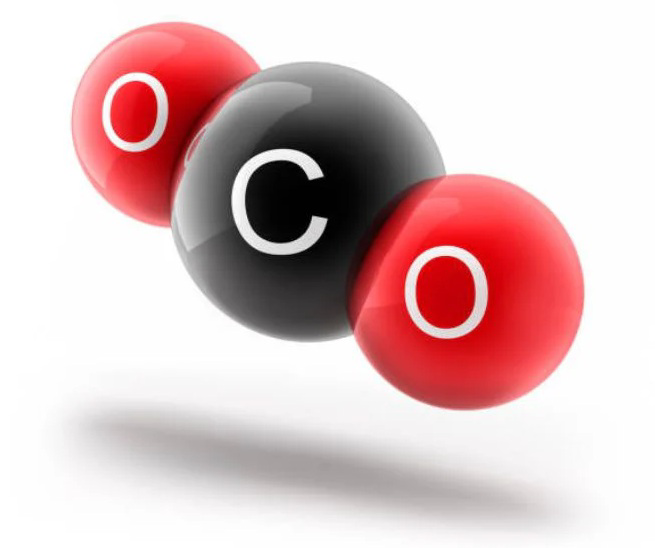
Carbon dioxide is a molecule made of three atoms: one carbon atom and two oxygen atoms. Its chemical formula, CO$_2$, shows the number and types of atoms present. Even though carbon dioxide contains only a few atoms, its atomic structure helps explain why it behaves the way it does in the atmosphere.
In a carbon dioxide molecule, the carbon atom is located in the center, bonded to an oxygen atom on each side. This arrangement forms a straight, or linear, molecule. Because the oxygen atoms pull equally on both sides of the carbon atom, the molecule has no overall charge difference from one end to the other. As a result, carbon dioxide molecules do not strongly attract one another.
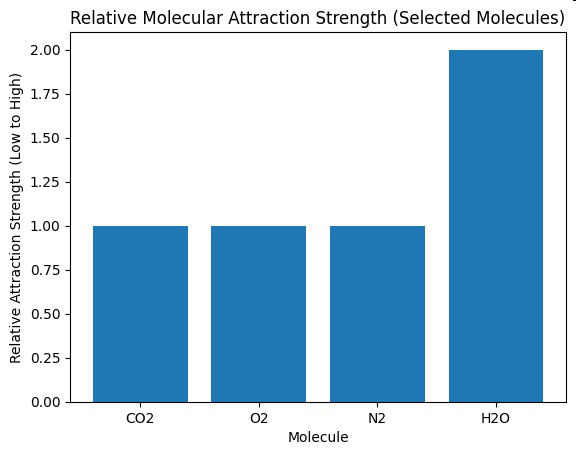
This weak attraction between CO$_2$ molecules explains why carbon dioxide remains a gas at normal temperatures and pressures on Earth. The molecules move freely and spread out rather than sticking together. This is why carbon dioxide mixes easily into the atmosphere instead of forming droplets or solids.
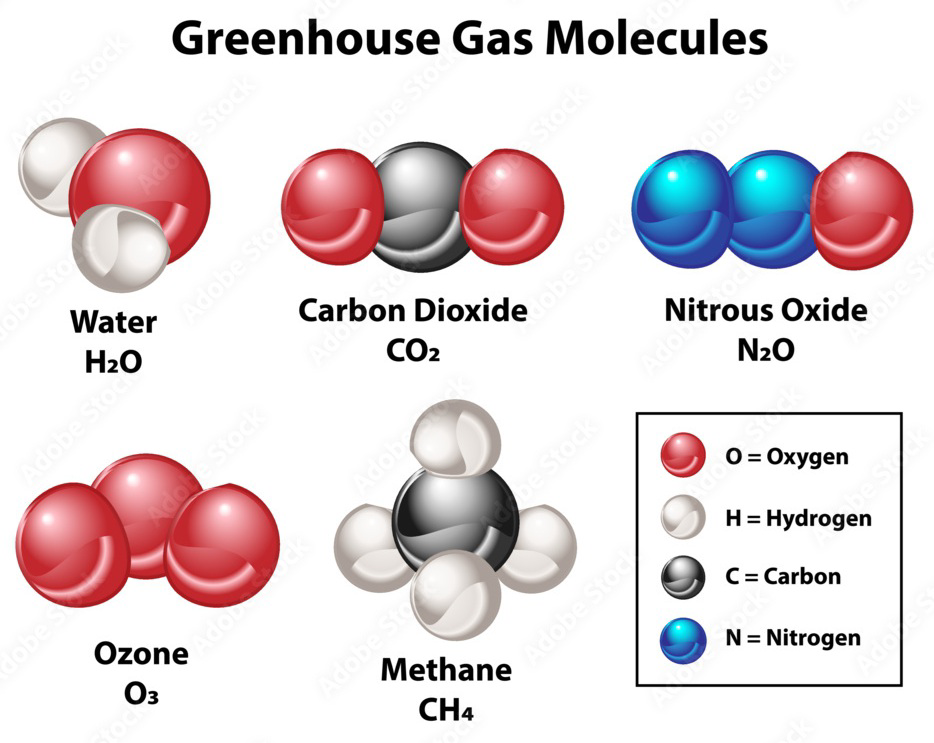
Scientists use models, such as ball-and-stick diagrams and molecular drawings, to represent this atomic arrangement. These models help show both the number of atoms and how they are connected. By comparing models of different molecules, scientists can explain why some substances are solids or liquids while others are gases.
Understanding the atomic composition and structure of carbon dioxide allows scientists to connect invisible molecular arrangements to observable patterns, such as how gases spread through the air and remain evenly distributed over time.
Diagram 1.
 Source: https://fity.club/lists/suggestions/molecules-meaning/
Diagram 2.
 Source:
https://asktheman.xyz/
Table 1.
Molecule | Carbon Atoms | Oxygen Atoms | Total Atoms per Molecule | State of Matter (Earth Surface) | Relative Molecular Attraction Strength |
|---|
Carbon Dioxide (CO$_2$) | 1 | 2 | 3 | Gas | Low |
Oxygen (O$_2$) | 0 | 2 | 2 | Gas | Low |
Nitrogen (N$_2$) | 0 | 0 | 2 | Gas | Low |
Water Vapor (H$_2$O) | 0 | 1 | 3 | Gas | Medium |
Graph of Information - Figure 1.
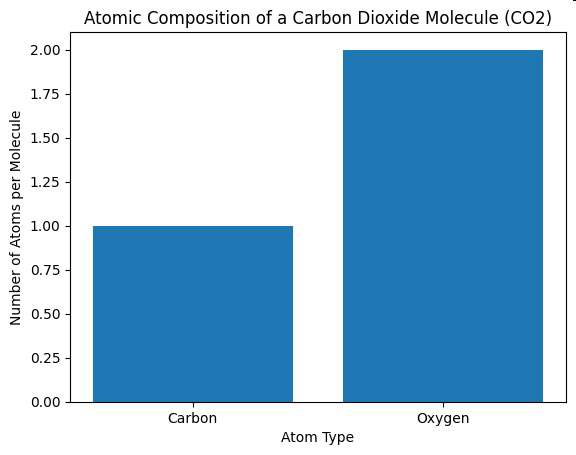
Graph of Information - Figure 2.