Why Most Clothing Is Synthetic
Real-World Phenomenon
When students check the tags on their clothing, many shirts, jackets, and athletic wear are labeled polyester or nylon instead of cotton or wool. These fabrics are not grown on farms or raised on animals. Scientists explain this by tracing how natural resources are transformed into synthetic fibers and how these materials affect society.
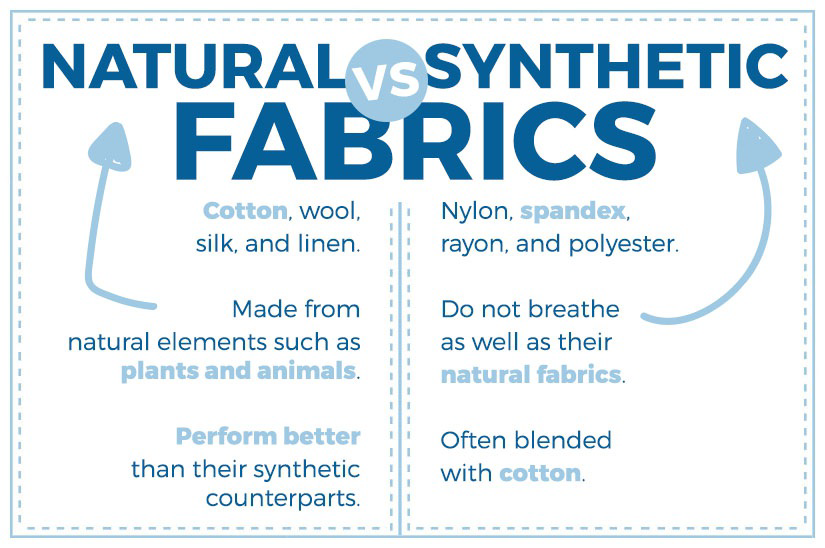
Clothing can be made from either natural fibers or synthetic fibers. Natural fibers, such as cotton and wool, come directly from plants or animals. Synthetic fibers, such as polyester and nylon, are made by humans using chemical processes. Even though they are manufactured, synthetic fibers begin with natural resources.
Polyester is one of the most common synthetic fabrics. It is made using chemicals derived from crude oil and natural gas. These fossil fuels are extracted from underground and processed in refineries. Chemists then use these materials to create small molecules that are linked together into long chains called polymers. These polymer chains are spun into thin threads that can be woven into fabric.
Synthetic fabrics have properties that make them useful to society. Polyester clothing is lightweight, strong, wrinkle-resistant, and dries quickly. These features make synthetic fabrics popular for sportswear and everyday clothing. Synthetic fibers are also usually cheaper to produce than natural fibers, allowing clothing to be made at lower cost.
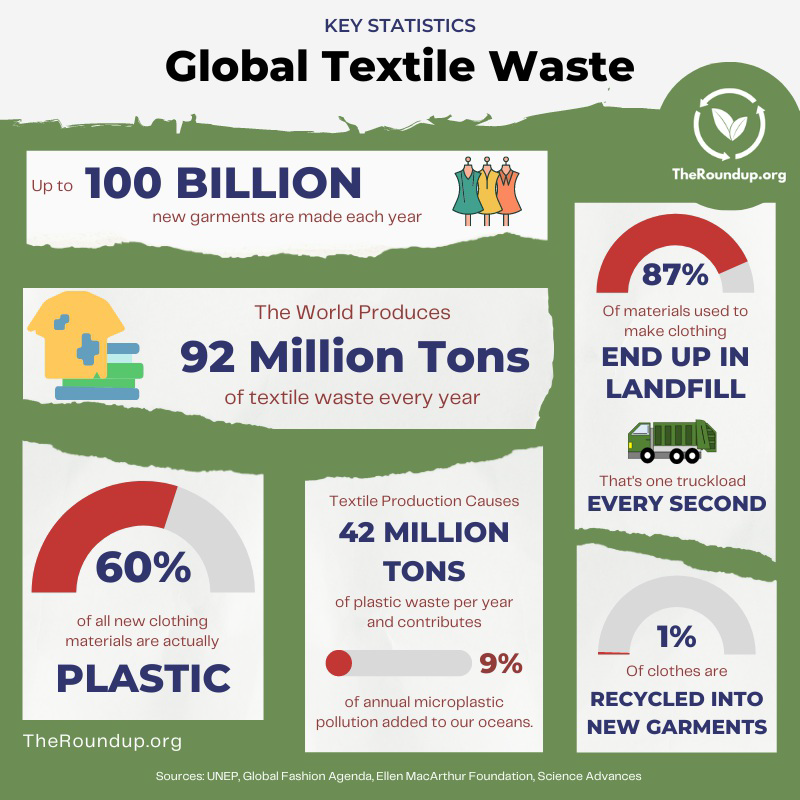
However, synthetic clothing also creates challenges. Producing synthetic fibers uses nonrenewable natural resources and requires energy. When synthetic fabrics are washed, tiny plastic fibers can break off and enter waterways. These microplastics can accumulate in the environment and affect ecosystems.
Scientists study both the benefits and impacts of synthetic fabrics so society can make informed decisions about material use. By understanding how synthetic clothing comes from natural resources and affects people and the environment, students can better evaluate tradeoffs involved in everyday materials.
Diagram 1.
 Source: https://www.theadairgroup.com/blog/the-essential-wholesale-apparel-glossary/
Diagram 2.
 Source:
https://theroundup.org/textile-waste-statistics/
Table 1.
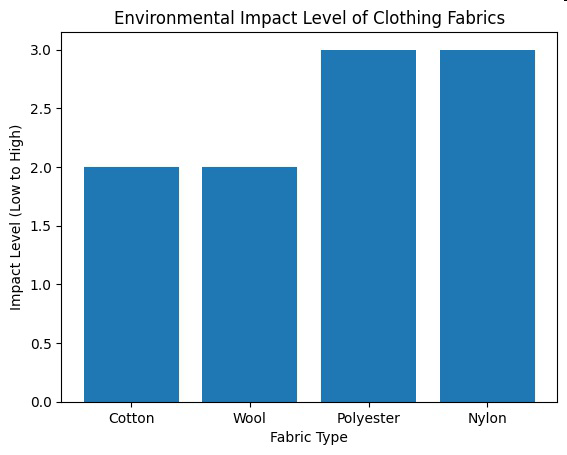
Fiber Type | Primary Natural Resource Source | Renewable or Nonrenewable | Key Benefit | Environmental Impact Level |
|---|
Cotton | Cotton plant | Renewable | Breathable | Medium |
Wool | Sheep (animal fiber) | Renewable | Warm insulation | Medium |
Polyester | Crude oil / Natural gas | Nonrenewable | Durable and quick-drying | High |
Nylon | Crude oil / Natural gas | Nonrenewable | Strong and lightweight | High |
Graph of Information - Figure 1.
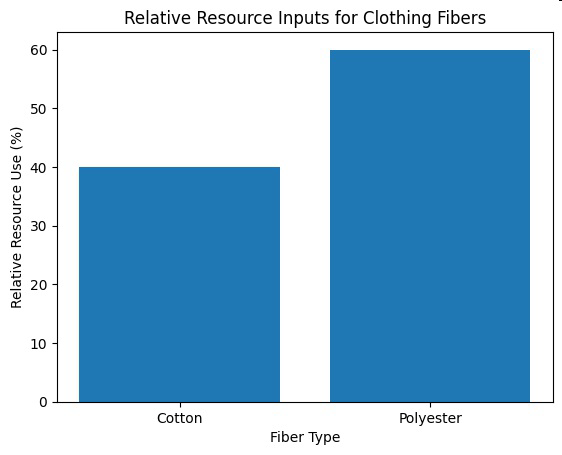
Graph of Information - Figure 2.