Why Water Behaves the Way It Does
Real-World Phenomenon
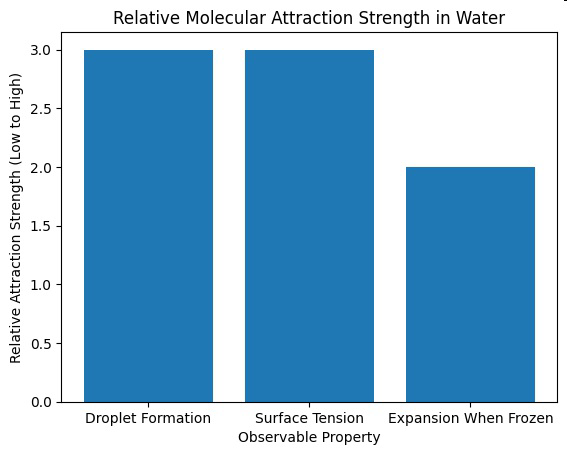
Water behaves differently depending on the surface and temperature. It forms round droplets on wax paper, spreads out on glass, and expands when it freezes into ice. These visible behaviors happen even though water always contains the same three atoms. Scientists explain these properties by modeling how hydrogen and oxygen atoms are arranged within a water molecule.
Water is made of tiny particles called molecules. Each water molecule contains three atoms: two hydrogen atoms and one oxygen atom. Scientists represent this using the chemical formula H$_2$O. Although water molecules are extremely small, the way these atoms are arranged helps explain many of water’s observable properties.
In a water molecule, the oxygen atom sits in the center with the two hydrogen atoms bonded to it at an angle. This bent shape means the oxygen side of the molecule has a slightly negative charge, while the hydrogen side has a slightly positive charge. Because of this uneven charge distribution, water molecules attract one another. This attraction is called hydrogen bonding.
Hydrogen bonding causes water molecules to stick together. This explains why water forms rounded droplets instead of spreading out on some surfaces. It also explains surface tension, which allows small insects to walk on water and droplets to hold their shape. When water freezes, the molecules slow down and arrange themselves into a more open structure. This arrangement spaces the molecules farther apart, causing ice to be less dense than liquid water and allowing it to float.
Scientists use models to describe these atomic arrangements because atoms cannot be seen directly. Ball-and-stick models show which atoms are connected and how they are arranged, while molecular diagrams show relative size and shape. These models help scientists connect the atomic structure of water molecules to patterns we can observe, such as droplet formation and expansion during freezing.
Understanding water’s atomic composition allows scientists to explain why water behaves differently from many other substances, even though it is made of only three simple atoms.
Diagram 1.
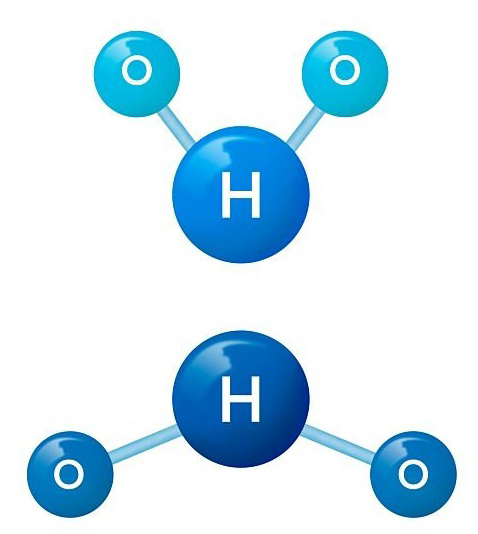 Source: https://www.istockphoto.com/vector/illustration-of-a-water-molecule-gm2216680863-633309029
Diagram 2.
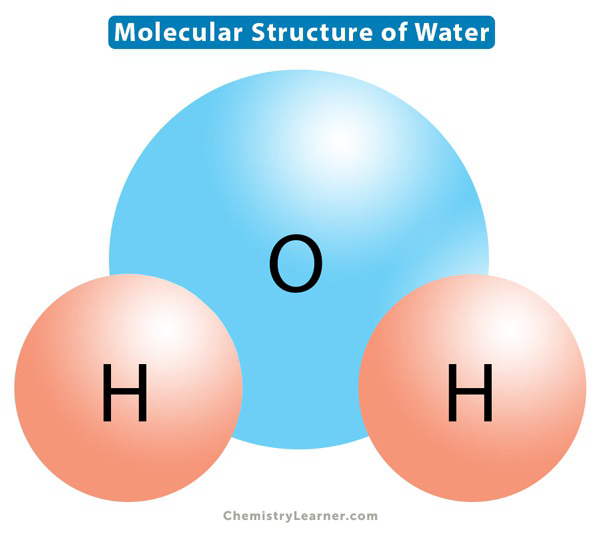 Source:
https://animalia-life.club/qa/pictures/polar-water-molecule-diagram
Diagram 3.
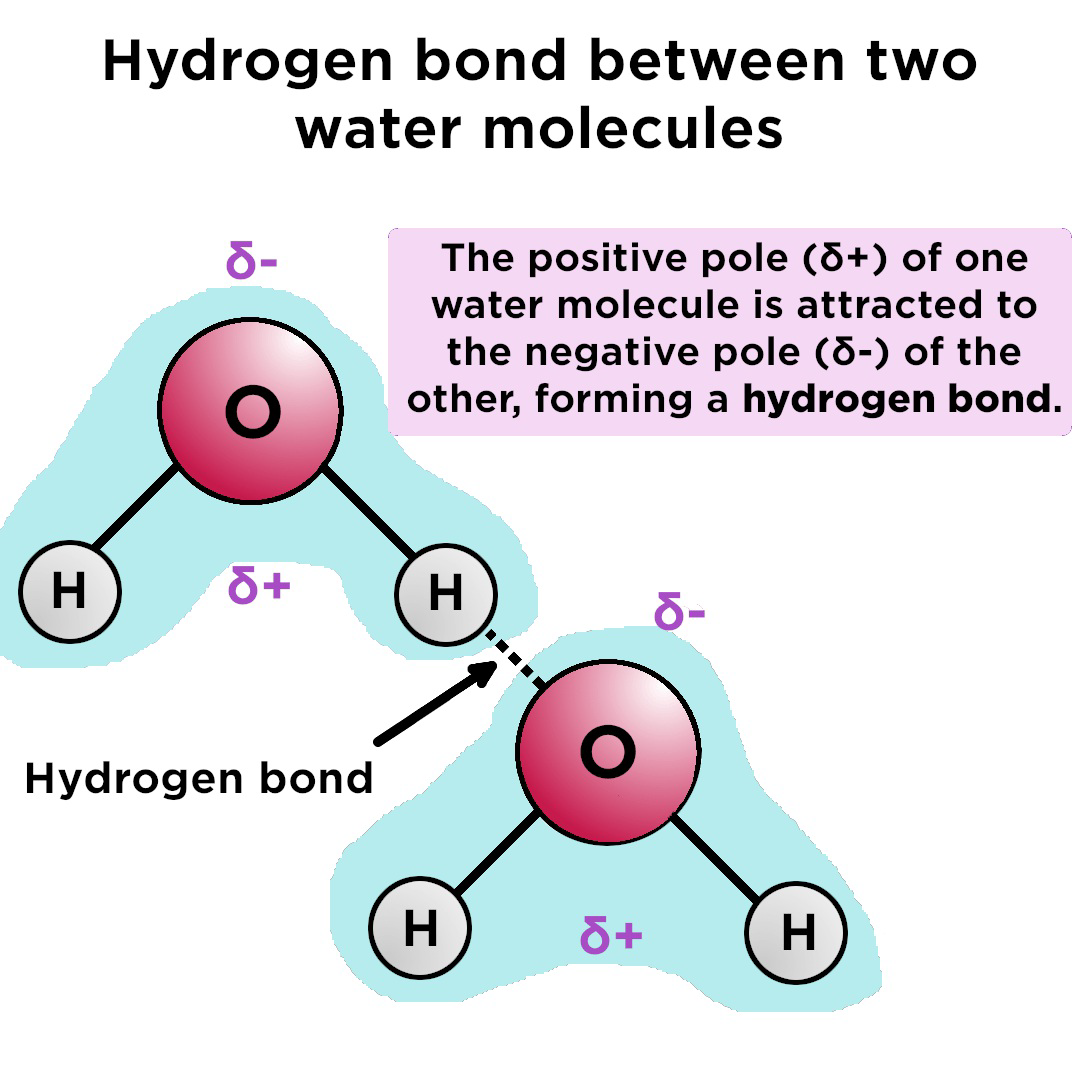 Source:
https://www.expii.com/t/hydrogen-bonds-overview-examples-10351
Table 1.
Molecule | Hydrogen Atoms | Oxygen Atoms | Total Atoms per Molecule |
|---|
Water | 2 | 1 | 3 |
Graph of Information - Figure 1.
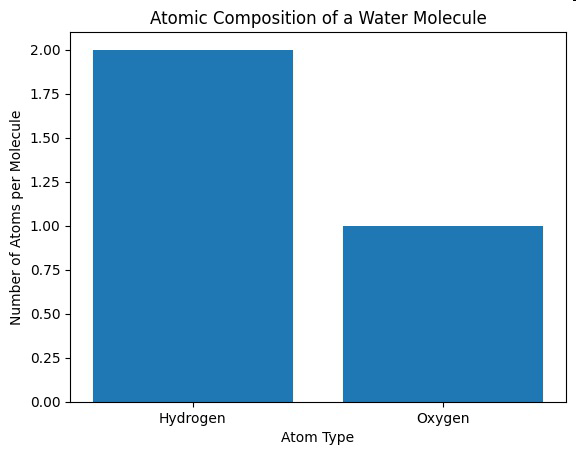
Table 2.
Property | Relative Molecular Attraction Strength |
|---|
Droplet Formation | High |
Surface Tension | High |
Expansion When Frozen | Medium |
Graph of Information - Figure 2.