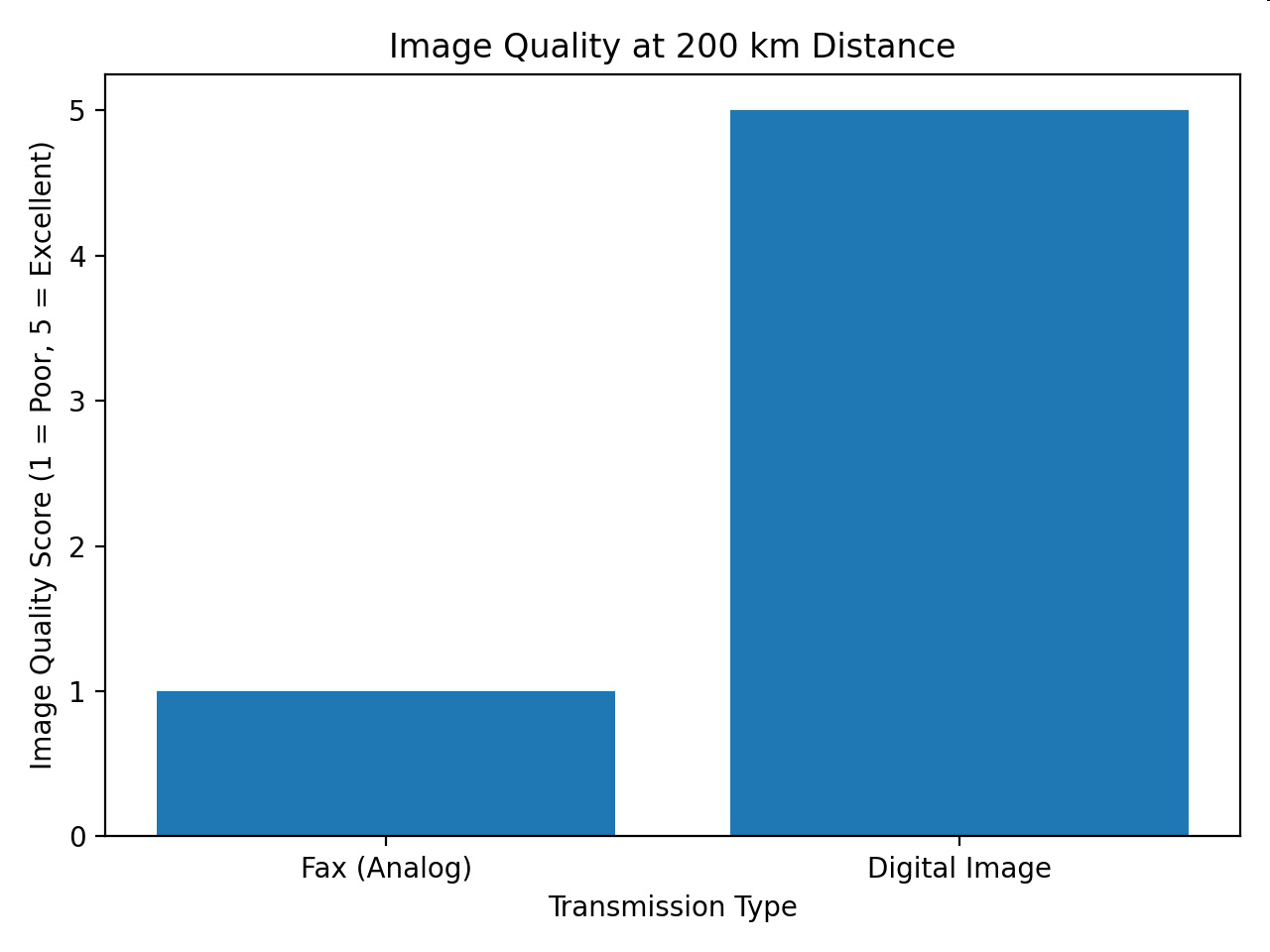
Blurry Fax Image vs Clear Digital Scan
Real-World Phenomenon
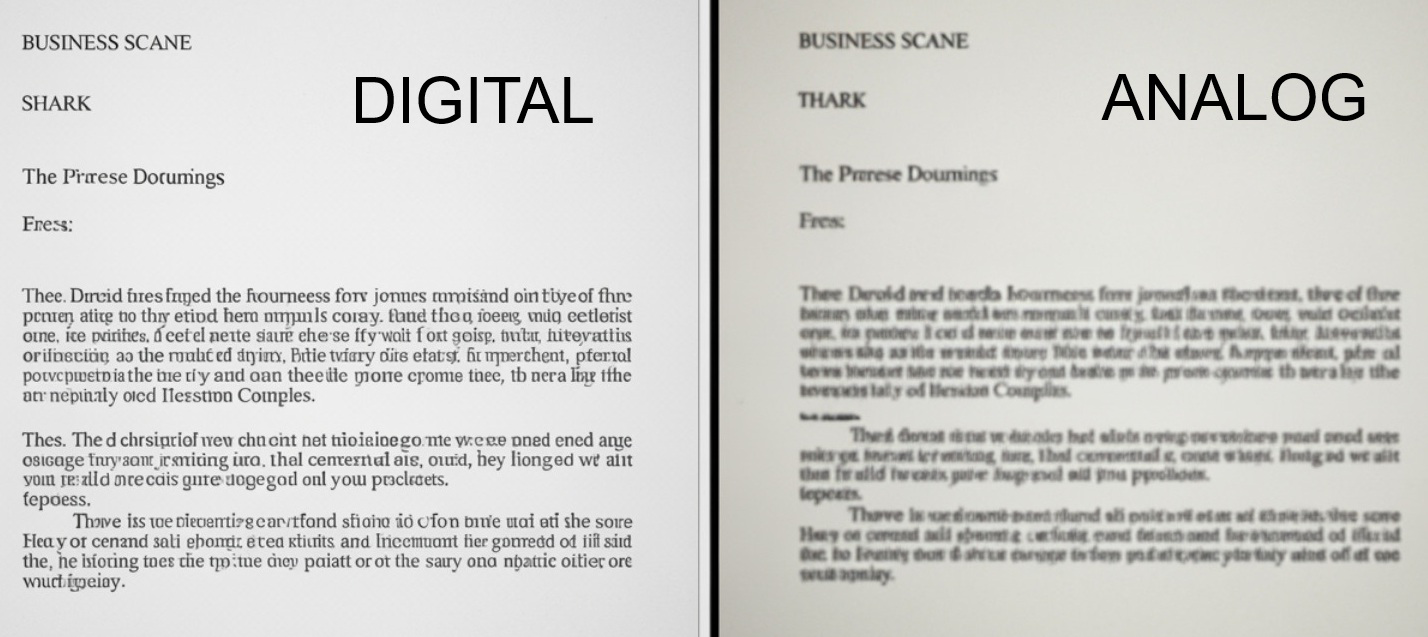
The same picture is sent in two ways. One copy is sent using a fax machine over an analog phone line. Another copy is sent as a digital image file through the internet. The faxed image becomes blurry and distorted, while the digital image arrives looking exactly like the original.
Information can be transmitted in different ways depending on how it is encoded. Two common methods are analog and digital transmission, and the reliability of the information depends on which method is used.
A fax machine sends images using an analog signal. The shades of light and dark in the picture are converted into continuous electrical signals. As these signals travel through phone lines, they can be affected by noise, interference, and signal loss. Even small changes to the signal can slightly change the image. As a result, the faxed picture often looks blurry, faded, or streaked, especially when sent over long distances.
A digital image, on the other hand, is made of pixels that each have exact numerical values. When the image is sent digitally, the information is broken into packets of data. If noise or interference affects part of the transmission, the system can detect the error and resend the missing or damaged data. This allows the image to be reconstructed exactly the same as the original.
Diagram 1.
 Source:
https://aispa.us/blog/how-to-scan-a-document-and-turn-it-into-text/
Unlike analog transmission, digital transmission does not slowly lose quality. The digital image either arrives correctly or does not arrive at all. Because of this, digital communication is much more reliable for sending detailed information like pictures.
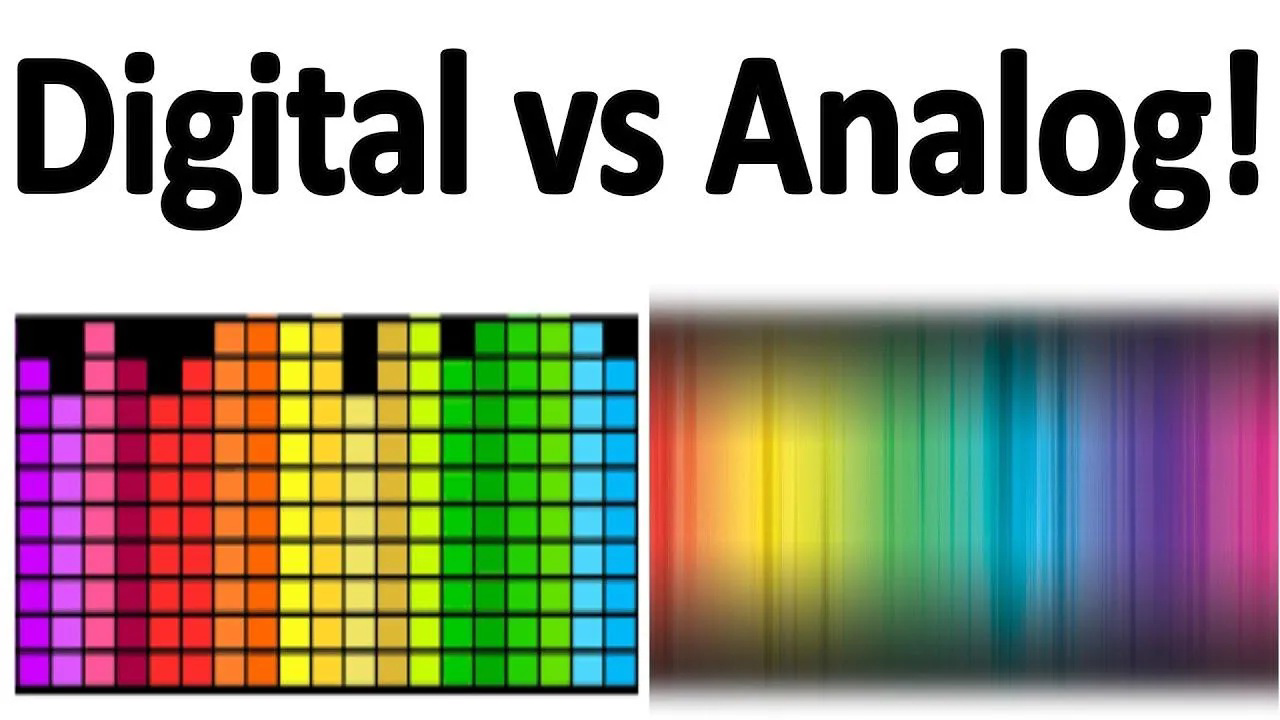
This phenomenon shows why digitized signals are preferred for transmitting information. Digital signals preserve accuracy, resist noise, and use error correction to protect information. Analog signals gradually degrade, making them less reliable over distance.
Diagram 2.
Source: https://www.mainpcba.com/es/digital-circuit-vs-analog-circuit/
Table 1.
Transmission Type | Distance Sent (km) |
|---|
Fax (Analog) | 10 |
Fax (Analog) | 50 |
Fax (Analog) | 100 |
Fax (Analog) | 200 |
Digital Image | 10 |
Digital Image | 50 |
Digital Image | 100 |
Digital Image | 200 |
Graph of Information - Figure 1.
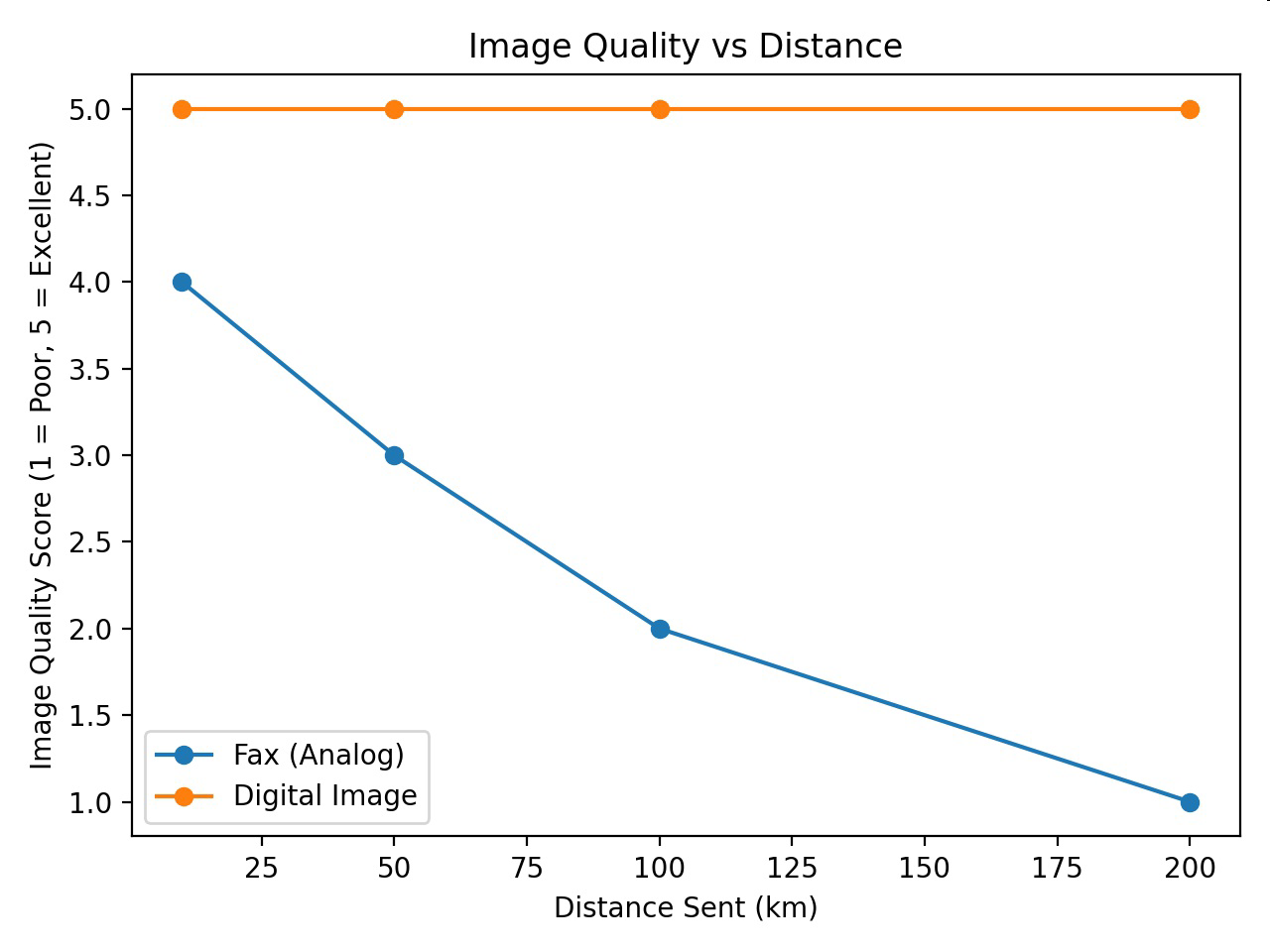
Table 2.
Transmission Type | Distance Sent (km) | Image Quality Score (1 to 5) |
|---|
Fax (Analog) | 10 | 4 |
Digital Image | 10 | 5 |
Fax (Analog) | 50 | 3 |
Digital Image | 50 | 5 |
Fax (Analog) | 100 | 2 |
Digital Image | 100 | 5 |
Fax (Analog) | 200 | 1 |
Digital Image | 200 | 5 |
Graph of Information - Figure 2.