Light Reflecting, Absorbing, and Passing Through Different Materials
Real-World Phenomenon
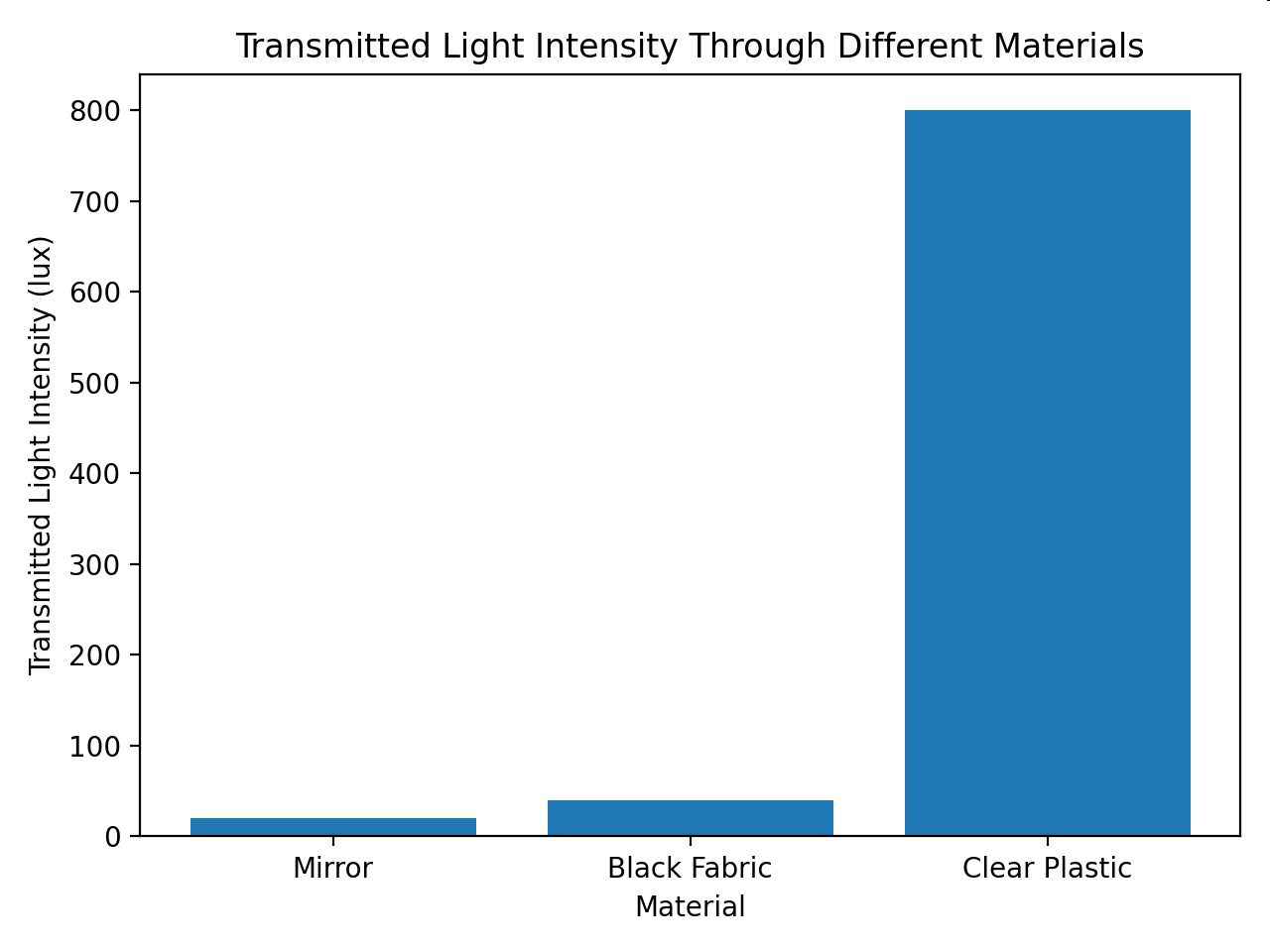
A flashlight is shined on three different materials: a mirror, a piece of black fabric, and a clear plastic sheet. The light bounces off the mirror, mostly disappears when it hits the black fabric, and passes through the clear plastic.
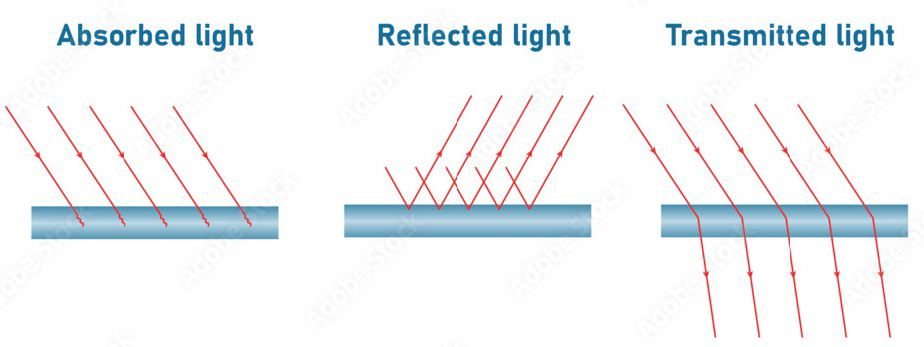
Diagram 1.
 Source: https://stock.adobe.com/es/images/reflection-absorption-and-transmission-of-light-light-falls-on-a-surface
Light is a type of wave that transfers energy. When light waves interact with materials, the energy they carry can be reflected, absorbed, or transmitted, depending on the properties of the material.
Reflection happens when light waves bounce off a surface. Smooth, shiny surfaces like mirrors reflect most of the light that hits them. This is why you can see images in a mirror. The light energy changes direction but remains light energy.
Absorption occurs when a material takes in the energy carried by the light wave. Dark-colored materials, such as black fabric, absorb most of the light that strikes them. The absorbed light energy is usually transformed into thermal energy, which may cause the material to warm up slightly. Because little light is reflected or transmitted, the material appears dark.
Transmission happens when light waves pass through a material. Clear materials like glass or transparent plastic allow most of the light to pass through them. The transmitted light continues to carry energy on the other side of the material, allowing objects to be seen through it.
Many materials interact with light in more than one way. For example, a clear plastic sheet may transmit most of the light but still reflect a small amount. A mirror may reflect most light but absorb a tiny fraction. These interactions depend on the structure, color, and smoothness of the material.
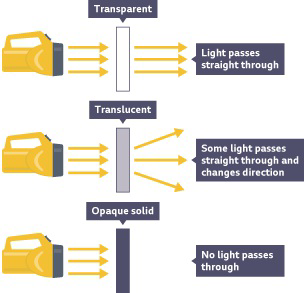
Diagram 2.
Source: https://www.bbc.co.uk/bitesize/topics/zvsf8p3/articles/z7rrkty
This phenomenon shows that waves do not behave the same way when they encounter different materials. By observing how much light is reflected, absorbed, or transmitted, students can use models and data to describe how waves interact with matter.
Table 1.
Material | Percent of Light Reflected (%) | Percent of Light Absorbed (%) | Percent of Light Transmitted (%) |
|---|
Mirror | 90 | 8 | 2 |
Black Fabric | 5 | 90 | 5 |
Clear Plastic | 10 | 10 | 80 |
Graph of Information - Figure 1.
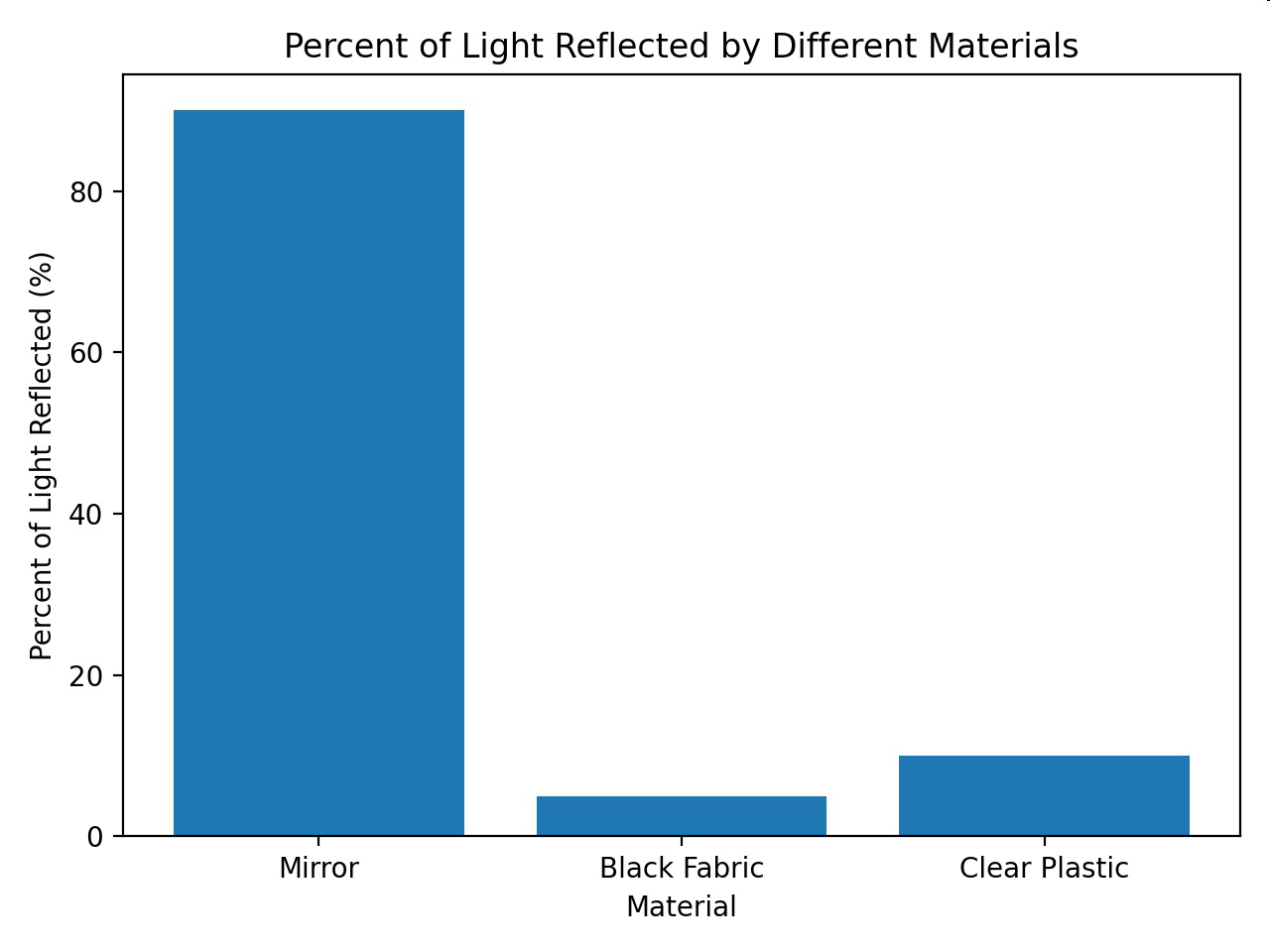
Table 2.
Material | Reflected Light Intensity (lux) | Transmitted Light Intensity (lux) |
|---|
Mirror | 900 | 20 |
Black Fabric | 50 | 40 |
Clear Plastic | 100 | 800 |
Graph of Information - Figure 2.