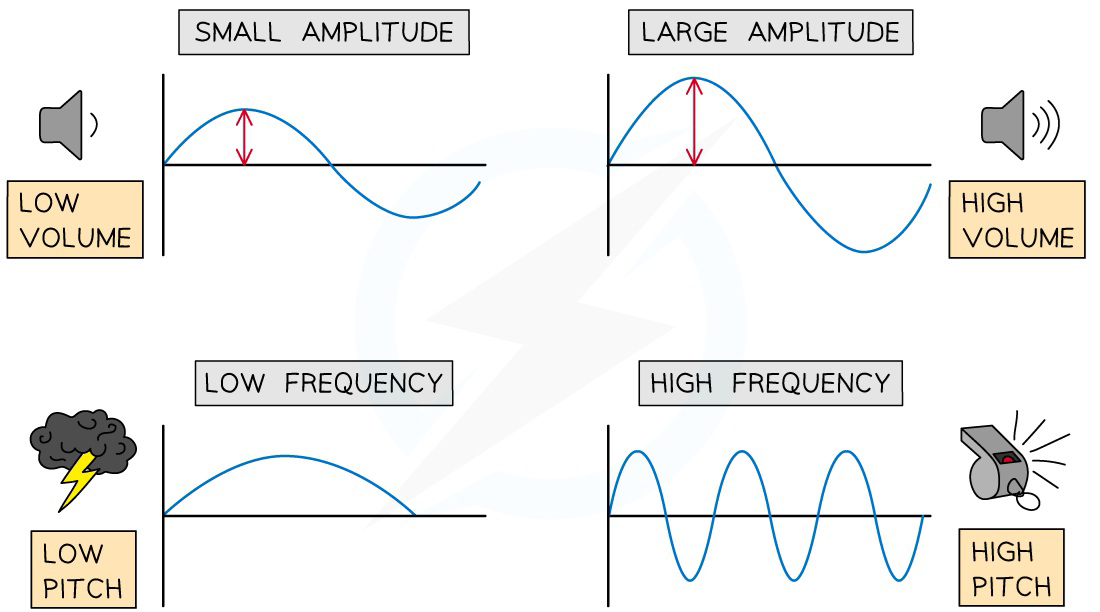
Sound Waves from a Speaker at Different Volumes and Pitches
Diagram 1.
 Source: https://www.savemyexams.com/igcse/physics/oxford-aqa/16/revision-notes/waves/sound-and-ultrasound/sound-waves/
Real-World Phenomenon
A speaker plays sounds at different pitches and volumes. When the pitch is higher, the sound seems “higher” and the sound wave pattern shows crests closer together. When the volume is higher, the sound is louder and the wave pattern shows taller peaks.
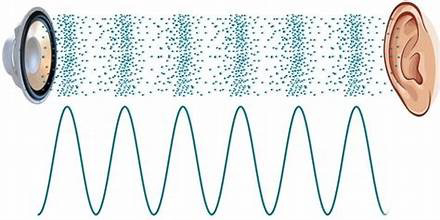
Sound is a wave that transfers energy through a medium, such as air. Sound waves are created when something vibrates and causes nearby air particles to compress and spread out. These compressions move outward as a wave.
Three important wave properties are frequency, wavelength, and amplitude. Frequency is how many wave cycles happen each second and is measured in hertz (Hz). For sound, frequency is related to pitch. A higher frequency produces a higher pitch. If the speed of sound in air stays the same, increasing frequency causes the wavelength to decrease. Wavelength is the distance between repeating parts of the wave.
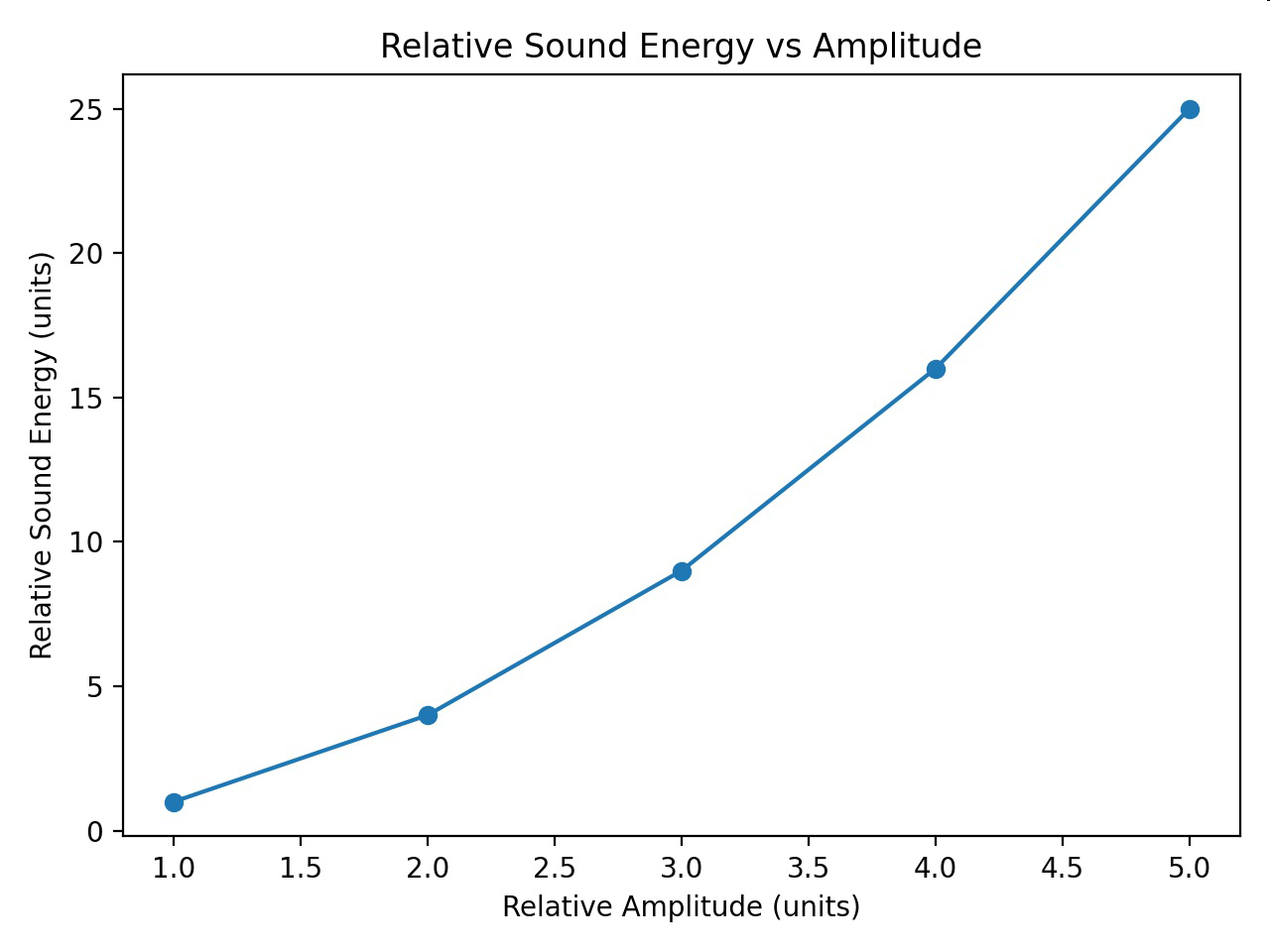
Amplitude describes how “strong” the wave is. For sound, amplitude is related to loudness. A louder sound has a greater amplitude because the air particles are compressed and spread out more strongly. Larger amplitude means more energy is being transferred by the wave.
Diagram 2.
 Source:
https://www.scienceabc.com/pure-sciences/movement-of-sound-waves-through-different-media.html
When a speaker’s volume is turned up, the speaker cone vibrates with a larger amplitude. This transfers more energy to the air each second, producing a louder sound. When the speaker plays a higher pitch, the cone vibrates more times per second, increasing frequency. Because the wave speed in air is about the same, the wavelength becomes shorter at higher frequencies.
These observations show that waves can be described and compared using measurable properties. Frequency and wavelength are related through wave speed, and amplitude is related to the energy carried by the wave. Sound waves provide a clear example of how wave behavior can be modeled using data and mathematical relationships.
Table 1.
Frequency (Hz) | Wavelength (m) |
|---|
170 | 2 |
340 | 1 |
510 | 0.67 |
680 | 0.5 |
850 | 0.4 |
Graph of Information - Figure 1.
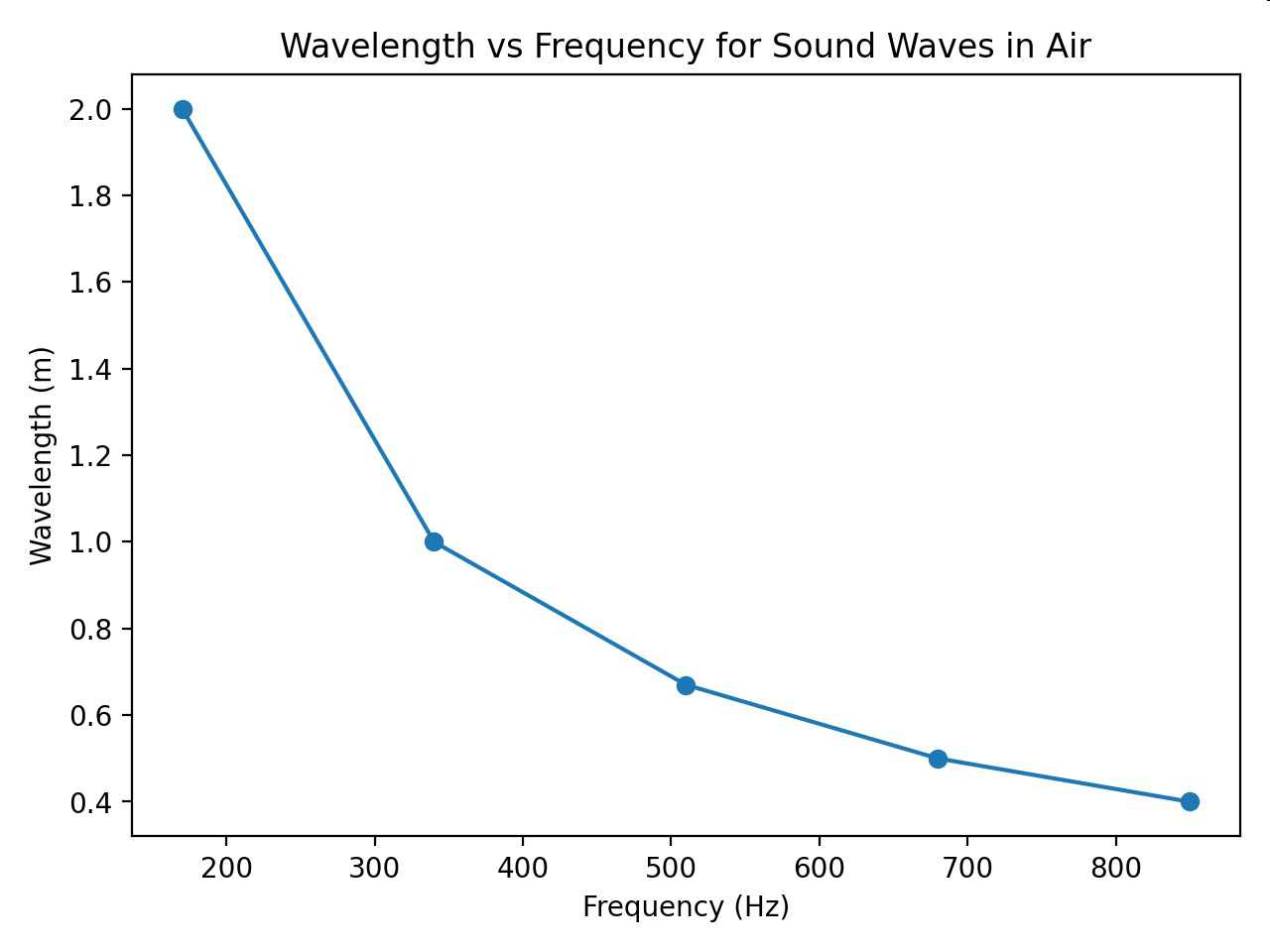
Table 2.
Relative Amplitude (units) | Relative Sound Energy (units) |
|---|
1 | 1 |
2 | 4 |
3 | 9 |
4 | 16 |
5 | 25 |
Graph of Information - Figure 2.