Waves on a Rope Shaken at Different Speeds and Heights
Diagram 1.
 Source: https://www.khanacademy.org/science/in-in-class11th-physics/in-in-11th-physics-waves/in-in-wave-characteristics/
Real-World Phenomenon
A student holds one end of a rope and moves their hand up and down. When the student shakes the rope faster, more waves pass a point each second and the waves appear closer together. When the student shakes the rope with larger motions, the waves become taller.
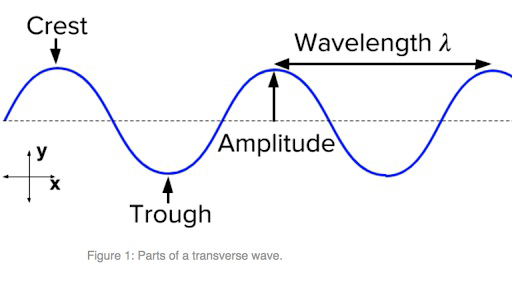
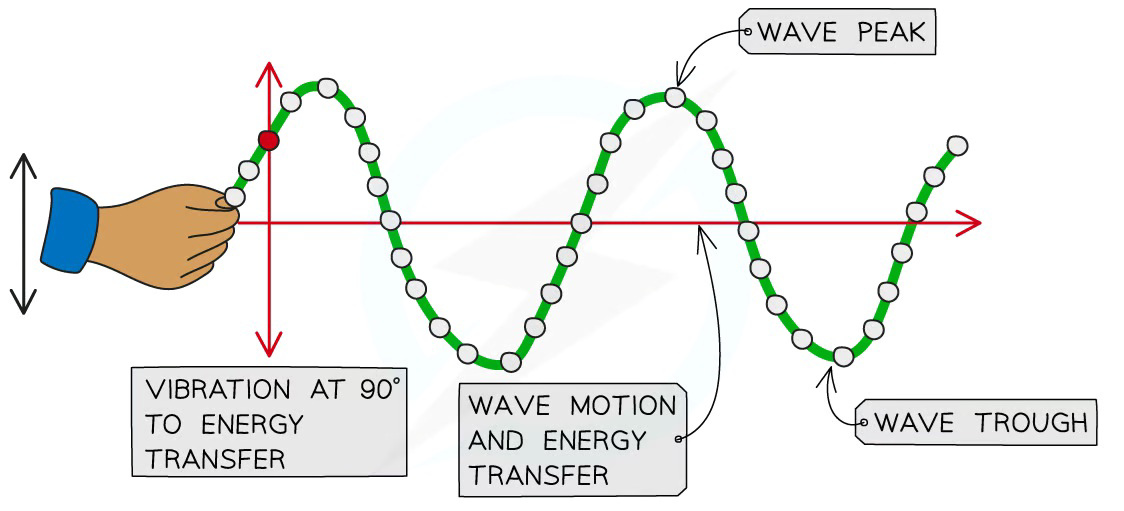
Waves transfer energy without transferring matter from one place to another. In a rope wave, energy moves along the rope as the rope itself moves up and down in place. Several properties are used to describe waves, including frequency, wavelength, and amplitude.
Frequency describes how many waves pass a point each second. When a student shakes the rope faster, the frequency of the wave increases. As frequency increases, the distance between wave crests becomes shorter. This distance between crests is called wavelength. For waves traveling at the same speed, an increase in frequency results in a decrease in wavelength.
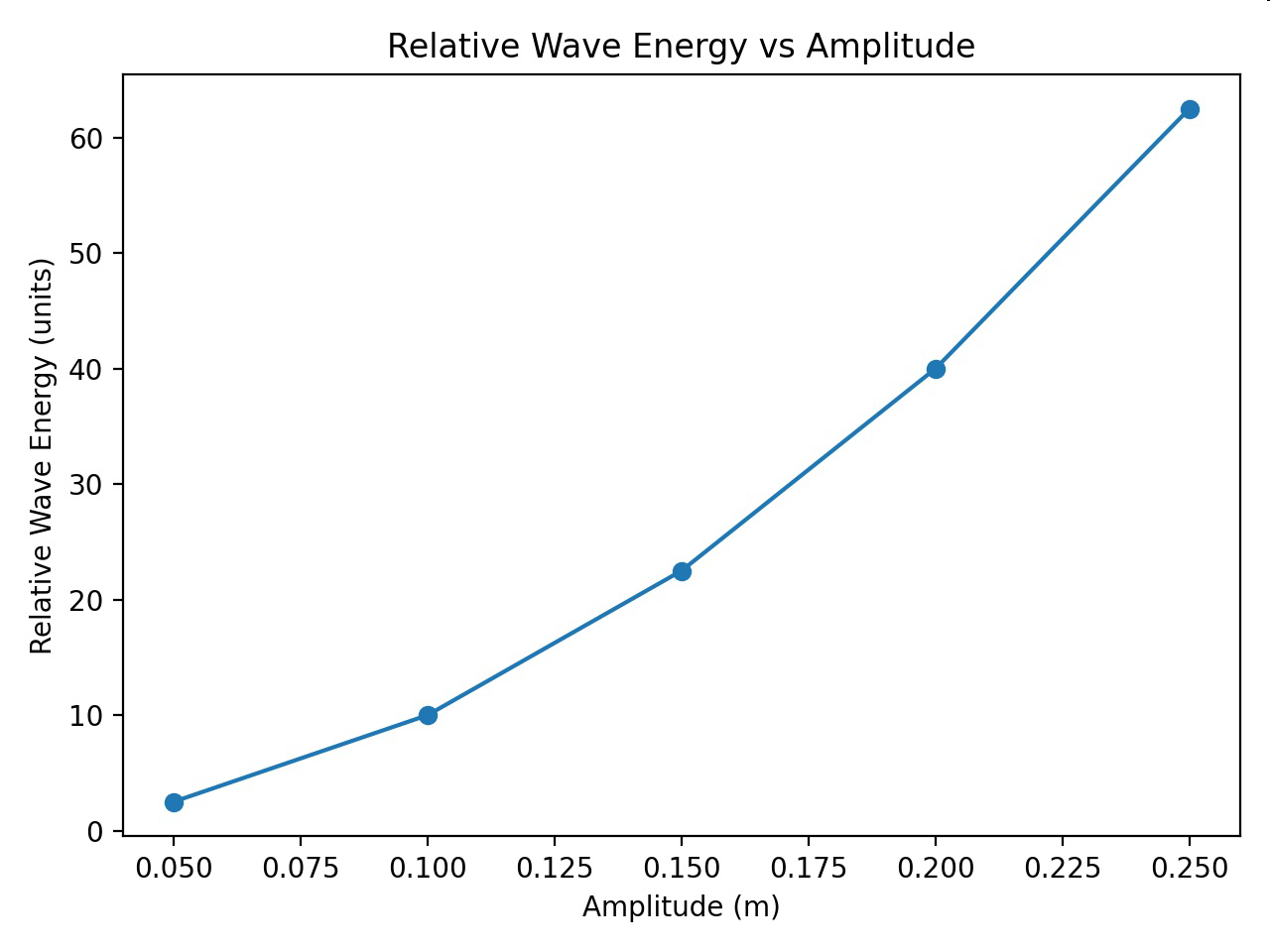
Amplitude describes the height of the wave measured from the resting position to the crest. When the student moves their hand a greater distance up and down, the amplitude of the wave increases. A wave with a larger amplitude carries more energy than a wave with a smaller amplitude.
The energy of a wave depends on how much the medium moves. In a rope wave, larger amplitude means the rope moves farther from its resting position. This requires more energy from the student’s hand. As a result, waves with greater amplitude transfer more energy along the rope.
Diagram 2.
 Source: https://www.savemyexams.com/igcse/physics/oxford-aqa/16/revision-notes/waves/general-properties-of-waves/
By changing how fast the rope is shaken, the student changes the frequency and wavelength of the waves. By changing how high the rope is shaken, the student changes the amplitude and the amount of energy transferred. These observations show that frequency, wavelength, and amplitude are all important for describing wave behavior.
This phenomenon provides evidence that waves can be modeled using measurable quantities and that mathematical relationships can be used to describe how waves behave.
Table 1.
Hand Motion Speed (shakes per second) | Wave Frequency (Hz) | Wavelength (m) | Amplitude (m) | Relative Wave Energy (units) |
|---|
1 | 1 | 2 | 0.05 | 2.5 |
2 | 2 | 1 | 0.1 | 10 |
3 | 3 | 0.67 | 0.15 | 22.5 |
4 | 4 | 0.5 | 0.2 | 40 |
5 | 5 | 0.4 | 0.25 | 62.5 |
Graph of Information - Figure 1.
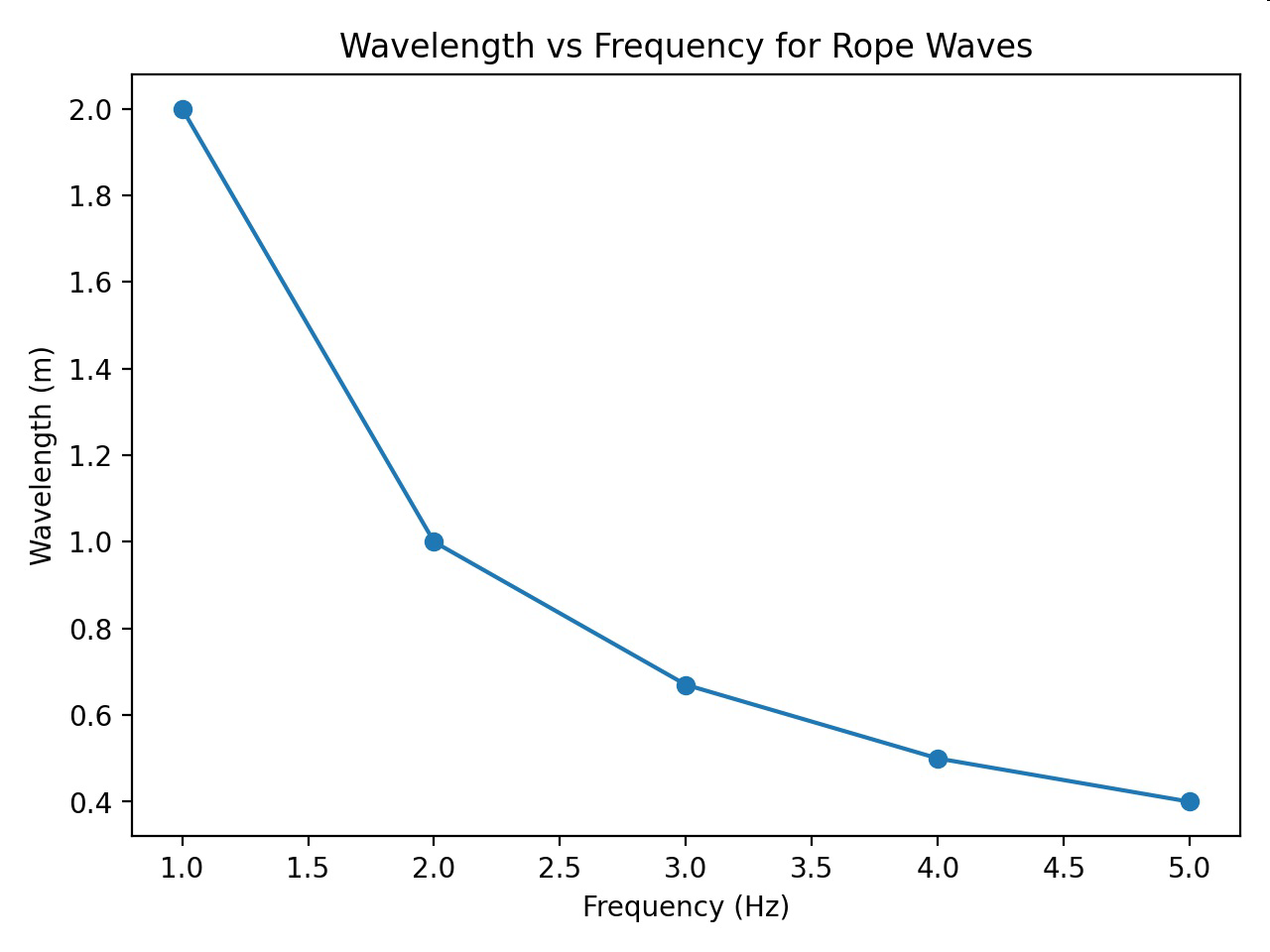
Graph of Information - Figure 2.