Scratchy Vinyl Record vs Digital Audio File
Real-World Phenomenon
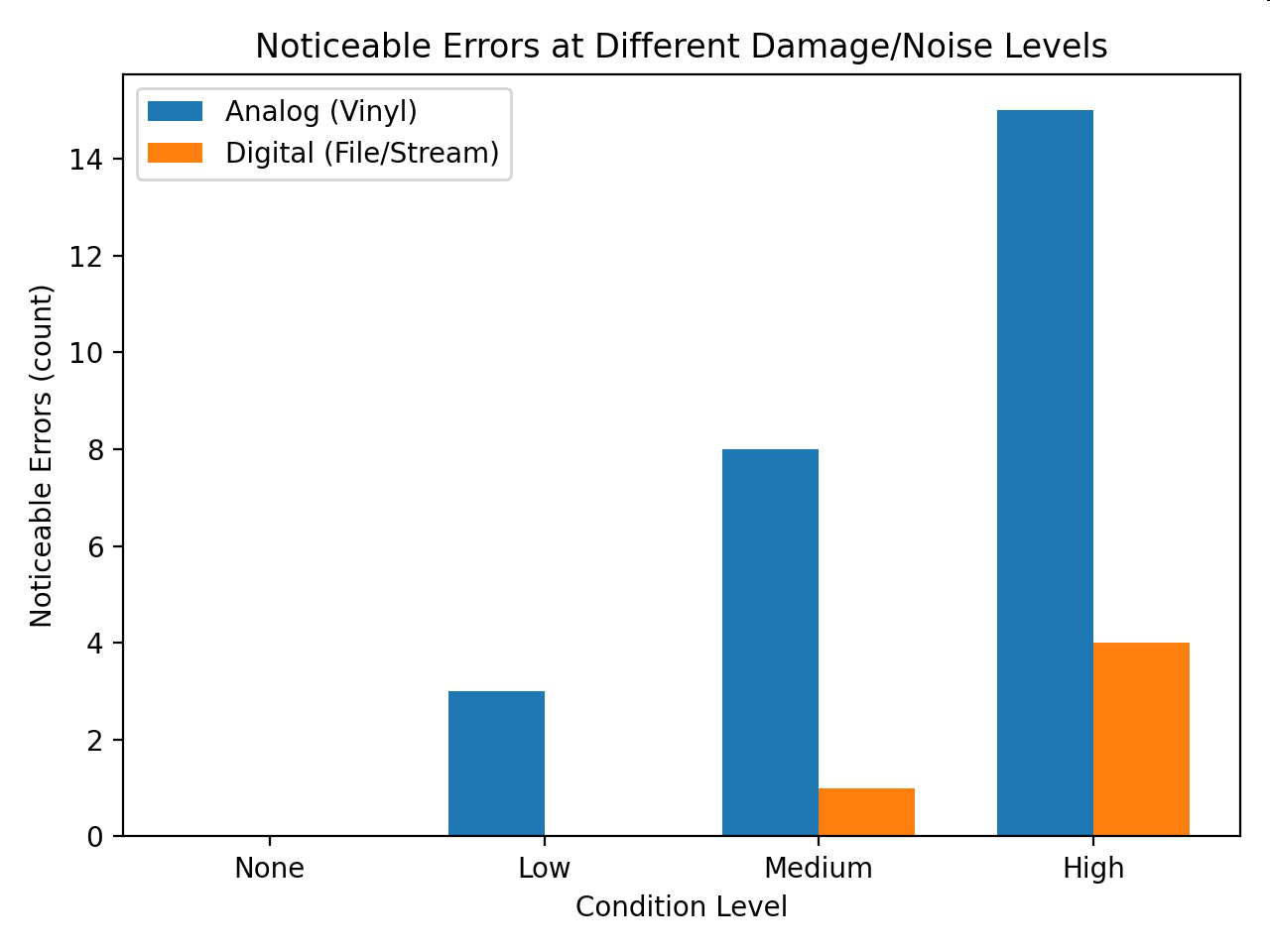
A song is played from a vinyl record and from a digital audio file. When the vinyl has scratches or dust, the sound includes pops, crackles, and distortion. The digital file sounds the same every time. Even when there is interference during transmission (like a weak connection), the digital audio stays clear until it briefly pauses or buffers, rather than slowly becoming scratchy.
Signals carry information from one place to another. How that information is encoded affects how reliably it can be stored or transmitted. Two common types of signals are analog and digital.
Diagram 1.
 Source:
https://www.youtube.com/watch?v=9m_6gLdNc7U
A vinyl record stores sound as an analog signal. Tiny grooves represent the original sound wave as a continuous pattern. A needle (stylus) follows these grooves and turns the motion into an electrical signal and then sound. Because the groove pattern is continuous, any damage like scratches, dust, or wear changes the groove shape. That directly changes the signal, which creates pops, crackles, or distortion. As damage increases, the sound quality gradually gets worse because the analog signal is being physically altered.
A digital audio file stores sound as numbers. The sound wave is sampled many times per second and each sample is saved as digital data (0s and 1s). When the file is played, the device uses those numbers to recreate the sound. Small amounts of noise or interference usually do not change the data enough to be misread, and digital systems often use error detection and correction. For example, data can be checked for mistakes, and missing or incorrect parts can be resent or reconstructed.
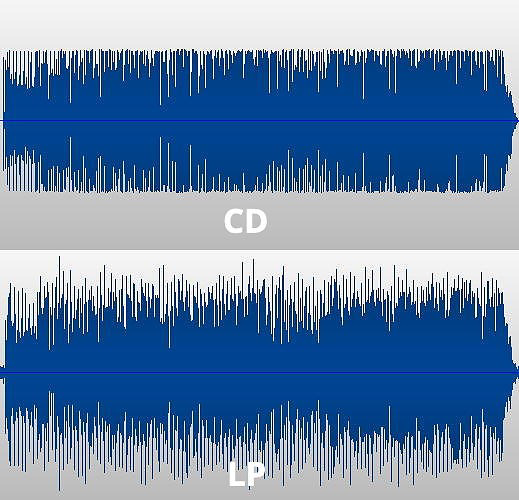
This is why digital signals are more reliable. Analog signals degrade gradually with damage or noise. Digital signals resist small errors and preserve the original information. If interference becomes too large, digital audio may briefly cut out, but it does not slowly become distorted the way analog audio does.
Diagram 2.
Source: https://www.grimmaudio.com/blogs/vinyl-versus-digital/
Table 1.
Condition Level | Signal Type |
|---|
None | Analog (Vinyl) |
Low | Analog (Vinyl) |
Medium | Analog (Vinyl) |
High | Analog (Vinyl) |
None | Digital (File/Stream) |
Low | Digital (File/Stream) |
Medium | Digital (File/Stream) |
High | Digital (File/Stream) |
Graph of Information - Figure 1.
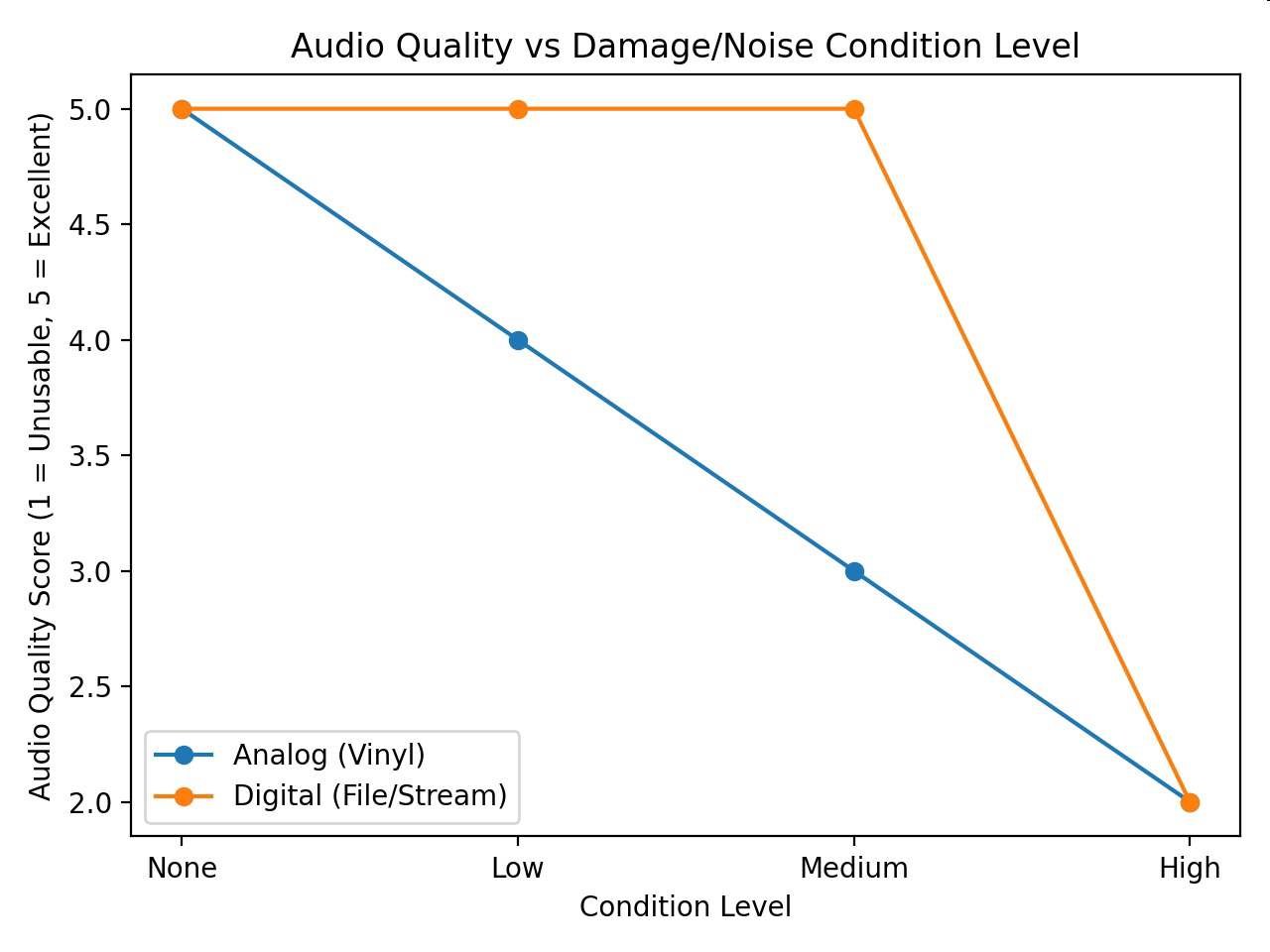
Table 2.
Signal Type | Condition Level | Audio Quality Score (1 to 5) | Noticeable Errors (count) |
|---|
Analog (Vinyl) | None | 5 | 0 |
Analog (Vinyl) | Low | 4 | 3 |
Analog (Vinyl) | Medium | 3 | 8 |
Analog (Vinyl) | High | 2 | 15 |
Digital (File/Stream) | None | 5 | 0 |
Digital (File/Stream) | Low | 5 | 0 |
Digital (File/Stream) | Medium | 5 | 1 |
Digital (File/Stream) | High | 2 | 4 |
Graph of Information - Figure 2.