Sound Waves Passing Through Walls Made of Different Materials
Real-World Phenomenon
Music is played at the same volume in one room while a listener stands in the next room. When the rooms are separated by a thin door, the music sounds loud. When the rooms are separated by a thick wall or a padded barrier, the music sounds much quieter.
Diagram 1.
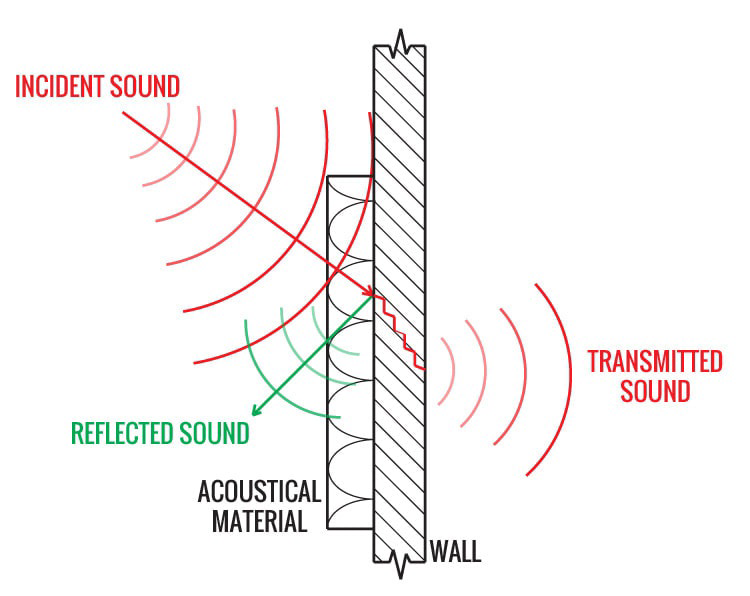 Source: https://bjolley.weebly.com/mastery-check-5---wave-interactions.html
Sound is a wave that transfers energy through a medium by causing particles to vibrate. When a sound wave reaches a wall or barrier, the wave’s energy can be reflected, absorbed, or transmitted, depending on the material the wall is made of.
Some materials allow sound waves to pass through more easily than others. Thin or rigid materials, such as wooden doors, often transmit a noticeable amount of sound energy. This allows sound waves to continue vibrating particles on the other side of the wall, making the sound easier to hear.
Other materials reduce how much sound energy is transmitted. Thick walls made of concrete or brick absorb more sound energy. Soft materials like foam panels, fabric, or insulation are especially good at absorbing sound. When sound waves enter these materials, the vibrations cause the material to move slightly, and much of the sound energy is transformed into thermal energy.
Reflection also occurs when sound waves hit a surface. Hard surfaces reflect sound waves back into the room, which can create echoes. However, when a wall absorbs a large amount of sound energy, less sound is reflected or transmitted.
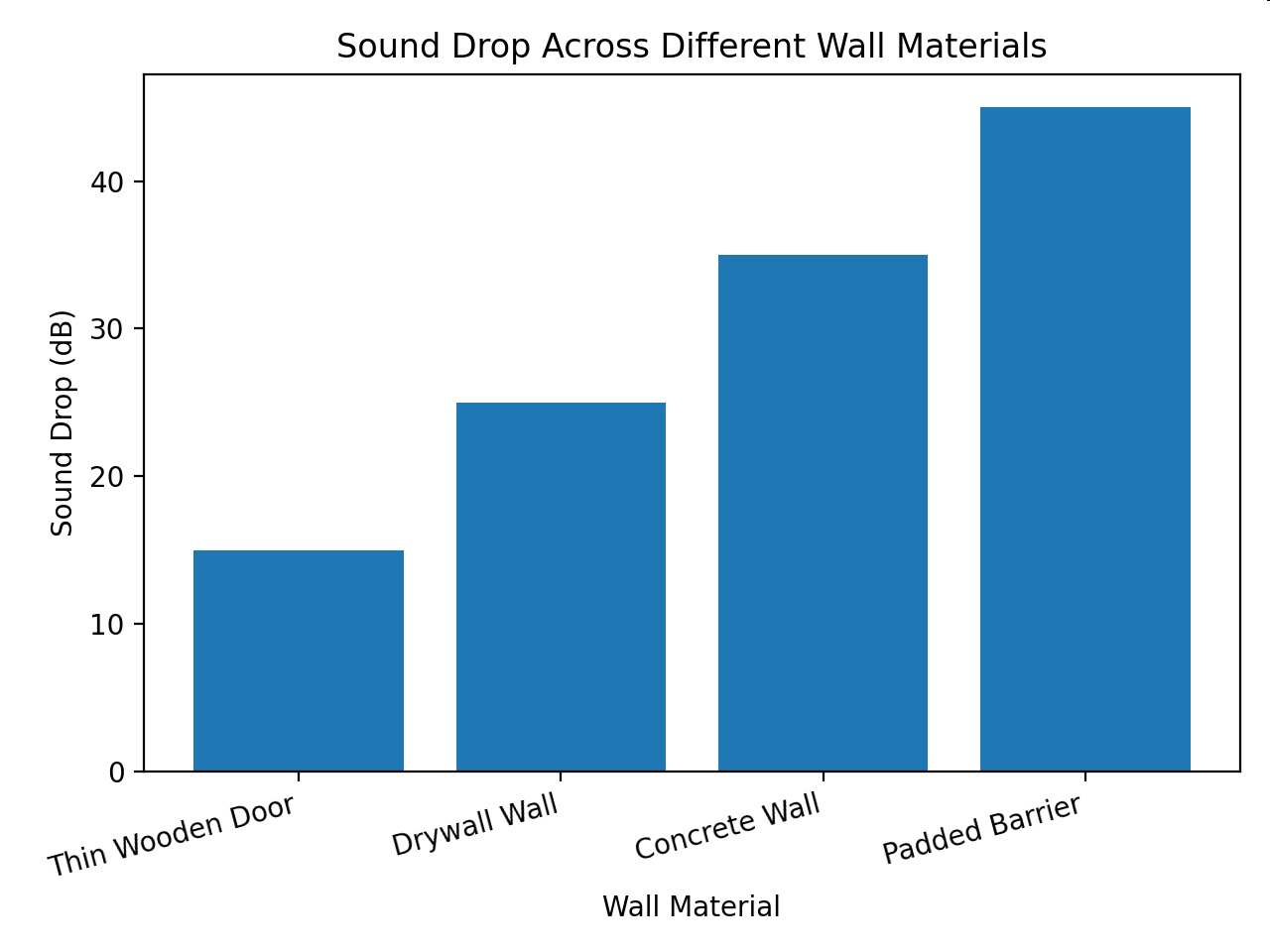
By comparing how loud the sound is after passing through different materials, students can observe that sound waves interact differently with materials. These observations provide evidence that waves can be reflected, absorbed, or transmitted, and that the amount of energy transferred depends on the type of material.
Table 1.
Wall Material | Thickness (cm) | Sound Level Before Wall (dB) | Sound Level After Wall (dB) | Sound Drop (dB) |
|---|
Thin Wooden Door | 3 | 80 | 65 | 15 |
Drywall Wall | 10 | 80 | 55 | 25 |
Concrete Wall | 20 | 80 | 45 | 35 |
Padded Barrier | 5 | 80 | 35 | 45 |
Graph of Information - Figure 1.
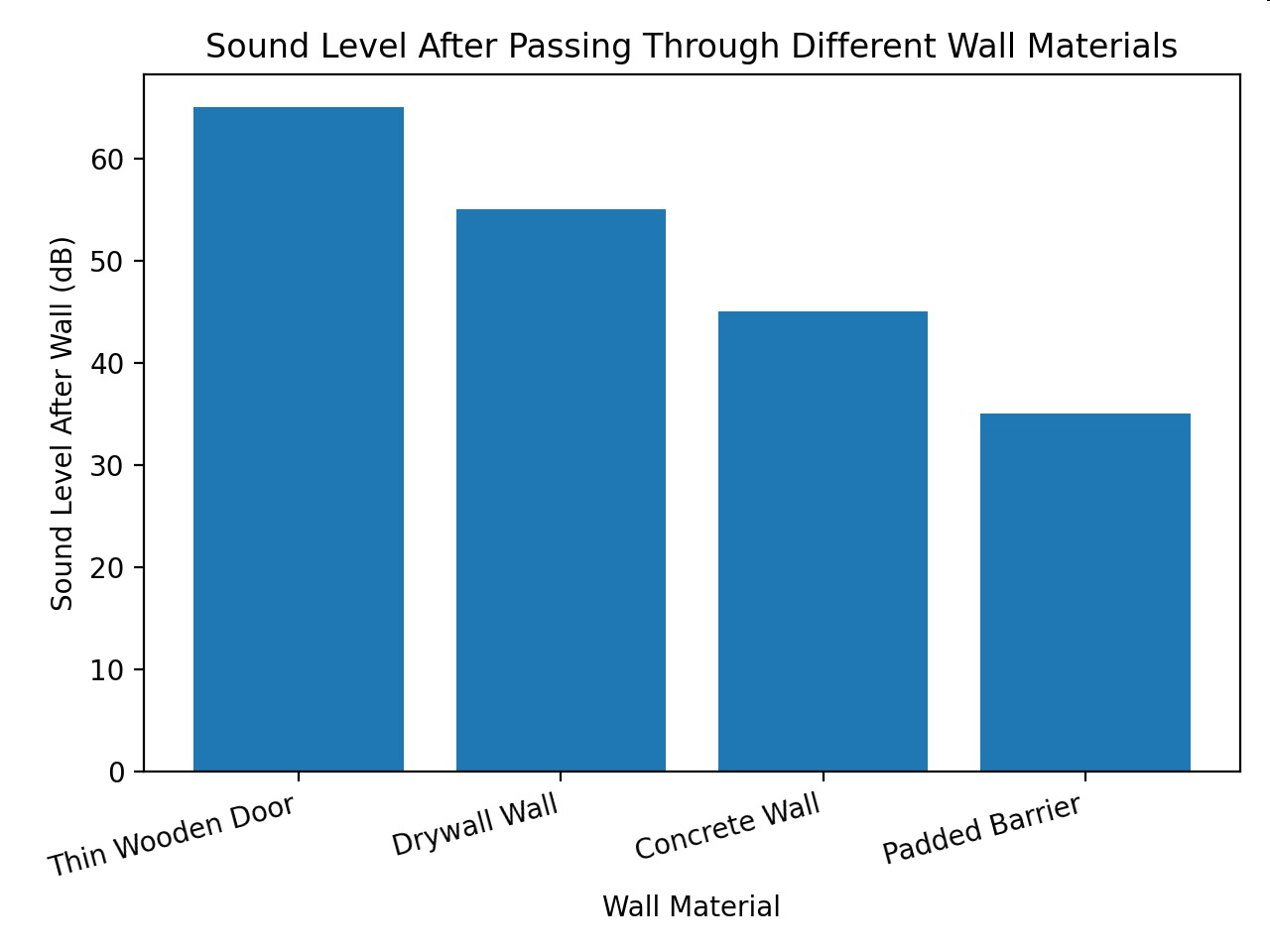
Graph of Information - Figure 2.