Vibrations Traveling Through Different Surface Materials
Real-World Phenomenon
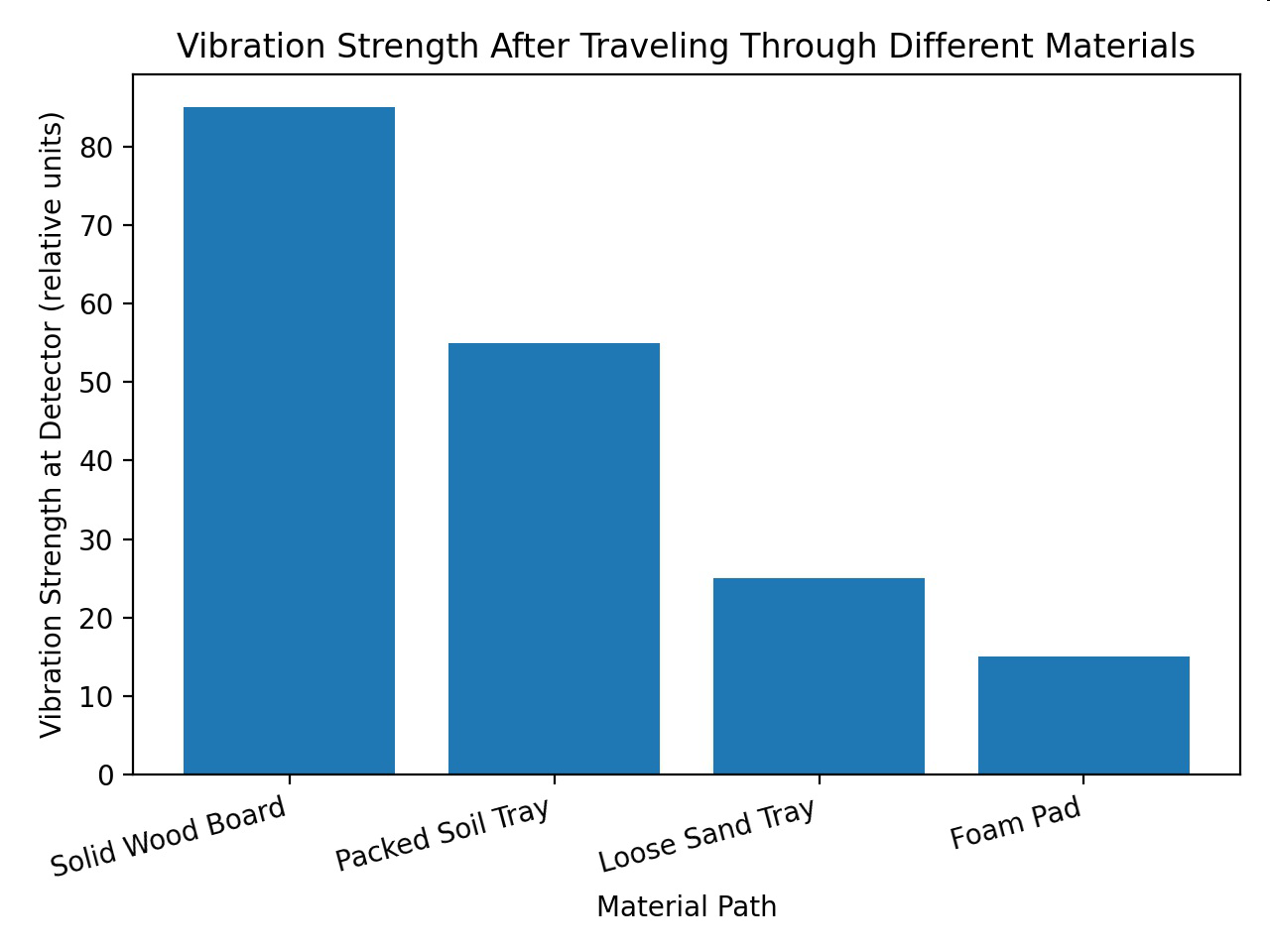
A student uses the same vibrating source (like a small buzzer or tapping a table) and measures how strong the vibration feels or is detected after traveling through different materials. Vibrations travel clearly through a solid surface (like a wood board or rock sample), but they weaken much more when traveling through loose materials like sand.
Diagram 1.
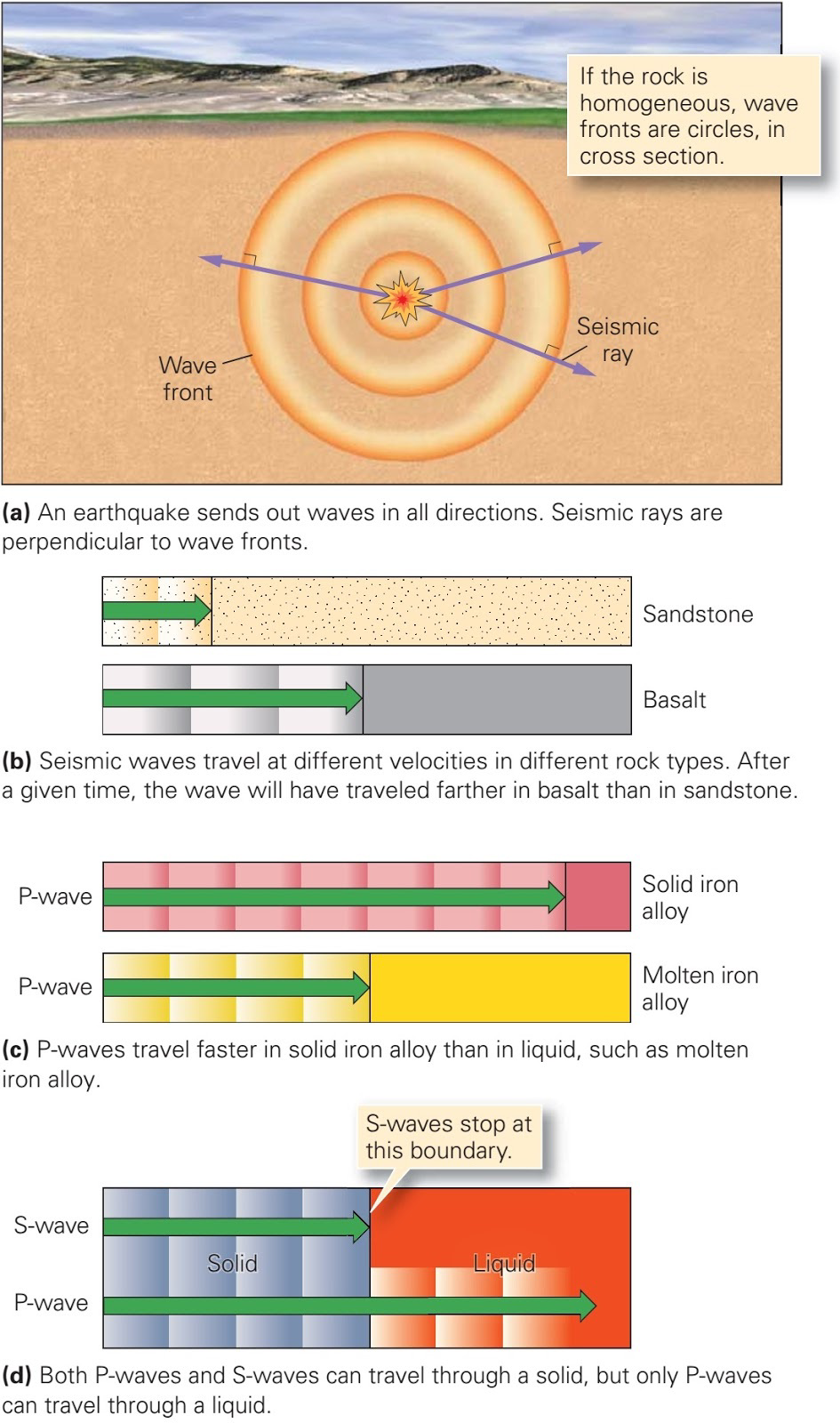 Source: https://geologylearn.blogspot.com/2016/03/the-movement-of-seismic-waves-through.html
Vibrations are a type of wave that can transfer energy through materials. When a vibration wave travels, it causes particles in the material to move back and forth. The wave’s energy can be transmitted, absorbed, or reflected depending on what the wave encounters.
Transmission happens when a wave passes through a material and continues moving. In solid materials, particles are packed closely together and connected more strongly. Because of this, vibrations can transfer energy efficiently from particle to particle, so more of the wave’s energy is transmitted over a distance.
Absorption happens when the wave’s energy is taken in by a material and transformed into other forms, often thermal energy. Loose materials like sand or soft foam can absorb vibration energy because the grains or fibers move and rub against each other. This converts some wave energy into heat and reduces how strong the wave remains.
Reflection happens when a wave hits a boundary and bounces back. For example, when a vibration wave traveling through a solid reaches a different material or an open end, some of the wave energy can reflect back. This reduces the amount transmitted forward.
When the same vibration source is used, different materials can produce different results. A solid pathway often shows higher vibration strength at the detector because more wave energy is transmitted. A loose or soft pathway usually shows lower vibration strength because more energy is absorbed.
Diagram 2.
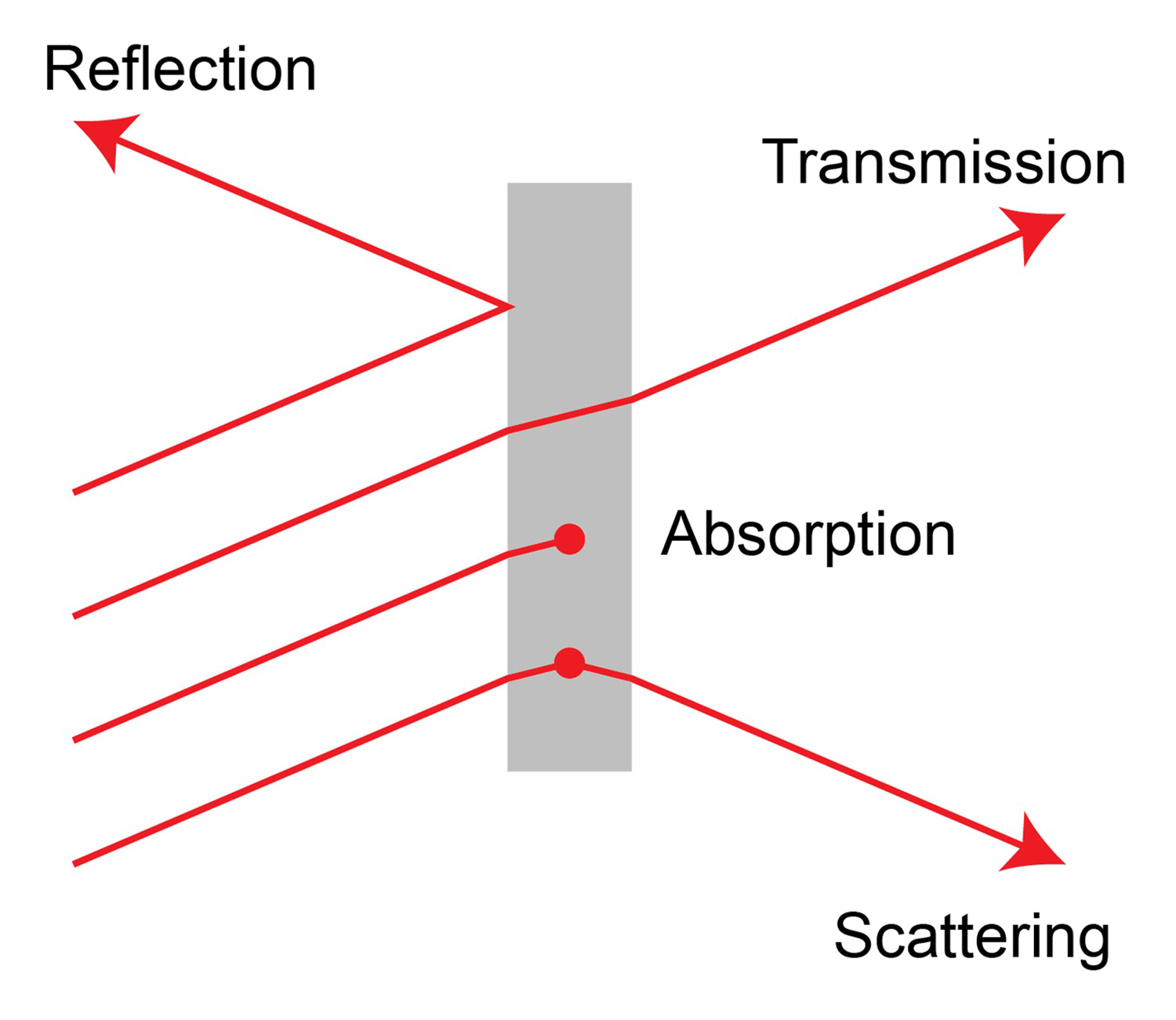
This phenomenon supports the model that waves interact with matter in predictable ways. Waves can be transmitted through materials, absorbed by materials, or reflected at boundaries, and the amount depends on the material’s structure and properties.
Table 1.
Material Path | Path Length (cm) |
|---|
Solid Wood Board | 50 |
Packed Soil Tray | 50 |
Loose Sand Tray | 50 |
Foam Pad | 50 |
Graph of Information - Figure 1.
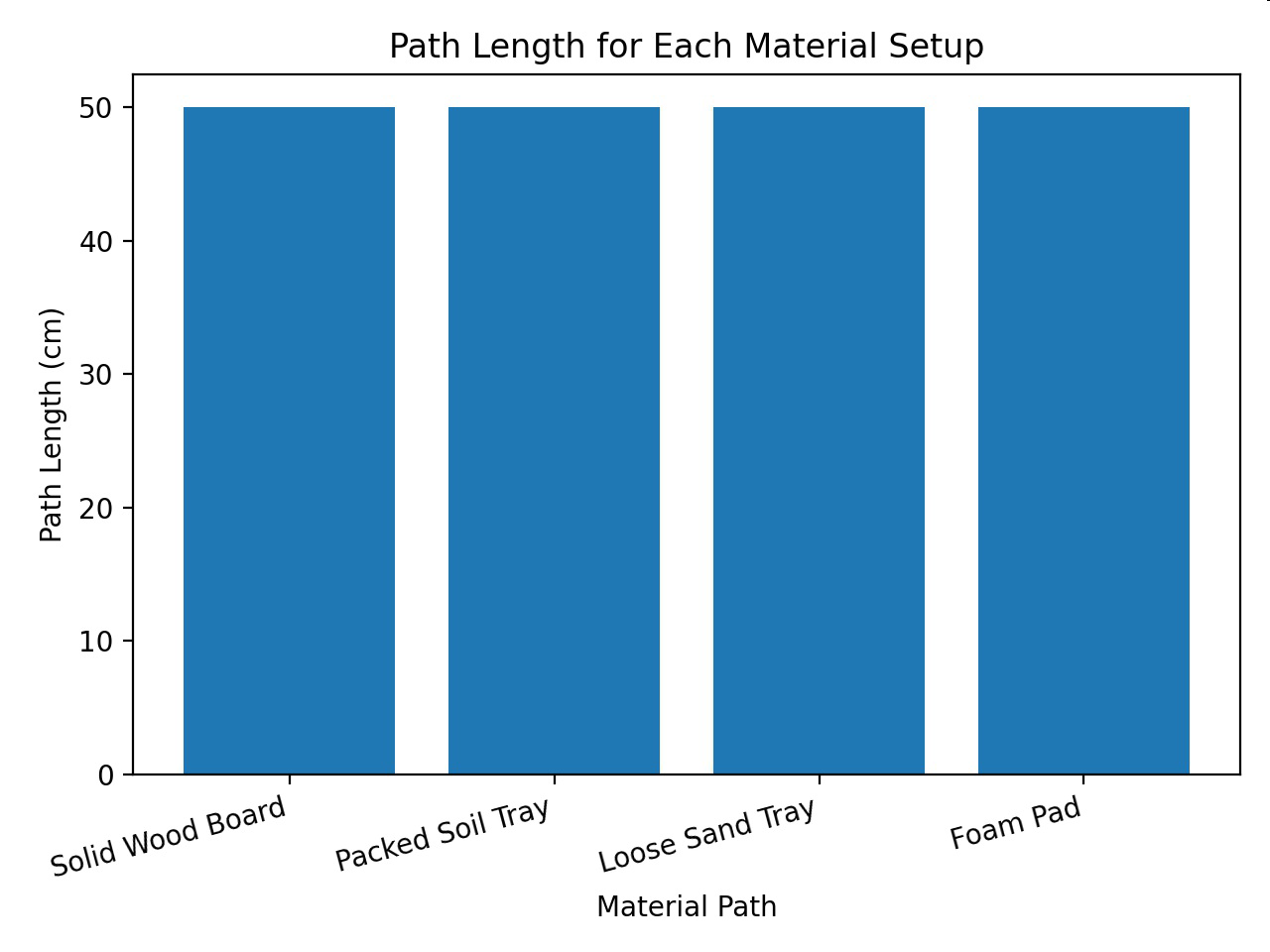
Table 2.
Material Path | Vibration Strength at Detector (relative units) | Evidence of Reflection (Yes/No) |
|---|
Solid Wood Board | 85 | Yes |
Packed Soil Tray | 55 | Some |
Loose Sand Tray | 25 | No |
Foam Pad | 15 | No |
Graph of Information - Figure 2.