Water Waves Created by Dropping Objects from Different Heights
Real-World Phenomenon
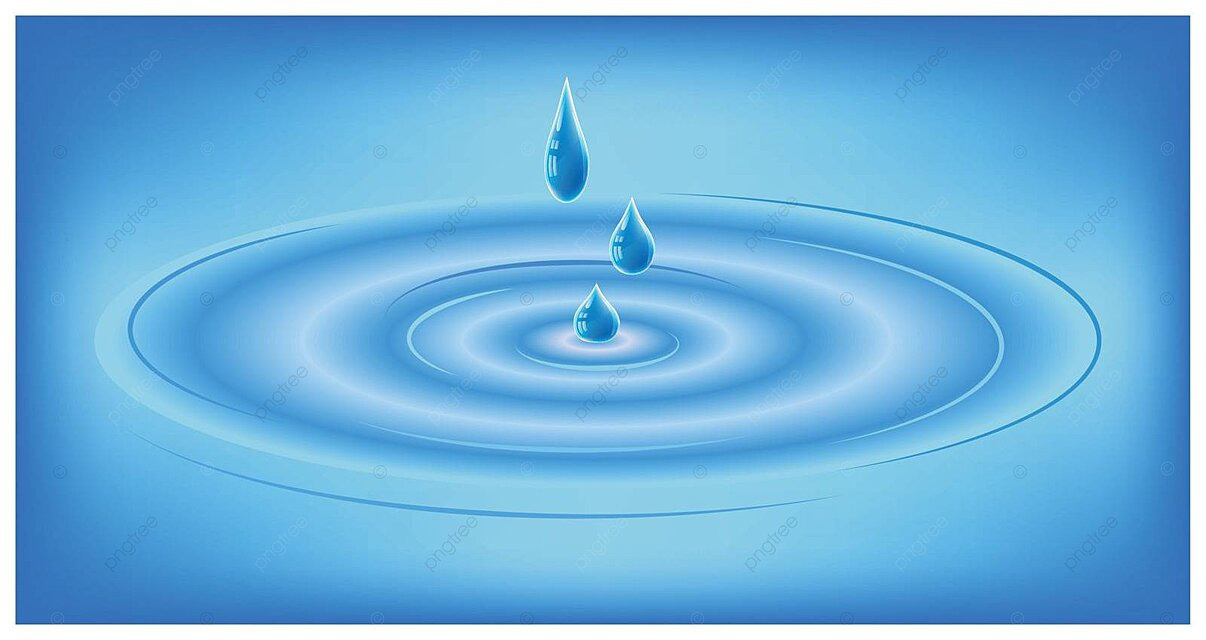
When an object is dropped into still water from a low height, small ripples spread outward. When the same object is dropped from a greater height, the ripples are taller and travel farther across the water’s surface.
Diagram 1.
 Source:
https://pngtree.com/freepng/vector-illustration-of-water-ripples-capturing-waves-formed-by-falling-drops-vector_9742053.html
Water waves transfer energy across the surface of water without moving the water itself across long distances. When an object falls into water, it transfers energy to the water, creating waves that move outward from the point of impact.
Several properties are used to describe these waves. Amplitude is the height of the wave measured from the resting water level to the crest. When an object is dropped from a greater height, it hits the water with more energy. This causes the water to move up and down more strongly, creating waves with larger amplitudes.
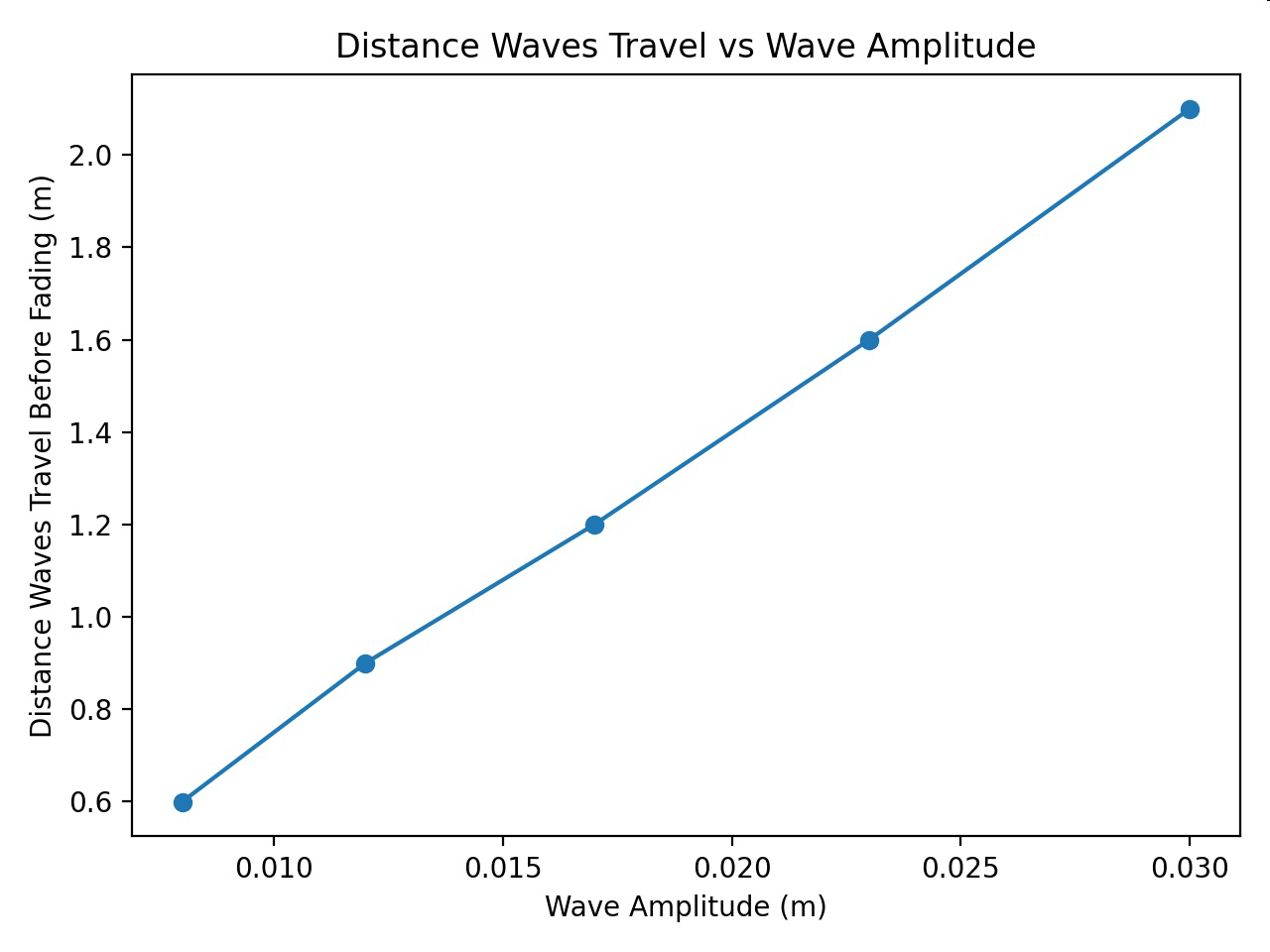
The energy carried by a wave is related to its amplitude. Waves with larger amplitudes carry more energy because the water particles move farther from their resting positions. As a result, larger waves can travel farther before they lose their energy.
Water waves also have wavelength, which is the distance between wave crests. If the water conditions stay the same, waves created by the same object tend to have similar wavelengths, even if their amplitudes are different. This allows students to compare how amplitude affects energy while keeping wavelength relatively constant.
This phenomenon shows that waves can be described using measurable quantities and that the energy carried by a wave is related to its amplitude. By measuring wave height and how far the waves travel, students can use data to model the relationship between amplitude and energy.
Table 1.
Drop Height (m) | Impact Speed (m/s) | Wave Amplitude (m) | Distance Waves Travel Before Fading (m) |
|---|
0.1 | 1.4 | 0.008 | 0.6 |
0.2 | 1.98 | 0.012 | 0.9 |
0.3 | 2.42 | 0.017 | 1.2 |
0.4 | 2.8 | 0.023 | 1.6 |
0.5 | 3.13 | 0.03 | 2.1 |
Graph of Information - Figure 1.
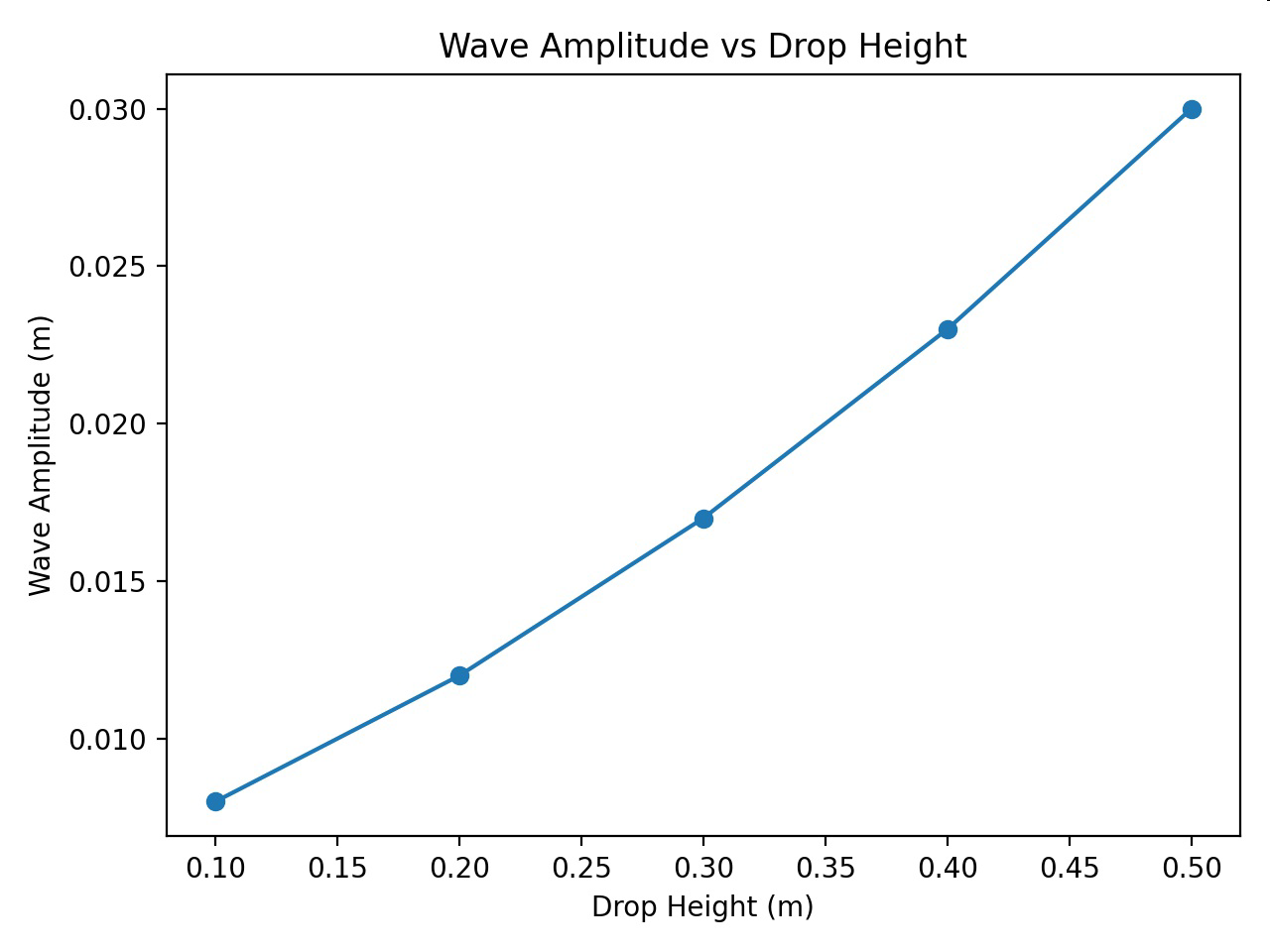
Graph of Information - Figure 2.