Water Waves Reflecting from a Wall and Passing Through a Barrier
Real-World Phenomenon
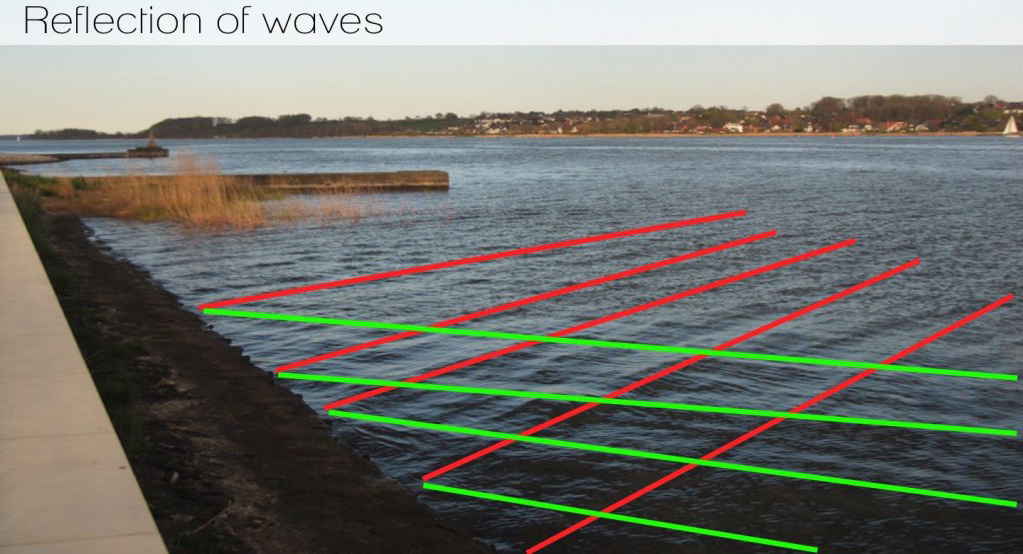
Ripples are created in a shallow tray of water. When the waves reach a solid wall, they bounce back toward the source. When the waves reach a barrier with openings, some waves pass through while others are reduced in size.
Diagram 1.
Source: https://mirjamglessmer.com/tag/schlei/
Water waves transfer energy across the surface of water. When these waves encounter an object or boundary, the energy they carry can be reflected, absorbed, or transmitted, depending on the properties of the barrier.
When water waves reach a solid wall, the wall prevents the water from moving forward. The wave energy cannot pass through the wall, so most of the energy is reflected. This causes the waves to bounce back toward the direction they came from. The reflected waves often have similar spacing and speed as the incoming waves but travel in the opposite direction.
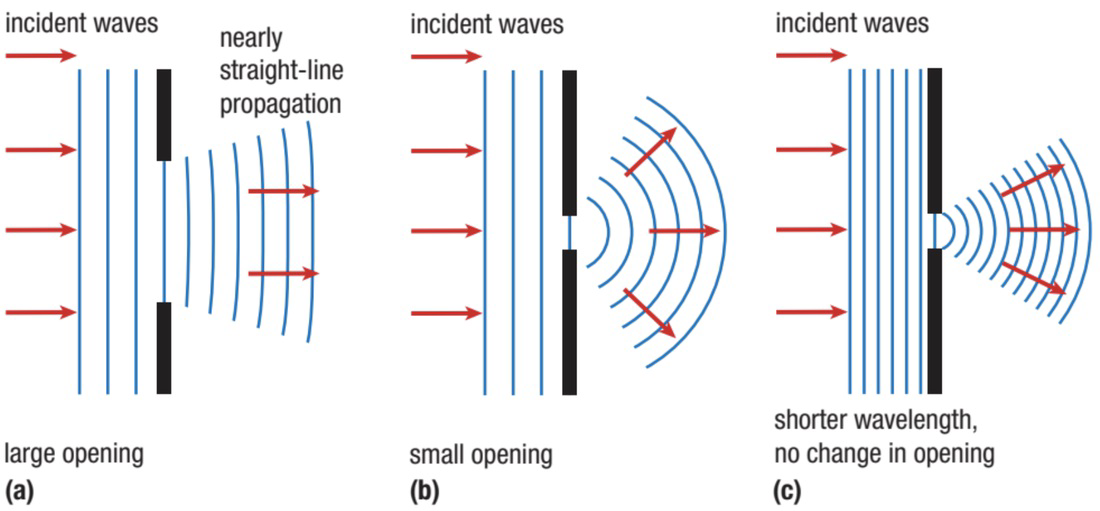
If the waves reach a barrier with openings, such as a slotted or mesh barrier, the interaction is different. Some of the wave energy passes through the openings and continues on the other side. This is called transmission. However, the transmitted waves usually have smaller amplitudes because not all of the energy passes through the barrier. Some energy is reflected back, and some may be absorbed or scattered by the barrier.
Diagram 2.
 Source: https://willowwoodlessons.weebly.com/lesson-4---diffraction--8203interference-of-water-waves.html
The size and spacing of the openings affect how much energy is transmitted. Larger openings allow more wave energy to pass through, while smaller openings reduce the transmitted wave energy. This results in smaller wave heights after the barrier.
These observations show that waves do not always behave the same way when they interact with materials. By comparing reflected and transmitted wave heights, students can use models and data to describe how barriers affect wave energy.
Table 1.
Barrier Type | Incoming Wave Amplitude (m) | Incoming Wavelength (m) | Reflected Wave Amplitude (m) | Transmitted Wave Amplitude (m) |
|---|
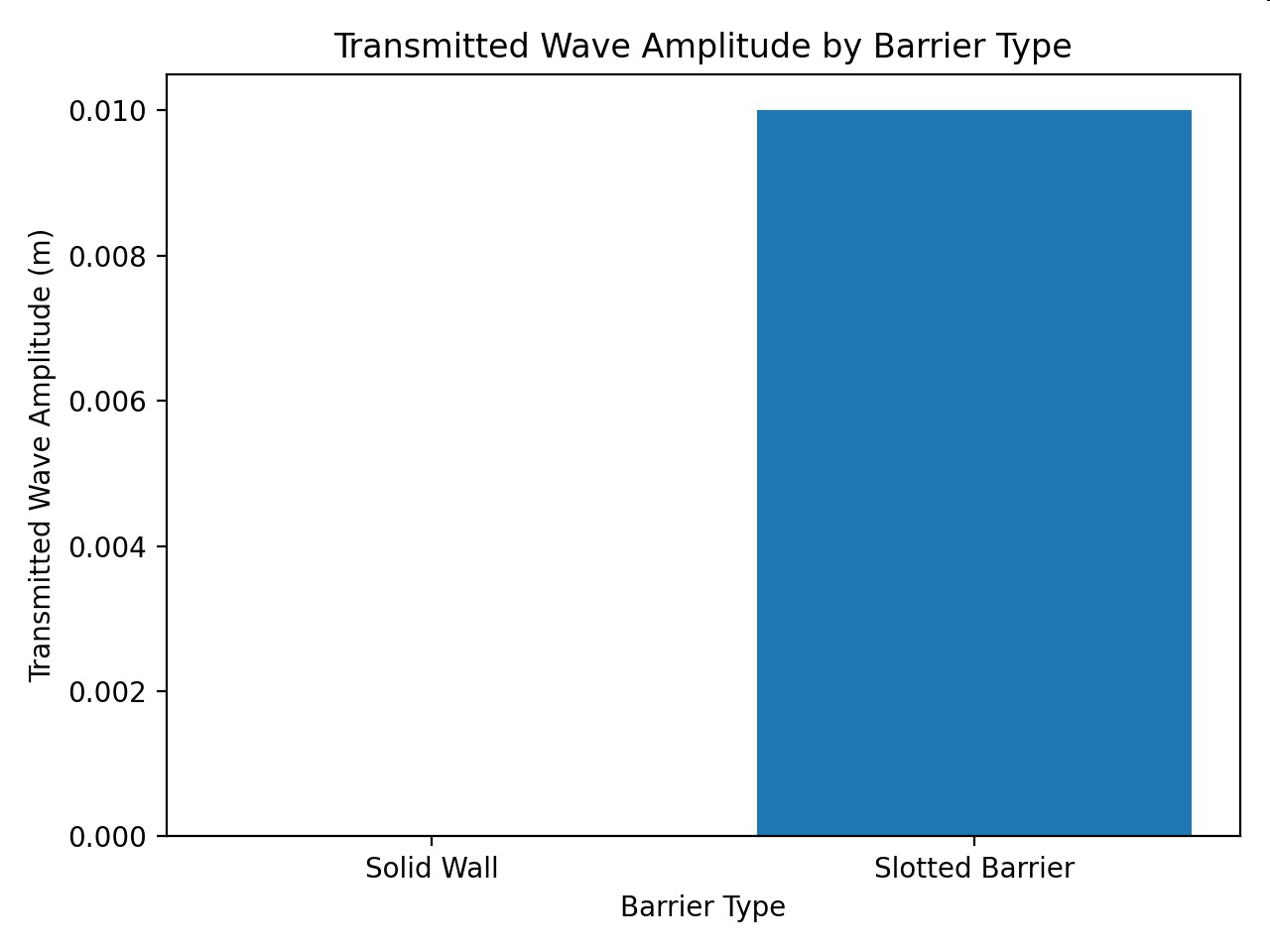
Solid Wall | 0.03 | 0.5 | 0.028 | 0 |
Slotted Barrier | 0.03 | 0.5 | 0.015 | 0.01 |
Graph of Information - Figure 1.
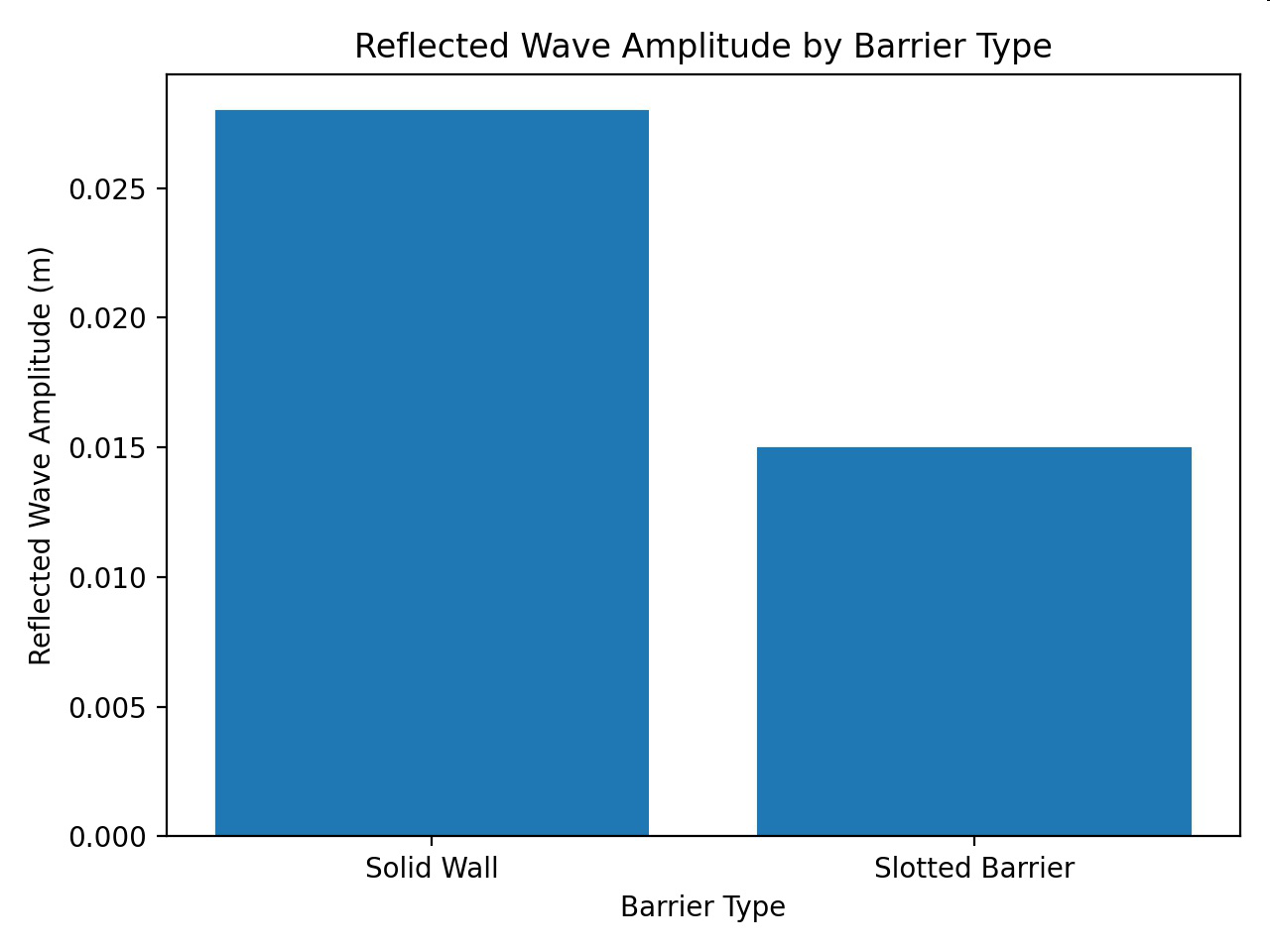
Graph of Information - Figure 2.