Isolationism Amidst Conflict
Which of the following best explains why Americans were opposed to U.S. involvement in World War II?
Isolationism Amidst Conflict

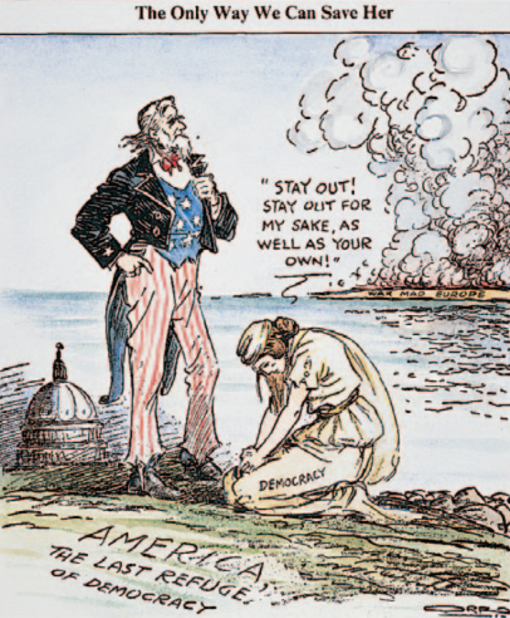
During the late 1930s Americans watched events in Europe with growing alarm. Dictators were destroying democratic systems of government throughout Europe. They were dragging the continent into war. These political events divided American public opinion. Some Americans felt that the United States should help European democracies. However, isolationists—people who believed that the United States should not interfere in other nations’ affairs— opposed getting involved in European disagreements.
What does the kneeling figure fear will happen to America if Uncle Sam gets involved?
Isolationism Amidst Conflict

During the late 1930s Americans watched events in Europe with growing alarm. Dictators were destroying democratic systems of government throughout Europe. They were dragging the continent into war. These political events divided American public opinion. Some Americans felt that the United States should help European democracies. However, isolationists—people who believed that the United States should not interfere in other nations’ affairs— opposed getting involved in European disagreements.
What U.S. policy does this cartoon support?
Isolationism Amidst Conflict
“This nation will remain a neutral nation, but I cannot ask that every American remain neutral in thought as well. . . . Even a neutral cannot be asked to close his mind or his conscience. . . . I have said not once, but many times, that I have seen war and I hate war. . . . As long as it is my power to prevent, there will be no blackout of peace in the U.S.”
–FDR from a radio speech; September 3, 1939; the day Britain and France declared war on Germany
Based on this quote, Franklin D. Roosevelt _________________ Americans' feelings of isolationism.
Isolationism Amidst Conflict
“The peace, the freedom, and the security of 90 percent of the population of the world is being jeopardized by the remaining 10 percent who are [breaking down] all international order and law. Surely the 90 percent who want to live in peace under law and in accordance with moral standards that have received almost universal acceptance through the centuries, can and must find some way . . . to preserve peace.”
—Franklin D. Roosevelt, from the “Quarantine Speech,” October 5, 1937
Who are the "10 percent" FDR is referring to in this quote?
Isolationism Amidst Conflict
“The peace, the freedom, and the security of 90 percent of the population of the world is being jeopardized by the remaining 10 percent who are [breaking down] all international order and law. Surely the 90 percent who want to live in peace under law and in accordance with moral standards that have received almost universal acceptance through the centuries, can and must find some way . . . to preserve peace.”
—Franklin D. Roosevelt, from the “Quarantine Speech,” October 5, 1937
Based on this quote, "jeopardized" most nearly means?
CAUTIOUS STEPS
Which of the following best describes the Cash-and-Carry provision of the 1939 Neutrality Acts?
THE AXIS THREAT
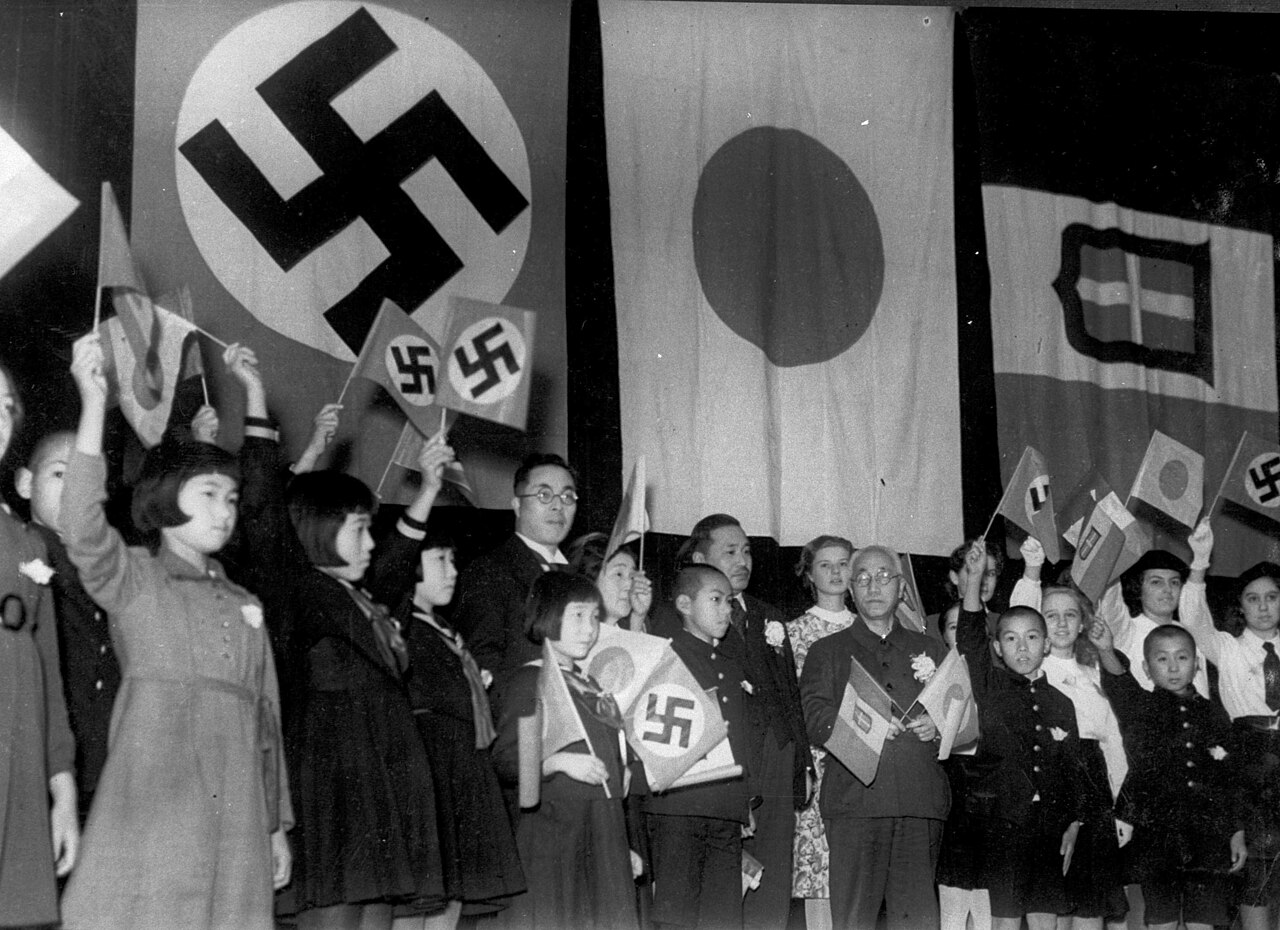
The Tripartite Pact was intended to keep _______________ out of the war. Under the treaty, each Axis nation agreed to defend the others in case of attack. This meant that if ______________ declared war on any one of the Axis powers, it would have to fight a two-ocean war, in both the Atlantic and the Pacific.
ROOSEVELT RUNS FOR A THIRD TERM
"I have the profound conviction that the American people are now determined to put forth a mightier effort than they have ever yet made to increase our production of all the implements of defense, to meet the threat to our democratic faith."
--Franklin D. Roosevelt, December 29, 1940 Fireside Chat
This quote supports Roosevelt's belief that the United States must become...?
THE LEND-LEASE PLAN
Roosevelt compared [the Lend-Lease plan] to lending a garden hose to a neighbor whose house was on fire. He maintained that this was the only sensible thing to do to prevent the fire from spreading to your own property.
In Roosevelt's analogy, who is his neighbor?
THE LEND-LEASE PLAN
Roosevelt compared [the Lend-Lease plan] to lending a garden hose to a neighbor whose house was on fire. He maintained that this was the only sensible thing to do to prevent the fire from spreading to your own property.
In Roosevelt's analogy, what is the fire?
THE LEND-LEASE PLAN
Roosevelt compared [the Lend-Lease plan] to lending a garden hose to a neighbor whose house was on fire. He maintained that this was the only sensible thing to do to prevent the fire from spreading to your own property.
In Roosevelt's analogy, what is the garden hose?
"The United States should not become involved in European wars."
Many Americans were still recovering from World War I and struggling with the Great Depression. They believed their country should remain neutral in the war in Europe.
The aviator Charles Lindbergh stated his hope that “the future of America . . . not be tied to these eternal wars in Europe.” Lindbergh asserted that “Americans [should] fight anybody and everybody who attempts to interfere with our hemisphere.” However, he also said, “Our safety does not lie in fighting European wars. It lies in our own internal strength, in the character of the American people and American institutions.” Like many isolationists, Lindbergh believed that democracy would not be saved “by the forceful imposition of our ideals abroad, but by example of their successful operation at home.”
Which of the following best explains the difference between Franklin D. Roosevelt's beliefs and Charles Lindbergh's?
THE ATLANTIC CHARTER
Which of the following were among the war goals established by the Atlantic Charter? (pick 5)
SHOOT ON SIGHT
Which of the following best explains the nature of German-American hostilities before the United States had officially declared war?
ECONOMIC MOTIVATIONS
Which of the following best explains why Japan decided to attack the United States? (pick 2)
PEACE TALKS ARE QUESTIONED
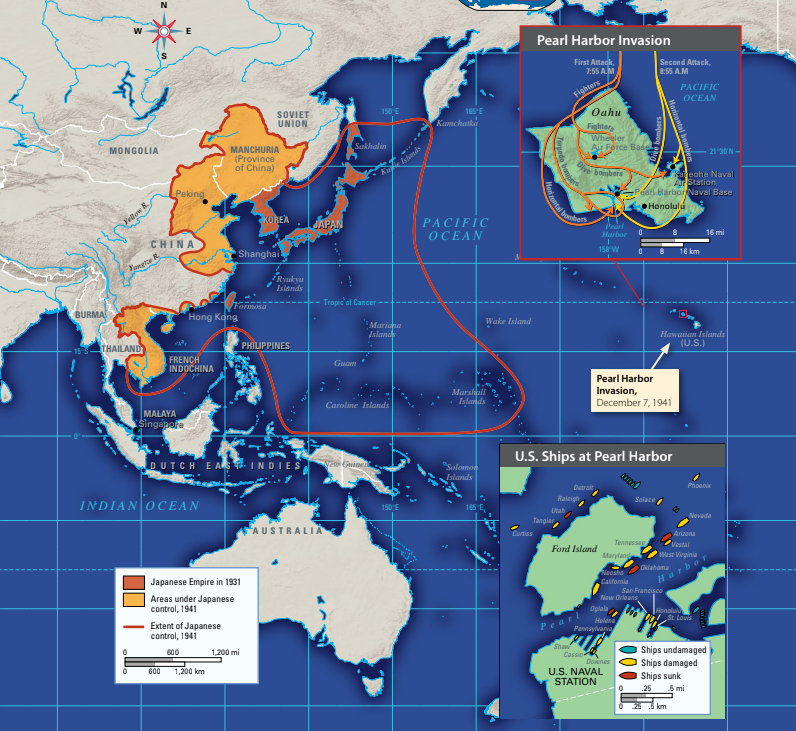
In addition to Hawaii and Guam, which of the following was also a Pacific territory administered by the United States?
Explain why President Roosevelt wanted the United States to join the conflict despite most Americans being isolationist.
Summarize the main idea of this lesson
THE AXIS THREAT

On September 27th, 1940, which three nations signed the Tripartite Pact, forming the Axis powers? (pick 3)