Log in
Sign up for FREE
arrow_back
Library
Science - Practice ACT (25-26)
By Elissa Belmont
star
star
star
star
star
Share
share
Last updated about 5 hours ago
40 questions
Add this activity
Note from the author:
Instructions
Passage 1
Passage 2
Passage 3
Passage 4
Passage 5
Passage 6
Passage 7
1
IOD
1
IOD
1
IOD
1
IOD
1
EMI
1
EMI
1
EMI
1
IOD
1
EMI
1
EMI
1
EMI
1
EMI
1
EMI
1
SIN
1
SIN
1
SIN
1
SIN
1
SIN
1
SIN
1
EMI
1
SIN
1
IOD
1
SIN
1
IOD
1
IOD
1
IOD
1
IOD
1
IOD
0
Question 29
29.
0
0
0
0
0
1
IOD
1
SIN
1
IOD
1
IOD
1
IOD
1
IOD
Question 1
1.
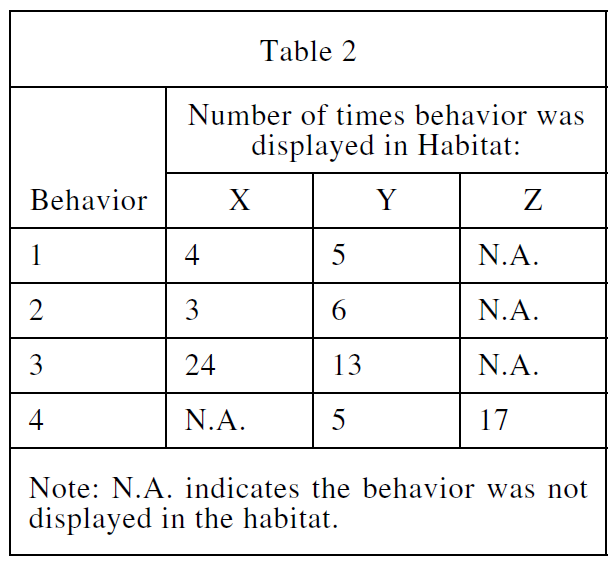
4:5
1:2
1:8
Question 2
2.
3 only
1 only
1 and 2 only
Question 3
3.
2
4
12
Question 4
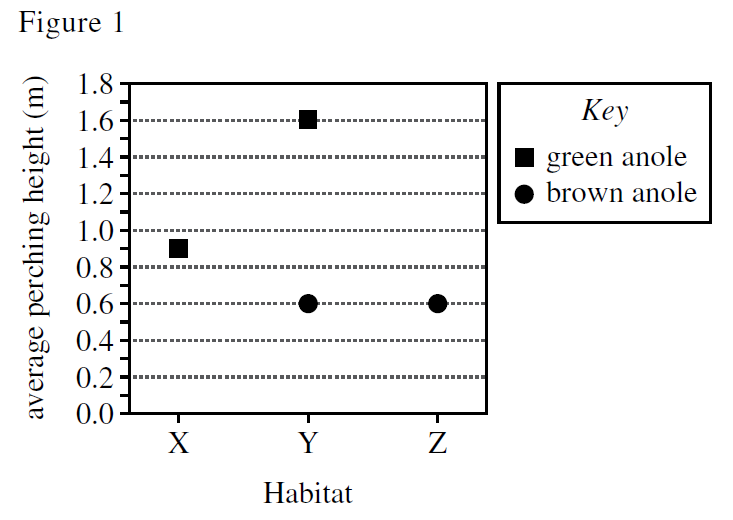
4.
0.7 \, \text{m}
0.0 \, \text{m}
0.3 \, \text{m}
Question 5
5.
amphibians and primarily generate heat from internal metabolic processes to maintain body temperature.
amphibians and primarily absorb heat from the surrounding environment to maintain body temperature.
reptiles and primarily generate heat from internal metabolic processes to maintain body temperature.
Question 6
6.
Question 7
7.
Yes, because ice can melt at those temperatures.
Yes, because ice cannot melt at those temperatures.
No, because ice cannot melt at those temperatures.
Question 8
8.
Float; they are more dense than ocean water.
Sink; they are more dense than ocean water.
Sink; they are less dense than ocean water.
Question 9
9.
Student 1 only
Student 4 only
Both Student 1 and Student 4
Question 10
10.
summer and winter are involved in calving, whereas Student 3 indicated that only winter is involved in calving.
only summer is involved in calving, whereas Student 3 indicated that summer and winter are involved in calving.
summer and winter are involved in calving, whereas Student 3 indicated that only summer is involved in calving.
Question 11
11.
Student 2 only
Students 2 and 3 only
Students 2 and 4 only
Question 12
12.
remained the same.
decreased only.
increased only.
Question 13
13.
highest average SGR also had the highest percent protein.
lowest average SGR had the highest percent protein.
highest average SGR had the lowest percent protein.
Question 14
14.
Higher; on average,
A. percula
fed Diet R had an SGR 0.05 percent/day greater than those fed Diet T.
Lower; on average,
A. percula
fed Diet R had an SGR 0.05 percent/day less than those fed Diet T.
Lower; on average,
A. percula
fed Diet R had an SGR 0.10 percent/day less than those fed Diet T.
Question 15
15.
12 g
3 g
1 g
Question 16
16.
10
1
4
Question 17
17.
Diet fed to the
A. percula
Specific growth rate
Volume of seawater in each tank
Question 18
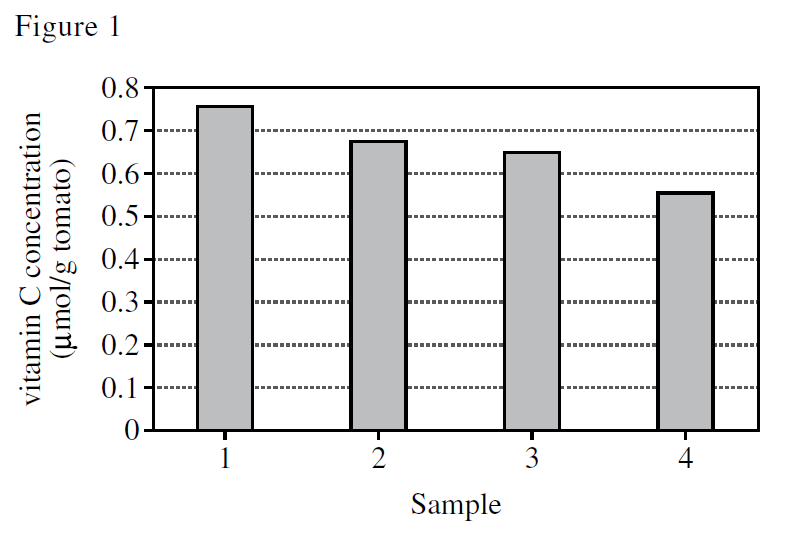
18.
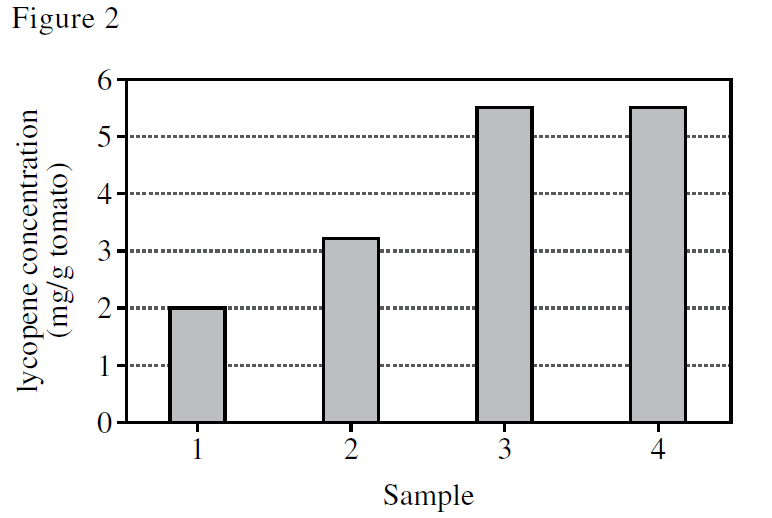
Sample 1
Sample 2
Sample 3
Question 19
19.
2 min
0 min
0.2 min
Question 20
20.
Both vitamin C and lycopene
Vitamin C only
Lycopene only
Question 21
21.
No; the incubation temperature was less than the boiling point of water at 1 atm.
Yes; the incubation temperature was greater than the boiling point of water at 1 atm.
Yes; the incubation temperature was less than the boiling point of water at 1 atm.
Question 22
22.
3
1
0
Question 23
23.
1, 2, 3
2, 1, 3
1, 3, 2
Question 24
24.
Question 25
25.
F = 50 Ă— 10^7
F = 60 Ă— 10^7
F = 70 Ă— 10^7
Question 26
26.
280°C and F = 40 × 10^7
550°C and F = 10 × 10^7
280°C and F = 10 × 10^7
Question 27
27.
Sample W
Sample Y
Sample X
Question 28
28.
2.2 g
0.22 g
0.44 g
Question 30
30.
30%
10%
20%
Question 31
31.
Yes; CM2 adsorbed 55% of the leachate DOC, whereas CM3 adsorbed 17%.
Yes; CM2 adsorbed 35% of the leachate DOC, whereas CM3 adsorbed 7%.
No; CM2 adsorbed 7% of the leachate DOC, whereas CM3 adsorbed 35%.
Question 32
32.
CM1 and CM3 only
CM2 only
CM1 only
Question 33
33.
Yes, because the clay mineral particles are dissolved in the leachate.
No, because the clay mineral particles are dissolved in the leachate.
Yes, because the clay mineral particles are not dissolved in the leachate.
Question 34
34.
Each mixture of filtrate and clay mineral was placed in the dark.
Each mixture of leaves and filtered lake water was placed in the dark.
Each mixture of leaves and lake water was filtered.
Question 35
35.
50%
100%
25%
Question 36
36.
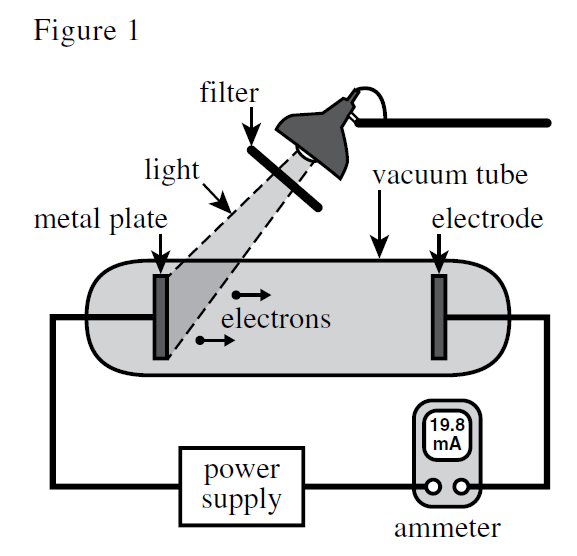
Color of light
Light source
Type of metal plate
Question 37
37.
Toward; negatively charged
Toward; positively charged
Away from; positively charged
Question 38
38.
2.14 eV
2.20 eV
2.31 eV
Question 39
39.
between 4.4 \times 10^{14} Hz and 5.2 \times 10^{14} Hz
less than 4.4 \times 10^{14} Hz
between 5.2 \times 10^{14} Hz and 5.6 \times 10^{14} Hz
Question 40
40.
\frac{0.11 \text{ eV}}{5.6 \times 10^{14} \text{ Hz}}
\frac{5.6 \times 10^{14} \text{ Hz}}{2.31 \text{ eV}}
\frac{5.6 \times 10^{14} \text{ Hz}}{0.11 \text{ eV}}