0
0
0
0
0
0
0
0
0
DIRECTIONS: There are several passages in this test. Each passage is accompanied by several questions. After reading a passage, choose the best answer to each question and fill in the corresponding oval on your answer document. You may refer to the passages as often as necessary.
DIRECTIONS: There are several passages in this test. Each passage is accompanied by several questions. After reading a passage, choose the best answer to each question and fill in the corresponding oval on your answer document. You may refer to the passages as often as necessary.
Passage I
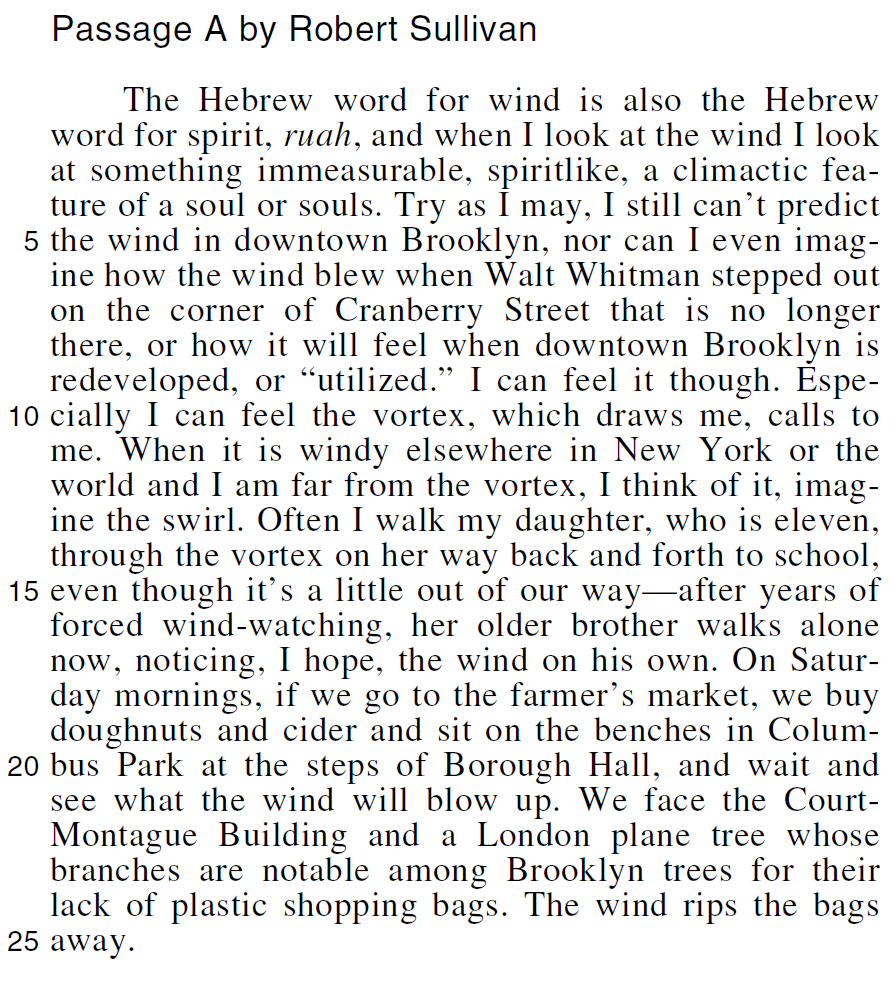
LITERARY NARRATIVE: Passage A is from the essay “A Windstorm in Downtown Brooklyn” by Robert Sullivan, and Passage B is from the essay “Down the Manhole” by Elizabeth Gaffney, both from the collection Brooklyn Was Mine, edited by
Chris Knutsen and Valerie Steiker ( 2008 by Chris Knutsen and Valerie Steiker).
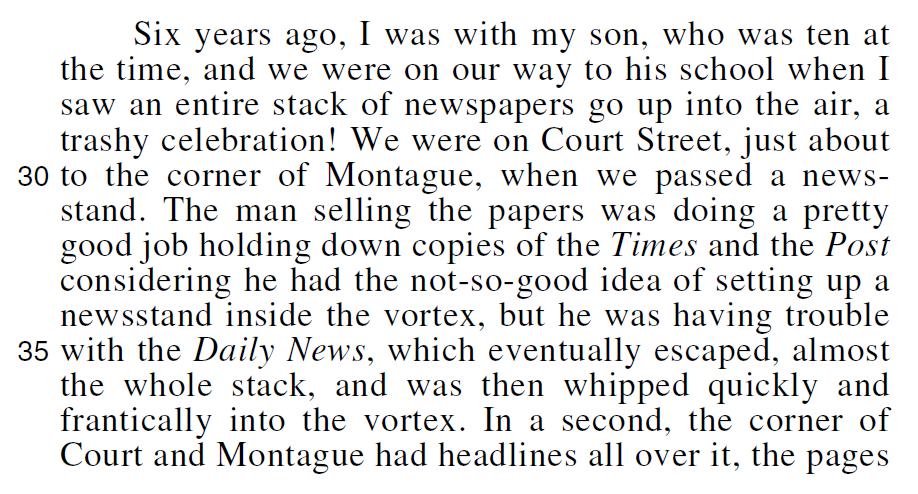
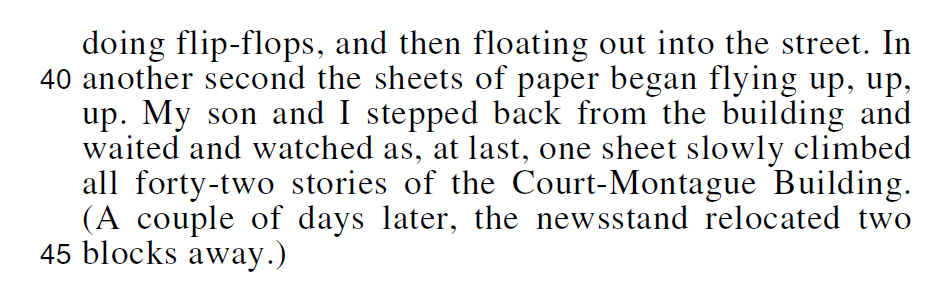
In the context of Passage A, the event described in the second paragraph (lines 26–45) most nearly serves to:
Which of the following statements best captures how the narrator of Passage A feels about the way his children might perceive the Brooklyn wind?
According to the narrator of Passage A, the branches of the London plane tree near the Court-Montague Building are notable for:
According to the narrator of Passage B, some manhole covers she encountered as a child were rubbed smooth partly because of:
It can reasonably be inferred from Passage B that one result of the excursions the narrator took around Brooklyn with her mother was the narrator’s:
Both passages are told from the point of view of narrators who:
The tone of both passages can best be described as a combination of:
Which of the following quotations from Passage B is most closely related to the themes in Passage A?
The reference to Cranberry Street in Passage A and the reference to streets paved with Belgian blocks in Passage B both serve to:
The third paragraph (lines 42–60) marks a shift in the passage from:
Based on the passage, who would most fully endorse the claim that lawns are particularly valuable for creating wide-open areas of green space that foster a feeling of community?
What reason does the passage author give to bolster his claim that “domination of suburbia by lawn constrains the diversity of birds that could be supported” (lines 18–19)?
The passage most strongly suggests that the gradual diversification of plant composition in a Freedom Lawn leads to:
The passage author most strongly suggests that American homeowners who grow shaggy lawns likely feel the most immediate pressure from which of the following circumstances?
The main point of the last paragraph (lines 67–78) is that:
The passage author includes the quotation by Pollan (lines 75–78) mainly to:
What evidence, if accurate, would best support the passage author’s claim that “our love of lawn is rooted in our history as a former British colony” (lines 2–4)?
Which of the following lists captures features of a Freedom Lawn as it is described in the passage?
In the context of the passage, the main function of the first paragraph (lines 1–8) is to:
According to the passage, how does the bark spider establish tension in its bridgeline?
In the context of the passage, the statement in lines 11–12 can best be described as:
According to the passage, how many different kinds of silk proteins can an individual spider make?
It can reasonably be inferred from the passage that the author uses the word stretch (line 78) mainly to:
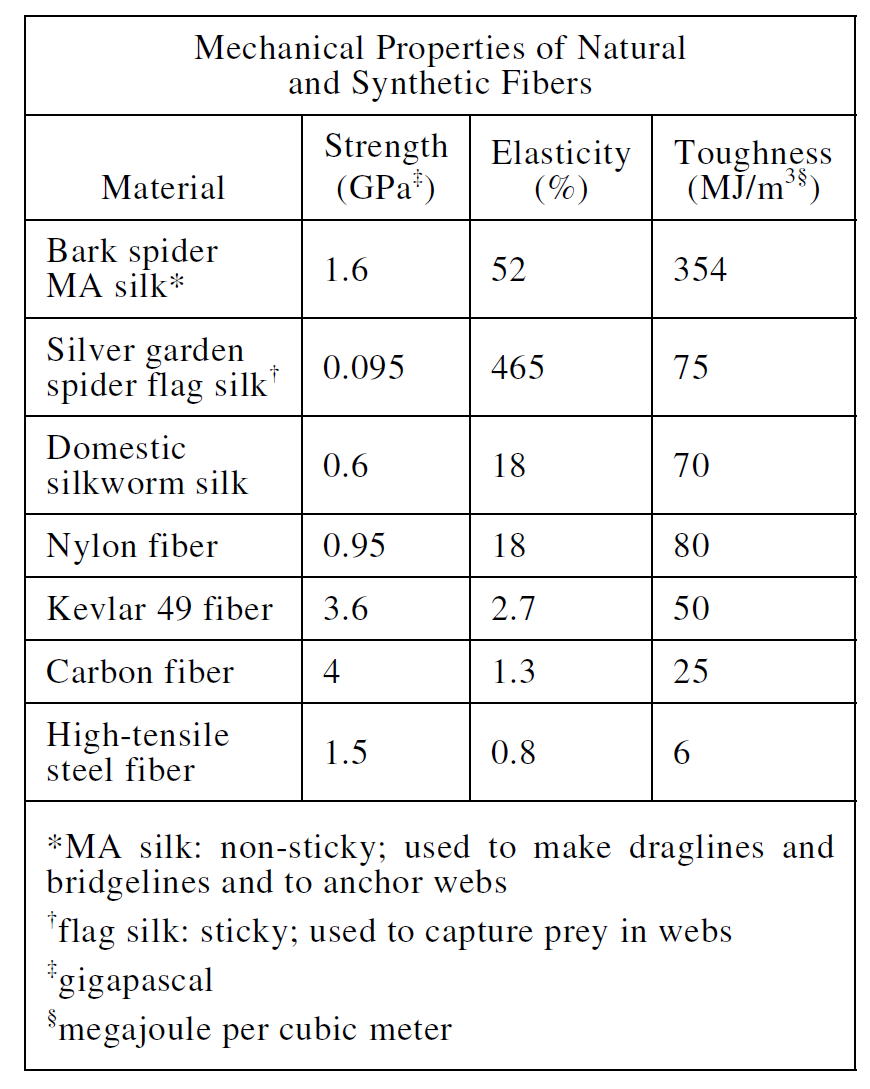
Based on lines 65–67 and the table, which of the following statements is accurate?
Based on the passage and the table, does the information in the table support the passage’s claim about how the bark spider’s silk compares to steel fiber?
Based on the table, which of the following pairs of materials are most different in terms of elasticity?
According to the table, compared to the silver garden spider’s flag silk, the domestic silkworm’s silk has:
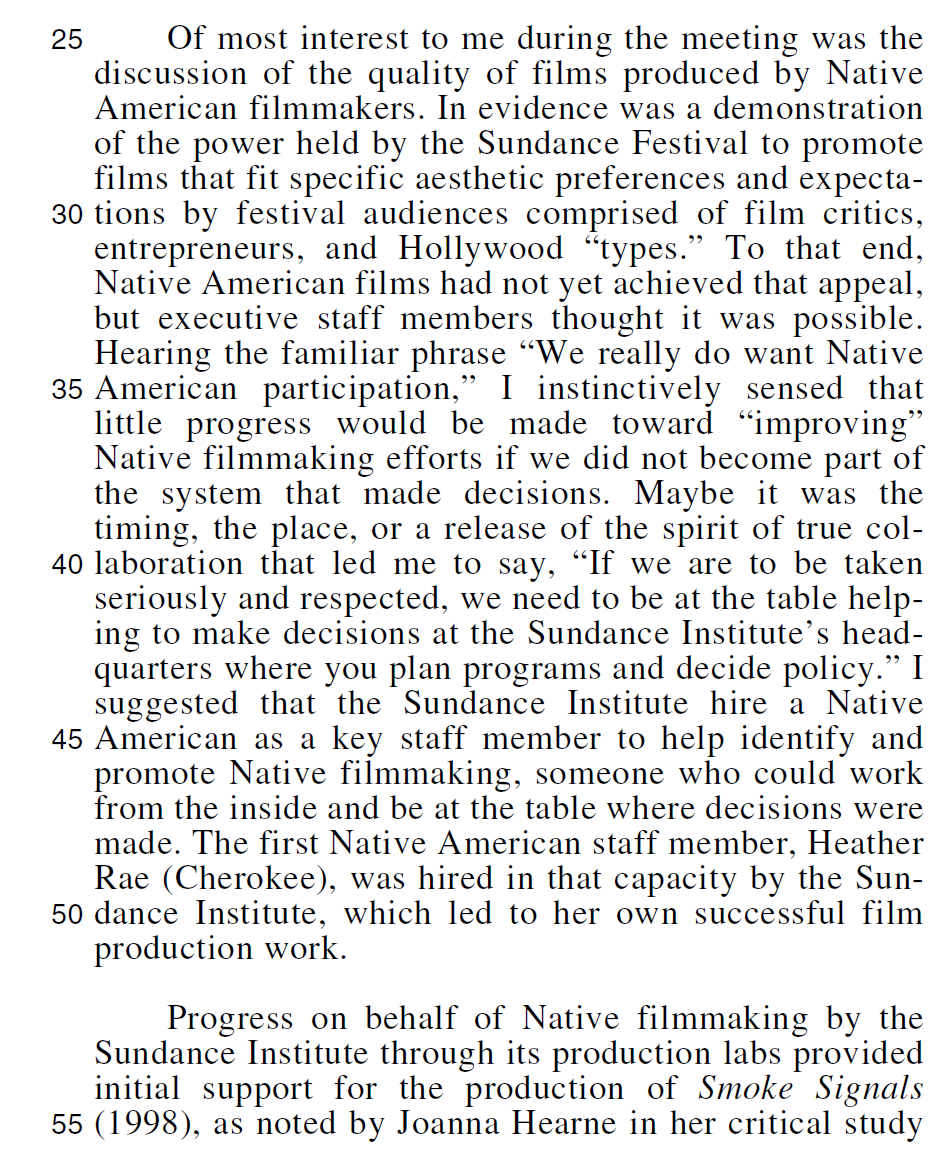
It can reasonably be inferred that the passage author viewed the Sundance executives’ claim in lines 34–35 as:
The passage author indicates that in order to become more active participants in the Sundance Festival, Native filmmakers were most in need of:
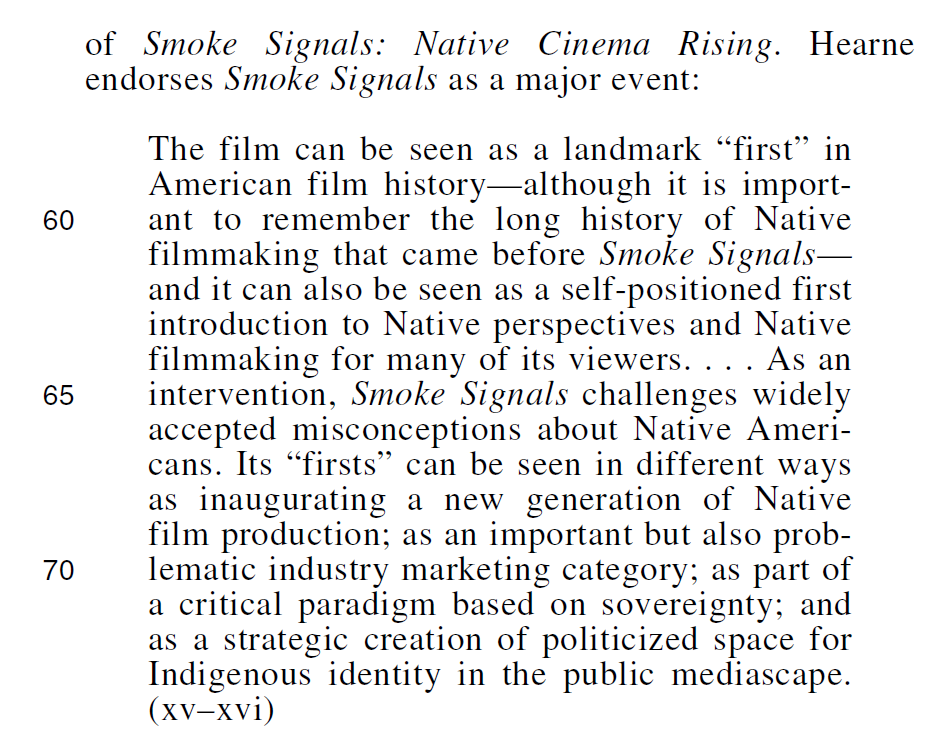
Which of the following statements best summarizes the excerpt from Hearne in lines 58–74?
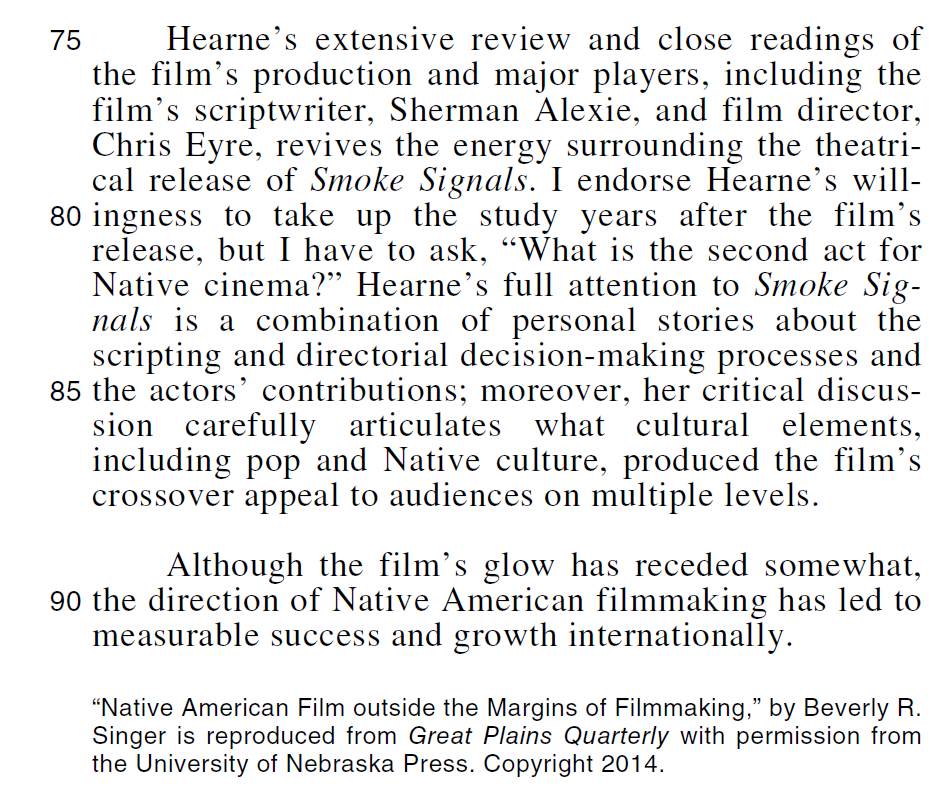
Based on the passage, the passage author would most likely agree that Hearne’s review of Smoke Signals:
According to the passage, in their 1997 meeting with Native filmmakers, Sundance executives were primarily interested in making Native films:
The passage author describes the conversation between Native filmmakers and Sundance executives as “wavering” (line 22) primarily to make clear that, up to that point, the meeting had:
As it is used in line 28, the phrase held by most nearly means:
It can reasonably be inferred from the passage that the Sundance Institute’s decision to hire someone like Rae was the result of a suggestion from:
In the context of the passage, the main purpose of the last paragraph (lines 89–91) is to: