Twa kɔ nsɛm atitiriw so
Log in
Sign up for FREE
arrow_back
Laabri

Week 2.4: Pieces of the Past

star
star
star
star
star
Last updated about 2 hours ago
23 Nsɛmmisa
Hyɛ no nsow a efi ɔkyerɛwfo no hɔ:

Each passage contains 2 short texts, please read both before answering questions.

Each passage contains 2 short texts, please read both before answering questions.

China's Terracotta Army
Rock Art
Easter Island Statues

Click submit when finished with all questions and check your answers. You may not be able to make corrections at this time.

1
1
1
1
1
1
1
1

Rock Art

Imagine a painting. What do you think of? You most likely thought of a canvas painting. Canvas is a cloth material, and it is stretched across wooden frames to make a surface to paint on. You probably did not think of a rock painting, but this type of painting is a very important form of art.

Most art historians believe that the invention of rock art was a transition point in the history of art. As one of the earliest known art forms, rock art may have been a way for prehistoric people to communicate through symbols and pictures. It also shows that these early artists tried to record their ways of life.

Some of the earliest rock art is located in Africa. Some of these rock art paintings were painted around 10,000 years ago! Pictures of humans and animals decorate the walls of these caves. These rock art paintings often depict hunting scenes. This has helped historians understand what hunting may have been like for prehistoric peoples.
1
1
1
1
1
1
1
1

Easter Island Statues

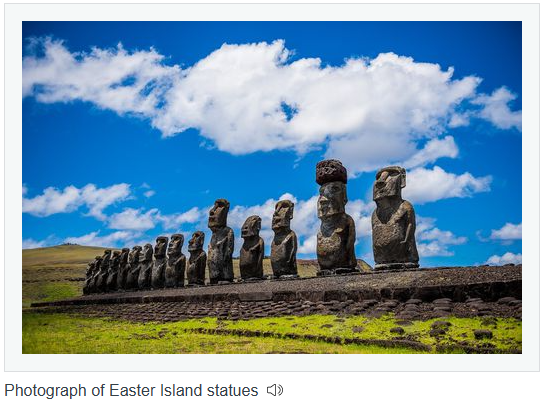
Easter Island, an island in the South Pacific Ocean, provides a look into ancient Polynesian history. Eight hundred eighty-seven stone statues, built by the Rapa Nui people, stand tall and decorate the island. Most statues have a human head and a torso. It has been discovered that, at one time, these statues also had a full body. With an average height of thirteen feet and an average weight of 14 tons, these statues must have been extremely difficult to carve and move. So, why would the Rapa Nui people put in all of that effort?

There is little evidence for what these statues meant to the Rapa Nui people but most scholars believe that they were carved as a tribute to their ancestors. If this was the reason, then it means that the Rapa Nui people honored the dead.

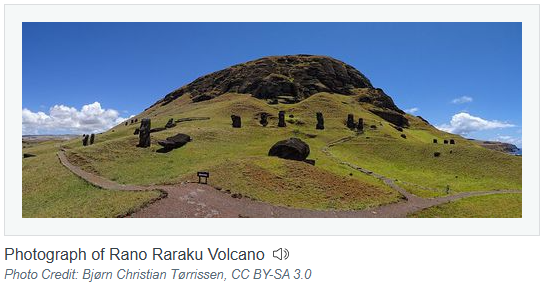
While scholars aren't completely sure why the statues were built, they do know what the statues were built with. The statues were constructed with volcanic rock from Rano Raraku. The carvers probably used rock from Rano Raraku because there was a lot of tuff around the volcano. Tuff is volcanic ash that is packed into a solid form. Tuff is very easy to carve and, since the Rapa Nui were building these statues sometime between the years 1400 and 1650, they did not have the machinery to help them carve harder stone.

1
1
1
1
1
1
1

China's Terracotta Army

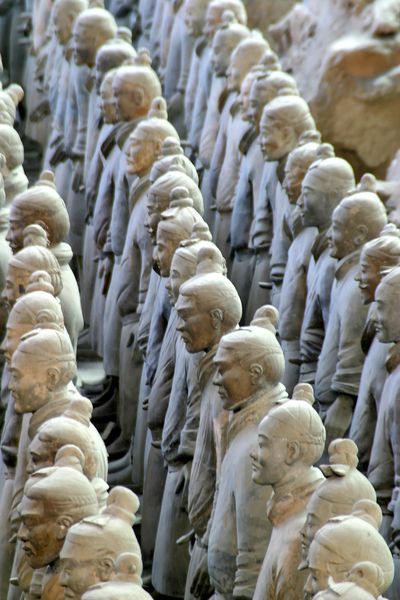
Photograph of the Terracotta Army

The Terracotta Army is a vast collection of terracotta sculptures that was constructed more than 2,000 years ago by the Chinese Emperor Qin Shi Huang. Beginning at the age of thirteen, Emperor Qin ordered the development of a guarded city in his future tomb. He wanted an army of warriors, along with their sturdy horses and sharpened weapons, to protect him in death. In his underground fortress, there were even stables made for the terracotta horses! In addition to the terracotta figures, the tomb was filled with valuable possessions like gold, silver, and jade jewelry.

This construction project was estimated to have lasted 38 years, which is actually not that long considering the amount of detail put into all 8,000 terracotta figures. One of the most impressive things about the Terracotta Army is that each warrior’s face is unique, conveying personality and emotion.

This tomb site was discovered by farmers in 1974 and, immediately following this amazing discovery, archaeologists began carefully excavating the tomb. The excavation has been a continuous process, and archaeologists continue to discover new things. One of the more recent discoveries is the existence of terracotta court performers, including acrobats.

Experts believe the tomb was never fully completed! Can you imagine what else Emperor Qin might have wanted in his burial place?

Asemmisa {{asɛmmisaAhyɛnsode}}
1.

When was the Terracotta Army constructed?

Asemmisa {{asɛmmisaAhyɛnsode}}
2.

What does the text describe?

Asemmisa {{asɛmmisaAhyɛnsode}}
3.

No one knows the size of Emperor Qin's tomb site.

What evidence from the text best supports this conclusion?

Asemmisa {{asɛmmisaAhyɛnsode}}
4.

Read these sentences from the text.

Beginning at the age of thirteen, Emperor Qin ordered the development of a guarded city in his future tomb. He wanted an army of warriors, along with their sturdy horses and sharpened weapons, to protect him in death. In his underground fortress, there were even stables made for the terracotta horses! . . .

. . . The excavation has been a continuous process, and archaeologists continue to discover new things. One of the more recent discoveries is the existence of terracotta court performers, including acrobats.

Based on the text, what did Emperor Qin want in his tomb?

Asemmisa {{asɛmmisaAhyɛnsode}}
5.

What is the main idea of the text?

Asemmisa {{asɛmmisaAhyɛnsode}}
6.

Every word has other words that have similar meanings or even the exact same meaning (these are called synonyms!). Match the vocabulary word to its synonyms.

  • tomb

  • surround

  • protect

  • guard, defend, shield

  • enclose, ring, fence in

  • shrine, pyramid, vault

Asemmisa {{asɛmmisaAhyɛnsode}}
7.

Which detail is included in BOTH passages?

Asemmisa {{asɛmmisaAhyɛnsode}}
8.

Based on information from BOTH passages, what can readers infer about Emperor Qin?

Asemmisa {{asɛmmisaAhyɛnsode}}
9.

According to the text, in passage 1 Rock Art, what is one of the earliest known art forms?

Asemmisa {{asɛmmisaAhyɛnsode}}
10.

What does the text, in passage 1 Rock Art, describe?

Asemmisa {{asɛmmisaAhyɛnsode}}
11.

Read the following sentences from the text, in passage 1 Rock Art.

"Some of these rock art paintings were painted around 10,000 years ago! Pictures of humans and animals decorate the walls of these caves. These rock art paintings often depict hunting scenes. This has helped historians understand what hunting may have been like for prehistoric peoples."

What conclusion about people who lived 10,000 years ago does this information support?

Asemmisa {{asɛmmisaAhyɛnsode}}
12.

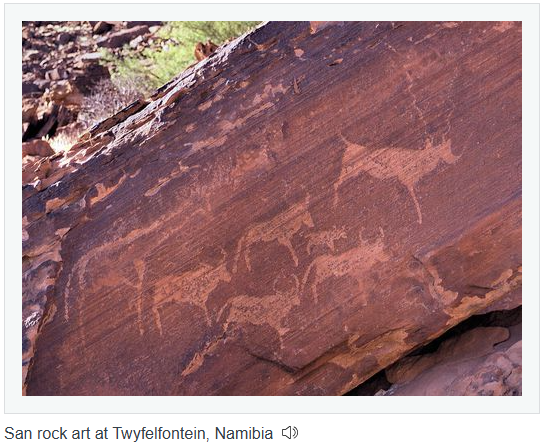
The text, in passage 1 Rock Art, contains a photograph of rock art at Twyfelfontein, Namibia.

Based on the text and photograph, what does this photograph most likely show?

Asemmisa {{asɛmmisaAhyɛnsode}}
13.

What is the main idea of passage 1 Rock Art?

Asemmisa {{asɛmmisaAhyɛnsode}}
14.

According to passage 2, The Rock Art of Tsodilo Hills, what are the Tsodilo Hills?

Asemmisa {{asɛmmisaAhyɛnsode}}
15.

According to passage 2, The Rock Art of Tsodilo Hills, how does the text describe rock art in the Tsodilo Hills?

Asemmisa {{asɛmmisaAhyɛnsode}}
16.

What is the main idea of passage 2, The Rock Art of Tsodilo Hills?

Asemmisa {{asɛmmisaAhyɛnsode}}
17.

Where is Easter Island?

Asemmisa {{asɛmmisaAhyɛnsode}}
18.

What does the text, in passage 1, Easter Island Statues, describe?

Asemmisa {{asɛmmisaAhyɛnsode}}
19.

Rapa Nui had to put in a lot of effort to build the statues discovered on Easter Island. What information from passage 1, Easter Island Statues, best supports this statement?

Asemmisa {{asɛmmisaAhyɛnsode}}
20.

According to the second passage, why is Easter Island considered unique?

Asemmisa {{asɛmmisaAhyɛnsode}}
21.

Which detail is found in BOTH passages?

Asemmisa {{asɛmmisaAhyɛnsode}}
22.

Based on information from both passages, what can readers infer about the Rapa Nui people?

Asemmisa {{asɛmmisaAhyɛnsode}}
23.

How do the two passages work together?