Twa kɔ nsɛm atitiriw so
Log in
Sign up for FREE
arrow_back
Laabri

Week 3.3: Immigration

star
star
star
star
star
Last updated about 2 hours ago
33 Nsɛmmisa
Immigration
Immigration: The Statue of Liberty
Lost on Ellis Island
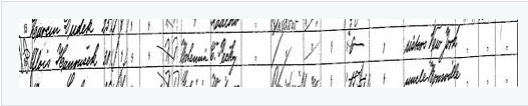
Immigration -- Ellis Island: The Hunt for Alois Hanousek
Immigration: Famous Immigrants

Make sure you have answered all the questions, click submit when finished with all questions and check your answers. You may not be able to make corrections at this time.

Immigration

The United States of America has long been the world’s chief receiving nation for immigrants. An immigrant is a person who leaves his or her country to settle and live in another country. Over the years, many millions of people have uprooted and left family and friends to move to America. Some felt forced to leave because they feared for their lives due to dangers present in their home countries. For example, many immigrants left countries that were at war or that didn’t give them the freedom to practice their faith. Immigrants also left their native lands if they couldn’t find work or enough food to live. Whatever the reason, immigrants usually have had to sacrifice a life that is familiar for one that is unknown.

The United States was founded by immigrants. From the 1600s through 1775, European colonists settled in the land that is now the United States. Most of these immigrants were from England. Others arrived from France, Germany, Ireland, Scotland, and Spain. Many of these colonists came here looking for economic opportunity. They wanted better land to farm or better work. Others came to escape religious persecution. Some were even convicts brought over from English jails.

Since the United States was established in the late 1700s, it has seen three waves of immigration. The first wave of American immigration took place from 1820 to 1870. Over seven million people made the voyage to America, mostly from northern and western Europe. About a third of these immigrants were Irish people trying to escape a famine that plagued Ireland in the mid-1840s. Another third of the immigrants from this wave were German. The Chinese also began to immigrate to America during this time. They got word of the Gold Rush in California. They came to work in the mines.

This flood of immigrants wasn’t always welcome by those already in America. Some feared these newcomers would take away their jobs. Others didn’t like the politics, customs, and/or religions the new immigrants brought with them. For example, many Irish people were discriminated against for being Roman Catholic. The Chinese also suffered greatly from discrimination.

The next wave of U.S. immigration was by far the greatest. It started in 1881 and ended in 1920. Over 23 million people immigrated to the United States during this period, most of whom came from southern and eastern Europe. But by this time, anti-immigration sentiments had become so strong that a growing number of people demanded laws to make it harder for foreigners to become American citizens. In 1875, Congress passed its first immigration law intended to limit immigration. It kept people who were viewed as undesirable out, including convicts. In 1882, Congress also passed the Chinese Exclusion Act. It prohibited Chinese workers from coming to the United States. A few years later, other laws were passed. One required adult immigrants to have literacy skills. Another limited the number of immigrants from countries outside the Western Hemisphere. However, one of the greatest blows to immigration was the Great Depression of the 1930s. Immigration sharply declined. In fact, there were more people leaving America than coming to America during this time.

The third wave of immigration began in 1965 and continues today. Most immigrants in this wave have come from Asian countries as well as South American countries, Caribbean countries, and Mexico. A large number of these immigrants have settled in the East and Midwest. However, many others have moved to California.

Most immigrants have come to America with the hope of building a better life. However, they were sometimes met with hatred by the people already living in the country who feared the economic and cultural impacts of these newcomers. While this discrimination and the economic downfall of the Great Depression had a negative effect on immigration, American immigration has managed to survive.

1
1
1
1
1
1
1

Immigration: The Statue of Liberty

In 1884, the people of France gave the Statue of Liberty to the United States. It was a great gift of friendship. The copper statue symbolized the ideal of liberty shared by both peoples. French people donated the money to build the statue. In the United States, people raised the funds to build the foundation and pedestal. The famous figure of a robed woman holding a torch is one the largest statues ever built. It reaches a height of over 300 feet. The statue’s complete name is Liberty Enlightening the World. Frédéric Auguste Bartholdi, a French sculptor, designed the statue and chose its site at the mouth of New York Harbor.

The great poet Emma Lazarus wrote about the Statue of Liberty. This poem entitled “The New Colossus” is inscribed on a plaque inside the lower level of the statue’s pedestal.

The New Colossus

Not like the brazen giant of Greek fame,
With conquering limbs astride from land to land;
Here at our sea-washed, sunset gates shall stand
A mighty woman with a torch, whose flame
Is the imprisoned lightning, and her name
Mother of Exiles. From her beacon-hand
Glows world-wide welcome; her mild eyes command
The air-bridged harbor that twin cities frame.
“Keep, ancient lands, your storied pomp!” cries she
With silent lips. “Give me your tired, your poor,
Your huddled masses yearning to breathe free,
The wretched refuse of your teeming shore.
Send these, the homeless, tempest-tost to me.
I lift my lamp beside the golden door!”

1
1
1
1
1
1
1
1
1
1
1
1
1
Asemmisa {{asɛmmisaAhyɛnsode}}
20.

Choose the answer that best completes the sentence below.

Immigrants to America were often given new names it was difficult for the author and Rebekah to find information about their great-grandfather in Kutna Hora, they found some information about him at Ellis Island.
1
Asemmisa {{asɛmmisaAhyɛnsode}}
28.

What is the interesting fact about the one dancer on this list?

1
1
1
1
1
Asemmisa {{asɛmmisaAhyɛnsode}}
1.

How many waves of immigration to the United States does the text describe?

Asemmisa {{asɛmmisaAhyɛnsode}}
2.

According to the text, there were strong anti-immigration sentiments in America by the late 1800s. One cause of this was that people already living in America feared the newcomers would take away their jobs. What was one effect of this anti-immigration sentiment?

Asemmisa {{asɛmmisaAhyɛnsode}}
3.

Sometimes there were cultural differences between the people already living in America and immigrants who had moved to America. What information from the text best supports this information?

Asemmisa {{asɛmmisaAhyɛnsode}}
4.

How can the United States’ attitude toward immigrants during the late 1800’s best be described?

Asemmisa {{asɛmmisaAhyɛnsode}}
5.

What is the text mainly about?

Asemmisa {{asɛmmisaAhyɛnsode}}
6.

Read the following sentences from the text:

“In 1875, Congress passed its first immigration law intended to limit immigration. It kept people who were viewed as undesirable out, including convicts. In 1882, Congress also passed the Chinese Exclusion Act. It prohibited Chinese workers from coming to the United States.”

Based on the text, what does “limit” most nearly mean?

Asemmisa {{asɛmmisaAhyɛnsode}}
7.

Choose the answer that best completes the sentence.

In the late 1800s, America passed laws intended to keep certain people from coming into the United States.

Asemmisa {{asɛmmisaAhyɛnsode}}
9.

What does the author describe in the text?

Asemmisa {{asɛmmisaAhyɛnsode}}
10.

Read these sentences from the text.

In 1884, the people of France gave the Statue of Liberty to the United States. It was a great gift of friendship. The copper statue symbolized the ideal of liberty shared by both peoples. French people donated the money to build the statue.

Based on the text, what conclusion can you make about why the people of France were friends with the United States?

Asemmisa {{asɛmmisaAhyɛnsode}}
11.

Based on the text, how can the poem “The New Colossus” best be described?

Asemmisa {{asɛmmisaAhyɛnsode}}
12.

What is this text mostly about?

Asemmisa {{asɛmmisaAhyɛnsode}}
13.

Read this sentences from the text.

Frédéric Auguste Bartholdi, a French sculptor, designed the statue and chose its site at the mouth of New York Harbor.

As used in this sentence, what does the word “site” mean?

Lost on Ellis Island

To get to Ellis Island, you have to take a boat. From 1892 to 1954, many people came here from across the ocean. Millions of immigrants from Europe and beyond came to America through this tiny little island, where they were processed, checked for disease, and sometimes given a new, more American-sounding name. Stepping onto Ellis Island was the end of a long journey, and the beginning of a new life.

But for Emily Dalton, it was just another day on a family vacation. Emily, her parents, and little brother, Max, had been to New York City before, but they had never visited the museum on Ellis Island. They took a boat there, too—coming not from Europe, but in a little ferry from the southern tip of Manhattan. Emily had wanted to see the Statue of Liberty, but the family outvoted her.

“Think of it this way, Em,” said her father. “You can look at the Statue of Liberty on the boat ride over!”

Emily stared at the big green statue as their ferry docked at Ellis Island. More than anything else, she wanted to climb to the top of Lady Liberty and look at New York harbor from high up there. Instead, it was time to visit another museum.

“See you later,” she said to the statue as they disembarked. “Maybe next summer.”

Emily and her family had been in New York for four days. In that time, they’d done nothing but walk, walk, walk, and visit more museums than she could count. They saw art museums, science museums and history museums. There was even one boring museum all about pieces of paper. Between all the museums and crushing July heat, Emily was nearly asleep on her feet as they walked onto Ellis Island.

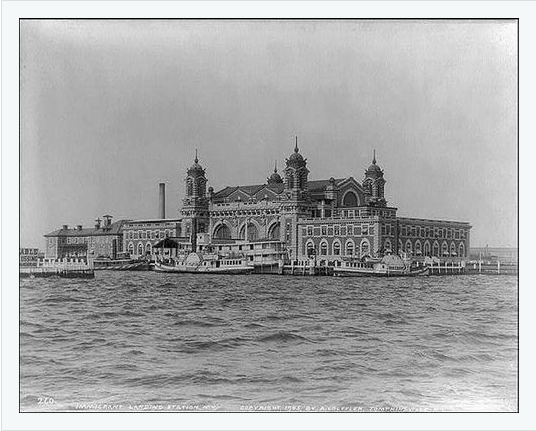
The main building on Ellis Island has four big turrets, and looks a little bit like a castle. Inside is a huge main room, the Registry Room, where immigrants once waited in line for permission to enter the country. To the sides are lots of smaller rooms, which hold different exhibits about the island’s history.

“Oh wow,” Emily said. “Exhibits.”

“Emily, if you’re going to grump your whole way through this museum,” said her mother, before pausing for a few moments. “Well…just don’t!”

“Oh my gosh, Dad!” squealed Max. “They have an exhibit all about maps!”

Max loved maps. Emily did not. The thought of spending two hours watching Max coo over 100-year-old maps made Emily fear she would actually fall asleep where she stood.

“You guys go on ahead,” she said. “I’m going to poke around in the gift shop.”

“Okay,” said her dad. “We’ll meet you back here at four to take the last ferry back.”

“Sounds great.”

As Emily’s family walked excitedly toward the map room, Emily felt her chest loosen slightly. She loved her parents and brother, but there was such a thing as too much family vacation. Now that she was by herself, Ellis Island didn’t feel so bad. She was walking toward the gift shop, thinking about purchasing a new mug, when a machine caught her eye. The sign said “Family Records,” and it made something stir inside Emily’s brain.

She remembered two Thanksgivings ago, when her grandfather told the story about how he immigrated to the United States as a child. He was only seven years old, but he remembered standing in line in a long room in a building that reminded him of a castle—he said Zamek—back in Poland.

“I wonder if this is the same room!” said Emily, as she began navigating the computer screen on the records machine. Without her family there, she was allowed to feel excited. She typed in her grandfather’s name, last name first: Dalton, Stanley.

“No records in the archive match your search,” said the machine.

“Darn!” said Emily. She was sure her grandfather had described Ellis Island. “Wait a minute…”

She remembered what her dad had told her about people’s names being changed when they got to the island. The American government forced people to take new names, as a way of making them fit in better in their new country. Stanley Dalton wasn’t a very Polish-sounding name. That Thanksgiving, her grandfather had told them his given name. Emily bit her knuckle as she tried to remember.

“Stan…Stanislaus…Stanislaus Dombrowski!” A name like that, Emily thought, you don’t forget. She typed it in, and there he was! A picture of an old piece of paper came up covered in squiggly handwriting from January 12, 1930. On line 12, Emily found her grandfather: Stanislaus Dombrowski, whose name was changed to Stanley Dalton. He was from Warsaw, it said, and had never been to the United States before. He was seven years old, and in good health. There was information about his parents, too, and his younger sister. Emily read everything she could about the Dombrowski family, and then started searching for other people. She searched for her friends’ families, for famous people, and any random name that came into her head. And many of them had come through this hall.

She was so engrossed that she forgot the time, and was shocked to hear the announcement:

“It is four o’clock. The last boat leaves in five minutes.”

Emily looked up, and saw that the hall was nearly empty. Her family was nowhere to be seen. She ran down the hall, peering into the exhibit rooms, bathrooms and the coat check.

“Max!” she shouted. “Mom? Dad? Dalton family? Dombrowskis? !”

When she realized she was the last person in the hall, she panicked. She ran out of the main entrance and up the ramp to the ferry, getting there just fifteen seconds before it left the island. She found her parents sitting in the front of the boat.

“Hey, Emily,” said her mom.

“You left me behind!”

“Oh, baby, I’m so sorry. We thought you were on the upper deck with your brother.”

“We were supposed to meet in the great hall at four.”

“I think we said we would meet in the boat, dear."

Emily knew her mother was wrong, but she was too tired to argue. Her vacation stress had returned. She slumped into her seat, watching the castle of Ellis Island grow smaller behind her. As Stanislaus Dombrowski had learned nearly 100 years earlier, she realized then that as nice as it is to get to Ellis Island, it’s even better to catch the boat to Manhattan.

Asemmisa {{asɛmmisaAhyɛnsode}}
14.

Where does Emily’s family visit?

Asemmisa {{asɛmmisaAhyɛnsode}}
15.

How do Emily’s feelings about Ellis Island change in the story?

Asemmisa {{asɛmmisaAhyɛnsode}}
16.

Emily is tired of spending time with her family. What evidence from the passage best supports this conclusion?

Asemmisa {{asɛmmisaAhyɛnsode}}
17.

How can Emily best be described?

Asemmisa {{asɛmmisaAhyɛnsode}}
18.

What is this story mostly about?

Asemmisa {{asɛmmisaAhyɛnsode}}
19.

Read the following sentences:

“She searched for her friends’ families, for famous people, and any random name that came into her head. And many of them had come through this hall.

“She was so engrossed that she forgot the time, and was shocked to hear the announcement: ‘It is four o’clock. The last boat leaves in five minutes.’”

What does “engrossed” mean as used in the passage

Asemmisa {{asɛmmisaAhyɛnsode}}
21.

According to the text, who was Alois Hanousek?

Asemmisa {{asɛmmisaAhyɛnsode}}
22.

The text describes how the author was able to find information about Alois Hanousek. What else does the author describe in the text?

Asemmisa {{asɛmmisaAhyɛnsode}}
23.

Read these sentences from the text.

No one in my family knew much about Alois Hanousek, my great-grandfather. We knew that he immigrated to the United States in the 1890s. We also knew he came from or near a town in the Czech Republic called Kutna Hora. My family once went to Kutna Hora in search of information. We came home empty-handed.

What can you conclude based on this evidence?

Asemmisa {{asɛmmisaAhyɛnsode}}
24.

Based on the text, what would it be like to find information about relatives at Ellis Island?

Asemmisa {{asɛmmisaAhyɛnsode}}
25.

What is this text mostly ab

Asemmisa {{asɛmmisaAhyɛnsode}}
26.

Read these sentences from the text.

My family once went to Kutna Hora in search of information. We came home empty-handed.

So far, we had very little information to go on.

As used in these sentences, what does the word “empty-handed” mean?

Immigration: Famous Immigrants

The United States has a rich history of immigrants. Many have overcome great odds to rise to the top of their fields. Find out more about their remarkable feats by reading the chart below.

Name

D.O.B.

Origin

Profession

Interesting Facts

Peter Jennings

1938
d. 2005

Toronto,Canada

T.V. Broadcast Journalist

Anchor of ABC’s World News Tonight.

Martina Navratilova

1956

Prague, Czech Republic

Professional Tennis Player

Winner of a record 167 singles titles, including Wimbledon, the French Open, and the U.S. Open.

Madeleine Albright

1937

Prague,Czech Republic

Former Secretary of State

Escaped both Nazi and Communist governments in Europe.

Gene Simmons

1949

Haifa, Israel

Singer

Co-founder of the rock group KISS. Used to be a schoolteacher.

Gloria Estefan

1957

Havana, Cuba

Singer

Received her B.A. in Psychology at the University of Miami.

Arnold Schwarzenegger

1947

Thal, Austria

Actor, Former Governor

Named Mr. Universe five times for bodybuilding.

Alex Trebek

1940

Sudbury, Canada

TV Game Show Host

First worked as a newscaster.

Albert Einstein

1879
d. 1955

Ulm, Germany

Scientist

Lived and worked in Princeton, NJ for nearly 30 years, until his death in 1955.

Mikhail Baryshnikov

1948

Riga, Latvia (U.S.S.R.)

Ballet Dancer

Starred in several motion pictures, including The Turning Point (1977), White Nights (1985), and Dancers (1987).

Andy Garcia

1956

Havana, Cuba

Actor

Garcia’s family fled Cuba’s communist government when he was five and started a perfume company in Miami, FL worth millions of dollars.

Bob Hope

1903
d. 2003

London, England

Actor, Comedian

Appeared in over 50 films. Winner of five Academy Awards.

Henry Kissinger

1923

Furth,Germany

Former Secretary of State

Came with his family to the U.S. in 1938 to escape Nazi persecution of Jews. Won a Nobel Peace Prize in 1973.

Hakeem Olajuwon

1963

Lagos,Nigeria

Professional Basketball Player

Leading shot-blocker in NBA history with 3,830 blocked shots.

Alexander Graham Bell

1847
d. 1922

Edinburgh, Scotland

Inventor

Patented the telephone, which revolutionized communication, at the age of 29.

Patrick Ewing

1962

Kingston, Jamaica

Professional Basketball Player

Holds New York Knicks’ team record for scoring, rebounding, blocked shots, and steals.

Audrey Hepburn

1929
d. 1993

Brussels, Belgium

Actress

This Oscar-winning film and Broadway star also became an ambassador for UNICEF. She worked to aid hungry children in Africa and Latin America.

Yoko Ono

1933

Tokyo, Japan

Composer, poet, singer.

Married John Lennon in 1969, just before the Beatles broke up. Made albums with Lennon.

Elie Wiesel

1928

Sighet, Romania

Author

Won the Nobel Peace Prize in 1986, after having survived Nazi concentration camps.

Asemmisa {{asɛmmisaAhyɛnsode}}
29.

How does the author organize the information in this passage?

Asemmisa {{asɛmmisaAhyɛnsode}}
30.

What can be inferred about the relationship between immigrants and TV and film?

Asemmisa {{asɛmmisaAhyɛnsode}}
31.

Read the sentence:

“The United States has a rich history of immigrants.”

Which word could best replace rich as used in this sentence?

Asemmisa {{asɛmmisaAhyɛnsode}}
32.

This list is mostly about

Asemmisa {{asɛmmisaAhyɛnsode}}
33.

Choose the answer that best completes the sentence below.

Gene Simmons is the co-founder of the rock group KISS,