Choose the answer that best completes the sentence below.
Harvey is not interested in the galley at first; he becomes more interested in it.
Kurt closed the door of his mother’s car with great excitement. Today was the day he was finally going to be on a plane. For the first time in his life, he was going to actually soar through the skies and see the clouds from all the angles he had imagined since he was little.
“Are you excited my boy?” said Kurt’s mother, Val, from the front of the car.
“I can’t believe today’s the day!” said Kurt.
“Believe it!” responded Kurt’s older brother Joachim as he lifted his head from his mobile phone for just a second to speak to Kurt.
The car ride felt like forever, but that’s because Kurt could not wait to get to the airport and see this adventure through. It felt like they were stuck in traffic for hours and all the cars were moving slowly just to drive Kurt crazy. But actually they arrived at the airport in just a few minutes.
Val parked their car in the underground parking lot and found a steel trolley to load the suitcases and the hatbox she always took with her on a journey. Joachim never helped with anything, so Kurt knew he was the best man for the job. He helped his mother load the trolley neatly and pushed it towards the terminal building proudly.
It was bigger than Kurt thought it would be. It was a massive building filled with hundreds of people looking around and rushing to get to wherever they were going. He immediately felt the rush of energy as he walked towards the check-in desk.
He watched as Val took out their passports and gave them to the friendly lady on the other side of the desk. His mother asked Joachim to help lift the bags onto the scale so that they could get weighed and checked in. But he wasn’t listening. Kurt gloated as he lifted the bags and put them on the designated scale. The check-in lady was overly friendly and appreciative of his help. He loved the feeling.
Val was handed some tickets and off they went to security. After what felt like a long wait in line, the security officer asked Kurt to empty his pockets and put his bag through the big X-ray scanner. Kurt had never done this before and felt a little nervous. It was such a big and scary machine that started beeping loudly as the elderly woman in front of him walked through.
Kurt started to feel more confident now as he walked through the machine. Not a beep. He waited for his family to come through security as he grabbed his bag. Suddenly, he saw the plane through the massive glass windows. It was huge! And it looked much bigger than what it looked like in his dreams.
Kurt ran down the ramp towards the gate. After a few minutes, the plane was ready for boarding. Everyone lined up and showed their tickets. Walking on a ramp down towards the plane, Kurt nearly tripped from all the excitement. And then he arrived, he was one foot away from the plane and finally feeling like a grown up who would fly all over the globe.
The air steward took his ticket and showed him down the aisle to his seat. Kurt ran ahead of his mother and brother and immediately sat down in his seat, buckling his seat belt. With his eyes firmly on the wing of the plane, he was waiting for everyone to sit down so that he could feel that weightlessness that everyone talks about at school when a plane takes off.
The plane started to move, and reversed slightly. Moving like a giant metal bird, the plane taxied towards the runway. Kurt clenched his mother’s hand. The plane started to speed up, faster than Kurt has ever gone in his life in any car or boat. And then, as if by magic, the plane lifted off the ground. And Kurt knew this would be the first of many adventures that started this way.
Choose the answer that best completes the sentence below.
the plane taxied towards the runway, Kurt clenched his mother’s hand.

In 1957, as tensions between the Soviet Union and the United States grew, the Soviet Union launched a satellite named Sputnik I into space. It was the first satellite ever launched into orbit. This marked a huge milestone for humankind -- and for the Soviets. Many Americans felt it was crucial for the United States to catch up to the Soviet Union in space technology. President Eisenhower agreed. In 1958, the President created the National Aeronautics and Space Administration (NASA). NASA created space centers all over the country. Each space center had a special role to play in supporting NASA's space missions and research. And each space center is still doing important work today.
The first important NASA space center was actually created before NASA existed. The Langley Research Center was founded in 1917 in Hampton, Virginia. It was founded by the National Advisory Committee for Aeronautics, or NACA. NACA researched air travel and air crafts. When NASA was created, NACA became part of the new space program. Under NASA, the Langley Research Center began researching technology and science for space travel, not just air travel. For example, scientists at Langley designed a special moon-landing training site for astronauts. This helped astronauts prepare to walk on the moon. Today, Langley Research Center makes tools like flight simulators and software to help plan for space missions. Another important space center, the Marshall Space Center, was founded in Huntsville, Alabama in 1960. Today, it is one of NASA's largest centers. Nearly 6,000 people work there! The Marshall Space Center develops technologies that help NASA's space missions go smoothly. For example, many scientists at the space center have researched propulsion technologies. Propulsion is the force needed to push a spacecraft forward at high speeds. Without the right propulsion technology, a spacecraft wouldn't have the power to make it into space. Marshall Space Center engineers and scientists have built technology so that NASA spacecraft can safely make it to their destination in space.
The Johnson Space Center was established in Houston, Texas in 1961. It is the center for NASA mission control and astronaut training. Have you ever heard the phrase, "Houston, we have a problem?" The "Houston" in that phrase is referring to mission control at the Johnson Space Center. Mission control is a group of scientists who organize, plan, and assist throughout space missions. The Johnson Space Center's mission control has helped with many space missions. Astronauts also train at the Johnson Space Center. The space center has models of different parts of spacecraft. Astronauts use these models to learn how to operate spacecraft and prepare for emergencies that could happen during their mission.
All these space centers support NASA's space missions. But where do NASA spacecraft actually launch into space? For that purpose, NASA founded its "spaceport" in Cape Canaveral, Florida in 1961. Cape Canaveral spaceport's most famous launch happened in 1969. On July 20, 1969, almost all of America was watching as the Apollo 11 spacecraft, launched from Cape Canaveral with three astronauts aboard, landed on the moon! Neil Armstrong and "Buzz" Aldrin were the first humans to walk on the moon. Michael Collins orbited above in the command ship, Columbia. This achievement made the U.S. the first country to put a man on the moon. Decades later, Cape Canaveral is still one of the country's centers for technology and the home to one of the world's most important spaceports.
Even though competition between countries inspired the U.S. government to start NASA, today countries work together in space. Space agencies from the U.S., Europe, Russia, Japan, and Canada all came together to build the International Space Station (ISS) from 1998 to 2000. Since then, astronauts from 19 countries have visited the ISS. And scientists from around the world have collaborated in the ISS's science laboratory to research technology, physical science, and life science in space. All of NASA's space centers have worked together to make this space travel and research possible.
Choose the answer that best completes the sentence below.
Francis does not enjoy walking past houses in New Orleans, he enjoys riding past them on a streetcar.

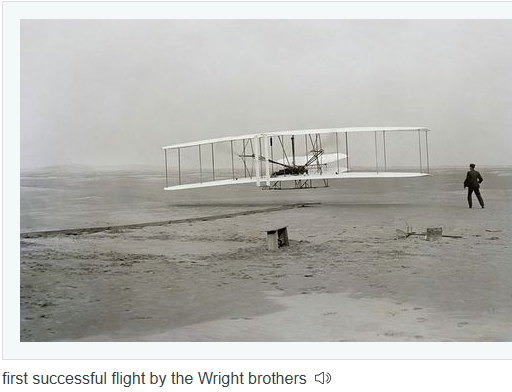
More than one hundred years ago, two brothers stood on a sand dune at Kitty Hawk, North Carolina. Nearby was a big, odd-looking machine they had built. The brothers were Orville and Wilbur Wright. The machine was the world's first powered airplane.
Today, that amazing flying machine is on display at the National Air and Space Museum in Washington, D.C. The museum has the largest collection of historic aircraft and spacecraft in the world.
A new exhibit at the museum marks the 100th anniversary of the Wright brothers' famous flight.
The Wright brothers' flying machine looks something like a box kite with an engine. But it made all future flight possible.
In 1896, the Wright brothers made bicycles in Dayton, Ohio. But they dreamed of wings, not wheels.
At that time, the only way to fly was in a basket under a hot-air balloon. Not many people did so, as the balloons were hard to control.
Orville and Wilbur set out to build a machine that could fly. It would have glider-type wings and an engine.
Designing and building the flying machine took years. When it was finally ready, bad weather set in. The Wrights had to wait months to test their invention.
Flying was a dangerous mission. Other people had died trying to fly. On December 17, 1903, however, the Wright brothers were ready to take their chances.
Orville was the machine's first pilot. His flight lasted only 12 seconds. The flyer traveled just 120 feet and landed with a thud. The flight was short but very sweet. It proved that humans could fly.
Orville and Wilbur made four flights that day. They took turns as pilots. Wilbur made the longest flight. He flew for 59 seconds and went a distance of 852 feet.
The Wright brothers' invention began the age of flight. Their machine was important not only because it flew, but because it could be controlled in the air.
The Wrights could control their craft in three important ways-roll, pitch, and yaw. They could roll the wings right or left. They could pitch the plane's nose up or down. And they could yaw the nose from side to side.
Being able to control the plane in those three ways made all the difference. All pilots use those same controls when flying today.
After the Wright brothers' success, flying really took off.
In May 1927, Charles Lindbergh flew a small, one-seater plane across the Atlantic Ocean. He was the first person to do such a feat alone.
That plane, the Spirit of St. Louis, can be seen at the Air and Space Museum.
The museum also displays a jet named Glamorous Glennis. Its pilot was Chuck Yeager. In October 1947, Yeager flew the plane 700 miles per hour. It was the first plane to fly faster than the speed of sound. With jets, humankind pushed toward the edge of space and beyond!
In 1962, John Glenn became the first man to orbit Earth. He flew in the Mercury Friendship 7 space capsule. That tiny craft is now at the museum. The craft that first flew men to the moon is there, too.
For the Wright brothers, flight was an amazing adventure. Today, the adventure goes on. In the past hundred years, human flight has soared from Kitty Hawk to the moon

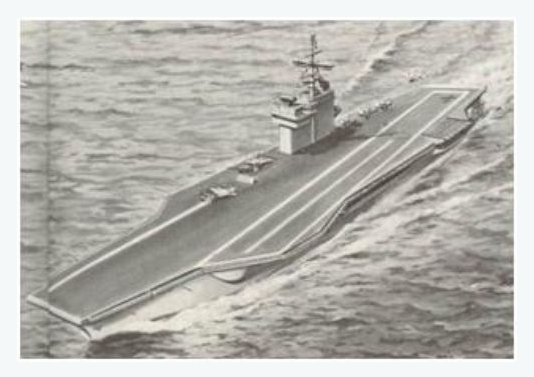
A boy can have a lot of fun on an aircraft carrier. Harvey had been waiting for this trip for months, ever since his dad first asked him what he wanted to do for his birthday, and now that it was finally here he could hardly contain his excitement. He didn’t even know where to start. There were plenty of planes to look at—fighter jets from the United States and Great Britain and France and Japan and Israel and everywhere else—but on a ship the size of the U.S.S. Thompson, there is much more to do than look at planes.
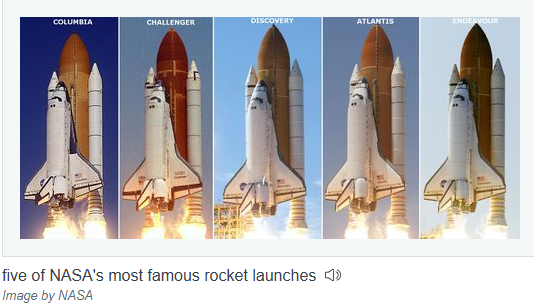
For one thing, there’s a space shuttle. When NASA stopped using the great big shuttles to fly astronauts into space, the government sent one of them to live on the Thompson. It was the biggest attraction on board the aircraft carrier, but it also had the biggest line, and Harvey did not have time to wait. There was too much to see!
“What do you think, Dad?” he asked. “Should we start on the deck?”
“Sure,” said Harvey’s dad. “The program said they have a Spitfire on display this summer.” A Spitfire is an old British plane from World War II. It has a propeller, rounded wings and just one seat. Harvey knew all about Spitfires. Harvey knew all about planes.
“Orrrrrrrrr,” said Harvey, consulting the map of the ship, “we could go look around the engine room. The engines on the Thompson are about as big as engines can get.”
“Sure. That sounds like a blast.”
“Wait wait wait! If we go to the armory, we can look at the machines they used to load the big guns.”
“Okay, let’s go to the armory.”
“Ooh! Or maybe we should go to the bridge. We can see the whole ship from there!”
“I’ve got an idea. Let’s start with the galley.”
“The mess hall! Are you crazy, dad? Why would we go to some boring old cafeteria when there are all these rooms and planes?” His dad started laughing, and Harvey realized he had been kidding. Nobody wanted to visit the mess hall.
“We can see it all, kiddo. We’ve got plenty of time.”
Two hours later, Harvey and his father had been all over the great big ship. They had seen the deck, the armory, the engine room and everything else. They went onto the bridge, and climbed all the way up the conning tower. From there, they could see all the way down the river, to the cruise ships and freighters pulling in and out of the bay.
“Those cruise ships are pretty big,” said Harvey’s dad.
“Pfft,” said Harvey. “Not as big as the Thompson. And I bet they don’t even have a Spitfire.”
The Spitfire was the highlight. Its machine guns were still attached, though of course they didn’t have any ammunition in them. As he looked at the seventy-year-old airplane, Harvey realized it was as old as his grandfather. It wasn’t hard to imagine himself sitting in the cockpit, flying over the English countryside, with nothing above him but bright, blue sky.
“That,” he informed his father, “is a pretty cool plane. Now where do we go?”
“I have bad news.”
“Oh no. What?”
“Look at the map. We’ve seen it all. There’s only one place left to go.”
“Oh, crud,” said Harvey. “The mess hall.”
Harvey and his dad walked silently down the massive halls of the great ship, dreading the boredom of the mess hall. Harvey had seen cafeterias before. He ate in one every day. The food was the same in every cafeteria on land and at sea. What was the point in seeing where sailors fixed their tater tots?
“Oh well,” he said as they turned into the mess. “If our only option is to leave the Thompson, I guess we can spend a few minutes looking at…the biggest cafeteria I’ve ever seen!”
It was gigantic, a great long hall filled with gleaming tables, all decorated in a cowboy theme. On one end was the window to the kitchen, which Harvey raced to see. How could they have possibly made enough food for this many people?
“Wow, dad!” he shouted. “Look at that pot! It’s the size of Mom’s car!”
“That’s the biggest pot I’ve ever seen,” said Dad, undeniably impressed.
“I wonder how many potatoes you could fit in there,” said Harvey.
“About 600 pounds,” said a voice behind them. A wrinkled old man stood, looking through the glass at the gleaming kitchen equipment.
“Who are you?” asked Harvey.
“Ship’s cook, third class, Rex Phillips,” he said.
“Nice to meet you,” said Harvey’s dad. “Did you serve on the Thompson?”
“I did,” said Rex. “Right here. I can tell you, we didn’t always keep it so clean.”
“Do you…do you want to tell us about it?” asked Harvey.
The old man’s eyes lit up, and he smiled as he began to speak. He worked at a hamburger stand before he joined the Navy, he said, and when it came time for assignments aboard the ship, he was assigned to work in the galley.
“Mostly it was peeling potatoes,” he said. “I got so I could peel a potato inside of ten seconds, toss it in that pot, and move on to the next one. When we were going good, we could serve up to 10,000 meals a day.”
When he finished telling them about life in the galley, Rex took Harvey and his father back through the ship, telling them all sorts of things that they hadn’t learned on their tour. By the time he finished, Harvey knew everything there was to know about the U.S.S. Thompson. It was a perfect birthday. Not only did he get to go on an aircraft carrier—he got to tour it twice!
What is the U.S.S. Thompson?
Where does this story take place?
There is a lot to look at on the U.S.S. Thompson.
What evidence from the story supports this statement?
How do Harvey’s feelings about the galley change when he visits it?
What is this story mainly about?
Read the following sentences:
“Not only did he get to go on an aircraft carrier—he got to tour it twice!”
What does tour mean in the sentence above
What is Kurt doing for the first time in his life?
What critical event happens at the end of the story?
What evidence from the text suggests that Kurt may have been looking forward to being on a plane for a while?
What is this story mainly about?
Read the following sentence:
“The car ride felt like forever, but that’s because Kurt could not wait to get to the airport and see this adventure through.”
What does the phrase “see this adventure through” most nearly mean?
What did President Eisenhower create in 1958?
What does the author describe in this text?
Space centers work to prepare the people who are involved in space missions.
What evidence from the passage supports this conclusion?
What can you infer about space missions, based on all the different roles that the NASA space centers play?
What is the main idea of this text?
What significant structure did countries build together?

“That!” said Francis. “I want to ride on that!”
“Put your hand down,” said Mom. “It’s rude to point.”
Francis didn’t care what was rude. This was the coolest thing he’d seen on his entire vacation, and he wanted to make sure everyone knew about it. Francis and his family were in New Orleans, and even though the city was supposed to be fun, Francis couldn’t tell why. They had spent the entire day walking back and forth on streets that all looked the same. At each corner there would be another old house. On the second floor would be a crummy-looking wrought iron balcony. The houses were all different colors, which should have been fun, but the colors were boring pastels. They were girl colors, which explained why Francis’ sister, Angela, was so excited by them.
“Oh wow, Dad,” she would say. “Look at the detailing on that ironwork.”
“Why don’t they make the iron into fun shapes?” asked Francis. “Like swords or rocket ships or pirates.”
“You don’t understand anything about detailing.”
Detailing was Angela’s new favorite word. She used it about 15 times an hour. She had also taken to correcting the way Francis said things. If he saw Burgundy Street and said the word like the color, she would say, “Actually, they say it ‘Bur-GUN-dy.’” If he tried to sound out Chartres Street, saying it like “charts,” she would testily insist that it was pronounced “charter,” even though it wasn’t even spelled like that. New Orleans was confusing.
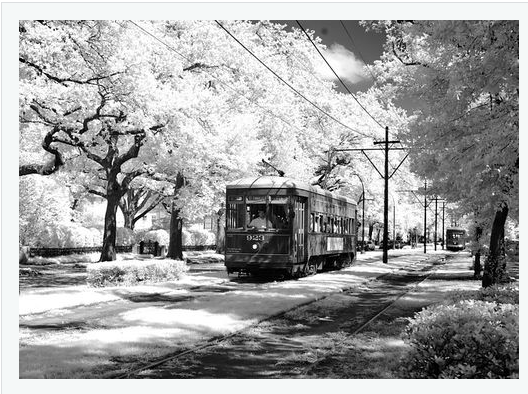
But finally he had seen something that made perfect sense. Something that wasn’t confusing or boring or pastel: a streetcar, trundling down the middle of the road, with a hook connecting it to the cable above.
“Can we ride on it?” he asked. “Pleeeeeeease?”
“Ugh,” said Angela. Ugh was her other favorite word. “Streetcars are for tourists.”
“But we are tourists! And buildings are for losers.”
And with that, Francis did the only thing he could to save the afternoon. He ran, pounding his feet on the sidewalk, huffing and puffing in a mad dash to get to the streetcar before it moved on and took all the fun in the world with it.
“Angela! Go after your brother!”
Mom and Dad weren’t much for running, so they let Angela do it for them. She charged after Francis, her long legs making up the ground easily. But he had too good a head start. He leapt onto the back of the small red streetcar, landing perfectly. Angela stumbled as she jumped and landed flat on her face.
“Two bucks!” asked the conductor.
“It’s on me,” said Francis, as he extracted two wrinkled dollar bills from his pocket.
“All right, let’s go,” said Angela, as she dragged herself to her feet.
“We are going! Look!”
And Angela saw that it was too late. They were already on their way. Panicked, she asked the conductor where the streetcar was headed.
“You get on the car, you don’t know where it’s going?” asked the conductor, whose New Orleans accent was as thick as cane syrup.
“Just tell me!”
“We go to the aquarium.”
As Angela frantically texted her parents to meet them at the aquarium, Francis watched the city slide by beside them. At that speed, the buildings didn’t look so boring. They seemed to blend together, swirling into an unbroken streak of pastels. Even the silly balconies started to look like a fun place to put your feet up and have a soda. And on his left was the river, wide and flat and brown and magnificent.
“I can see why they call it Big Muddy,” he said, as his sister plopped down onto the seat beside him, inspecting her skinned knee.
“What?”
“I said, I see why people call the river Big Muddy. I guess it is pretty cool how old this town is.”
“Yeah,” she said. “And look at the ironwork on the side of the streetcar!”
“The detailing is wonnnnnnnnderful,” he said, and she socked him playfully on the shoulder.
“I guess a streetcar ride wasn’t such a bad idea after all.”
“And just wait until we get to the aquarium!”
What does Francis want to ride?
What is the setting of this story?
Read these sentences from the story:
“Francis and his family were in New Orleans, and even though the city was supposed to be fun, Francis couldn’t tell why. They had spent the entire day walking back and forth on streets that all looked the same. At each corner there would be another old house. On the second floor would be a crummy-looking wrought iron balcony.”
What can be concluded from these sentences?
Compared to Francis, how does Angela feel about the houses in New Orleans?
What is a theme of this story?
Read the following sentences:
“And on his left was the river, wide and flat and brown and magnificent. ‘I can see why they call it Big Muddy,’ he said.”
What does “they call it Big Muddy” mean?
Based on the text, who was the first to fly faster than the speed of sound?
Which of the following does the author describe last in the text?
The Wright brothers contributed significantly to the mechanics of flight today.
What evidence from the text supports this conclusion?
Based on the text, why is the Wright brothers' flying machine displayed at the National Air and Space Museum?
What would be another good title for this text?
Read this sentence from the text.
In 1962, John Glenn became the first man to orbit Earth.
As used in the sentence, what does the word "orbit" mean?
Choose the answer that best completes the sentence.
The Wright brothers originally made bicycles, they really wanted to build a flying machine.