Twa kɔ nsɛm atitiriw so
Log in
Sign up for FREE
arrow_back
Laabri

Week 3.7: Pets

star
star
star
star
star
Last updated about 2 hours ago
37 Nsɛmmisa
No Bites, No Scratches, No Problems
Drone Delivery of Special Treats
Planting Pet Trees
Capturing Ghost Dog
From Pet to Threat

Make sure you have answered all the questions, click submit when finished with all questions and check your answers. You may not be able to make corrections at this time.

1
1
1
1
1
1
1
Asemmisa {{asɛmmisaAhyɛnsode}}
7.

Choose the answer that best completes the sentence below.

Animals may attack you it to our house.

1

Planting Pet Trees

Kids have pets of all kinds: dogs, cats, hamsters, gerbils, ferrets, and fish. Some schools have pets in the classrooms, like turtles or an iguana. But have you ever heard of pet trees?

Eighty fourth-grade students at the Bronx Community Charter School planted 40 seedlings and took care of them for eight weeks. The program, called “A Tree Grows in the Bronx,” was part of an effort to restore the native plant habitat along the Bronx River in New York.

The Bronx River travels 23 miles from Westchester, New York, through the Bronx, which is part of New York City. It is the only freshwater river in New York City and is a place where people can canoe, fish, and enjoy nature. However, some invasive plants were preventing native trees and shrubs from growing along the river’s banks. Invasive plants are those that come from somewhere else and spread so quickly that they leave no room for the local plants that are supposed to be there.

The New York City Parks, The New York Botanical Garden, Bronx Community Charter School, Bronx House, and Bronx River Alliance all got together and created a plan. They wanted to get rid of the invasive plants and replace them with native trees and shrubs, such as button bush, silky dogwood, and pussy willows.

Therefore, four fourth-grade classrooms took care of 10 tree seedlings each for eight weeks. They watered them and kept them alive and well until it was time to plant them outdoors. They also spent those weeks learning about the importance of trees to the environment. They learned that trees can prevent erosion. In addition, trees can cool the air because they release moisture and reflect heat. Trees also absorb carbon dioxide from the air and release oxygen back into the air.

Michelle A. Luebke is the director of environmental stewardship with the Bronx River Alliance. People who make plans and take action to help improve local soil, plants, wildlife, and water (such as rivers and lakes) are called stewards of the environment. Luebke said the students in the fourth-grade classrooms really connected with their trees. “It literally made trees come alive for the students, which encouraged a sense of stewardship,” she said.

The fourth-grade students also got to name their trees when they planted them! First, the students had to identify the species of the tree. The student who knew the correct species first got to name the tree.

After taking care of their “pet” trees for eight weeks, many students were sad to leave them after planting them near the river, even though they knew that’s where the trees belonged.

“There were very emotional and teary goodbyes when the students planted their pet trees in the woods and had to go back to their school,” Luebke said. “Students promised their trees they would come back to visit them often.”

In addition to the work the students did, more than 200 volunteers helped remove invasive plants and planted 1,300 native trees and shrubs.

For these fourth graders, learning about trees and their benefits was personal and fun. Now, they are environmental stewards!

1
1
1
1
1
1
1
1
1
1
1
1
1
1
1
Asemmisa {{asɛmmisaAhyɛnsode}}
29.

Choose the answer that best completes the sentence below.

pythons and tigers, can cause a lot of harm.

1

No Bites, No Scratches, No Problems

You are walking down the street toward a friend's house. A big, brown dog runs up the sidewalk on the other side of the street. Suddenly, it looks at you and stops. You stop. You stare at each other. It starts running toward you, its ears forward, and its head and tail down. What should you do?

The American Veterinary Medical Association (AVMA) says that millions of people in the United States share their homes with dogs and cats. In 2022, somewhere between 83.7 and 88.9 million people in the U.S owned dogs. Around 61 million people in the U.S. owned cats. The AVMA also says that each year around 4.5 million people are bitten by dogs in the U.S. Those bites may be a nip, a serious bite, or a major attack.

Doggy Behavior

Understanding your canine buddy can help you avoid making any moves that might cause your dog to bite. Even though dogs may love their owners, they can't help behaving the way they do in certain situations. This is because the ancestor of the dog is the wolf. Breeding has eliminated some wolf behaviors to make dogs better pets. And, of course, training your pets properly can help them to act in ways that are not threatening.

Dogs, like wolves, are territorial. This means that they "own" or guard their space and their possessions. Some dogs are more territorial than others. That has to do with their breeding and training. Here are some possible problem areas.

  • Food. A dog's food is very important to the dog. Never touch or otherwise bother a dog that is eating.

  • Puppies. If your dog has had puppies, she may be protective of them. Leave her and her puppies alone when they are all together in their bed. Only play with the puppies when a human adult is around.

  • Toys. Leave a dog's toys alone. Do not try to take a toy away from a dog. If you want to play with the dog, use something that is only used for that purpose, such as a squeaky dog toy. Put it away when you are not actively playing with the dog.

  • Sleeping. A dog's bed is its private space. Many dogs don't want to be bothered when they are in their beds. Never jump on a sleeping dog or surprise it in any way. If you want a sleeping dog's attention, call it from across the room or yard.

Talk to Me, Fido

So what about that dog on the sidewalk? If you are approached by a strange dog, remain motionless, with your hands at your sides, advises Stephanie Shain, former Director of Outreach for Companion Animals of the Humane Society of the U.S. "Stand absolutely still. Don't run," she says. "Running isn't a good idea because the dog can run faster than you can." It is a dog's nature to chase and catch you. If the dog knocks you down, curl into a ball with your hands over your ears and remain motionless. Try not to scream or roll around.

Shain adds, "Don't make eye contact with the dog." We are taught that it's polite to look other people in the eye. "But to a dog, that's a challenge."

After the dog has sniffed you, it will probably lose interest in you and walk away. Then you can slowly back away. Don't turn your back on it, and don't start running.

In Your Own Home

Stephanie Shain says that most dog bites occur with the family dog. The dog may bite you because of your actions. Or it may bite a friend who comes over to see you.

If you go to a friend's house, don't expect his dog to be as friendly as your own. Even if it is friendly, always treat it with respect. Just as with a strange dog, keep your hands at your sides when you meet it. If your friend says it is OK, offer your hand to the dog to sniff. If it's OK to pet the dog, pet it under the chin instead of raising your hand over its head. Raising your hand may seem like a threat to a dog.

Never squat down in front of a strange dog and try to hug its neck. Even the friendliest dog may bite from fear if you scare it with an action it isn't used to, especially if you are a stranger. Dogs, like humans, need time to get to know someone new.

Kids and Kitties

Cat scratches and bites don't get the same attention that dog attacks do. Cats are small and not as strong as large dogs, and they don't maul people. But cats can still cause injury. They want to protect themselves, and their claws and teeth are what they use.

To be safe around cats, learn their "language." By "reading" a cat's body movements, you will get used to your cat's behavior and moods. Here are some things to look for.

  • If a cat raises its back and rubs against your leg, it is feeling friendly, and you can pet it.

  • If the cat ducks its back away from you when you try to pet it, it doesn't want to be touched at that time.

  • Leave a cat alone if you see that the hair on its back is raised and its tail is all puffed out.

  • If a cat flattens its ears, hisses or growls, or starts thrashing its tail, leave it alone. It is not in the mood to be approached.

  • Don't pick up a strange cat. And if your own cat doesn't like to be picked up, don't insist on doing so.

  • Don't try to hold onto a cat that becomes frightened. It doesn't really want to hurt you, but its natural reaction is to use its claws to get away or to protect itself.

Respecting a dog or cat and knowing what is natural behavior for the animal can help to keep you safe from bites and scratches. Animals will appreciate your respect for their ways.

Playing With Your Pet

Dogs and cats enjoy playing, and it is a wonderful way for you to relate to your pet. Here are a few ways that you can play safely together.

  • Many dogs love to play with a ball. Hard plastic balls make good "soccer" balls. A tennis ball is fun for throwing and retrieving but watch to see that it is in good condition. Get a new one when the old one starts to fall apart.

  • Many dogs love to play Frisbee, even if they can't catch it in the air.

  • Don't tease or play rough with your dog. Dogs can become excited with rough play and then bite, because that's how dogs play with each other.

  • If a dog walks away, don't go after it for more play. Recognize when it has had enough, and respect that.

Cats enjoy playing with toys too. They like anything that involves hunting or chasing "prey." Here are some ways to play safely with your cat and keep it amused.

  • Roll a ball or crumpled piece of paper across the floor.

  • Dangle a fishing-pole type of toy in front of your cat.

  • Blow bubbles for the cat to chase and pop (don't blow them at its face).

  • Use a laser pointer or small flashlight to create a spot of light on the floor. Move it in a zigzag path. (Don't shine the light in your cat's eyes. )

  • Don't roughhouse with a cat--it may scratch and bite to get away.
Asemmisa {{asɛmmisaAhyɛnsode}}
1.

According to the text, what do millions of Americans share their homes with?

Asemmisa {{asɛmmisaAhyɛnsode}}
2.

What does the text describe in the section titled "Talk to Me, Fido"?

Asemmisa {{asɛmmisaAhyɛnsode}}
3.

Read the following sentences from the text.

"Cat scratches and bites don't get the same attention that dog attacks do. Cats are small and not as strong as large dogs, and they don't maul people. But cats can still cause injury."

What can you conclude based on this information?

Asemmisa {{asɛmmisaAhyɛnsode}}
4.

Based on the text, what might you do before you get a pet?

Asemmisa {{asɛmmisaAhyɛnsode}}
5.

What is the main idea of this text?

Asemmisa {{asɛmmisaAhyɛnsode}}
6.

Read the following sentences from the text.

"Cats are small and not as strong as large dogs, and they don't maul people. But cats can still cause injury. They want to protect themselves, and their claws and teeth are what they use."

As used in these sentences, what does the word "injury" mean?

Asemmisa {{asɛmmisaAhyɛnsode}}
8.

What was actually in the peanut butter treats that were delivered to prairie dogs?

Asemmisa {{asɛmmisaAhyɛnsode}}
9.

What problem are scientists working to solve by delivering the sylvatic plague vaccine to prairie dogs?

Asemmisa {{asɛmmisaAhyɛnsode}}
10.

Read the following sentences from the text.

“Before they used drones and ATVs, scientists placed pellets containing peanut butter and the vaccine by hand near prairie dog colonies. They knew that they had to find a more efficient way to do it. They needed to deliver the baits to colonies over thousands of acres across several states such as Montana, Colorado, and South Dakota. So the World Wildlife Fund, U.S. Fish and Wildlife Service, and Model Avionics developed drones and ATVs to do the job.”

What can you conclude about the vaccine delivery based on this information?

Asemmisa {{asɛmmisaAhyɛnsode}}
11.

How does protecting prairie dogs help other animals in the prairie dogs’ habitat?

Asemmisa {{asɛmmisaAhyɛnsode}}
12.

What is the main idea of this text?

Asemmisa {{asɛmmisaAhyɛnsode}}
14.

Words have different forms when we use them in different ways. Choose the right vocabulary word to each blank.

My uncle caught a while he was traveling, and he's in the hospital now.

Asemmisa {{asɛmmisaAhyɛnsode}}
16.

Invasive plants were blocking native plants from growing along the Bronx River. What solution did local organizations come up with to this problem?

Asemmisa {{asɛmmisaAhyɛnsode}}
17.

Read these sentences from the passage.

“Therefore, four fourth-grade classrooms took care of 10 tree seedlings each for eight weeks. They watered them and kept them alive and well until it was time to plant them outdoors. They also spent those weeks learning about the importance of trees to the environment.”

What can you conclude based on this information?

Asemmisa {{asɛmmisaAhyɛnsode}}
18.

The author calls the fourth graders from Bronx Community Charter School “environmental stewards.” What evidence supports this label?

Asemmisa {{asɛmmisaAhyɛnsode}}
19.

What is the main idea of this text?

Asemmisa {{asɛmmisaAhyɛnsode}}
20.

What did students learn about the benefits of trees?

Asemmisa {{asɛmmisaAhyɛnsode}}
21.

What are invasive plants?

Capturing Ghost Dog

Ghost Dog is a large Cane Corso Mastiff. This is a breed of dog that is very muscular and often weighs more than 100 pounds. Ghost Dog weighs 109 pounds! In 2012, Ghost Dog didn’t have a home or owners. He didn’t have a leash, a dinner bowl, and he certainly didn’t have a dog bed. Instead, Ghost Dog lived alone in a large park in the middle of Brooklyn.

Of course he used to have owners. He has clipped ears and a docked tail, which are telltale signs that at one time he lived with humans. But when he was one or two years old, he began living in the park with no one to take care of him.

The weird thing was that people did take care of him. In fact, he was a well-known animal in the park, almost a celebrity. In the mornings, one man regularly fed him breakfast. Then Ghost Dog wandered to the dog beach and begged for scraps from dog owners. He spent the rest of the day relaxing in an open field in the park, or playing with other dogs. Other runners and walkers in the park fed him small treats. Sometimes he found scraps of food in the trashcans of nearby restaurants. He didn’t like to be touched, and he didn’t like when people he didn’t know tried to come near him. After a long day of playing in the park, Ghost Dog went to sleep in the hollowed trunk of a fallen tree.

You might be wondering how anyone can know the details of Ghost Dog’s daily routine. And that’s where Sean Casey becomes part of the story. Sean owns an Animal Rescue shelter and has spent much of his life helping animals in need. He first heard about Ghost Dog in 2008. He received complaints that a large, wild dog was roaming the park without a leash. The dog didn’t seem dangerous or mean, but Sean wanted to make sure. He sent one of his workers into the park overnight. The worker followed Ghost Dog for 24 hours and learned what the dog did and how he survived.

Sean soon realized that Ghost Dog was very happy in the park, and that Ghost Dog wasn’t mean or aggressive or dangerous. Ghost Dog was just a very big dog leading a very happy life in the middle of a very busy city.

But Sean was worried. A dog living alone in the park without a leash might cause problems in the future, especially if he became injured or sick. “We tried to capture him using ropes, but he was too smart. We could never get close enough,” Sean says. So instead, Sean decided to monitor the dog’s activities and wait until the right moment presented itself.

In May 2012, Sean began receiving reports that Ghost Dog was “haunting” the park and acting aggressively toward people. He says these reports were ridiculous. “He’s a sweetheart,” Sean said. But he noticed something else too: Ghost Dog was injured. He was limping and he moved slowly around the park. He seemed less scared of being captured. Sean knew Ghost Dog needed help. After four years in the park, maybe Ghost Dog was ready for a different home.

And so he unleashed a plan. One morning, Sean, his workers, and the man who regularly fed Ghost Dog captured the wild dog using ropes. They began by feeding him treats and circling him until they could get close enough to loop a rope around his neck. They brought another dog with them. This helped distract Ghost Dog who loved the company of other animals. Ghost Dog tried to fight, but eventually gave up and followed Sean into the Animal Rescue van.

Sean took Ghost Dog to a veterinarian. Ghost Dog had Lyme’s Disease and an injured knee that required surgery. Sean kept him at a shelter until he was healed. For a dog that lived on his own for so long, Ghost Dog was surprisingly friendly and affectionate. He nuzzled Sean’s leg and welcomed his touch.

Sean has spent a lot of time to rehabilitate Ghost Dog. He hopes that someone will adopt him, even if he is “a bit of a handful.”

Asemmisa {{asɛmmisaAhyɛnsode}}
22.

Who is Ghost Dog?

Asemmisa {{asɛmmisaAhyɛnsode}}
23.

Which of the following shows the sequence of events described in the text in the correct order?

Asemmisa {{asɛmmisaAhyɛnsode}}
24.
Asemmisa {{asɛmmisaAhyɛnsode}}
25.

Ghost Dog has clipped ears and a docked tail. Based on this evidence, what conclusion can be made?

Asemmisa {{asɛmmisaAhyɛnsode}}
26.

Based on the text, why might some people have complained about Ghost Dog in 2008?

Asemmisa {{asɛmmisaAhyɛnsode}}
27.

What is this text mostly about?

Asemmisa {{asɛmmisaAhyɛnsode}}
28.

Read the following sentences: “In May 2012, Sean began receiving reports that Ghost Dog was ‘haunting’ the park and acting aggressively toward people. He says these reports were ridiculous.”

One meaning of the word “haunt” is “to visit or live in a place as a ghost.” Ghost Dog is not actually a ghost, so why does the author use the word “haunting” to describe Ghost Dog’s behavior?

From Pet to Threat

Imported pets become major menaces in the United States.

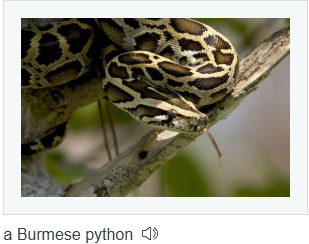
Back in 2005, a wacky photo made headlines. It looked like a joke, but it was the real deal. A 13-foot Burmese python had burst open after trying to swallow a 6-foot alligator in Everglades National Park in Florida.

Many decades ago, people never would have seen such a clash of predators. Predators are animals that capture and eat other animals. Burmese pythons are native to Asia. But over the last few decades, many pet snakes have escaped or been set free in Florida by owners who were tired of caring for them.

Todd Hardwick rounds up troublesome animals—both native and exotic. He runs Pesky Critters Wildlife Control, a business in southern Florida. At least once a week, Hardwick gets a call to catch a strange animal. Many of those animals started out as somebody’s pets.

"When they’re no longer the ‘in thing,’ people let them go, or they escape," Hardwick says. "For me, it seems like Miami is a large open-air zoo."

Hardwick has wrangled iguanas, lizards, hedgehogs, potbellied pigs, and plenty of pythons. Many imported animals thrive in Florida’s tropical weather.

But the introduction of exotic animals into the wild in the United States isn’t happening only in the South. A species of wild parrot native to Argentina now lives in New York City. Foreign fish have been dumped from aquariums into rivers and lakes across the U.S.

Exotic creatures, such as pet tigers, can be dangerous to people. Many foreign animals damage the environment. Pythons, for example, dine on the local wildlife.

Keeping exotic pets isn’t bad for just native animals; it’s bad for the exotic animals too. Many of these pets are brought illegally from their home countries to where they may be threatened in the wild.

Pet owners may not realize it, but wild pets are often illegal. About two dozen states ban some kinds of foreign pets. Python imports were banned in 2012. "Obviously," says Hardwick, "they don’t belong here."

Sick Pets, Sick People

Exotic pets can bring exotic diseases into your living room.

In 2003, a creepy-sounding disease popped up in six Midwestern states: monkeypox. The disease usually infects monkeys. But it can also spread to people, causing fever, headache, muscle pain, and blisters on the skin.

Monkeypox is normally found in Africa, halfway around the globe. How did it get to the United States? Pets.

Diseases that jump from animals to humans are called zoonoses (zo-AHN-uh-seez). About 70 people in the Midwest became infected with monkeypox after handling pet prairie dogs. Before those people bought their pets, the prairie dogs had been stored with a rat from Africa. The prairie dogs probably caught monkeypox from the rat.

The people who caught monkeypox recovered after being treated by doctors. But other zoonoses can be more serious. In some parts of the world, people who have had contact with birds have contracted bird flu, a deadly virus. Many U.S. government officials work very hard to protect people in the U.S. from new zoonoses.

Asemmisa {{asɛmmisaAhyɛnsode}}
30.


According to the text, where did a 13-foot Burmese python try to swallow a 6-foot alligator?

Asemmisa {{asɛmmisaAhyɛnsode}}
31.

Based on the text, which animal was likely the cause of prairie dogs getting monkeypox?

Asemmisa {{asɛmmisaAhyɛnsode}}
32.


Read this paragraph from the text.

But the introduction of exotic animals into the wild in the United States isn’t happening only in the South. A species of wild parrot native to Argentina now lives in New York City. Foreign fish have been dumped from aquariums into rivers and lakes across the U.S.

What can you conclude based on this evidence?

Asemmisa {{asɛmmisaAhyɛnsode}}
33.

Based on the text, what is probably true about exotic pets in the United States?

Asemmisa {{asɛmmisaAhyɛnsode}}
34.

What is the main idea of the text?

Asemmisa {{asɛmmisaAhyɛnsode}}
35.

Read these sentences from the text.

Many imported animals thrive in Florida’s tropical weather.

But the introduction of exotic animals into the wild in the United States isn’t happening only in the South. A species of wild parrot native to Argentina now lives in New York City. Foreign fish have been dumped from aquariums into rivers and lakes across the U.S.

As used in these sentences, what does the word “thrive” mean?

Asemmisa {{asɛmmisaAhyɛnsode}}
37.

Why are some exotic pets illegal to own?