Arctic Sea Ice
Key Points
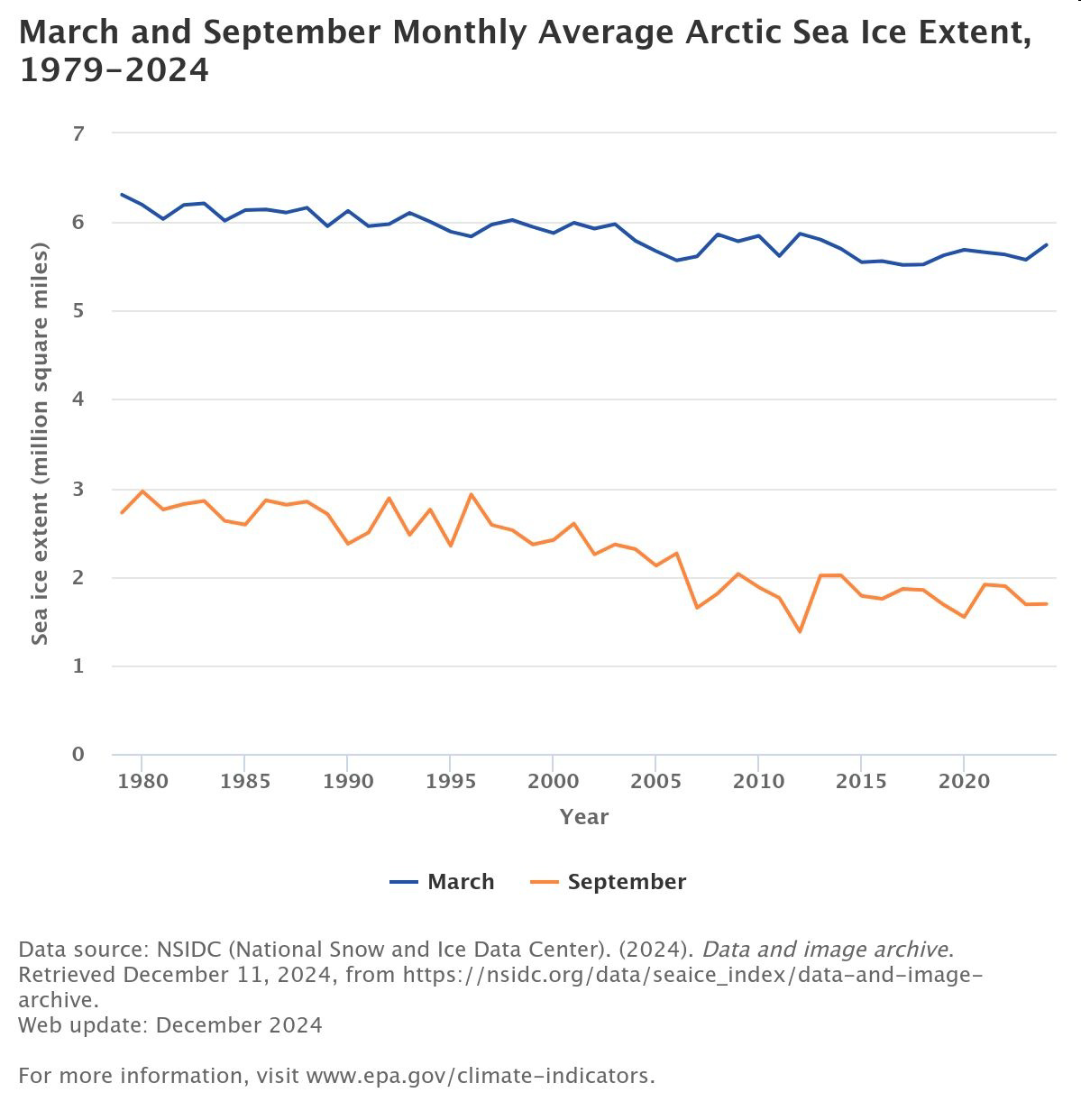
September 2012 had the lowest sea ice extent ever recorded, 44 percent below the 1981–2010 average for that month. For March, the lowest sea ice extent on record was in 2017, 7.4 percent less than the 1981–2010 average (Figure 1).
The September 2024 sea ice extent was the sixth smallest on record. It was about 785,000 square miles less than the historical 1981–2010 average for that month (Figure 1) - a difference almost three times the size of Texas.
All months have shown a negative trend in sea ice extent over the past several decades. The largest year-to-year decreases have occurred in the summer and fall months.
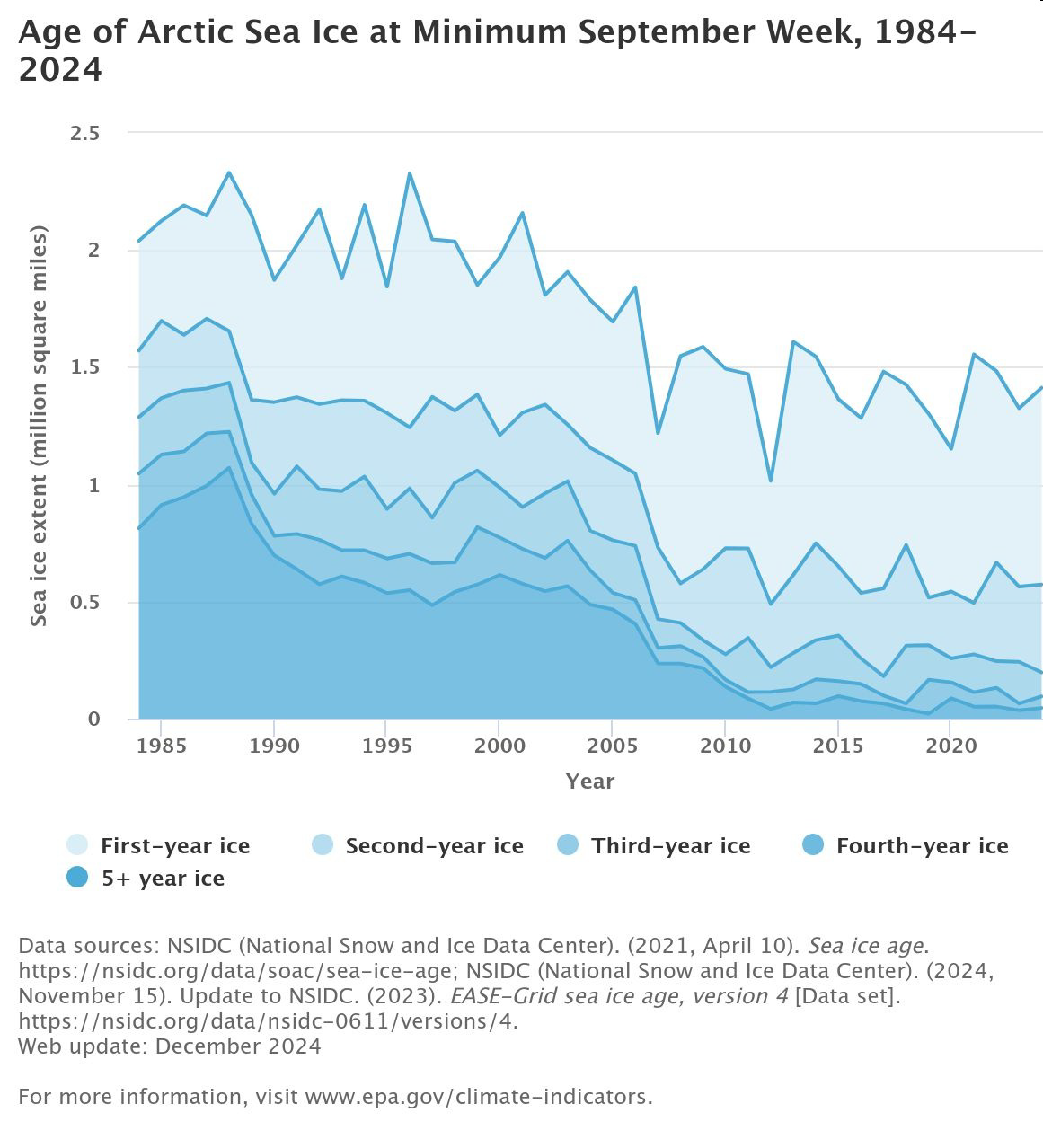
Evidence suggests that fewer patches of older, thicker sea ice are surviving through one or more melt seasons and persisting through multiple years (Figure 2). The proportion of sea ice five years old or older has declined dramatically over the recorded time period, from more than 40 percent of September ice on average in the 1980s to less than 10 percent since 2010. A growing percentage of Arctic sea ice is only one or two years old. Less old multi-year ice implies that the ice cover is thinning, which makes it more vulnerable to further melting.
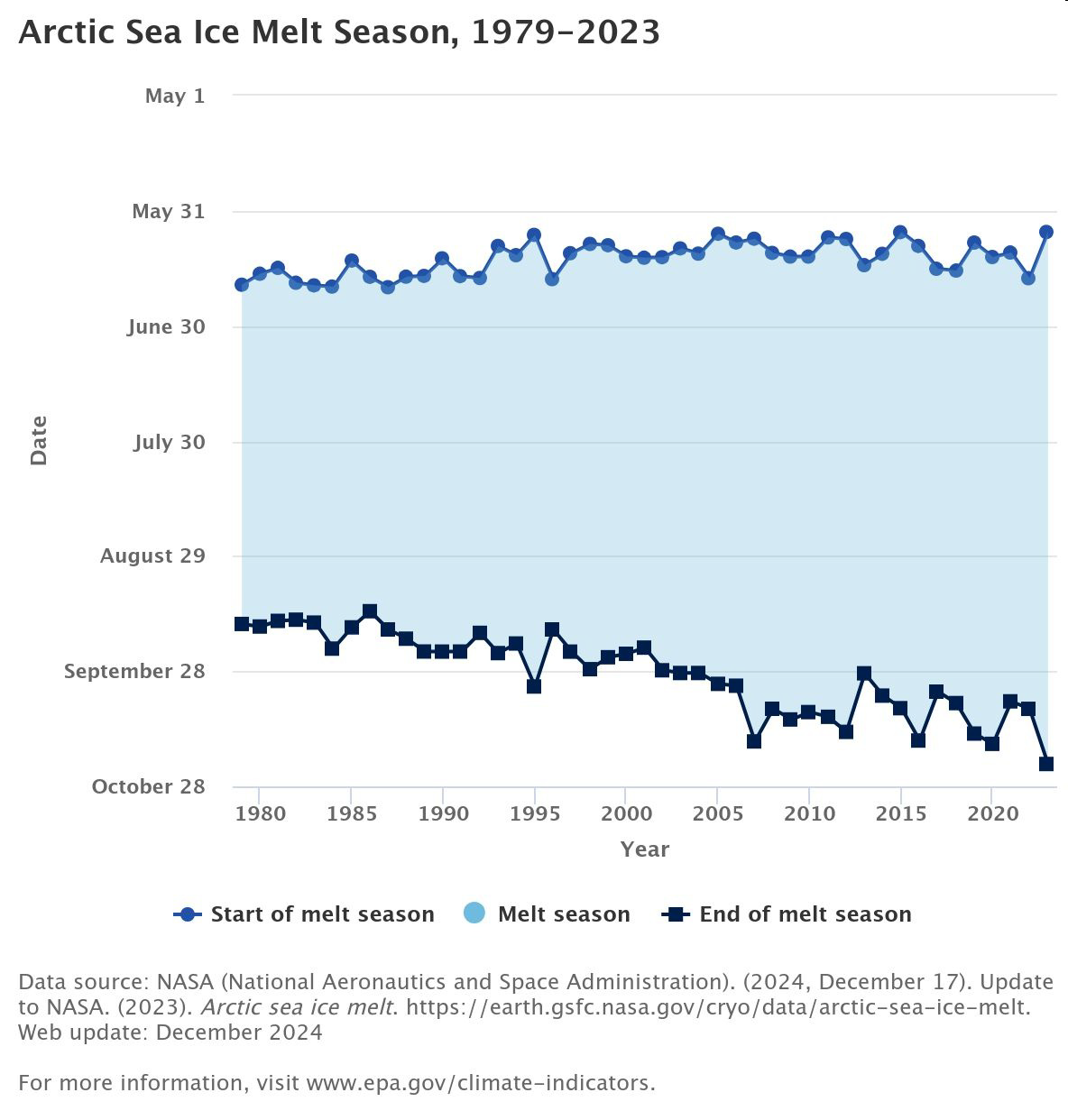
Since 1979, the length of the Arctic sea ice melt season has grown by about 40 days (Figure 3). On average, Arctic sea ice now starts melting eight days earlier and starts refreezing 31 days later than it has historically (Figure 3).
Background
Sea ice, which is sea water that freezes from the ocean surface down to several feet below, is an integral part of the Arctic Ocean. During the dark winter months, sea ice essentially covers the entire Arctic Ocean. In summer, some of this ice melts because of warmer temperatures and long hours of sunlight. Sea ice typically reaches its minimum thickness and extent in mid-September, when the area covered by ice is roughly half the size of the winter maximum. The ice then begins to expand again during fall and winter when temperatures decrease and sunlight is limited.
The extent of area covered by Arctic sea ice is an important indicator of changes in global climate because warmer air and water temperatures are reducing the amount of sea ice present. Because sea ice is light-colored, it reflects more sunlight (solar energy) back to space than liquid water, thereby playing an important role in maintaining the Earth’s energy balance and helping to keep polar regions cool. (For more information on the effects of surface color on reflecting sunlight, see the Snow Cover indicator.) Sea ice also keeps the air cool by forming a barrier between the cold air above and the relatively warmer water below. As the amount of sea ice decreases due to the oceans absorbing more solar energy, the cooling effect of this ice is reduced, which can magnify the original warming. The magnified warming then leads to even more loss of sea ice.
The age of sea ice is also an important indicator of Arctic conditions, because ice that has accumulated over many years is generally thicker and stronger than younger ice. A loss of older ice suggests that the Arctic ice cover is becoming thinner. Evidence also suggests that the melt season has become longer; the ice is starting to melt earlier in the year and freeze later than it used to.
Changes in sea ice can directly affect the health of Arctic ecosystems. Mammals such as polar bears and walruses rely on the presence of sea ice for hunting, breeding, and migrating. These animals face the threat of declining birth rates and restricted access to food sources because of reduced sea ice coverage and thickness. Impacts on Arctic wildlife, as well as the loss of ice itself, are already restricting the traditional subsistence hunting lifestyle of indigenous Arctic populations such as the Yup’ik, Iñupiat, and Inuit.
While diminished sea ice can have negative ecological effects, it can also present commercial and economic opportunities. For instance, reduced sea ice opens shipping lanes and increases access to natural resources in the Arctic region.
Graph of Information - Figure 1.
This figure shows Arctic sea ice extent for the months of September and March of each year from 1979 through 2024. September and March are when the minimum and maximum extent typically occur each year.
Graph of Information - Figure 2.
This figure shows the distribution of Arctic sea ice extent by age group during the week in September with the smallest extent of ice for each year. The total extent in Figure 2 differs from the extent in Figure 1 because Figure 1 shows a monthly average, while Figure 2 shows conditions during a single week.
Graph of Information - Figure 3.
This figure shows the timing of each year’s Arctic sea ice melt season. The shaded band spans from the date when ice begins to melt consistently until the date when it begins to refreeze.
Year | Average Extent (million sq. miles) |
|---|
1980 | 2.8 |
2000 | 2.5 |
2010 | 2.0 |
2020 | 1.7 |
2023 | 1.6 |