Heavy Precipitation
Key Points
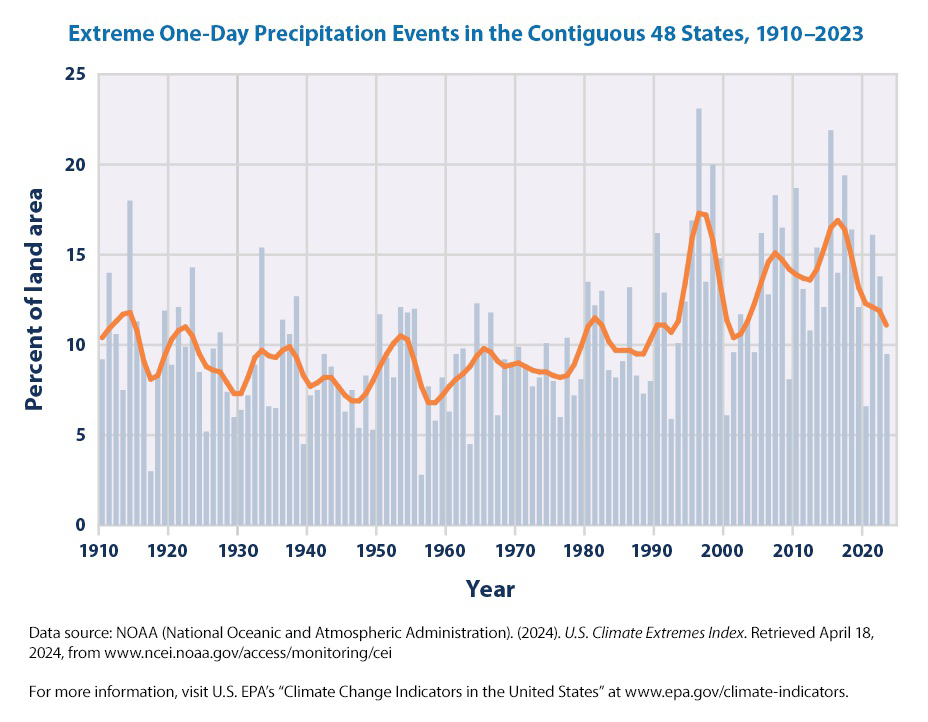
In recent years, a larger percentage of precipitation has come in the form of intense single-day events. Nine of the top 10 years for extreme one-day precipitation events have occurred since 1995 (see Figure 1).
The prevalence of extreme single-day precipitation events remained fairly steady between 1910 and the 1980s, but has risen substantially since then. Over the entire period from 1910 to 2023, the portion of the country experiencing extreme single-day precipitation events increased at a rate of about half a percentage point per decade (see Figure 1).
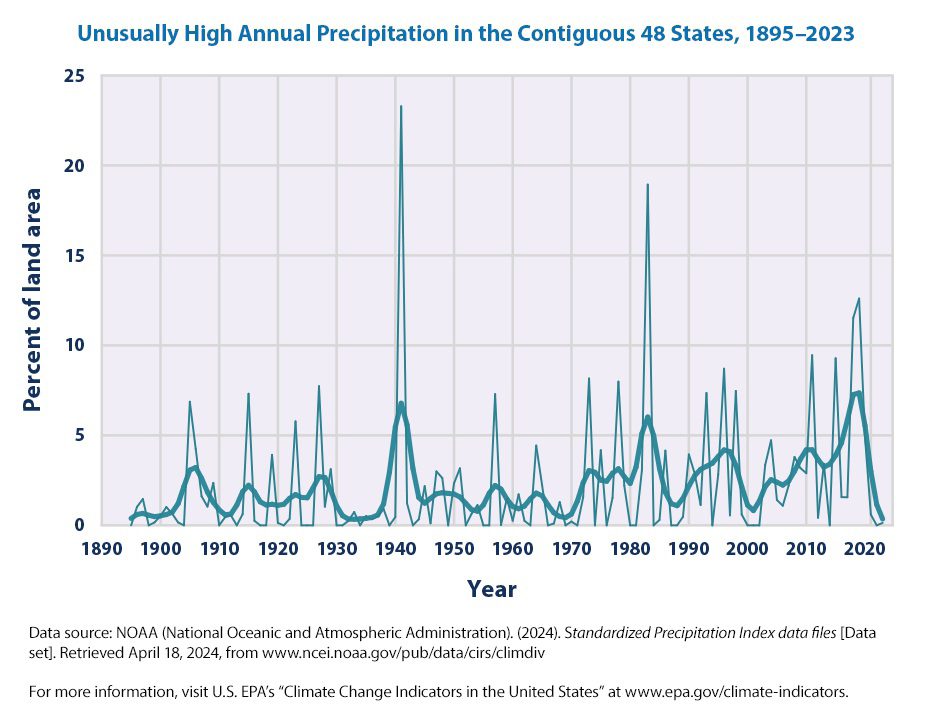
The percentage of land area experiencing much greater than normal yearly precipitation totals increased between 1895 and 2023. There has been much year-to-year variability, however. In some years there were no abnormally wet areas, while a few others had abnormally high precipitation totals over 10 percent or more of the contiguous 48 states’ land area (see Figure 2). For example, 1941 was extremely wet in the West, while 1983 was very wet nationwide.
Figures 1 and 2 are both consistent with other studies that have found an increase in heavy precipitation over timeframes ranging from single days to seasons to years. For more information on trends in overall precipitation levels, see the U.S. and Global Precipitation indicator.
Background
“Heavy precipitation” refers to instances during which the amount of rain or snow experienced in a location substantially exceeds what is normal. What constitutes a period of heavy precipitation varies according to location and season.
Climate change can affect the intensity and frequency of precipitation. Warmer oceans increase the amount of water that evaporates into the air. When more moisture-laden air moves over land or converges into a storm system, it can produce more intense precipitation - for example, heavier rain and snow storms. The potential impacts of heavy precipitation include crop damage, soil erosion, and an increase in flood risk due to heavy rains - which in turn can lead to injuries, drownings, respiratory health impacts from exposure to mold, and other flooding-related effects on health. In addition, runoff from precipitation can impair water quality as pollutants deposited on land wash into water bodies.
Heavy precipitation does not necessarily mean the total amount of precipitation at a location has increased - just that precipitation is occurring in more intense events. However, changes in the intensity of precipitation, when combined with changes in the interval between precipitation events, can also lead to changes in overall precipitation totals.
Graph of Information - Figure 1.
This figure shows the percentage of the land area of the contiguous 48 states where a much greater than normal portion of total annual precipitation has come from extreme single-day precipitation events. The bars represent individual years, while the line is a nine-year weighted average.
Graph of Information - Figure 2.
This figure shows the percentage of the land area of the contiguous 48 states that experienced much greater than normal precipitation in any given year, which means it scored 2.0 or above on the annual Standardized Precipitation Index. The thicker line shows a nine-year weighted average that smooths out some of the
year-to-year fluctuations.