Log in
Sign up for FREE
arrow_back
Library

2.04 Seawater Lab MOD

star
star
star
star
star
Last updated about 2 hours ago
24 questions
Note from the author:
Required
1
Required
1
Required
1
Required
1
Required
1
Required
1
Required
1
Required
1
Required
0
Required
2
Required
2
Required
3
Required
2
Question 1
1.
Part 1: Density & Salinity (Saltiness)

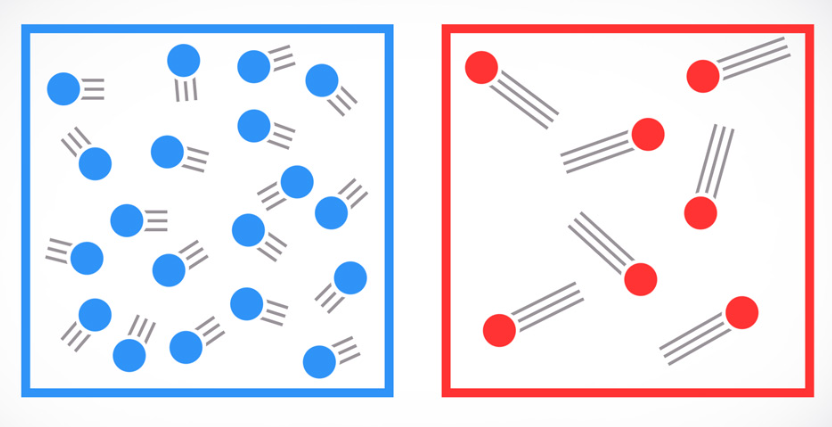
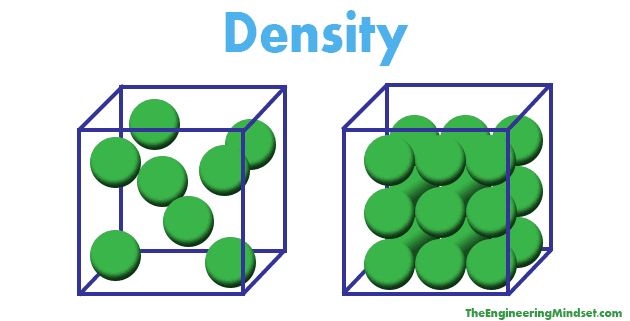
Density is a measurement of the amount of mass in a specific volume.

Low density means the matter is not held closely together. There are less matter.

High density means the matter is packed closely together. There is more matter.

Identify the relative density of these models:
Other Answer Choices:
high density
low density
Question 2
00:49
keyboard_arrow_down
Required
0.5
Question 3
01:25
keyboard_arrow_down
Required
0
Question 4
01:43
keyboard_arrow_down
Required
0.5
Question 5
01:53
keyboard_arrow_down
Required
0
Question 6
02:03
keyboard_arrow_down
Required
0.5
Question 7
7.

Question 8
8.

Question 9
9.
In the second demonstration, the blue salt water was __________ dense than the fresh water, which is why the blue salt water and yellow fresh water __________
Question 10
10.
Part 2: Density & Temperature

Temperature is a measurement of energy. Adding energy to matter increases its temperature.
Matter with a low temperature has low energy, which allows the matter to be closer together (more dense).

Matter with a high temperature has high energy, which keeps the matter spread out (less dense).

Even in solids, all matter is moving a little bit unless the temperature is absolute zero.

How would you expect matter to be moving in cold water? __________

How would expect matter to be moving hot water? __________
Question 11
01:13
keyboard_arrow_down
Required
0
Question 12
01:34
keyboard_arrow_down
Required
0.5
Question 13
02:08
keyboard_arrow_down
Required
0
Question 14
02:28
keyboard_arrow_down
Required
0.5
Question 15
03:37
keyboard_arrow_down
Required
0
Question 16
05:03
keyboard_arrow_down
Required
0.5
Question 17
17.

Question 18
18.
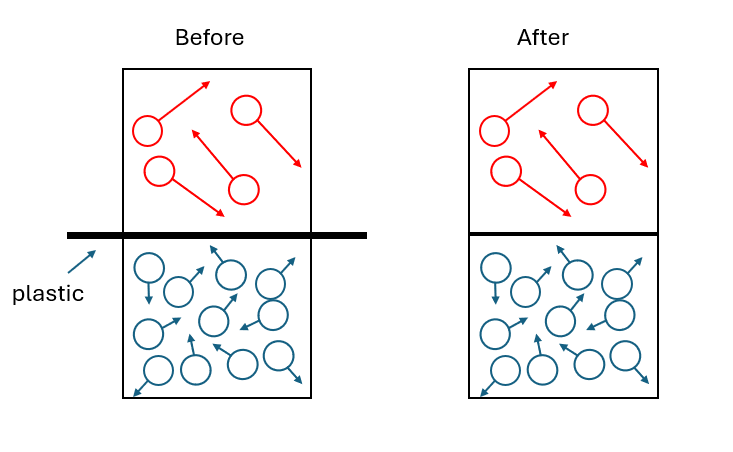
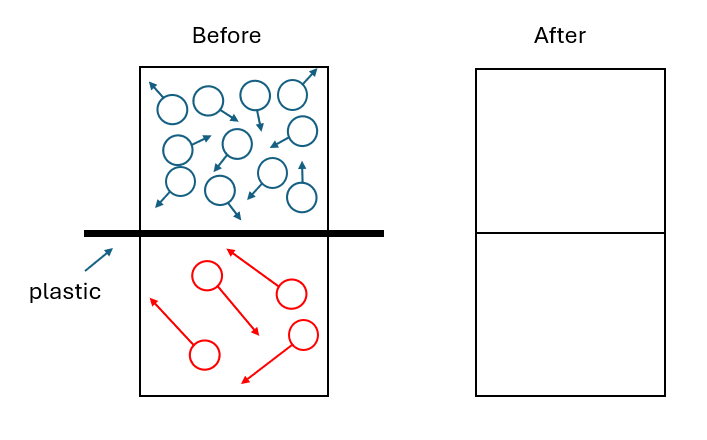
Consider this model of the second demonstration with the hot red water on top of the blue cold water:


The arrows represent the amount of energy of each molecule.

The red water molecules have long arrows to represent __________ energy.

The blue water molecules have short arrows to represent __________ energy.

If you were asked to draw molecules in the "After" model, how would you draw their arrows to represent their energy? __________

The molecules should also be drawn __________
Question 19
19.
In the second demonstration, the blue cold water was __________ dense than the red hot water, which is why the colors __________
Question 20
20.
Part 3: Salinity (Saltiness) & Temperature

Air temperate affects the amount of ice present in an area of the ocean.

When water freezes, the salt is left behind.

Predict:
When the air is cold and there is lots of ice, the salinity will __________
When the air is warm and there isn't a lot of ice, the salinity will __________
Question 21
21.

Observe the effect changing the temperate has on the salinity and the speed the water sinks due to density.

Watch the video above where the temperature increases. Make sure to notice the change in the salinity gauge and speed of sinking water. What conclusions can you form from your observations?

When the temperature increases, salinity __________ and water sinks __________ because it becomes __________ dense.
Question 22
22.

Observe the effect changing the temperate has on the salinity and the speed the water sinks due to density.

Watch the video above where the temperature decreases. Make sure to notice the change in the salinity gauge and speed of sinking water. What conclusions can you form from your observations?

When the temperature decreases and more ice forms, salinity __________ and water sinks __________ because it becomes __________ dense.
Question 23
23.
Part 4: Conclusion

In areas of the ocean where water sinks, the sinking water would have these characteristics:
  • Density: __________
  • Temperature: __________
  • Salinity: __________
Question 24
24.

Question 2
2.
Adding salt to the water would __________ the amount of matter in the cup.
Question 3
3.

Question 4
4.

Question 5
5.

Question 6
6.

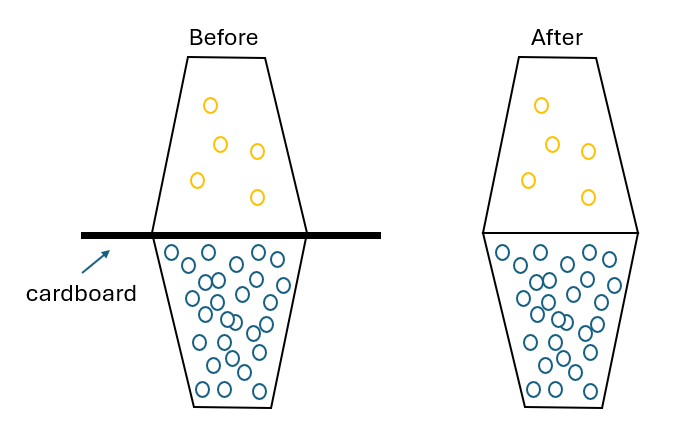
Consider this before and after model of the first demonstration with the yellow fresh water on top of the blue salt water:


What is the best explanation for why the colors stayed separated?
The blue salt water's matter was more closely packed, so there was no room for the yellow fresh water
The water in the cups had not been mixed together
The yellow fresh water had less matter, so it floated on top of the blue salt water
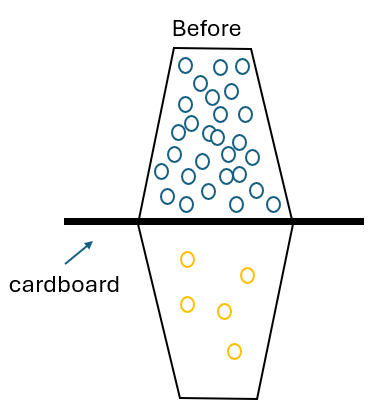
Consider this before model of the second demonstration where the blue salt water was on top of the yellow fresh water.


Which model best represents what happened after the cardboard was removed?
Question 11
11.

Question 12
12.

Question 13
13.

Question 14
14.

Question 15
15.

Question 16
16.

Consider this before and after model of the first demonstration with the red hot water on top of the cold blue water:


What is the best explanation for why the colors stayed separated?
The hot red water had less matter, so it floated on top of the blue cold water
The water in the cups had not been mixed together
The blue cold water's matter was more closely packed, so there was no room for the hot red water
Which of the following best re-states the lesson objective?
I can calculate the saltiness, temperature, and density of ocean water.
I can explain how the saltiness, temperature, and density of ocean water affect how water moves.
I can mix warm fresh water and cold salt water together.
Predict: What will happen when the card stock is removed?
The blue and yellow water will stay separate
The water will mix and turn green
What happened when the card stock was removed?
The blue and yellow water stayed separate
The water mixed and turn green
Predict: What will happen when the card stock is removed?
The blue and yellow water will stay separate
The water will mix and turn green
What happened when the card stock was removed?
The blue and yellow water stayed separate
The water mixed and turn green
Predict: What will happen when the plastic is removed?
The blue and red water will stay separate
The water will mix and turn purpleish
What happened when the plastic was removed?
The blue and red water stayed separate
The water mixed together and turned purpleish
Predict: What will happen when the card stock is removed?
The red and blue water will stay separate
The water will mix together and turn purpleish
What happened when the plastic was removed?
The red and blue water stayed separate
The water mixed together and turned purpleish
Did the infrared camera confirm that hot water on top doesn't mix with the cold water when the plastic is removed?
Yes
No
What happened to the hot water's energy when the plastic was removed?
Some of the hot water's energy transfered to the cold water so the temperature was the same
The hot water kept all of its energy
The cold water took all of the hot water's energy