Snowpack
Key Points
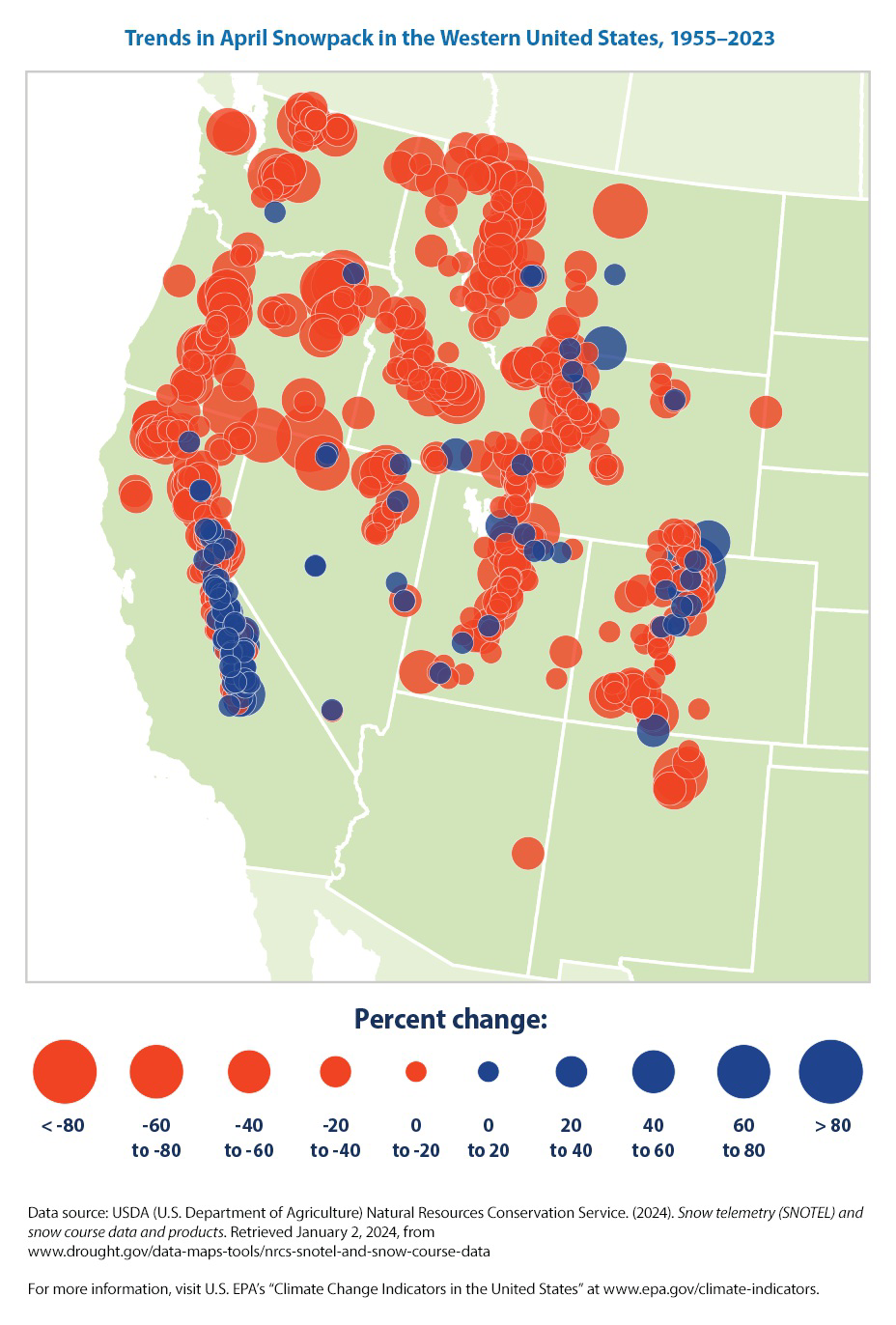
From 1955 to 2023, April snowpack declined at 81 percent of the sites measured (see Figure 1). The average change across all sites amounts to about an 18 percent decline.
Large and consistent decreases in April snowpack have been observed throughout the western United States (see Figure 1). Decreases have been especially prominent in Washington, Oregon, northern California, and the northern Rockies.
While some stations have experienced increases in April snowpack, all 12 states included in this indicator experienced a decrease in snowpack on average from 1955 to 2023 (see Figure 1). In the Northwest (Idaho, Oregon, Washington), all but four stations saw decreases in snowpack over the period of record.
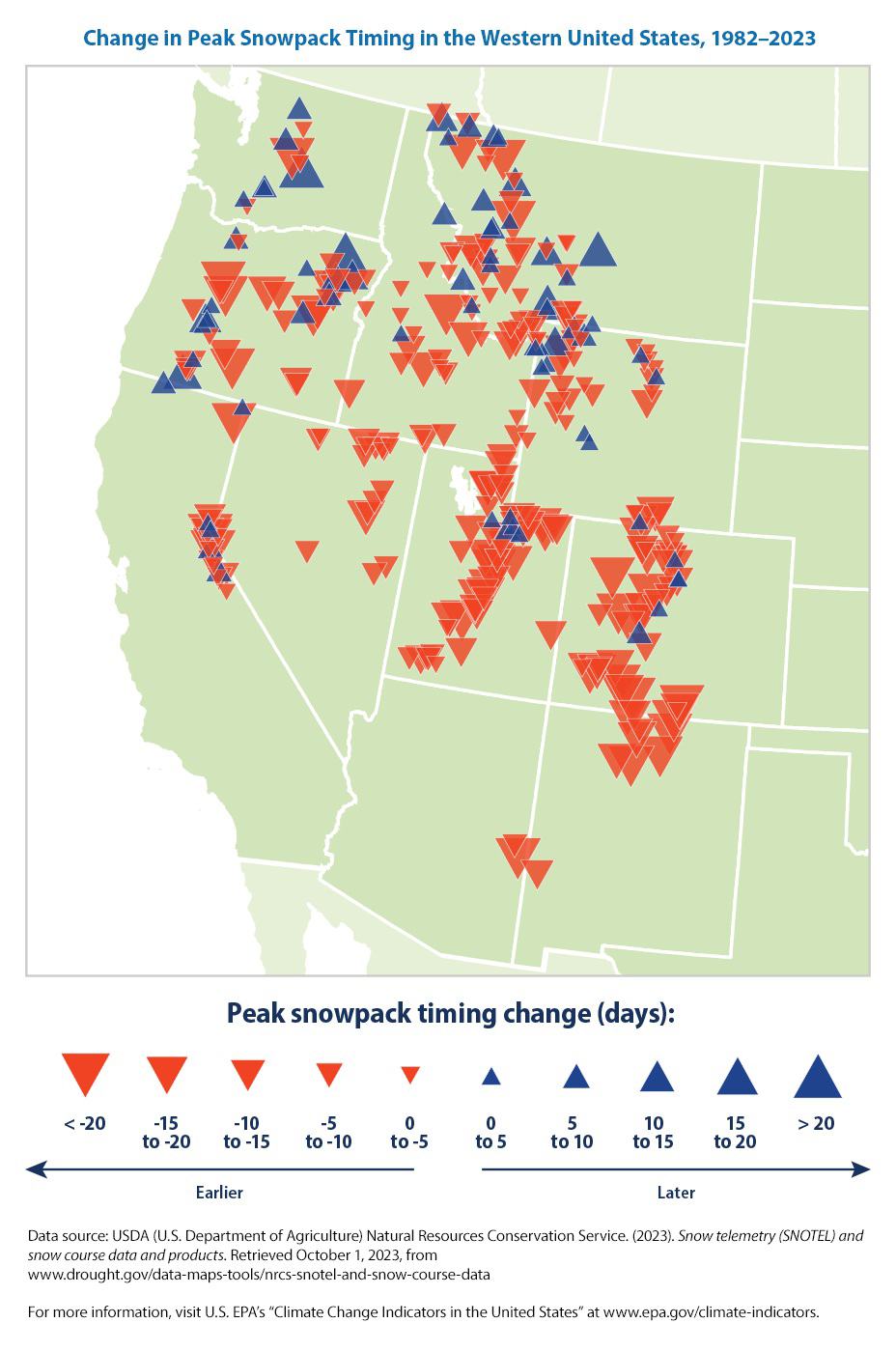
Almost 80 percent of sites have experienced a shift toward earlier peak snowpack (see Figure 2). This earlier trend is especially pronounced in southwestern states like Colorado, New Mexico, and Utah.
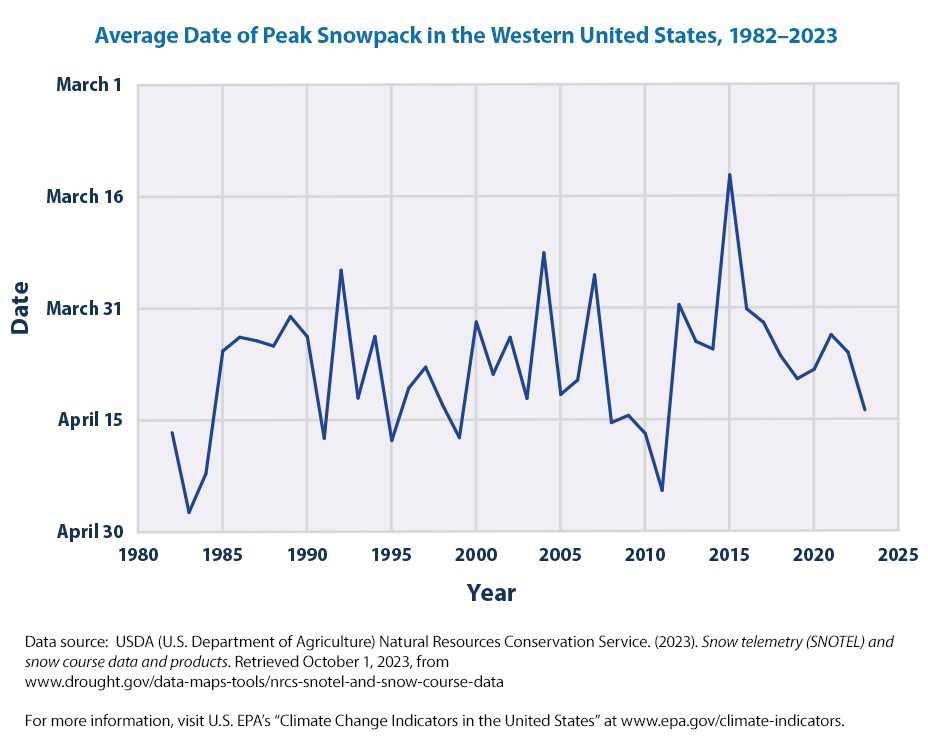
Across all stations, peak snowpack has shifted earlier by an average of nearly seven days since 1982 (see Figure 3), based on the long-term average rate of change.
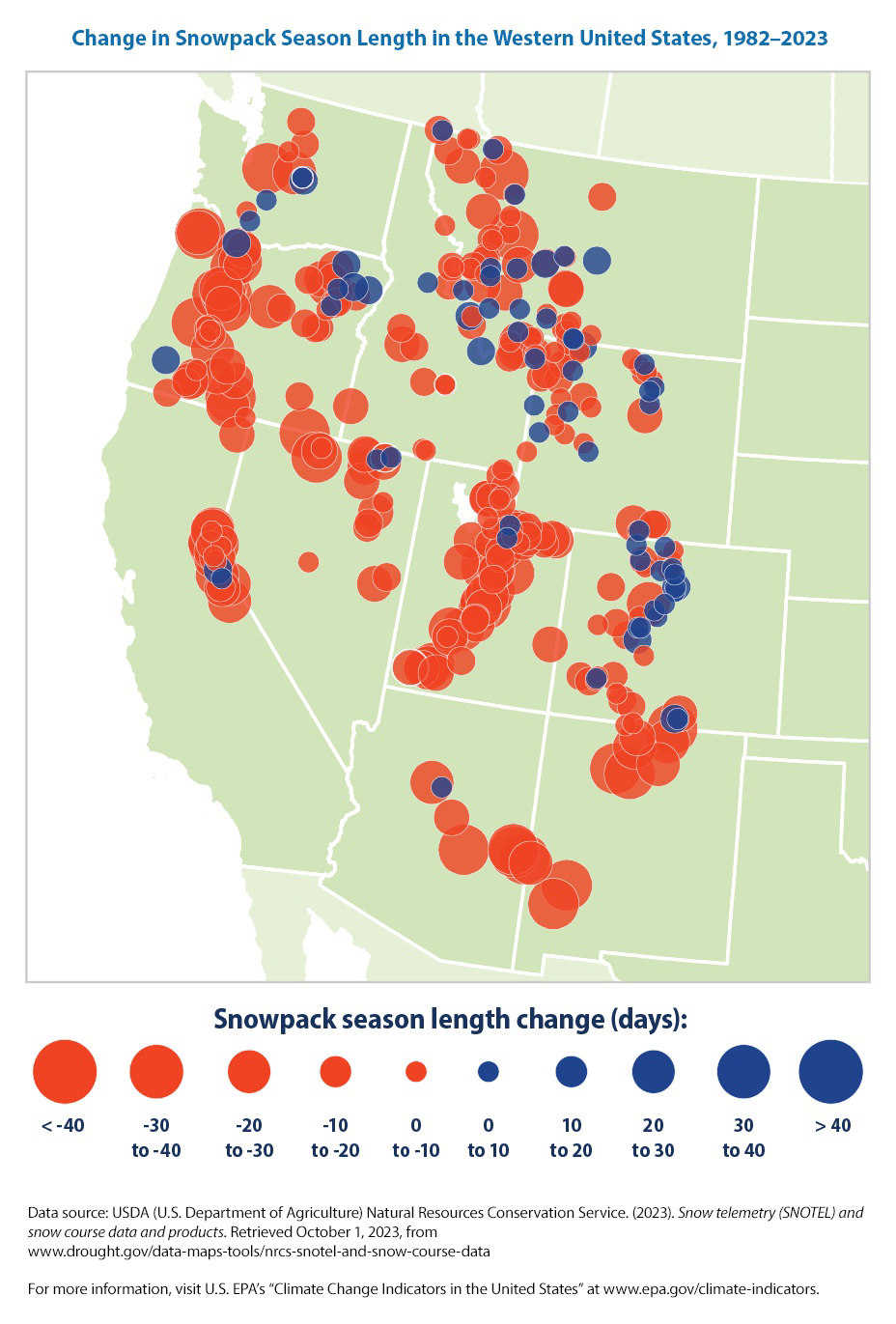
From 1982 to 2023, the snowpack season became shorter at about 80 percent of the sites where snowpack was measured (see Figure 4). Across all sites, the length of the snowpack season decreased by about 15 days, on average.
Background
Temperature and precipitation are key factors affecting snowpack, which is the amount or thickness of snow that accumulates on the ground. In a warming climate, more precipitation will be expected to fall as rain rather than snow in most areas - reducing the extent and depth of snowpack. Long-term observations across the contiguous 48 states show that nearly 80 percent of weather stations examined have experienced a decrease in the proportion of precipitation falling as snow. In addition, with warmer winters and springs, the seasonality of snowpack is also changing. Higher temperatures cause snow to melt earlier, which in turn affects the timing and availability of water.
Mountain snowpack plays a key role in the water cycle in western North America, storing water in the winter when the snow falls and releasing it as runoff in spring and summer when the snow melts.
Millions of people in the West depend on the melting of mountain snowpack for hydropower, irrigation, and drinking water. In most western river basins, snowpack is a larger component of water storage than human-constructed reservoirs. Continued reductions in snowpack and shifts in snowmelt are expected in the future, which will reduce hydropower production in the West.
Changes in mountain snowpack can affect agriculture, winter recreation, and tourism in some areas, as well as plants and wildlife. For example, certain types of trees rely on snow for insulation from freezing temperatures, as do some animal species. In addition, fish spawning could be disrupted if changes in snowpack or snowmelt alter the timing and abundance of streamflows. Additionally, warming and earlier snowmelt accelerate the start of the wildfire season and promote more wildfire activity in the western United States and Alaska. Altogether, snowpack’s sensitivity to climate and its many related effects make this a valuable indicator to track.
Graph of Information - Figure 1.
This map shows trends in April snowpack in the western United States, measured in terms of snow water equivalent. Blue circles represent increased snowpack; red circles represent a decrease.
Graph of Information - Figure 2.
This map shows trends in the date during the year when snowpack reaches its maximum amount across the western United States. Blue triangles represent a shift to later timing; red triangles represent a shift to earlier timing.
Graph of Information - Figure 3.
This graph shows trends in the date during the year when snowpack reaches its maximum amount across the western United States. The line in this graph represents an average of all the sites shown in Figure 2.
Graph of Information - Figure 4.
This map shows trends in the length of the snowpack season across the western United States, in days. Blue circles show where the season has grown longer; red circles show where it has become shorter.