Corn Kernel Color
Corn plants show easily visible examples of inherited traits through their kernels - the tiny seeds covering an ear of corn. Each kernel develops from its own fertilized ovule and inherits genes for color and texture from parent plants.
Corn kernel color is typically determined by two main genes:
The Y gene controls yellow (dominant) versus white (recessive) coloration.
The P gene can modify color intensity, producing purple or red in certain combinations.
This means that kernel color follows predictable inheritance patterns, but there is still variation within each ear.
In a classic corn genetics study, researchers crossed two varieties:
Parent Cross 1 (Yellow × White):
Produced mostly yellow kernels, but some white.
Parent Cross 2 (Purple × Yellow):
Produced purple, yellow, and red kernels in measurable ratios.
Results from a single-generation study:
Kernel Color | Count | Percentage (%) |
|---|
Yellow | 320 | 64% |
White | 120 | 24% |
Purple | 40 | 8% |
Red | 20 | 4% |
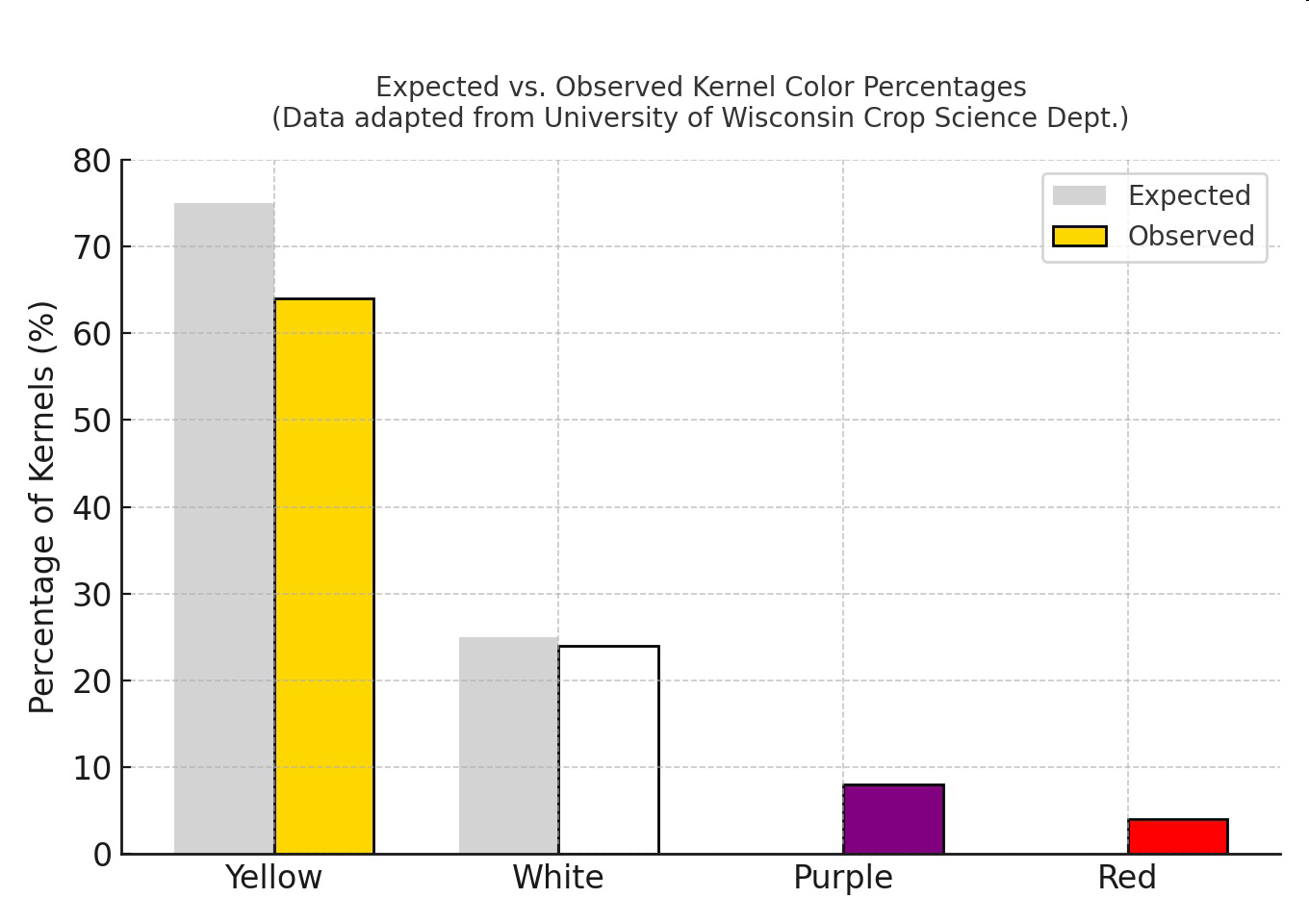
The data show that kernel color is inherited from parent plants through genetic patterns, but the variety of outcomes in each ear provides clear evidence of variation among offspring.
Table 1.
Kernel Color | Observed Count | Observed Percentage (%) | Expected Percentage (%) |
|---|
Yellow | 320 | 64 | 75 |
White | 120 | 24 | 25 |
Purple | 40 | 8 | 0 |
Red | 20 | 4 | 0 |
Graph of Information - Figure 1.
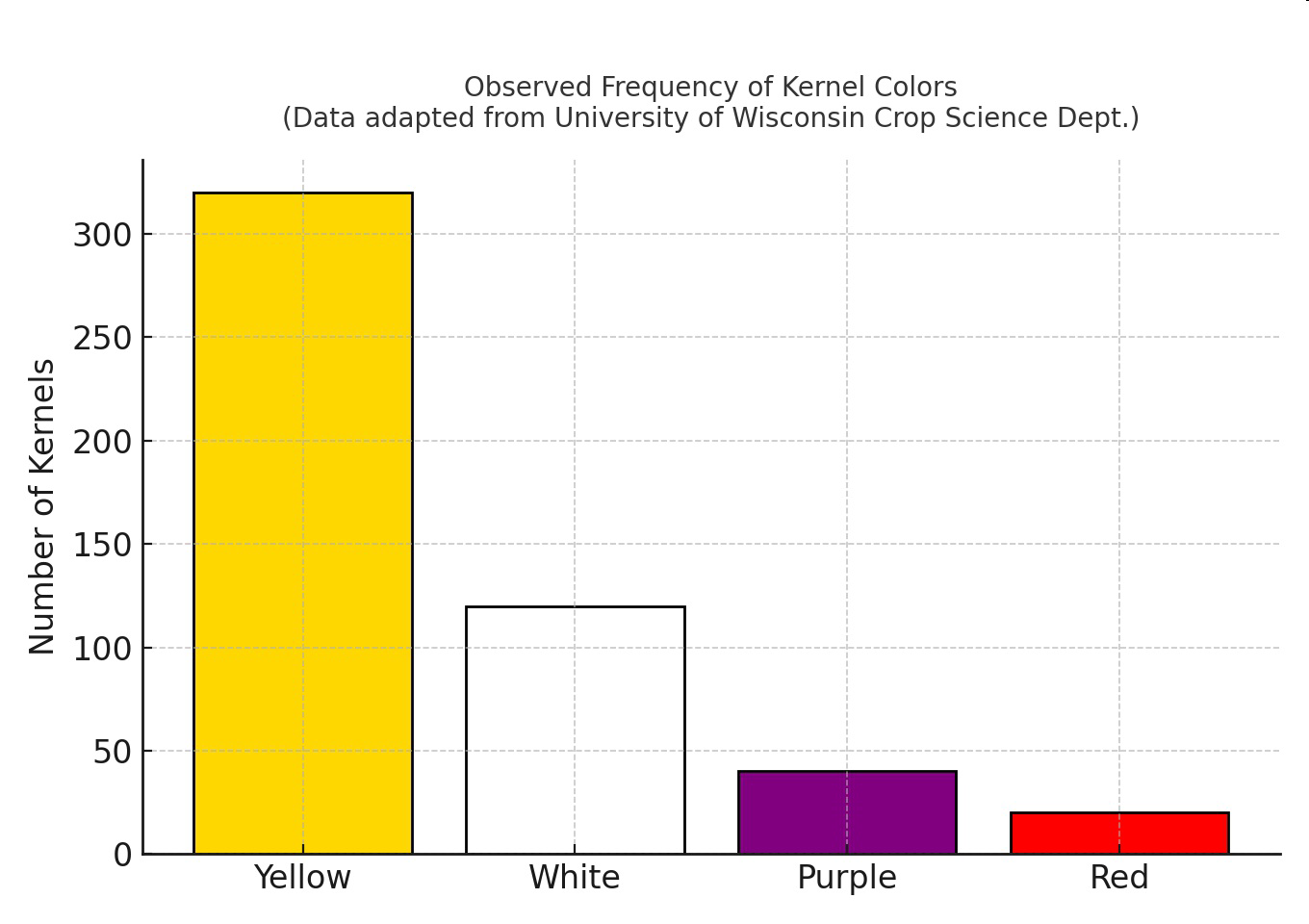
Graph of Information - Figure 2.