Arctic Hare Fur Color and Temperature
Arctic hares live in some of the coldest environments on Earth. Their thick fur helps them survive the extreme cold - but what’s most remarkable is that their fur color changes with the seasons.
In winter, Arctic hares have white fur that blends with snow and ice, helping them avoid predators. In summer, when the snow melts, their fur turns gray-brown to match the tundra rocks and vegetation.
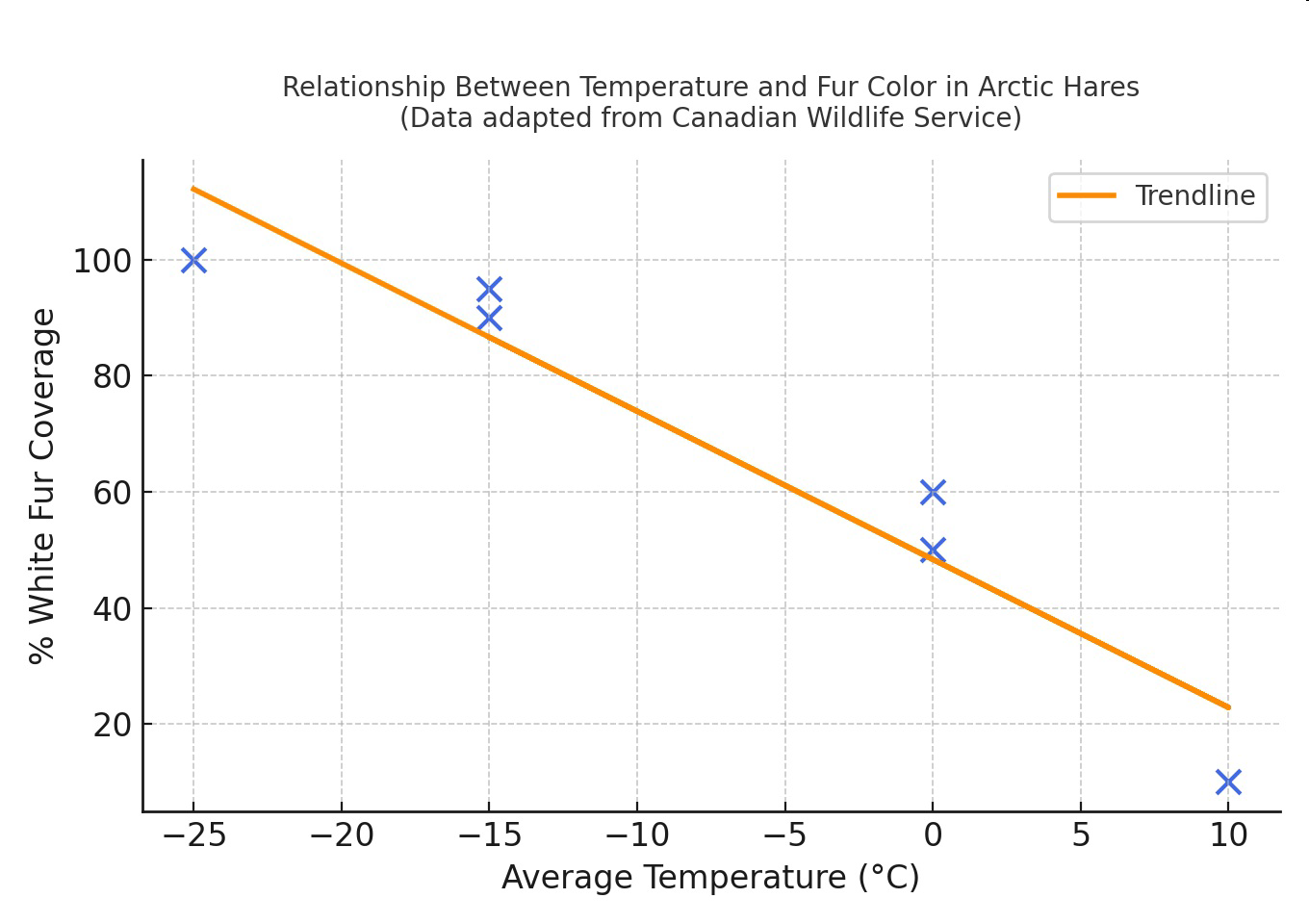
Scientists at the Canadian Wildlife Service studied how temperature and daylight affect this color change. They found that as average temperature and daylight hours increase, the amount of white fur decreases, while brown fur coverage increases. This shows that fur color isn’t just inherited - it’s influenced by environmental signals like temperature and light levels.
Month | Average Temperature (°C) | % White Fur Coverage |
|---|
January | -25 | 100% |
March | -15 | 90% |
May | 0 | 50% |
July | +10 | 10% |
September | 0 | 60% |
November | -15 | 95% |
This pattern repeats every year. The hares inherit the ability to change fur color, but the environment determines when and how much the color shifts.
This phenomenon shows how traits are shaped by both genetics and environment. The genes for fur color change are inherited, but the timing and degree of change depend on environmental factors like temperature and day length.
Graph of Information - Figure 1.
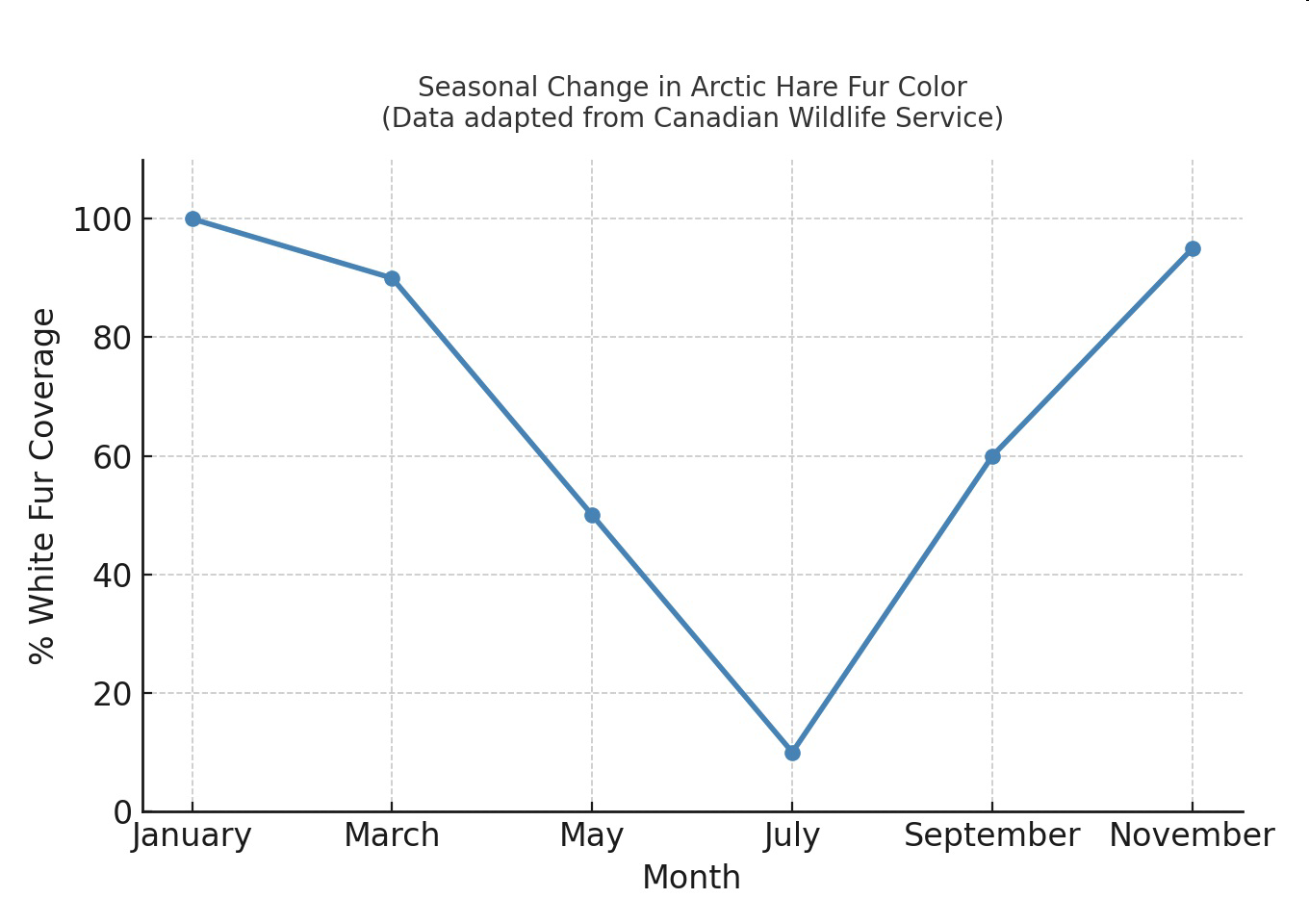
Graph of Information - Figure 2.