Butterfly Wing Pattern and Predator Avoidance
Many butterflies have wing patterns that help them avoid predators. Some species, such as the viceroy butterfly, resemble other species like the monarch, which are toxic to birds. This type of variation, called mimicry, gives butterflies that look more like the toxic species a better chance of survival.
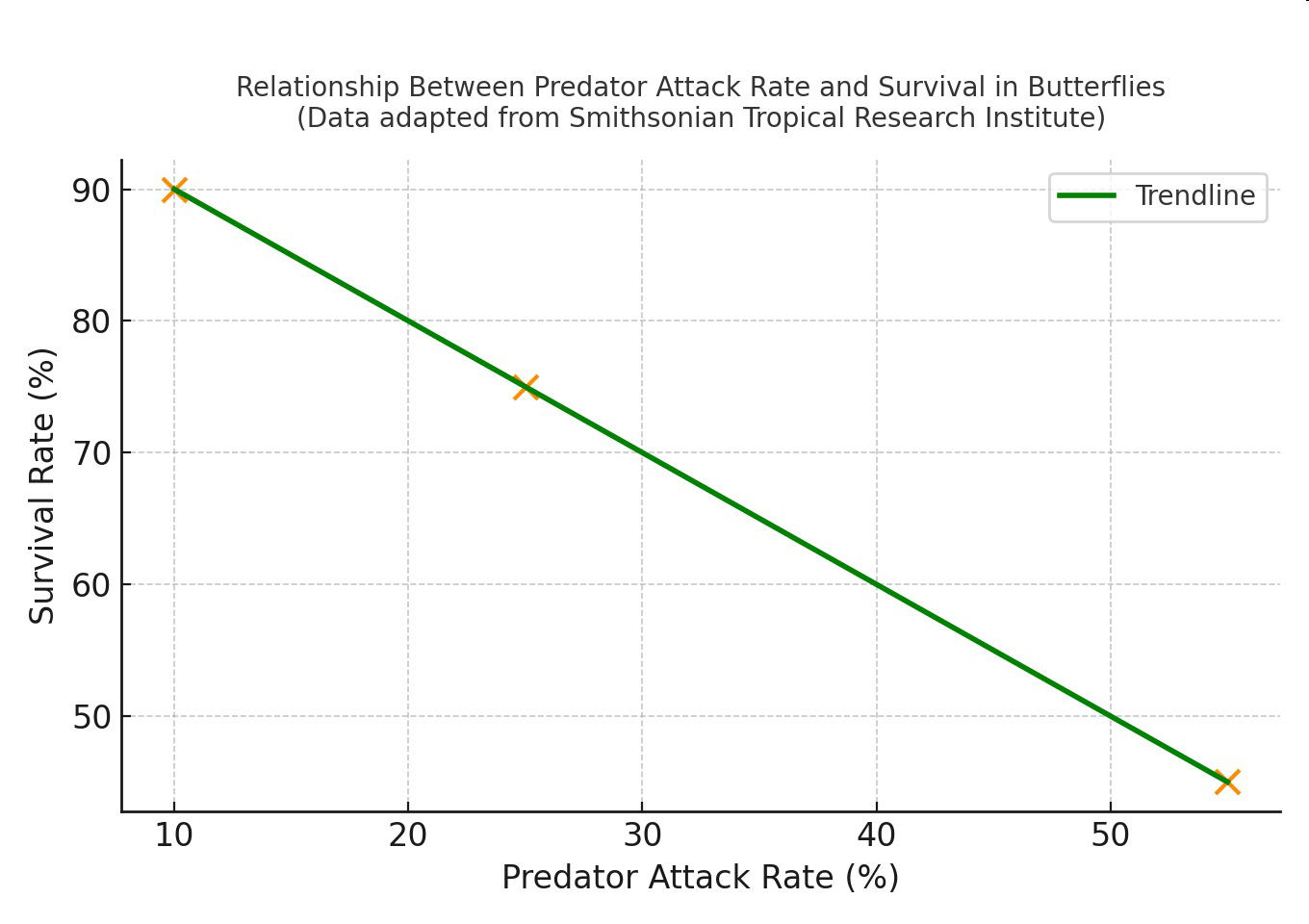
Researchers from the Smithsonian Tropical Research Institute studied how different wing pattern variations affected bird attack rates in a mixed butterfly population. They recorded how often each pattern type was attacked when released in a forest with native bird predators.
Wing Pattern Type | Description Predator | Attack Rate (%) | Survival Rate (%) |
|---|
Bright Orange, Monarch-like | Strong mimic | 10 | 90 |
Partially Orange/Black | Moderate mimic | 25 | 75 |
Light Brown | Weak mimic | 55 | 45 |
All butterflies in this study belong to the same species, but variation in wing pattern affected their chances of being eaten. Birds avoided those that resembled the toxic monarch and attacked the duller ones more often. This selective advantage means butterflies with patterns closer to the monarch’s are more likely to survive and reproduce, passing their pattern traits on to the next generation.
This phenomenon provides strong evidence that variations in characteristics within a species can offer advantages in survival and reproduction. The butterflies with the most effective mimicry survive longer and produce more offspring - a direct example of natural selection acting on variation.
Graph of Information - Figure 1.
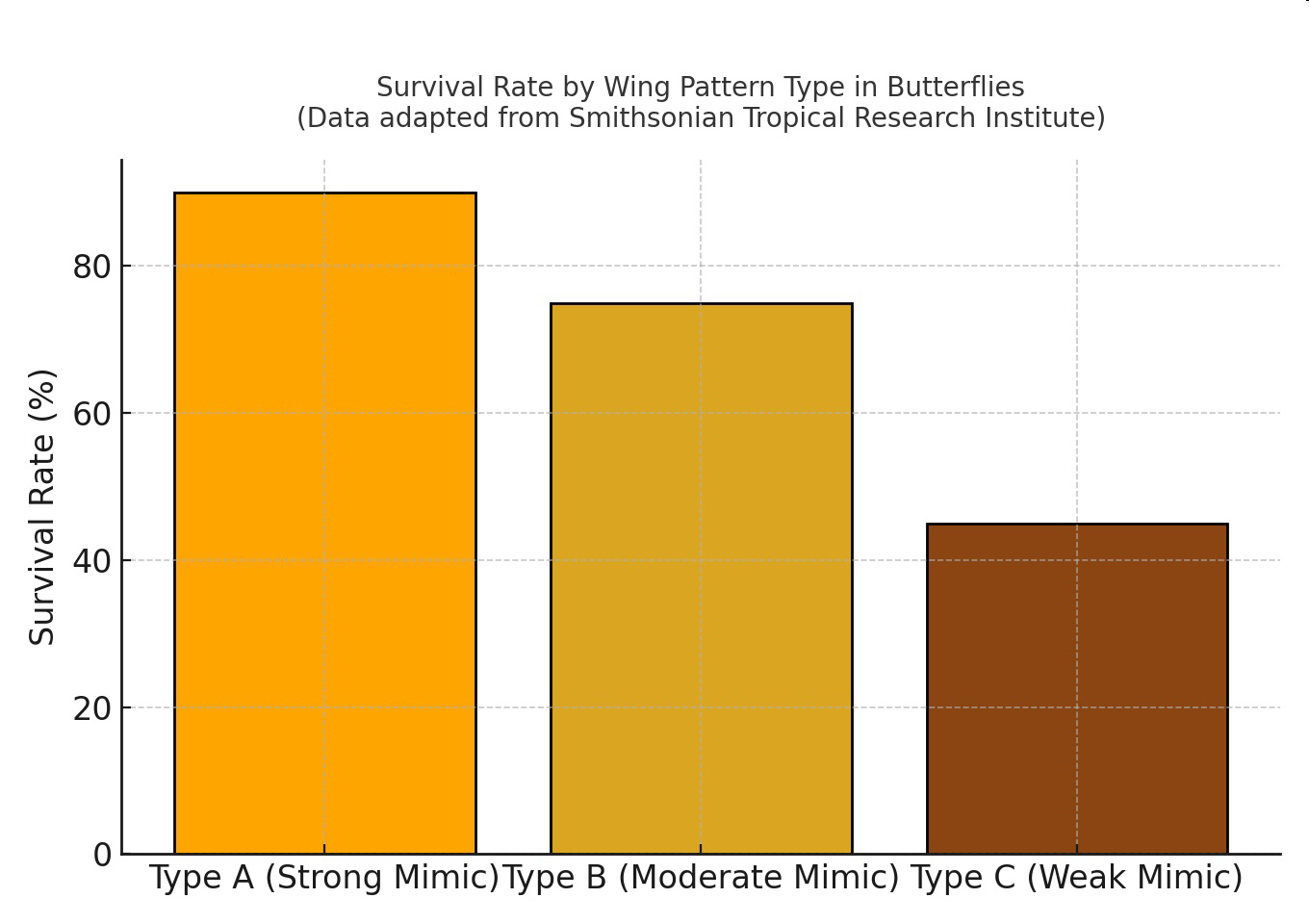
Graph of Information - Figure 2.