Cat Fur Patterns
Domestic cats show incredible diversity in their fur color and pattern - from solid black to striped tabby, spotted, calico, or mixed. These traits are inherited from parent cats, but variation among kittens is common because each kitten receives a different combination of genes.
Cat coat traits are influenced by several interacting genes:
Pigment color (black, orange, or diluted gray) is determined by alleles at the B and O loci.
Pattern (striped, spotted, solid) is controlled by separate genes that regulate pigment distribution.
White spotting and patch patterns result from modifiers that turn pigment expression “on” or “off” in regions of the fur.
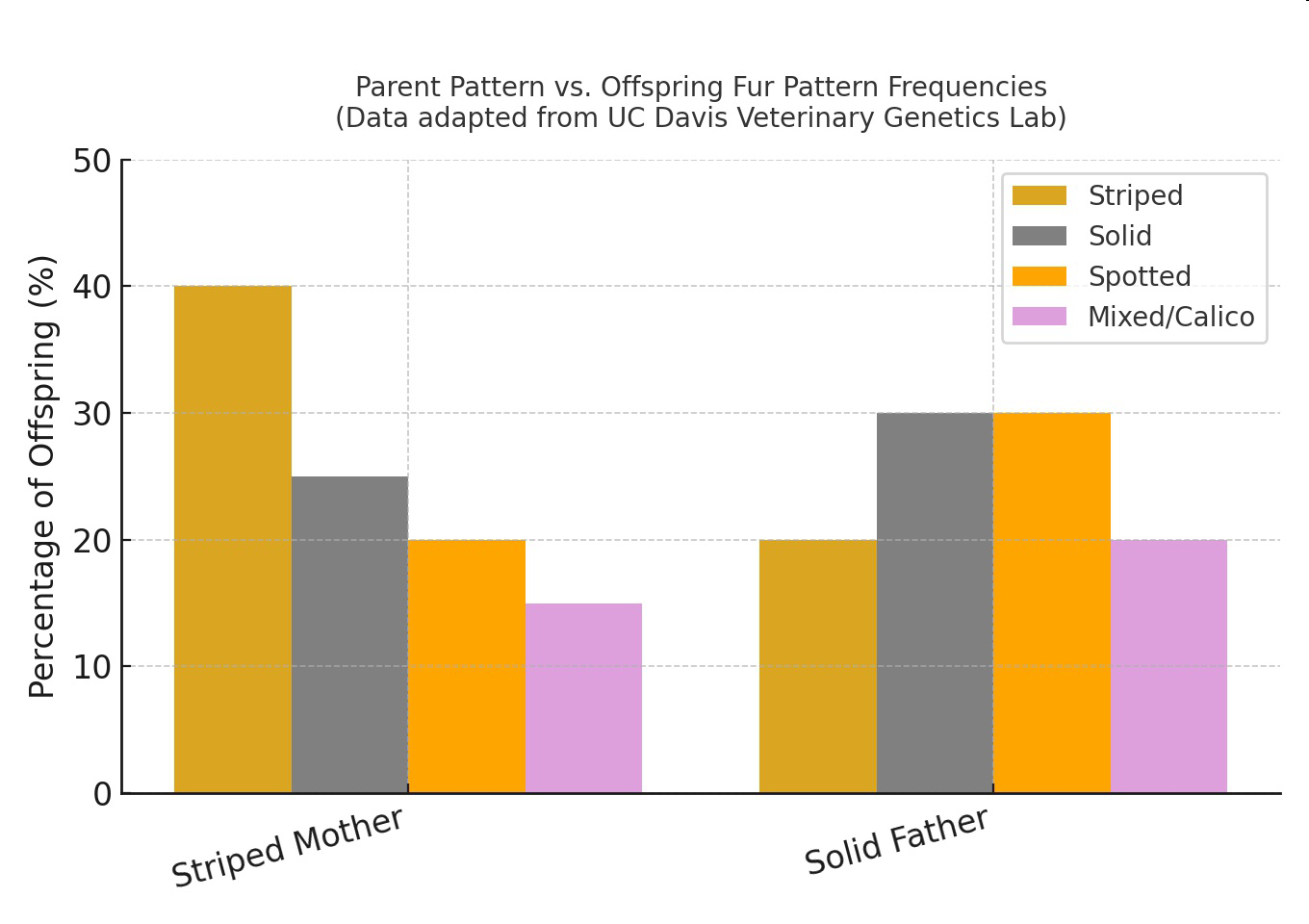
Even kittens from the same litter can look very different. For example, a litter from a tabby (striped) mother and a solid black father may include striped, solid, or mixed-pattern kittens - all sharing traits but showing unique combinations.
In a study of 50 kittens born to mixed-pattern parent cats:
20 kittens (40%) had striped patterns.
15 kittens (30%) were solid-colored.
10 kittens (20%) had spotted coats.
5 kittens (10%) showed mixed or calico combinations.
This variation reflects genetic inheritance with recombination - traits are passed from parents but expressed in different ways among siblings.
Table 1.
Fur Pattern | Number of Kittens |
Striped | 20 |
Solid | 15 |
Spotted | 10 |
Mixed/Calico | 5 |
Table 2.
Parent Type | Striped Offspring (%) | Solid Offspring (%) | Spotted Offspring (%) | Mixed/Calico Offspring (%) |
Striped Mother | 40 | 25 | 20 | 15 |
Solid Father | 20 | 30 | 30 | 20 |
Graph of Information - Figure 1.
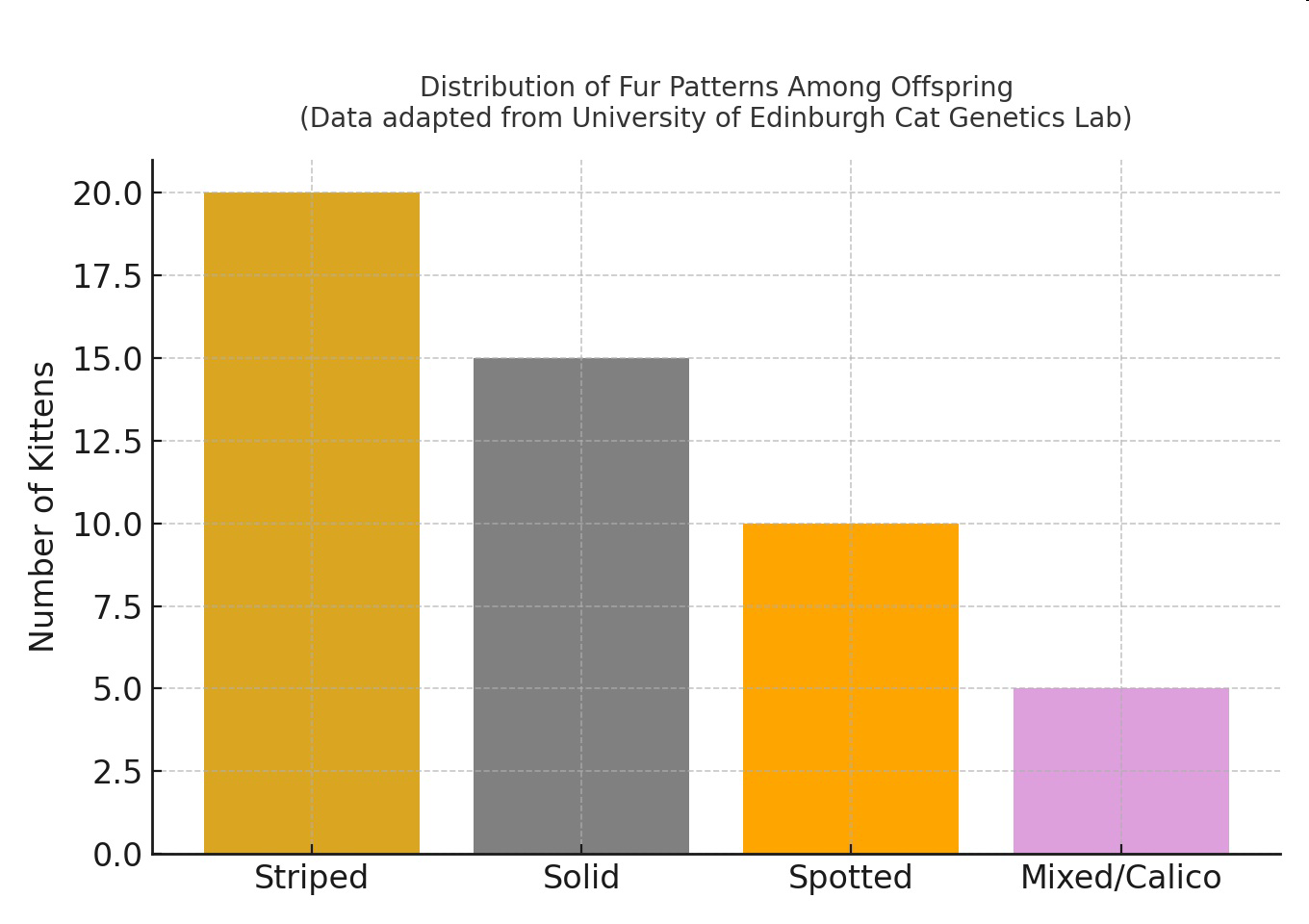
Graph of Information - Figure 2.