Dog Coat Color and Length
Dog puppies inherit many visible traits from their parents - such as coat color, fur length, ear shape, and body size. These traits are controlled by genes passed from parents to offspring. However, because each puppy receives a unique mix of genes from both parents, variation exists even among littermates.
One of the best examples of inherited and variable traits is coat color.
In Labrador retrievers, for example, coat color is determined by two interacting genes:
This means that two black Labradors can produce yellow or chocolate puppies if they both carry recessive genes - showing that appearance alone doesn’t reveal all genetic information.
Researchers from the American Kennel Club (AKC) Genetics Program analyzed color inheritance in multiple Labrador litters:
Parent pair 1 (Black × Black): 70% black, 25% yellow, 5% chocolate puppies
Parent pair 2 (Black × Yellow): 50% black, 50% yellow puppies
Parent pair 3 (Chocolate × Yellow): 40% chocolate, 60% yellow puppies
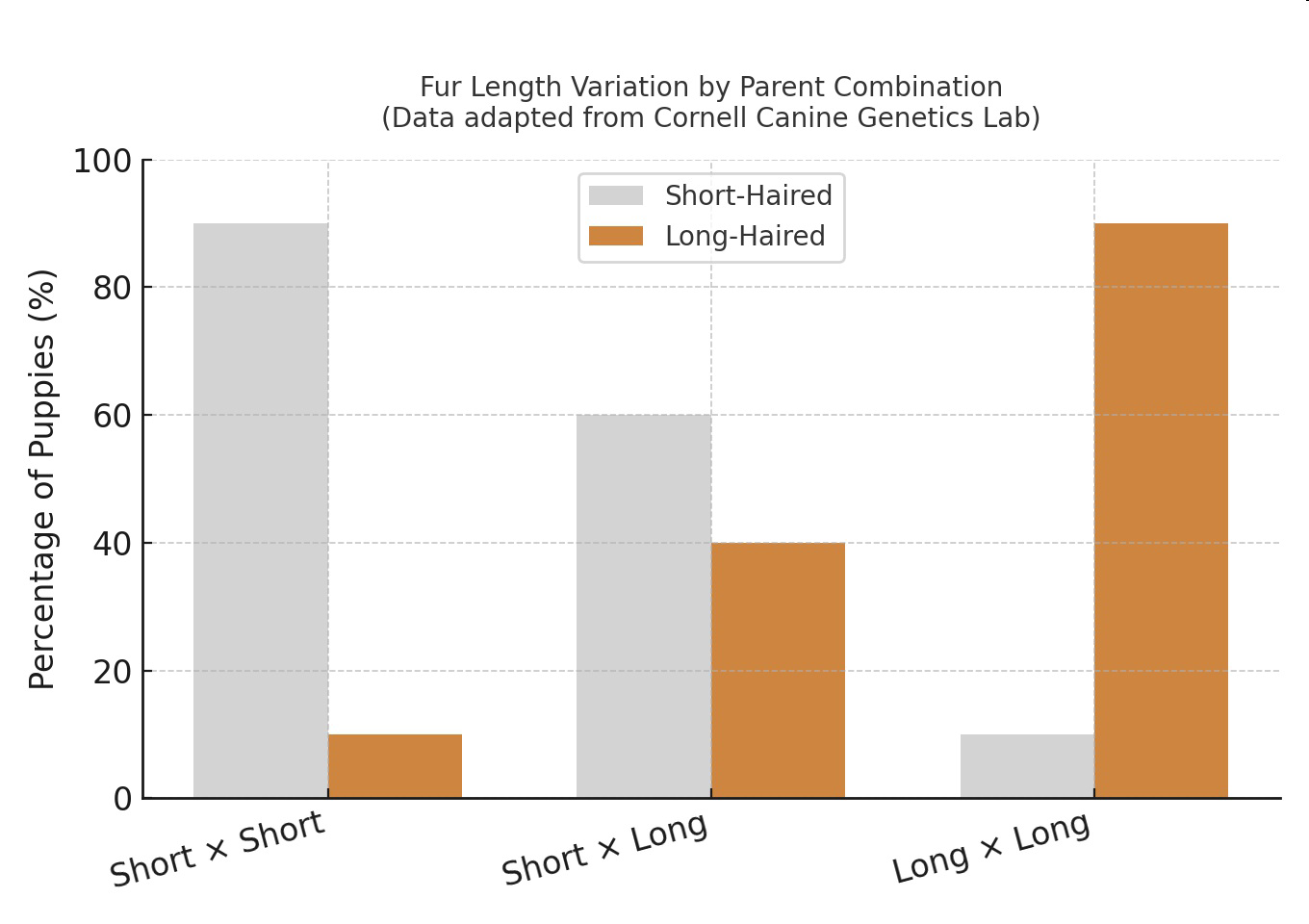
Even though the parents share many genes, genetic combinations produce observable variation. The same applies to fur length - puppies of short-haired parents usually have short coats, but if one carries a recessive long-hair gene, variation appears.
This variation among offspring provides evidence that traits are inherited from parents but are not identical among all individuals in a species.
Table 1.
Parent Pair | Black Puppies (%) | Yellow Puppies (%) | Chocolate Puppies (%) |
|---|
Black × Black | 70 | 25 | 5 |
Black × Yellow | 50 | 50 | 0 |
Chocolate × Yellow | 0 | 60 | 40 |
Graph of Information - Figure 1.
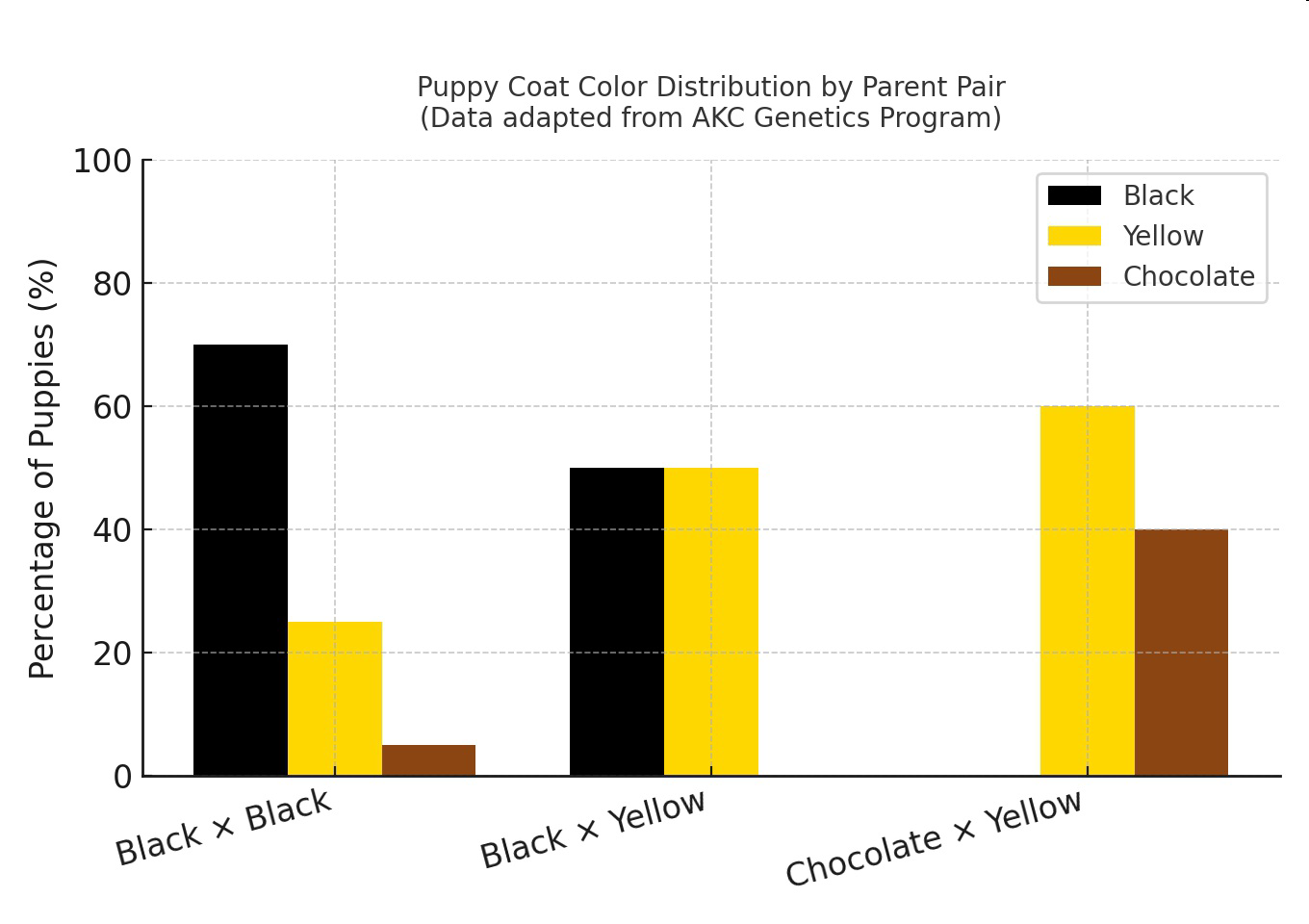
Table 2.
Parent Combination | Short-Haired Puppies (%) | Long-Haired Puppies (%) |
|---|
Short × Short | 90 | 10 |
Short × Long | 60 | 40 |
Long × Long | 10 | 90 |
Graph of Information - Figure 2.