Finch Beak Depth and Seed Type
On the Galápagos Islands, populations of medium ground finches (Geospiza fortis) show differences in beak depth - the distance from the top to the bottom of the beak. This small variation has big effects on what types of seeds the birds can eat.
During drought years, small, soft seeds become scarce, leaving mostly large, hard seeds. Finches with deeper, stronger beaks can crack these tougher seeds more easily, while those with smaller beaks struggle to find food.
Researchers from Princeton University recorded how beak depth affected survival rates during a drought year on Daphne Major Island.
Table 1.
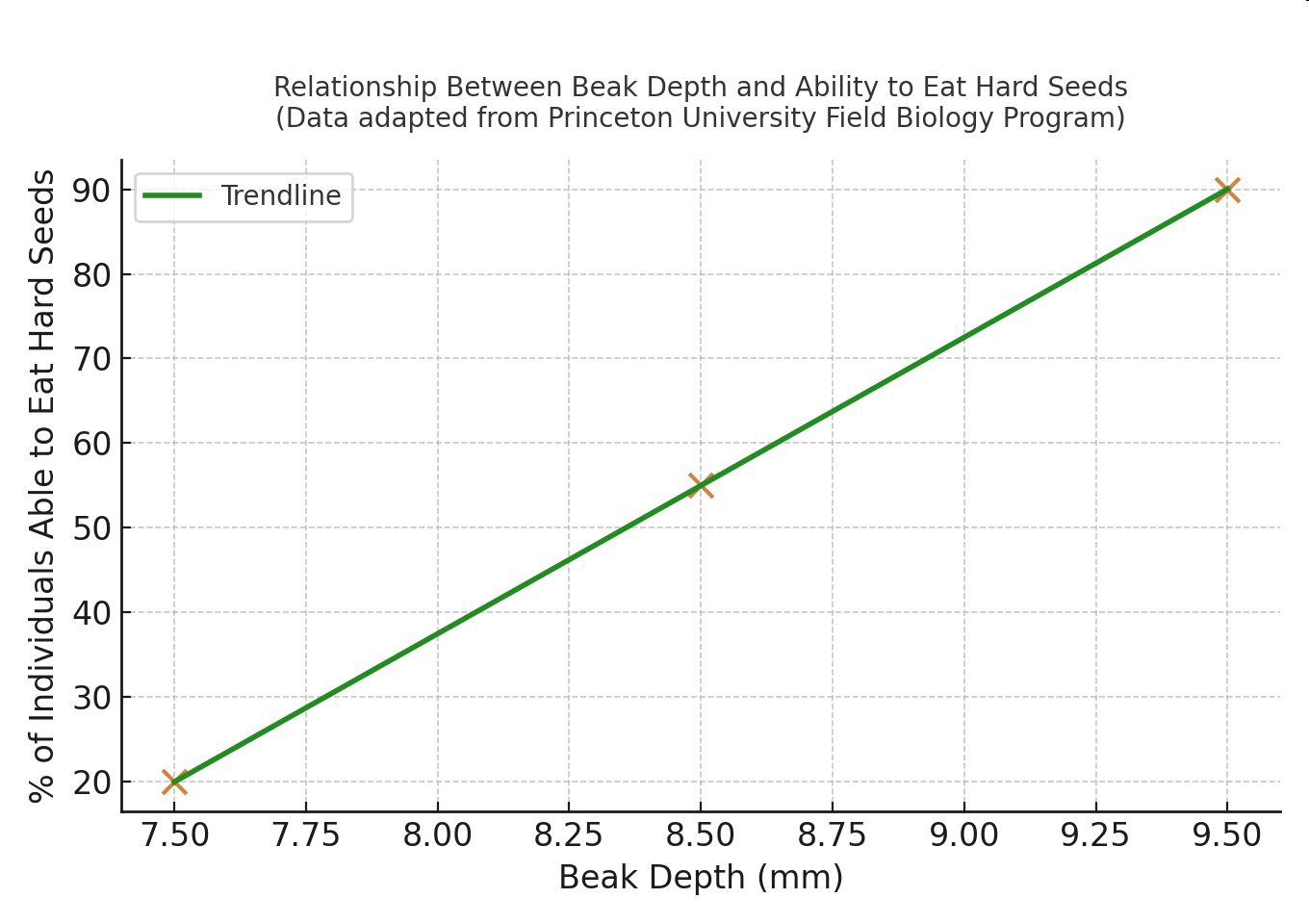
Beak Depth (mm) | % of Individuals Able to Eat Hard Seeds | Survival Rate (%) |
|---|
7.0–8.0 | 20 | 40 |
8.1–9.0 | 55 | 65 |
9.1–10.0 | 90 | 88 |
This variation in beak depth gives some finches a clear advantage when resources are limited. Birds with deeper beaks can access more food and are more likely to survive and reproduce, passing on their traits. Over time, environmental pressures (like drought) can shift the population’s average beak size, an observable example of natural selection.
This is a classic example of how variation within a species affects survival and reproduction. The finches inherit genes for beak size, but environmental conditions determine which variations are advantageous in a given year.
Graph of Information - Figure 1.
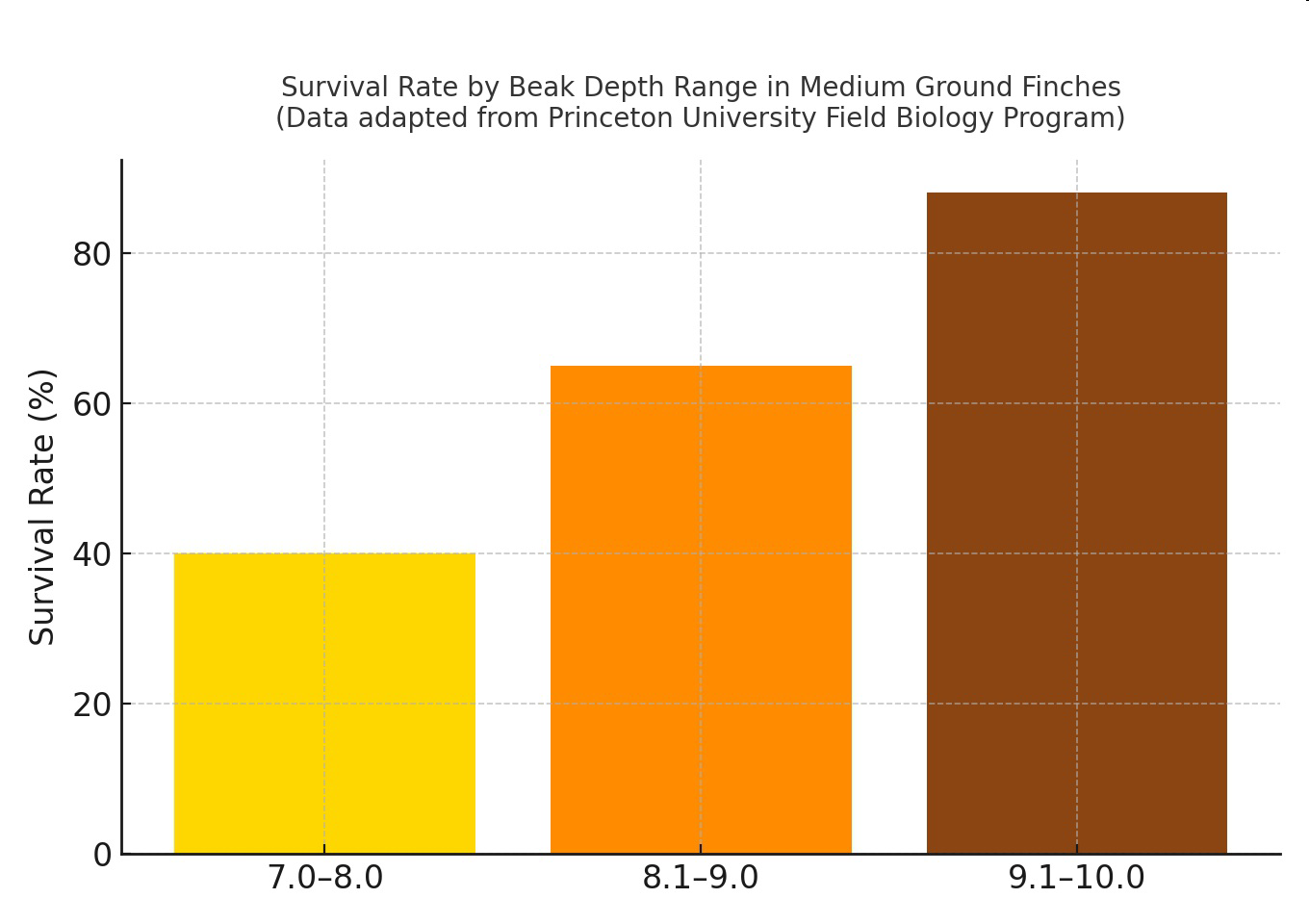
Graph of Information - Figure 2.