Frog Life Cycle and Pond Habitat Changes
Frogs have one of the most dramatic life cycles in the animal kingdom, showing clear stages of birth, growth, reproduction, and death through a process called metamorphosis.
The typical frog life cycle includes four main stages:
Egg: Frogs lay hundreds to thousands of eggs in water. These eggs hatch within 6–10 days, depending on temperature and water quality.
Tadpole: Tadpoles breathe through gills and feed on algae. Over 6–8 weeks, they grow and develop legs, lungs, and other adult features.
Froglet: Around 10–12 weeks after hatching, the young frog begins to leave the water, breathing air and eating small insects.
Adult Frog: Once mature, the frog reproduces and the cycle begins again. Most adult frogs live 3–6 years, though some species live much longer.
Environmental conditions such as water depth, temperature, and pollution strongly affect how fast tadpoles grow and survive. Studies from the U.S. Geological Survey Amphibian Research and Monitoring Initiative show that when ponds dry too early or water becomes too warm, tadpole survival rates drop sharply.
In a controlled experiment:
In ponds with stable water lasting 10 weeks, 85% of tadpoles survived to froglet stage.
In ponds that dried after 6 weeks, only 40% survived.
In polluted ponds, survival dropped below 30%.
Despite environmental differences, all frogs share the same essential life cycle pattern. These differences help students model both the diversity (different timing and environmental needs) and the universality (birth → growth → reproduction → death) of living organisms.
Table 1.
Pond Duration (weeks) | Tadpole Survival Rate (%) |
|---|
4 | 20 |
6 | 40 |
8 | 60 |
10 | 85 |
12 | 90 |
Graph of Information - Figure 1.
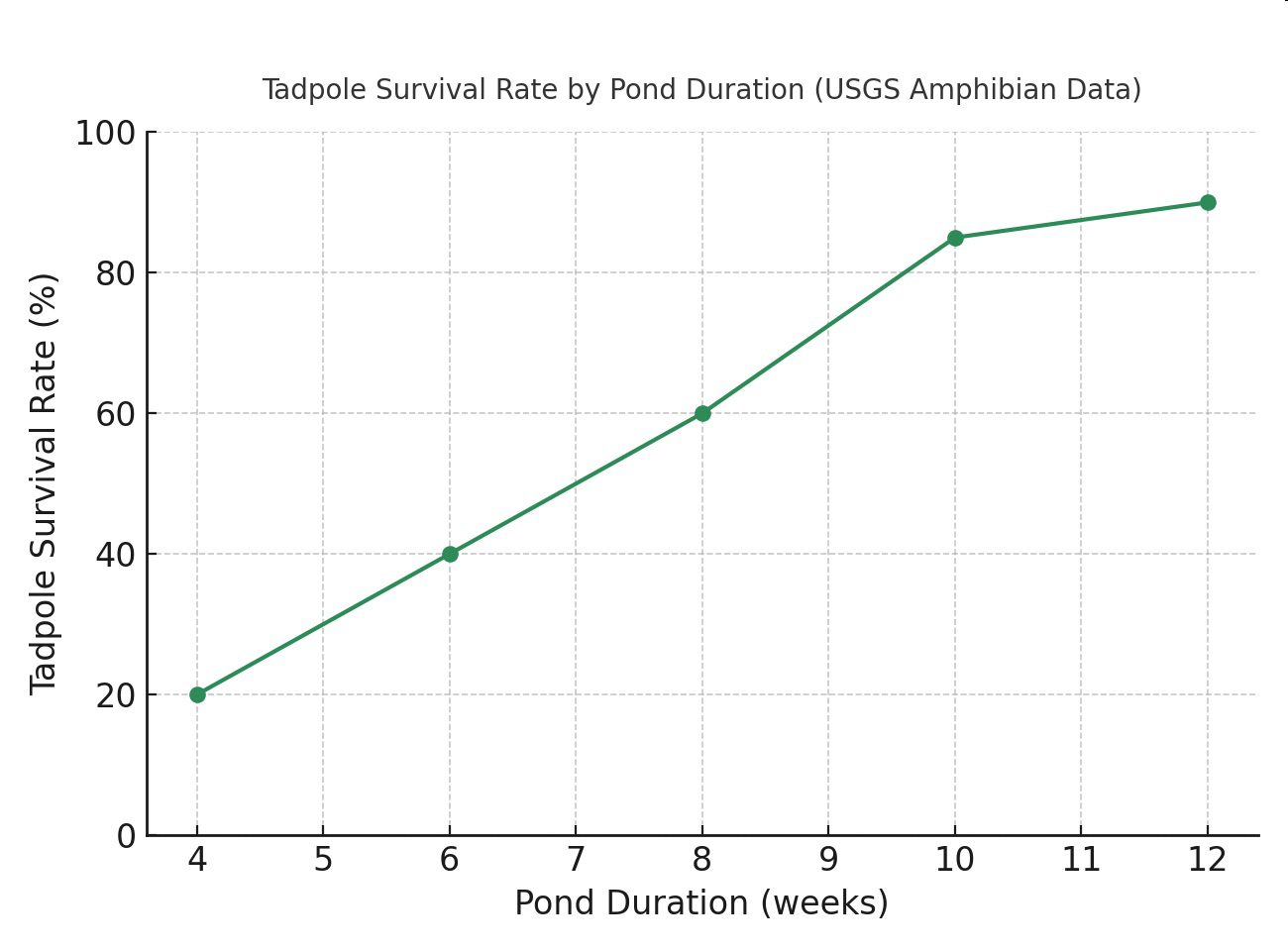
Table 2.
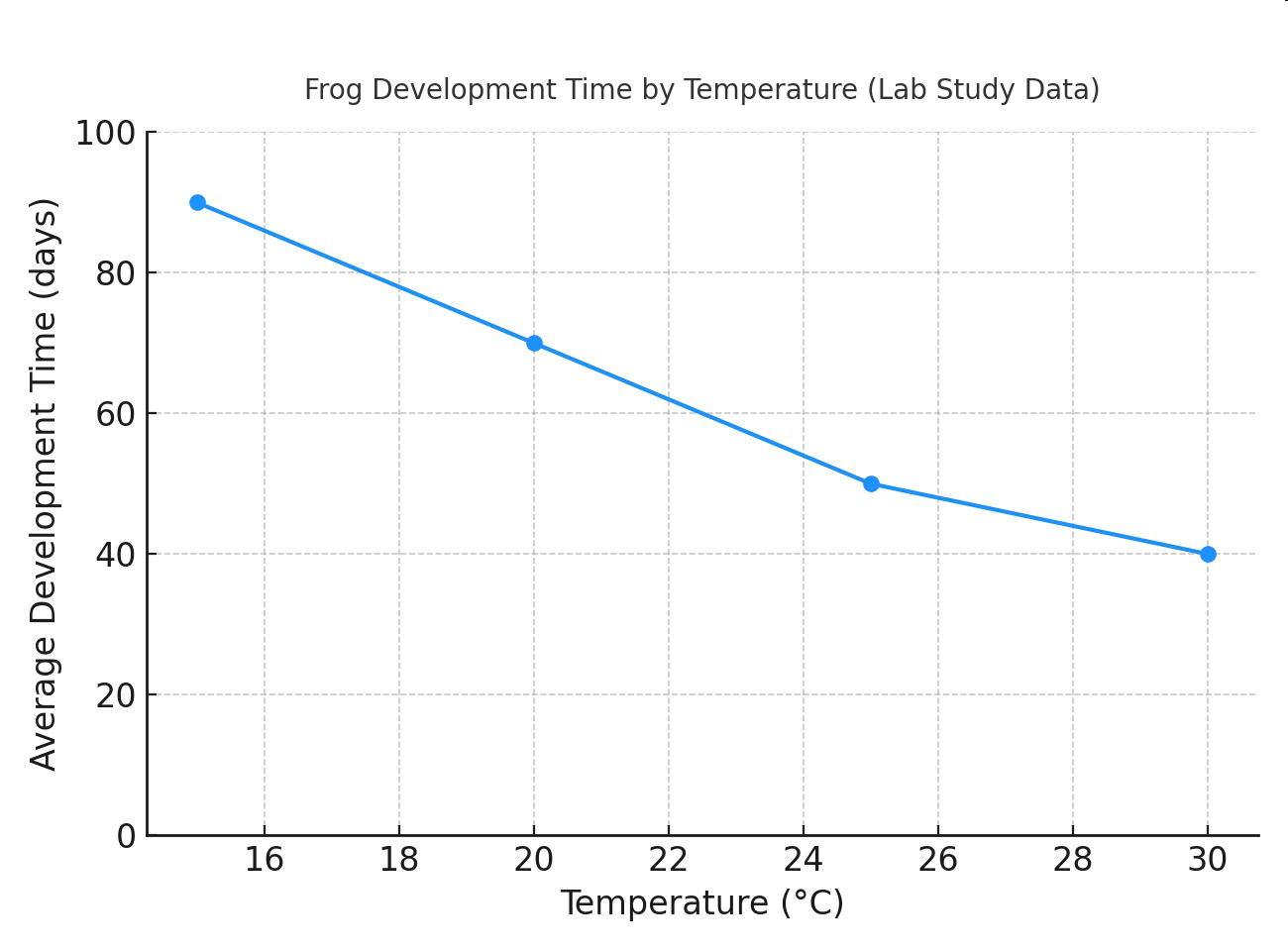
Temperature (oC) | Development Time (days) |
|---|
15 | 90 |
20 | 70 |
25 | 50 |
30 | 40 |
Graph of Information - Figure 2.