Giraffe Neck Length and Feeding Advantage
In African savannas, giraffes live in open woodlands where trees are often tall and food can be scarce during dry seasons. While all giraffes share similar features, there is variation in neck length among individuals. Some have slightly longer necks than others.
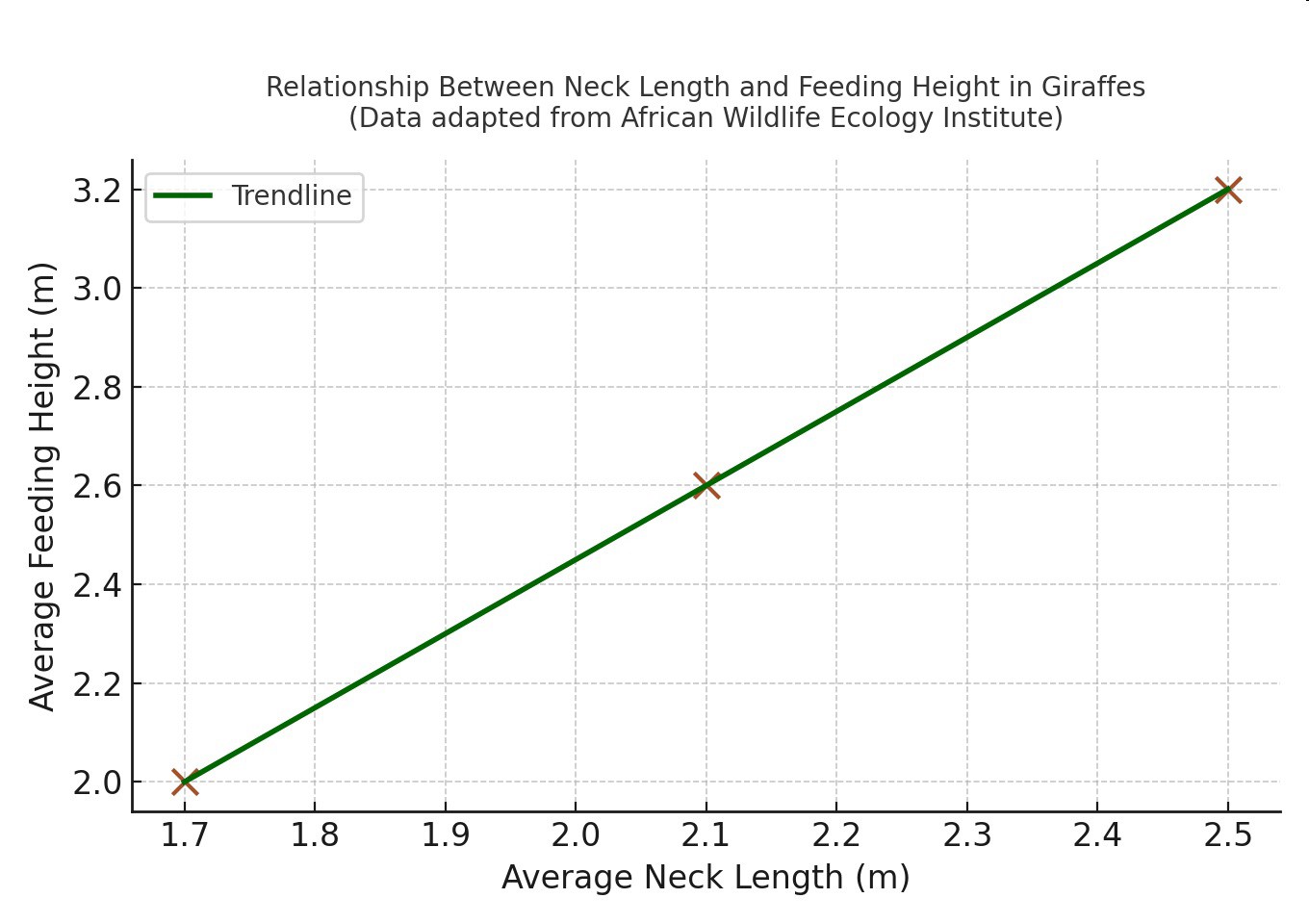
Scientists from the African Wildlife Ecology Institute measured how neck length affects feeding height and survival. They found that giraffes with longer necks can reach leaves higher in acacia trees, where shorter individuals cannot feed - especially when lower vegetation dries out.
Giraffe Category | Average Neck Length (m) | Average Feeding Height (m) | Survival Rate (%) |
|---|
Short-necked | 1.7 | 2.0 | 60 |
Medium-necked | 2.1 | 2.6 | 75 |
Long-necked | 2.5 | 3.2 | 90 |
Even small variations in neck length can provide a feeding advantage. When food is limited near the ground, giraffes with longer necks can reach leaves that others cannot. These individuals are more likely to survive, reproduce, and pass on their genes, increasing the frequency of long-neck traits in the population over time.
This example provides strong evidence that variation among individuals contributes to survival and reproduction advantages. The inherited trait (neck length) interacts with environmental conditions (food height availability), illustrating natural selection in action.
Graph of Information - Figure 1.
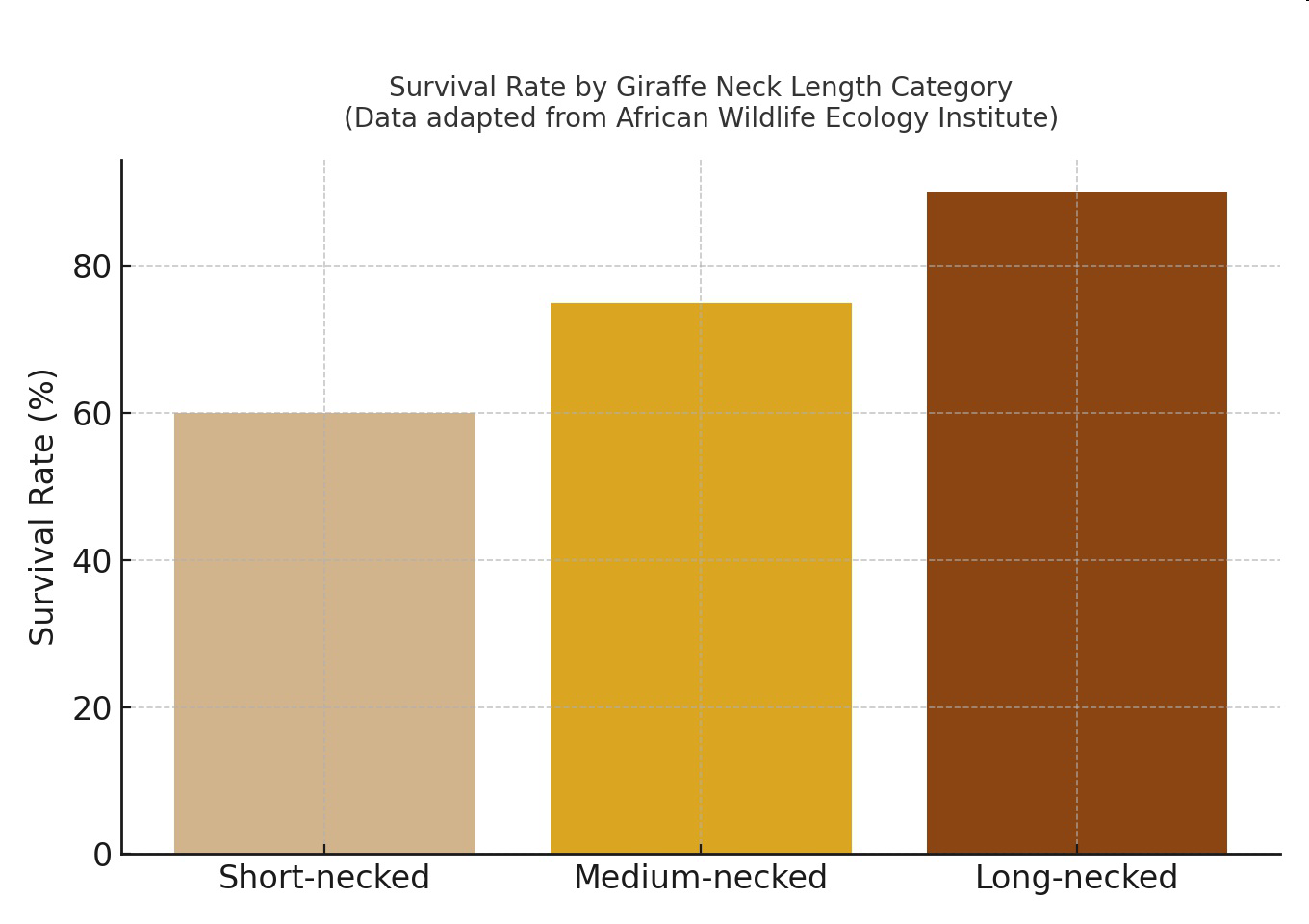
Graph of Information - Figure 2.