Hydrangea Soil pH and Flower Color
Hydrangeas are flowering plants that inherit genes for producing blue and pink pigments, but the color of their blooms depends on the soil they grow in. This is because the availability of aluminum ions in the soil changes with pH level, which in turn affects pigment chemistry inside the flower petals.
When grown in acidic soil (low pH), hydrangeas absorb more aluminum, which reacts with pigments to make blue flowers. In alkaline soil (high pH), less aluminum is absorbed, and the flowers appear pink instead.
Soil pH | Average Petal Color Index (Blue = 0 6 Pink = 100) |
|---|
4.5 | 10 |
5.0 | 25 |
5.5 | 40 |
6.0 | 65 |
6.5 | 85 |
7.0 | 95 |
This shows a clear relationship: as pH increases, the flowers change color from blue to pink – even though they share the same genetic makeup.
This investigation shows that traits can be influenced by environmental factors. All hydrangeas in the study inherited the same color-producing genes, but the environment (soil chemistry) determined which pigment form was expressed. It’s a vivid, real-world example of environmental influence on gene expression.
Graph of Information - Figure 1.
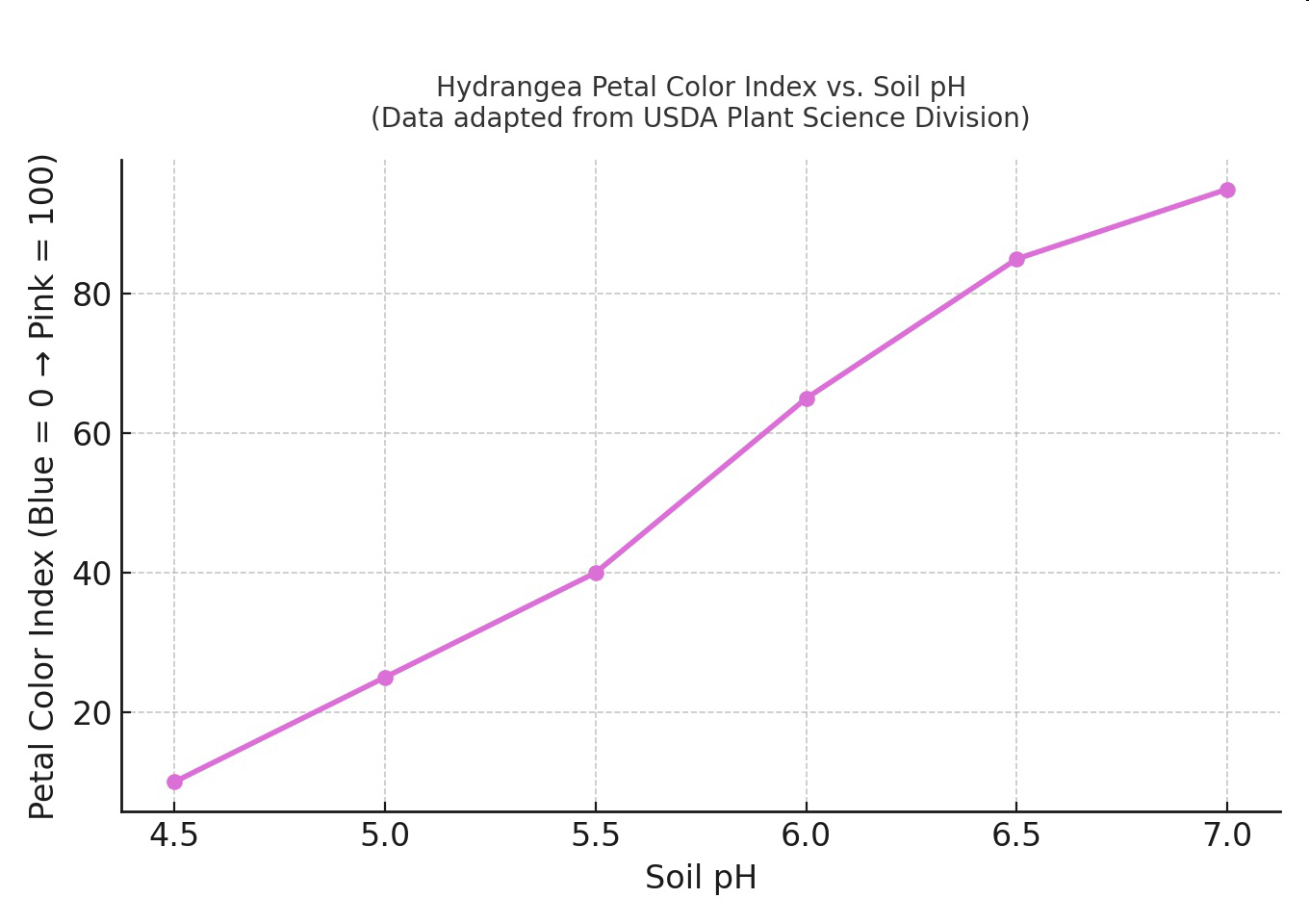
Graph of Information - Figure 2.
